
For investors navigating the challenging landscape of high-cost markets such as New York, California, or the Northeastern states, a common frustration has emerged: positive cash flow from real estate investments has become increasingly elusive. With cap rates in major cities like New York City often hovering between a mere 3% and 4%, and property entry points demanding seven-figure commitments, generating meaningful returns feels like a distant dream rather than a tangible investment goal. The once-reliable investment strategies in these overheated regions are simply no longer yielding the desired financial outcomes.
Amidst this challenging environment, Texas has quietly, yet decisively, ascended as the premier out-of-state investment destination across the nation. This burgeoning popularity is rooted in a robust foundation of compelling economic fundamentals. The Lone Star State boasts median home prices that are a staggering 40% to 60% lower than those found in coastal markets, offering a far more accessible entry point for investors. Coupled with remarkable population growth, the distinct advantage of no state income tax, and rental yields that genuinely make financial sense, Texas provides a stark contrast to markets struggling with affordability and diminishing returns. Here, strong fundamentals aren’t just a promise; they are a daily reality for shrewd investors.
However, the prospect of investing remotely in an unfamiliar market, deciphering local regulations, and navigating specialized financing options can naturally feel overwhelming. This comprehensive guide aims to demystify the process, offering a clear roadmap for capitalizing on Texas’s burgeoning real estate opportunities from anywhere in the country.

In the following sections, we will meticulously break down the core reasons why discerning investors are strategically targeting Texas, explore the unique market dynamics that set it apart, and outline the most effective financing strategies to fund your next lucrative property acquisition, regardless of your current location.
Why Discerning Investors Are Flocking to Texas Real Estate
The Lone Star State’s appeal to real estate investors is not based on fleeting trends but on deeply entrenched economic and demographic strengths. Here’s an in-depth look at the fundamental drivers making Texas an unparalleled investment magnet:
Unprecedented Population Growth Fuels Sustained Rental Demand
Texas stands as a national leader in population expansion, adding over 470,000 new residents in 2024 alone—a figure surpassing any other state. Major metropolitan areas like Dallas-Fort Worth consistently welcome approximately 150,000 new people annually, while Houston, Austin, and San Antonio demonstrate equally rapid and sustained growth. This isn’t merely a demographic anomaly; it’s a direct consequence of widespread corporate relocations, an exceptionally business-friendly regulatory environment, and the compelling allure of relative affordability compared to the exorbitant costs of coastal living. Major companies from diverse sectors continue to establish or expand their presence, drawing a steady stream of highly skilled professionals and their families.
For astute real estate investors, this relentless population influx translates directly into an insatiable demand for rental housing. Unlike markets experiencing stagnation or decline, Texas cities consistently feature robust rental markets characterized by remarkably low vacancy rates, typically ranging between a healthy 4% and 6%. This tight market dynamic, combined with strong job creation and wage growth, ensures consistent year-over-year rent appreciation, providing a reliable income stream and significant equity growth for property owners.
No State Income Tax Creates a Stronger, More Stable Tenant Pool
Texas distinguishes itself as one of only nine states in the U.S. that does not impose a state income tax. This crucial financial advantage directly impacts the purchasing power and disposable income of its residents. Consider a household earning $100,000 annually; this tax exemption translates into an additional $5,000 to $8,000 in take-home pay each year compared to residents in high-tax states. For instance, New York’s state income tax can exceed 8%, while California’s can reach a staggering 13.3%.
This substantial tax savings leaves Texas residents with significantly more disposable income, making them more financially stable and better equipped to comfortably cover rental expenses. When combined with the booming job markets across diverse sectors—such as energy in Houston, cutting-edge technology in Austin, and finance and logistics in Dallas—Texas attracts a highly qualified tenant pool. These renters often exhibit lower default risks than individuals in similar income brackets residing in states burdened by higher tax liabilities, thereby enhancing the security and predictability of rental income for investors.
Cash Flow That Actually Makes Tangible Financial Sense
This is arguably where Texas unequivocally separates itself from its coastal counterparts, presenting a compelling case for investors focused on immediate returns. A direct comparison of investment metrics reveals a stark difference:
Queens, New York (Illustrative Example):
- Median single-family rental price: $850,000
- Average monthly rent: $3,200
- Gross rental yield: A modest 4.5%
- Projected cash-on-cash return after all expenses and financing: Often negative to a meager 2%
Plano, TX (A Thriving Dallas Suburb):
- Median single-family rental price: $380,000
- Average monthly rent: $2,400
- Gross rental yield: A robust 7.6%
- Projected cash-on-cash return: A healthy 6% to 9%
Even after meticulously accounting for Texas’s property taxes, which are indeed higher than in most states (typically ranging from 1.5% to 2.5% annually of the assessed value), the cash flow mathematics overwhelmingly favor Texas. Investors can realistically achieve positive cash flow from day one, a feat that is nearly impossible in prohibitively expensive markets like New York City, San Francisco, or Los Angeles without demanding massive, often unattainable, down payments.
Consistent Appreciation with Significantly Lower Downside Risk
While Texas real estate may not always exhibit the explosive, unsustainable 20% to 30% year-over-year appreciation characteristic of speculative bubble markets, it consistently delivers a more predictable and sustainable 4% to 8% annual appreciation. Crucially, this growth comes with a significantly lower downside risk. History serves as a powerful indicator: during the devastating 2008 financial crisis, property values in Texas experienced only a modest 5% to 10% decline, while coastal markets notoriously cratered by 30% to 50%.
This inherent stability stems directly from Texas’s remarkably diversified economy. Houston, for instance, relies on its robust energy sector but is also a global leader in healthcare and aerospace. Austin, a burgeoning tech hub, is further anchored by its prominent educational institutions and government presence. Dallas-Fort Worth serves as a powerhouse for finance, logistics, corporate headquarters, and defense. This broad economic base ensures that a downturn in any single industry is unlikely to destabilize the entire local real estate market, offering a crucial layer of protection for investments.
For patient buy-and-hold investors, this economic resilience translates into more predictable equity growth, shielding their portfolios from the volatile boom-bust cycles that frequently characterize more speculative and less diversified markets.
A Strictly Landlord-Friendly Regulatory Environment
Texas property laws are notably and overtly structured to favor property owners, providing a stable and predictable environment for landlords. Key aspects of this favorable legal framework include:
- Expedited Eviction Processes: Eviction proceedings in Texas are often measured in weeks rather than the months or even years commonly experienced in other states, allowing landlords to quickly address non-paying tenants or lease violations.
- Absence of Rent Control: Texas explicitly prohibits rent control or rent stabilization laws, granting landlords the flexibility to adjust rents to market rates and maximize their investment returns without government intervention.
- Flexible Security Deposit Rules: Regulations surrounding security deposits are clear and generally provide landlords with reasonable flexibility in their application and return.
- Clear Lease Enforcement Mechanisms: The legal system provides robust and transparent mechanisms for enforcing lease agreements, protecting landlords’ rights and investments.
For remote investors, this highly supportive legal framework drastically mitigates operational headaches and reduces potential holding costs during tenant turnover. Managing a property from afar becomes significantly less stressful and more efficient when local regulations actively support, rather than hinder, your business operations.
How to Finance Your Texas Investment Property from Anywhere
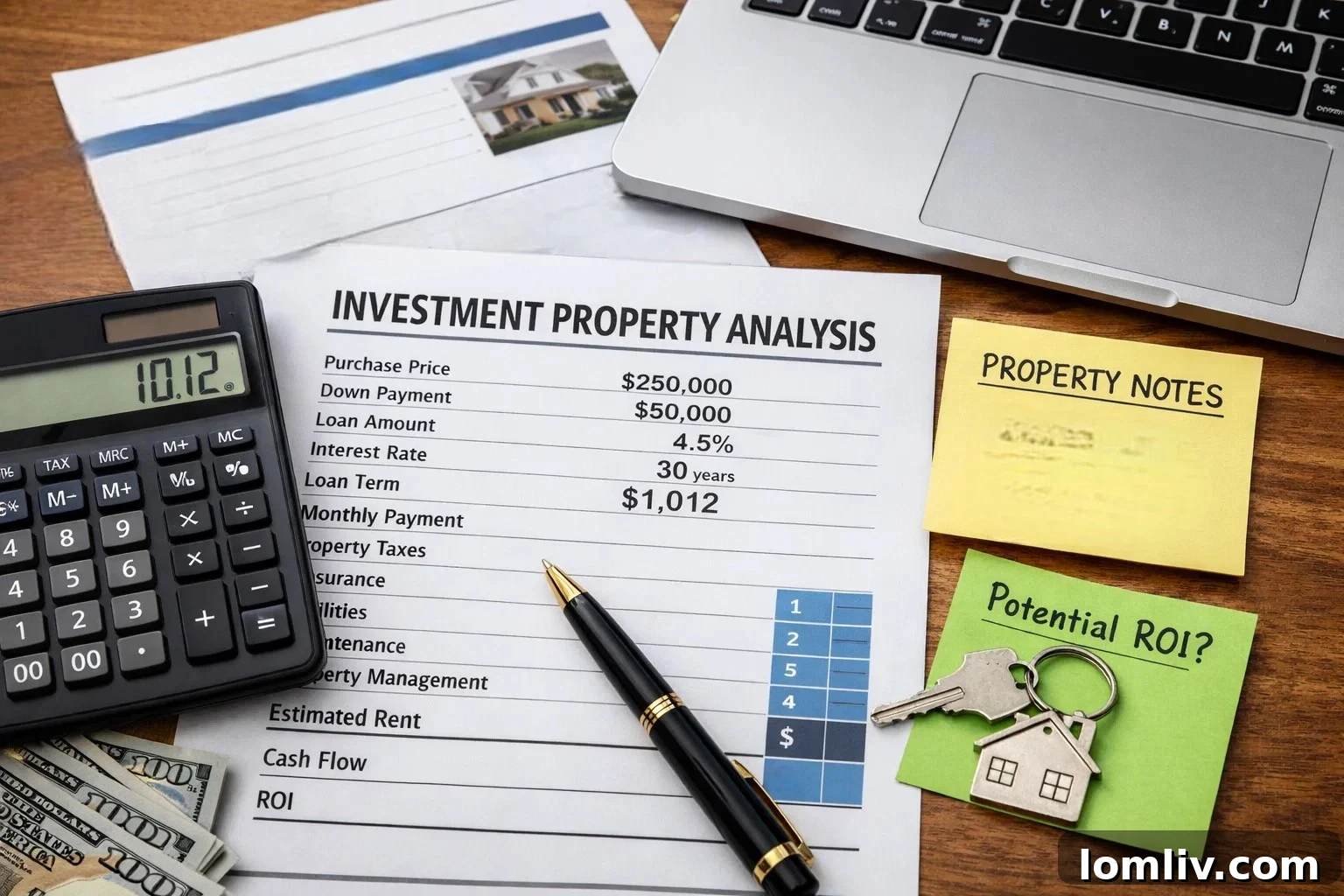
Securing financing for an out-of-state rental property demands a distinctly different strategy compared to obtaining a mortgage for a primary residence. Understanding the nuances of investment property loans is paramount to successfully funding your Texas real estate ventures. Here’s an in-depth guide to navigating the financing landscape:
DSCR Loans: The Remote Investor’s Strategic Advantage
Debt Service Coverage Ratio (DSCR) loans have rapidly emerged as the preferred and most accessible financing option for out-of-state investors targeting Texas rental properties. What makes DSCR loans particularly attractive is their unique underwriting approach: unlike traditional mortgages that heavily scrutinize your personal income, employment history, and detailed tax returns, DSCR loans qualify borrowers based almost entirely on the investment property’s inherent ability to generate sufficient rental income to cover its own debt obligations.
Understanding DSCR Loan Mechanics:
Lenders calculate the DSCR by dividing the property’s projected monthly rental income by its total monthly debt obligations. This includes the principal and interest of the mortgage payment, property taxes, insurance premiums, and any applicable HOA fees.
- DSCR of 1.0: This indicates that the rental income precisely covers the monthly debt service, representing a breakeven scenario.
- DSCR of 1.25: This is generally considered the preferred minimum by most lenders, signifying that the rental income is 25% higher than the debt service, providing a comfortable buffer.
- DSCR of 0.8: In this scenario, rental income covers only 80% of the debt service. While some specialized programs might approve this for highly experienced investors with strong credit and substantial down payments, lenders typically require compensating factors to offset the higher risk.
Most reputable lenders typically require a minimum DSCR of 1.0 to 1.25 to offer their most favorable interest rates and terms. However, certain niche programs or lenders catering to seasoned investors may consider ratios as low as 0.75, particularly when paired with exceptional credit profiles and larger equity contributions.
Why DSCR Loans Are Optimally Suited for Texas Investments:
Because Texas rental yields are consistently strong and property acquisition costs are relatively lower, a significant majority of properties naturally achieve a DSCR of 1.2 or higher. For example, a $300,000 property generating $2,200 in monthly rent with a 20% down payment can easily clear a 1.25 ratio, even after factoring in higher local property taxes. This favorable ratio makes DSCR financing highly accessible and efficient.
Contrast this with a market like NYC, where a comparable property might rent for $2,800 but cost $700,000. Such a scenario would typically result in a DSCR well below 1.0, making DSCR financing virtually impossible without an impractically large down payment that diminishes the entire investment premise.
Typical DSCR Loan Terms:
- Down Payment: Typically ranges from 20% to 25%, depending on the lender and loan-to-value (LTV).
- Interest Rates: Generally 0.25% to 0.75% higher than conventional owner-occupied mortgages, reflecting the investment risk.
- Loan Amounts: Can extend up to $2.5 million or more, offering significant flexibility for various property types and portfolios.
- Credit Score: A minimum of 660 is usually required, with scores of 700+ often qualifying for the most competitive rates.
- Documentation: No personal income documentation, employment verification, or tax return review is typically required.
For W-2 employees, self-employed individuals, or investors with intricate income structures, DSCR loans ingeniously bypass common documentation hurdles, offering a streamlined path to competitive financing for their Texas investment properties.
Conventional Investment Property Loans: Traditional Path to Low Rates
Traditional Fannie Mae and Freddie Mac-backed investment loans remain a highly viable option for investors who possess a stable, easily verifiable income and prioritize securing the lowest possible interest rate. These loans are typically the benchmark for cost-effective financing.
Key Requirements for Conventional Loans:
- Minimum Credit Score: Generally 620, though a score of 680 or higher is strongly recommended to access better terms.
- Down Payment: Ranging from 15% to 25%, influenced by the loan-to-value ratio and the number of financed properties already owned by the investor.
- Debt-to-Income (DTI) Ratio: Strict limits are usually applied, typically capped between 43% and 50% of your gross income.
- Documentation: Comprehensive employment and income verification is mandatory, requiring pay stubs, W-2s, and potentially tax returns.
- Reserves: Lenders often require proof of six to twelve months of PITI (Principal, Interest, Taxes, Insurance) reserves held in savings.
- Appraisal: A full property appraisal is always required to determine market value.
When Conventional Financing Is Your Best Choice:
If you have a straightforward W-2 income, a pristine credit history (ideally above 740), and substantial cash reserves, conventional loans will almost always offer interest rates that are half a point to a full point lower than comparable DSCR programs. On a $300,000 loan, this difference can translate into an extra $125 to $250 back in your pocket each month, significantly boosting your overall cash flow.
However, the stringent documentation requirements and strict debt-to-income limits can make conventional loans a challenging proposition for active investors who are scaling multiple properties, have complex self-employment income, or deal with seasonal business earnings. The flexibility offered by DSCR loans often outweighs the slight rate premium for such investors.
Portfolio Loans for Strategic Scaling Investors
Once an investor accumulates between four to ten financed properties, they will typically encounter the Fannie Mae and Freddie Mac loan limit wall. At this critical juncture, portfolio loans, offered predominantly by local and regional banks and credit unions, become an indispensable tool for continued portfolio expansion and strategic scaling.
Distinct Characteristics of Portfolio Loans:
- Higher Down Payments: Generally require 25% to 35% down, reflecting the increased risk and tailored nature of these loans.
- Interest Rates: Rates are typically slightly above conventional mortgages, often in the 6.5% to 8% range in current market conditions.
- Flexible Underwriting: A significant advantage is that the lending institution sets its own underwriting standards, allowing for more bespoke and flexible criteria compared to rigid agency guidelines.
- Relationship-Based Lending: These loans often depend heavily on the investor’s existing relationship with the bank, rewarding long-term loyalty and a proven track record.
- Unlimited Properties: Unlike conventional loans, portfolio loans generally have no limit on the number of properties an investor can finance, making them ideal for aggressive growth.
- Blanket Loans: A unique feature, blanket loans, can cover multiple properties under a single mortgage, simplifying management and potentially reducing closing costs for a portfolio.
Texas is home to a robust network of regional banks and credit unions that actively court real estate investors. Proactively establishing strong banking relationships with these institutions early in your investment journey will undoubtedly position you to secure much more favorable terms and unlock greater scaling potential down the road.
Leveraging Cash-Out Refinances and Home Equity Lines of Credit (HELOCs)
Many successful out-of-state investors strategically utilize cash-out refinancing or home equity lines of credit (HELOCs) on their primary residences or existing, highly appreciated properties to efficiently fund their Texas acquisitions. This approach allows them to unlock dormant equity and deploy it into higher-performing assets.
The Strategic Application:
- Equity Extraction: Systematically extract significant equity from appreciated properties located in high-cost, equity-rich markets.
- Texas Acquisition: Use the extracted cash to either purchase Texas properties outright or make larger down payments, reducing the need for primary external financing.
- Dual Benefit: Investors benefit from the strong cash flow generated by Texas properties while simultaneously maintaining exposure to the continued appreciation in their primary home market.
- Recapitalization: After stabilizing the Texas rental properties (typically six to twelve months), investors can perform a cash-out refinance on these new assets to pull their initial capital back out, effectively recycling their funds for further acquisitions.
Practical Example:
Imagine an investor holds $500,000 in equity within a Brooklyn townhouse and decides to open a HELOC at a 7% interest rate. They strategically withdraw $150,000 from this HELOC and deploy it as down payments across three separate $300,000 Texas properties, each at a 50% loan-to-value (LTV). After allowing the rentals to stabilize and season for approximately a year, they execute a cash-out refinance on the three Texas homes at a 75% LTV. This action returns roughly $135,000, which can then be used to significantly pay down the HELOC. The result: the investor now owns four properties in total while having only approximately $15,000 of their actual cash remaining invested in the deals. While this sophisticated strategy necessitates meticulous cash flow management, it empowers investors to rapidly multiply their portfolio holdings without the necessity of selling off their heavily appreciated home-market assets.
The Indispensable Role of a Local Texas Mortgage Broker
Attempting to finance an out-of-state property through a large, impersonal national bank often proves to be a significant misstep. Partnering with a specialized mortgage broker in Texas who possesses deep expertise in investor lending will provide an invaluable strategic advantage and smoother transaction experience.
Why Local Texas Expertise Is Non-Negotiable:
A proficient Texas mortgage broker profoundly understands:
- County-Specific Tax Rates: Intricate county-specific property tax rates and nuanced assessment practices that vary widely across the state.
- HOA Requirements: Diverse HOA requirements, restrictions, and fee structures prevalent in various Texas markets.
- Flood Zone Issues: The specific challenges and insurance implications associated with flood zones, particularly in regions like Houston and coastal areas.
- Foundation Concerns: Common foundation issues intrinsically linked to Texas’s expansive clay soil and the associated repair considerations.
- Appraisal Challenges: The unique appraisal challenges that can arise in rapidly appreciating submarkets, ensuring accurate valuations.
- Closing Procedures: The precise title company and closing procedures that are distinct to Texas real estate transactions.
More critically, an experienced local broker has cultivated extensive relationships with dozens of different lenders, both national and local. This network grants you immediate and unparalleled access to:
- Comprehensive Comparisons: Side-by-side comparisons of DSCR, conventional, and portfolio loan options, tailored to your specific needs.
- Rate Shopping: Simultaneous rate shopping across multiple lenders, ensuring you secure the most competitive terms available.
- Niche Programs: Access to specialized niche programs designed for unique property types or investor profiles.
- Underwriting Expertise: Expert navigation through the complexities of investor-specific underwriting challenges, smoothing the approval process.
- Coordinated Closings: Seamlessly coordinated closings, especially beneficial when acquiring multiple properties concurrently.
For a remote buyer, this localized expertise is genuinely priceless. A top-tier broker will proactively identify potential red flags before they can derail your closing, creatively source innovative financing solutions, and ultimately save you thousands of dollars by securing the absolute best possible loan terms.
Financing New Construction Rentals in Texas
Texas remains one of the few dynamic markets where new construction single-family rentals can still offer compelling financial viability for investors. Builders in thriving suburbs such as Katy, Frisco, Georgetown, and New Braunfels actively market their properties to investors, recognizing the strong demand for modern rental units.
Key Financing Considerations for New Construction:
- Higher Down Payments: Typically requires 25% to 30% down, reflecting the newness and often higher price point of the asset.
- Construction-to-Permanent Loans: Investors may utilize construction-to-permanent loans that convert from a construction phase loan to a permanent mortgage upon completion, or manage two separate closings.
- Builder Delays: Be prepared for potential builder delays and completion risks, which can impact your timeline for tenant placement.
- No Rental History: For DSCR qualification, lenders must rely on appraised rental value and market comparisons, as there is no existing rental history.
- Warranty Coverage: A significant advantage is the builder’s warranty coverage, which can protect you from major capital expenses and unexpected repairs for the initial one to two years of ownership.
Purchasing new construction offers substantial perks for remote owners. Brand-new HVAC systems and appliances drastically reduce emergency maintenance calls, builder warranties provide peace of mind against expensive surprises, and many builders even offer in-house property management services. However, it’s crucial to understand that financing these builds is inherently more complex and requires a lender who possesses a deep understanding of the new-construction process and its unique characteristics.
The Best Texas Target Markets for Real Estate Investors
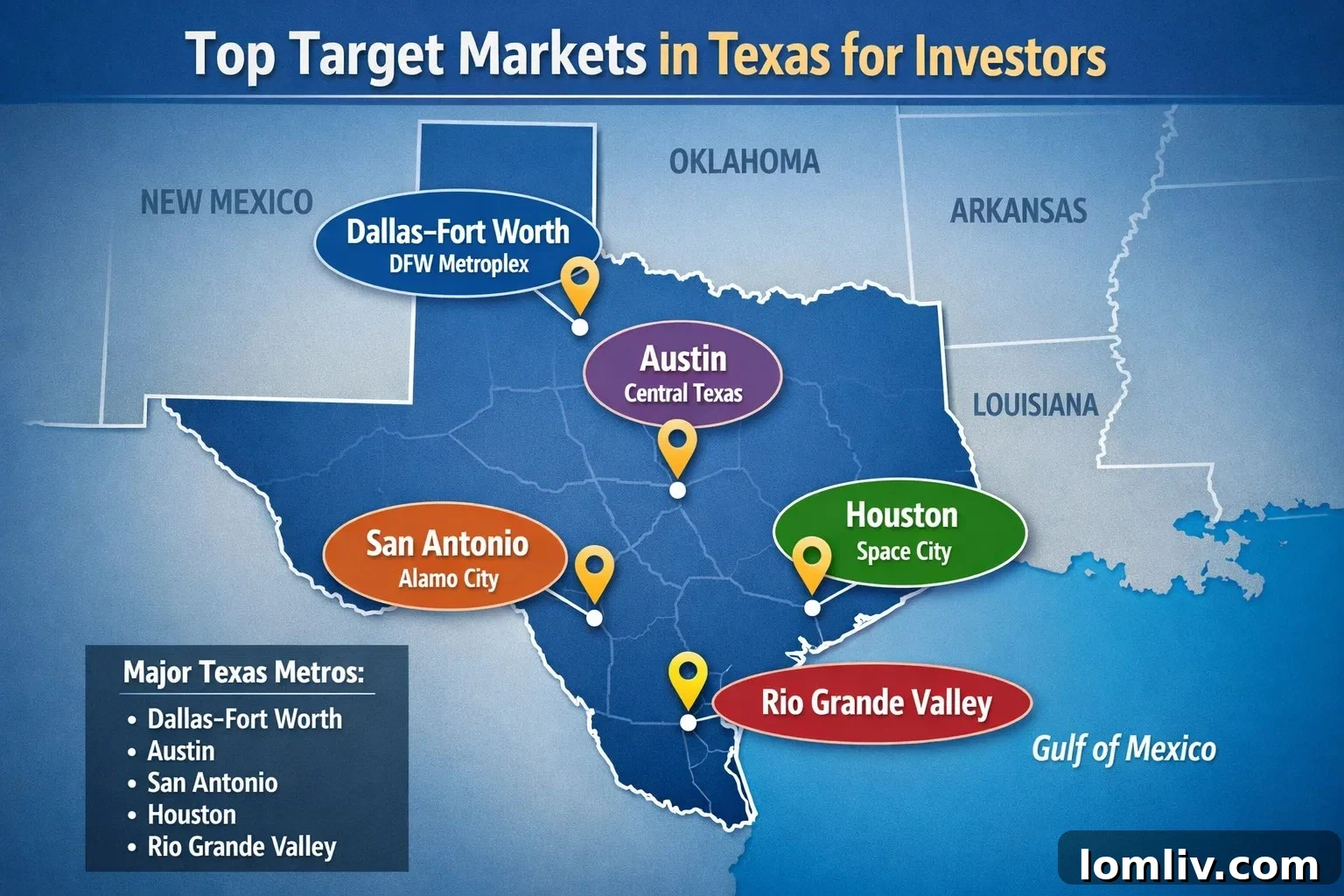
While the entire state of Texas offers compelling investment opportunities, not all cities present the same level of potential or risk. Savvy investors are strategically directing their capital into specific high-growth metropolitan areas that demonstrate the most robust fundamentals and highest likelihood of strong returns. Here’s where the smart money is moving right now:
Dallas-Fort Worth (DFW) Metroplex: The Corporate Relocation Hub
The Dallas-Fort Worth Metroplex is an undeniable magnet for real estate investors, driven by unparalleled corporate relocations, explosive job growth across diversified sectors, and a resilient, dynamic economy. Prime investment areas include the vibrant core of Dallas, and highly sought-after suburbs like Plano, Frisco, McKinney, Arlington, and Fort Worth.
Typical Investment Metrics:
- Median single-family home price: $320,000 to $420,000
- Average monthly rent: $2,000 to $2,800
- Gross rental yield: A solid 7% to 8%
- Property tax rate: Approximately 2.0% to 2.3%
Why DFW Works: The DFW Metroplex continues to attract over 150,000 new residents annually, fueling relentless demand for housing. Massive corporate relocations and expansions from industry giants such as Toyota, Liberty Mutual, and State Farm are driving an enormous demand for housing from white-collar professionals. Furthermore, the presence of numerous highly-rated school districts allows landlords to command premium rents while simultaneously enjoying remarkably low tenant turnover, as families prioritize quality education.
Houston: Affordability Meets Diversified Economic Powerhouse
Houston presents a compelling case for investors due to its formidable energy sector resilience, exceptional affordability compared to other major metros, and a strong, diverse international population. Key investment submarkets include family-friendly Katy, upscale Sugar Land, the master-planned community of The Woodlands, and rapidly growing Pearland.
Typical Investment Metrics:
- Median single-family home price: $280,000 to $380,000
- Average monthly rent: $1,800 to $2,600
- Gross rental yield: An attractive 7.5% to 9%
- Property tax rate: Approximately 1.8% to 2.2%
Why Houston Works: Houston boasts some of the lowest entry prices among all major Texas metropolitan areas, yet it maintains red-hot rental demand. The local economy has successfully diversified beyond its traditional reliance on oil and gas, with massive expansions in the world-renowned medical sector (the Texas Medical Center) creating a rock-solid employment base. Additionally, its position as a major port city and international business hub guarantees ongoing economic activity.
Important Caution: Flood risk is a genuine concern in certain neighborhoods, particularly after major weather events. It is absolutely imperative that investors meticulously verify the flood zone status of any prospective property and obtain firm quotes on flood insurance before submitting an offer.
Austin: The Tech Hub with Lifestyle Appeal
Investor demand in Austin is primarily propelled by its explosive tech growth, robust university-town fundamentals (driven by the University of Texas), and its magnetic lifestyle appeal, drawing young professionals and creatives. Key areas for investment include the rapidly expanding suburbs of Round Rock, Pflugerville, Cedar Park, and Kyle.
Typical Investment Metrics:
- Median single-family home price: $420,000 to $550,000
- Average monthly rent: $2,400 to $3,200
- Gross rental yield: Typically 6% to 7%
- Property tax rate: Approximately 1.95% to 2.2%
Why Austin Works: Austin remains an undeniable magnet for leading tech companies and high-earning professionals who are willing to pay top dollar for its vibrant cultural scene, outdoor amenities, and high quality of life. The perpetual presence of the University of Texas ensures a massive, never-ending pool of student and professional renters, providing foundational stability to the rental market.
Important Caution: Because home prices in Austin have skyrocketed significantly in recent years, cash flow can be notoriously tight compared to other Texas markets. Austin is often more heavily geared toward appreciation-focused investors who are comfortable with achieving near-breakeven on monthly rents, banking on long-term equity growth.
San Antonio: Affordability, Stability, and Military Presence
Investor demand in San Antonio is consistently driven by its formidable military presence, exceptional affordability, and steady, predictable growth. Prime investment areas include the affluent Stone Oak, the rapidly developing Alamo Ranch, and the growing communities within Northeast San Antonio.
Typical Investment Metrics:
- Median single-family home price: $260,000 to $340,000
- Average monthly rent: $1,600 to $2,200
- Gross rental yield: A very attractive 7.5% to 8.5%
- Property tax rate: Approximately 1.7% to 2.0%
Why San Antonio Works: The presence of multiple large military bases (such as Lackland Air Force Base and Fort Sam Houston) provides an incredibly stable and guaranteed tenant demand from military personnel and their families. Due to its highly affordable entry prices, San Antonio routinely offers some of the best cash-on-cash returns in the entire state, making it ideal for cash flow-oriented investors. Additionally, major corporate employers like USAA and Toyota further diversify the local economy, contributing to its sustained stability.
Common Out-of-State Investing Mistakes and How to Master Them in Texas

Investing in real estate a thousand miles away from your primary residence inherently comes with a distinct set of challenges and potential pitfalls. Remote investors, particularly those new to the Texas market, often fall prey to several classic mistakes. By proactively understanding and addressing these common errors, you can significantly mitigate risk and optimize your investment outcomes.
Mistake #1: Underestimating Texas Property Taxes
A frequent error made by rookie investors is hearing about Texas’s lack of state income tax and then naively assuming the overall tax burden will be low. The reality is quite the opposite: Texas property taxes are among the highest in the nation, typically hovering between 1.5% and 2.5% of the assessed home value annually. This is a critical distinction that heavily impacts financial projections.
For example, on a $350,000 property, you should realistically budget for $5,250 to $8,750 in annual property taxes, translating to approximately $440 to $730 per month. This substantial recurring expense dramatically alters cash flow calculations and must be factored in with precision. To ensure you’re on the safe side, it is prudent to run your investment numbers using a conservative 2.2% property tax assumption. Crucially, always verify the exact and current tax rate for the specific property you are considering before making any offer, and factor in potential annual increases of 5% to 8% in rapidly appreciating high-growth suburbs.
Mistake #2: Ignoring Foundation Issues and Their Costly Consequences
Texas is characterized by its heavy clay soil, which exhibits significant expansion and contraction cycles with fluctuating moisture levels. This geological characteristic often causes homes to shift over time. Unlike properties in the Northeast or West Coast, where foundation problems might be rarer, foundation issues are incredibly common in Texas and can easily result in substantial repair bills, typically ranging from $5,000 to $15,000, or even more for severe cases.
The most effective strategy to mitigate this risk is to never, under any circumstances, skip a comprehensive property inspection. Furthermore, it is highly advisable to invest an additional $300 to $500 to hire a specialized structural engineer to separately evaluate the foundation, independent of the standard home inspector. Always allocate a realistic foundation repair contingency within your rehab or emergency budget to prepare for potential issues.
Mistake #3: Choosing the Wrong Property Management Company
A subpar property manager can single-handedly decimate your hard-earned cash flow through ineffective tenant screening, delayed or improperly managed maintenance, and prolonged, costly vacancies. The quality of property management services varies wildly across the state, making due diligence paramount.
Key Red Flags to Watch Out For:
- Low Fees: Management fees consistently below 8% of gross rents can be a strong indicator that corners are being cut on essential services.
- Lack of Screening Process: An absence of a rigorous tenant screening process or clearly defined criteria is a major risk factor.
- Poor Online Presence/Reviews: A weak or non-existent online presence, or numerous negative online reviews, should raise immediate concerns.
- No References: Unwillingness to provide verifiable references from current investor clients is a significant red flag.
It is imperative to interview at least three reputable property management companies before you finalize the purchase of a house. Demand and thoroughly check references from their current out-of-state clients. Do not be afraid to pay a slightly higher 9% to 11% management fee for top-tier service; attempting to save 2% on management costs will invariably cost you thousands in the long run through costly evictions, extensive repairs, and lost rental income due to vacancies.
Mistake #4: Buying in Declining or Poorly Rated School Districts
In Texas, the ratings and reputation of local school districts directly correlate with rental demand and, consequently, your future property appreciation. Homes zoned for poorly rated or underperforming schools consistently suffer from higher vacancy rates, command discounted rents, and often attract a much tougher tenant pool, leading to increased management challenges.
Always verify school district ratings using reliable online resources such as GreatSchools.org before making a buying decision. If you are investing in single-family rentals, it is a sound strategy to stick to neighborhoods zoned for schools rated a 7 or higher on a 10-point scale. If your investment strategy focuses on multifamily properties or targets young professionals without school-aged children, school zones become slightly less critical but still influence overall neighborhood desirability.
Mistake #5: Overlooking HOA Restrictions on Rentals
Texas is renowned for its vast master-planned communities, and their Homeowner Associations (HOAs) can be incredibly strict and powerful. Many newer HOAs have stringent rules that either outright restrict rentals, mandate that you must live in the home for a minimum of two years before leasing it out, or strictly cap the percentage of investor-owned homes allowed within the neighborhood. These restrictions can severely impact your ability to rent out your property.
Before submitting any offer, instruct your real estate agent to meticulously pull and review the complete HOA bylaws and covenants. Explicitly verify that there are no rental caps or limitations in place that would impede your investment strategy. Additionally, check if the HOA levies a premium fee for non-owner-occupied homes, as such additional charges will immediately erode your monthly profit margins.
Mistake #6: Financing at Suboptimal Leverage Points
The amount of leverage (debt) you use can significantly impact your investment’s performance. Putting too little money down, especially in a high-interest-rate environment, will almost certainly cripple your monthly cash flow, making the property financially burdensome. Conversely, paying in all cash, while eliminating debt, leaves too much of your valuable capital sitting idle in one asset when it could be more effectively deployed to acquire additional income-generating properties.
Optimizing Your Leverage Strategy:
- For Buy-and-Hold Cash Flow: A 20% to 25% down payment typically maximizes cash-on-cash returns while ensuring comfortable debt service coverage and a healthy cash flow buffer.
- For Appreciation and Equity Building: A slightly higher 25% to 35% down payment accelerates equity growth and provides a more substantial cushion if market conditions soften or property values experience minor fluctuations.
- For Portfolio Scaling (Aggressive Growth): Maximum responsible leverage, typically 15% to 20% down, is appropriate when individual deals consistently clear a 1.2+ DSCR and you maintain significant cash reserves across your portfolio.
Always run precise cash flow scenarios at different down payment tiers to understand the precise impact on your returns. You must carefully weigh the opportunity cost of your capital. Often, strategically placing 20% down on two separate properties is a far superior wealth-building strategy than dumping 40% down on a single home solely to make the cash flow look artificially better.
Mistake #7: Closing Without Having “Boots on the Ground”
Online listing photos are designed to highlight positives and minimize flaws, virtual tours can be notoriously misleading, and even a live FaceTime walkthrough can easily miss critical sensory details like the lingering smell of smoke, pet urine, or unseen structural damage. Remote investors who wire their closing funds without ever having a trusted individual physically inspect the property are almost certainly inviting expensive and regrettable surprises.
If flying down to personally inspect the house is not feasible, it is absolutely essential to hire a highly trusted, investor-friendly local real estate agent to conduct a thorough walkthrough on your behalf. Even better, consider engaging a professional property inspection company to perform a pre-offer video walkthrough for approximately $200-$300. This nominal investment is arguably the best insurance policy you can buy to safeguard against inadvertently purchasing a “lemon.” For serious investors who plan to acquire three or more properties annually, making regular trips to Texas is highly recommended. These visits allow you to deepen your local market knowledge, cultivate invaluable relationships with property managers, and physically assess potential investment opportunities.
Significant Tax Advantages for Out-of-State Investors in Texas
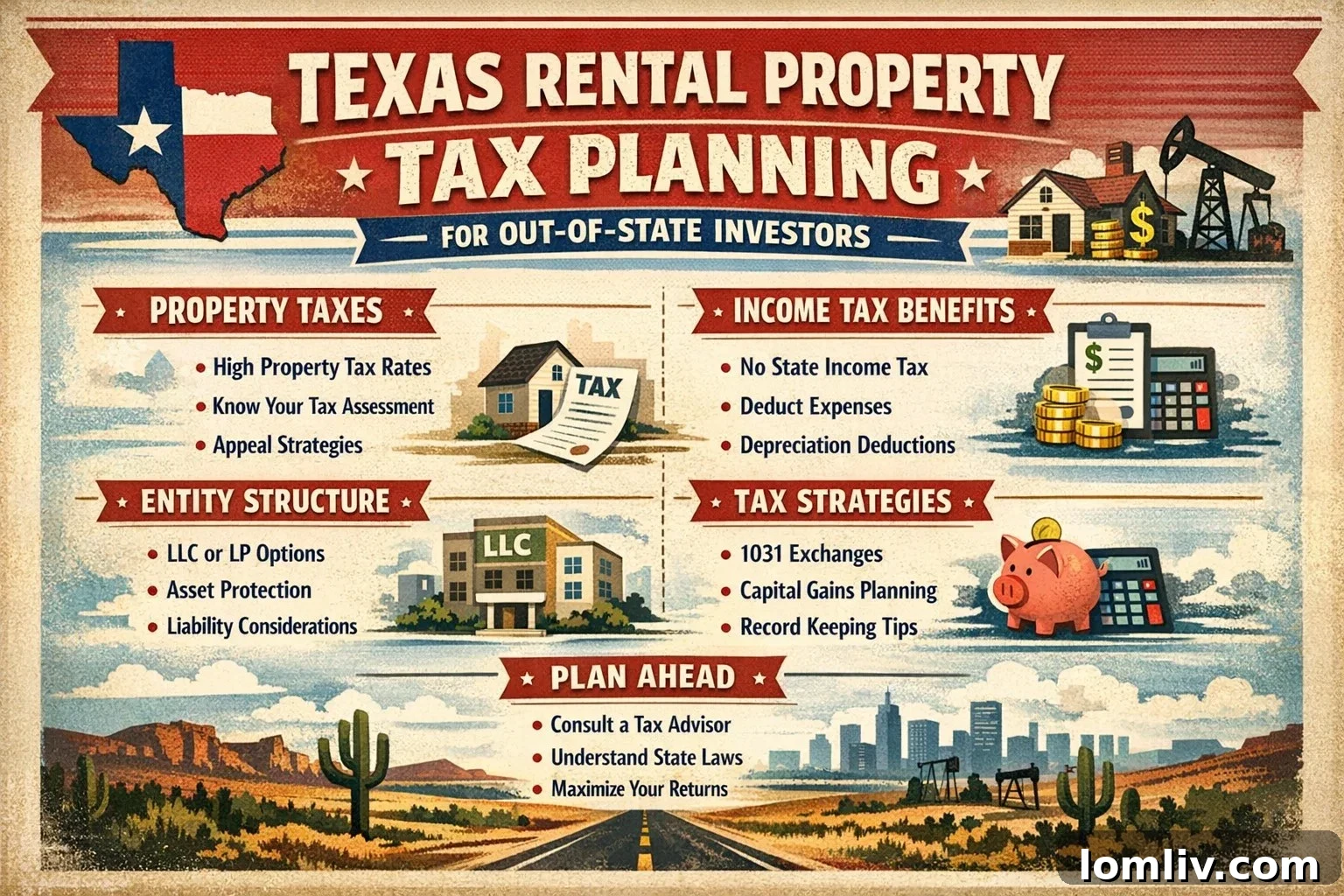
Beyond the attractive monthly rent checks and consistent appreciation, investing in Texas real estate offers a suite of powerful underlying tax benefits that can dramatically enhance your overall investment returns. These advantages are particularly significant for investors located in high-tax states.
No State Income Tax on Rental Income
A cornerstone advantage of investing in Texas is that all rental income generated within the state is completely shielded from state income tax. For investors currently residing in high-tax states like California or New York, this creates an enormous and immediate financial advantage, directly boosting their net operating income.
Illustrative Example:
Consider an investor residing in New York City, subjected to a combined state and city income tax bracket of approximately 10.9%. If this investor owns a rental property generating $3,000 a month in gross rent, and $10,000 in net annual income:
- NYC Rental Property: $10,000 net income – $1,090 (10.9% state and city tax) = $8,910 after-tax income.
- Texas Rental Property: $10,000 net income – $0 (state tax) = $10,000 after-tax income.
This additional, untaxed money compounds rapidly over time. For a growing portfolio of 10 properties, this translates into five figures of extra cash in your pocket every single year, purely due to the strategic choice of investing in a tax-friendly state.
Enhanced Depreciation Benefits
The IRS allows real estate investors to legally write off the “wear and tear” on their property through depreciation, even as the property’s actual market value may be appreciating. Texas properties present a unique and amplified advantage in this regard.
Higher Depreciable Basis in Texas:
Because land values in Texas are relatively more affordable compared to land in dense coastal markets, the physical structure (improvements) of a house constitutes a much larger percentage of the total purchase price. In coastal areas, the land itself might represent 70% or more of the property’s value. In contrast, the physical building in Texas typically accounts for 80% or more of the total value. Since only the building (improvements) and not the land can be depreciated for tax purposes, Texas properties yield significantly larger annual tax write-offs on a percentage basis.
Illustrative Example of Depreciation:
- $400,000 Texas Property: Assuming $340,000 for improvements / 27.5 years (residential depreciation schedule) = Approximately $12,364 in annual depreciation.
- $800,000 NYC Property: Assuming $400,000 for improvements / 27.5 years = Approximately $14,545 in annual depreciation.
Despite costing half as much, the Texas property generates approximately 85% of the depreciation deduction of the NYC property. On a per-dollar-invested basis, the depreciation benefits overwhelmingly favor Texas, maximizing your tax shield.
Strategic Cost Segregation Opportunities
For investors acquiring new construction or extensively renovated homes in Texas, a powerful tax optimization strategy known as a cost segregation study can turbocharge your tax savings. These specialized studies legally reclassify certain components of a property (e.g., land improvements, personal property, fixtures) from the standard 27.5-year depreciation schedule to shorter 5, 7, or 15-year schedules. This allows you to accelerate your depreciation deductions, effectively front-loading decades’ worth of tax write-offs into the initial five years of ownership. Cost segregation is an incredibly potent tool that can substantially reduce, or even completely eliminate, your taxable income from your real estate portfolio in the early years.
Powerful 1031 Exchange Strategies
The Section 1031 exchange is an invaluable tax deferral mechanism that allows investors to sell low-cash-flowing, highly appreciated coastal properties and strategically roll that accumulated equity directly into multiple high-cash-flowing Texas rental properties. This sophisticated strategy enables you to defer 100% of your capital gains taxes, while simultaneously and instantly tripling or quadrupling your monthly cash flow and diversifying your portfolio into a more landlord-friendly environment.
Example Strategy for a 1031 Exchange:
Imagine selling a $1.2 million Brooklyn duplex, originally purchased for $600,000 ten years ago. Instead of incurring a substantial capital gains tax liability (potentially $150,000+), you utilize a 1031 exchange to acquire three separate $400,000 Texas properties. The powerful results are manifold:
- Deferral of over $150,000 in capital gains tax liability.
- Tripling the number of income-producing properties from 1 to 3.
- A dramatic increase in monthly cash flow, potentially from $800 a month to $3,600 a month.
- Continued tax-deferred equity growth across a larger, more diversified portfolio.
Your Step-by-Step Guide to Buying Your First Texas Investment Property

Ready to transition from contemplating to executing your Texas real estate investment strategy? This precise, step-by-step framework outlines the proven approach that successful remote investors utilize to identify, evaluate, finance, and close lucrative deals in the Lone Star State.
Step 1: Meticulously Define Your “Buy Box” (Week 1)
Before you even begin browsing online listings on platforms like Zillow or Redfin, it is absolutely crucial to establish a strictly defined set of investment criteria – your “buy box.” This clarity will prevent decision fatigue and safeguard against impulsive or emotional purchases that don’t align with your financial objectives.
- Target Market: Specify your preferred metropolitan area(s), such as Dallas-Fort Worth, Houston, Austin, or San Antonio, and potentially specific submarkets within them.
- Price Range: Clearly define your acquisition budget, for example, $200,000 to $400,000 for cash flow or $400,000 to $600,000 for appreciating assets.
- Property Type: Determine your preferred asset class: single-family rental (SFR), townhome, small multifamily (duplex/triplex/quadplex), or new construction.
- Minimum Cash Flow Target: Set a clear target for monthly net cash flow after all expenses, such as $300, $500, or more.
- Acceptable DSCR Range: Establish your desired Debt Service Coverage Ratio, for instance, 1.15+ or a more conservative 1.25+.
- Desired Cash-on-Cash Return: Define your target annual cash-on-cash return, such as 6%, 8%, or 10%.
Step 2: Assemble Your Elite Local Team (Weeks 1-2)
Remote investing is a team sport; attempting to navigate the Texas market alone is a recipe for errors and missed opportunities. Build your indispensable roster of local professionals before you even consider making an offer.
- Texas-Licensed Real Estate Agent: Partner with an agent who specializes specifically in investor properties and understands the nuances of out-of-state buyers.
- Property Inspector: Engage a highly experienced property inspector intimately familiar with Texas-specific issues, such as foundation movement, high HVAC usage, and common pest concerns.
- Property Management Company: Thoroughly interview at least two or three reputable property management companies to ensure you find the best fit for your needs and investment goals.
- Texas Real Estate Attorney: Consult an attorney for closing guidance, entity structuring advice (LLC formation), and lease agreement reviews.
- Insurance Agent: Work with an agent who understands Texas homeowners and specialized landlord policies, including flood and windstorm coverage where applicable.
- Mortgage Broker: Crucially, connect with a mortgage broker deeply experienced in out-of-state investor financing, particularly DSCR loans and portfolio lending.
Step 3: Secure Your Financing Pre-Approval (Week 2)
Initiate contact with a local Texas mortgage lender to thoroughly explore all available financing options. Promptly submit your applications for either a DSCR loan or a conventional investment loan to accurately establish your actual buying power. This crucial step also allows you to uncover and address any potential credit hiccups or documentation issues proactively, preventing them from derailing a live deal later in the process. A strong, credible pre-approval letter not only signals to sellers that your offer is serious and well-supported but also prevents you from wasting valuable time and effort on properties beyond your financial reach.
Step 4: Diligently Analyze Potential Deals (Weeks 3-8)
Once pre-approved and with your team in place, dedicate ample time to reviewing properties that precisely match your pre-defined investment criteria. For each potential investment opportunity, conduct a thorough and conservative analysis, scrutinizing the following key metrics:
- Purchase Price: Compare against recent comparable sales (comps) in the immediate area.
- Rental Income: Verify against comparable rental rates in the local market.
- Property Tax Assessment: Research current assessments and project realistic annual increases.
- Insurance Costs: Obtain actual insurance quotes from your agent, especially for flood and windstorm, rather than relying on estimates.
- Repair and Renovation Budget: Detail all necessary repairs and potential renovations, adding a contingency for unexpected issues.
- DSCR Calculation: Accurately calculate the Debt Service Coverage Ratio based on your financing terms.
- Cash Flow Projection: Develop a detailed monthly and annual cash flow projection, factoring in all income and expenses.
- Cash-on-Cash Return: Calculate the projected cash-on-cash return, a vital metric for profitability.
- Total Return: Estimate the total potential return, encompassing both cash flow and conservative appreciation estimates.
Always underwrite your deals with a conservative mindset. It is significantly more advantageous to assume worst-case scenarios and be pleasantly surprised by better performance than to view the numbers through overly optimistic lenses and ultimately face unexpected financial losses.
Step 5: Make Informed Offers and Execute the Closing (Weeks 4-10)
When you identify a property that impeccably meets your stringent investment criteria and robust financial analysis:
- Submit an Offer: Instruct your real estate agent to submit a competitive offer, always including an inspection contingency clause to protect your interests.
- Professional Inspection: Once under contract, promptly arrange for the property to be professionally inspected by your local team.
- Renegotiate or Walk: Based on the inspection findings, you may choose to renegotiate the purchase price, request seller credits for repairs, or, if significant undisclosed issues arise, exercise your right to terminate the contract and walk away.
- Finalize Financing: Work closely with your mortgage broker to finalize all financing details and prepare for closing.
- Close with Title Company: Execute the closing process with a reputable title company, which will handle all legal transfers and funds disbursement.
- Transfer Utilities/Insurance: Arrange for the transfer of all utilities into your name (or the property management company’s name) and finalize your landlord insurance policy.
- Hand Keys to Property Manager: Immediately after closing, provide keys and necessary access to your chosen property manager to initiate tenant placement.
Typical Texas real estate closings for financed transactions generally take between 30 to 45 days, so plan your timeline accordingly.
Step 6: Stabilize Your Investment and Strategically Scale (Ongoing)
The journey doesn’t end at closing; successful long-term investing requires diligent post-acquisition management and a clear scaling strategy.
- Tenant Placement: Your property manager will actively market the property and secure qualified tenants, typically within two to four weeks in a strong market.
- Initial Monitoring: Closely monitor the first 90 days of the tenancy, including responsiveness to maintenance requests and tenant behavior, to ensure smooth operation.
- Financial Tracking: Establish robust financial tracking systems to monitor income, expenses, and profitability.
- Cash Reserves: Systematically build and maintain adequate cash reserves to cover future capital expenses, unexpected repairs, and potential vacancies.
- Performance Analysis: Conduct quarterly performance reviews of your property’s financial health and market position.
- Repeat and Scale: Once your first property is stabilized and performing well, repeat this entire methodical process for additional properties, strategically growing your Texas real estate portfolio.
The Bottom Line: Texas as Your Real Estate Investment Solution
Ultimately, successful real estate investing boils down to a fundamental principle: strategically deploying your capital in markets where the financial math genuinely works in your favor. Texas unequivocally delivers on this promise, offering a compelling array of advantages that high-cost coastal markets simply cannot match.
From achieving positive cash flow from day one to experiencing robust population growth, benefiting from diversified economies, and operating within a highly landlord-friendly legal framework—all without the burden of state income tax—Texas presents a uniquely attractive environment for investors. If you are weary of continuously feeding negative cash flow properties, merely holding out hope for distant future appreciation, Texas offers a refreshing and profitable alternative. It provides coastal investors with an unparalleled opportunity for massive portfolio diversification within a fiercely pro-business and growth-oriented environment.
The entire lending landscape has strategically shifted to make remote investing incredibly accessible and efficient. The widespread availability of DSCR loans effectively eliminates the onerous requirement for heavy personal tax documentation, while the proliferation of top-tier property management services makes truly hands-off property ownership a tangible reality. The only real question remaining for ambitious investors is to meticulously determine which vibrant Texas city best aligns with their specific budget, risk tolerance, and overarching investment strategy.