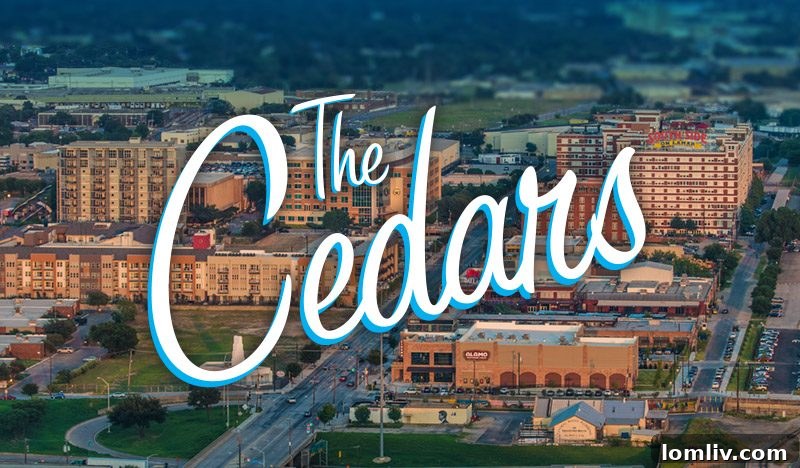
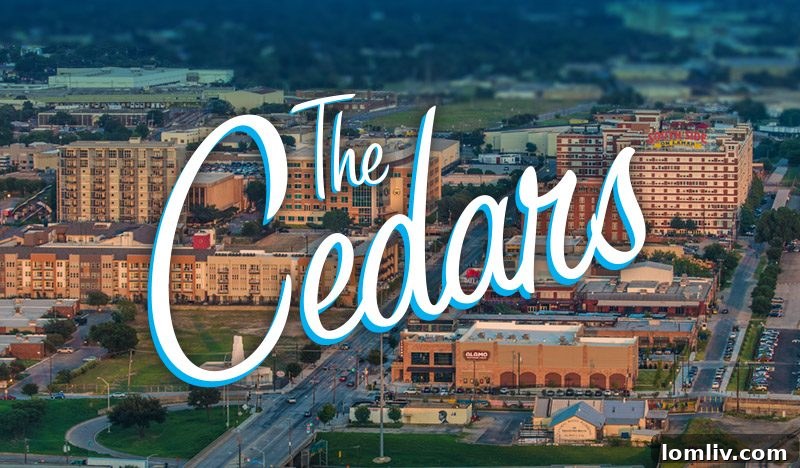
In a recent session that highlighted the ongoing debate surrounding urban development and public funding, the Dallas City Council gave its approval to a substantial $1.85 million economic development grant. This significant sum is earmarked to alleviate the “extraordinary cost” associated with essential off-site wastewater infrastructure upgrades for a new mixed-use development taking shape in the rapidly evolving Cedars neighborhood. The decision, however, was not without controversy, notably facing strong opposition from District 12 Councilwoman Cara Mendelsohn, who raised concerns about fiscal responsibility and the broader implications of such incentives.
Councilman Jesse Moreno, who proudly represents the dynamic Cedars area, passionately advocated for the grant’s approval. He underscored the critical demand for diverse housing options within this rapidly expanding district, emphasizing that the project would address a pressing community need. Furthermore, Moreno highlighted another compelling benefit: the grant presented a crucial opportunity to preserve a historically significant Dallas Power & Light building, integrating a piece of the city’s heritage into its future. This dual objective of fostering growth and preserving history became a central point of his argument for the project’s endorsement.
The journey to this grant approval began earlier, when the Dallas City Council had already given its initial blessing to the Public Facility Corporation (PFC) project last summer. Interim Economic Development Director Kevin Spath provided insight into the sequence of events that led to the developer’s request for additional financial assistance. “The developer started to go through plan review and was told by the city that he was responsible for the replacement of 3,000 linear feet of offsite wastewater line,” Spath explained, detailing the unexpected financial burden. “This line extends from Heritage Village all the way down to the project site. Consequently, they approached us and applied for additional incentives to help bridge that significant financial gap.”
Developers from Low Ervay, the entity behind this ambitious venture, have estimated the total cost for the required wastewater line improvements to be approximately $3 million. While they have already secured some preliminary funding assistance from Dallas Water Utilities, the remaining costs are substantial. Spath further clarified that these crucial wastewater infrastructure upgrades are not solely for the benefit of the new mixed-use development but will also positively impact and serve other properties situated within the surrounding Cedars area, underscoring a wider community benefit.
The comprehensive development project is designed to feature two distinct, yet complementary, components. The first is “Marcus at Cedars,” envisioned as a modern four-story multi-family building that will offer 76 thoughtfully designed mixed-income units. This component will be located at 2000 South Ervay Street, contributing much-needed residential capacity to the area. The second, and equally significant, component is “Power & Light at Cedars,” which will transform the historic structure into a vibrant five-story multi-family building, housing an impressive 310 mixed-income units. Together, these buildings are set to redefine urban living in The Cedars, blending contemporary design with historical character and catering to a diverse demographic.
Mendelsohn Raises Fiscal Concerns Over Additional Incentives in Dallas
District 12 Councilwoman Cara Mendelsohn has consistently voiced strong opposition to the city’s approach to economic development incentives, particularly when they involve additional costs that she believes should be borne by developers. Her recent objections to the $1.85 million grant for the Cedars development further solidified her position, sparking a broader discussion about fiscal responsibility and the true cost of urban growth in Dallas. Mendelsohn argued that, as a general principle, when developers encounter unexpected additional costs during a project, it is typically their responsibility to absorb these expenses. This fundamental expectation, she believes, maintains accountability and prevents the burden from shifting unnecessarily to taxpayers.
A central pillar of Mendelsohn’s concern revolves around the Public Facility Corporation (PFC) financing structure, which is already in place for this Cedars development. She meticulously pointed out that, due to this specific financial arrangement, the property will be effectively removed from the city’s tax rolls for an extensive period of 75 years. This long-term exemption from property taxes, she argued, represents one of the most generous benefits the city can bestow upon a private developer. The implications are significant, as she poignantly remarked during a June 12 City Council meeting, “We are giving away the most generous benefit that this city offers… Nobody in this room will still be alive when this expires.” This statement starkly highlighted the generational impact of the decision, emphasizing that the financial repercussions would extend far beyond the current political landscape.

Mendelsohn’s concerns were amplified by the city’s current budgetary climate. “We’re all looking very closely at the budget realizing we need to be very careful with our dollars,” she asserted, drawing a direct link between the city’s financial prudence and the approval of this additional grant. Her rhetorical question—”and now we’re going to pay for their sewage also?”—encapsulated her frustration, implying that the city was venturing into an area of spending that went beyond justifiable public benefit. She reminded her colleagues that she had already voted against the initial PFC deal for the project, making her stance clear. “I already voted no on the PFC deal,” she stated, “and I’m not going to agree to pay even more for this. This is a very careless way, I believe, for us to spend our tax dollars.”
Further elaborating on the financial impact, Mendelsohn highlighted that any revenue generated directly by the project would be directed back into the Public Facility Corporation itself, rather than flowing into the city’s general fund, where it could benefit broader municipal services. This structural arrangement, she argued, effectively creates a financial deficit for the city’s general operating budget. “We are creating a tax increase on everybody else,” she contended, articulating her belief that by foregoing direct tax revenue from such projects, the city inadvertently places a heavier tax burden on its other citizens and businesses. She concluded by reiterating her consistent criticism of the council’s broader tax policy as it pertains to Public Facility Corporations, stating, “I am actually being critical of this body’s tax policy as it relates to PFCs, as I have repeatedly almost every single time we vote on this.” Her steadfast opposition underscores a fundamental disagreement on how Dallas should strategically invest its public funds and manage its long-term financial health, particularly in the context of rapid urban expansion.
In Defense of Public Facility Corporation Projects: Balancing Growth and Community Needs
While Councilwoman Mendelsohn’s criticisms of the Public Facility Corporation (PFC) model and additional economic incentives are significant, several council members and city officials offered robust defenses, emphasizing the strategic importance and long-term benefits of such projects for Dallas. This counter-narrative frames PFC deals not as careless spending, but as necessary tools for fostering vital urban development, addressing housing needs, and stimulating economic growth, especially in challenging market conditions.
District 1 Councilman Chad West provided a clear articulation of how the city does, in fact, generate revenue from PFC projects, despite the properties being removed from traditional tax rolls for a period. He clarified that revenue streams are established through structured rent payments and annual lease payments made to the PFC over the full 75-year duration of the agreement. This mechanism ensures a steady, albeit different, form of financial return to the city. West robustly defended the strategic rationale behind these deals, stating, “PFC deals are being recommended and approved for a reason.” He highlighted the contemporary challenges faced by developers, particularly the escalating costs of construction. “As we know from rising construction costs, there is sometimes a delta,” he explained, referring to the financial gap between project costs and viable market returns. “But sometimes the projects can’t be built without subsidies to make them work.” This perspective frames incentives as critical enablers for projects that would otherwise be economically unfeasible, yet are essential for community development. West further emphasized the city’s role in addressing these gaps when projects align with key public benefits. “When you have a benefit like affordable housing for the city, we have a responsibility in some sense to meet that delta,” he concluded, positioning the city as a facilitator of crucial social infrastructure.
Adding another layer to the defense, District 4 Councilwoman Carolyn King Arnold provided important context regarding the allocation of city resources and the equitable distribution of development benefits. She clarified that specific 2012 bond funds had been strategically designated for targeted economic development and housing purposes, particularly within the southern part of the city and in areas identified as transit-oriented. This historical allocation underscores a deliberate policy choice to direct investment to specific geographies that have historically been underserved or possess significant growth potential. Arnold passionately expressed her support for the Cedars project, linking it directly to these broader equity and development goals. “I’m going to support this project, but I had to disturb the peace this morning around the southern sector and what we need,” she remarked, highlighting her commitment to advocating for her constituents. Her statement emphasized the need to ensure that these significant public investments translate into tangible benefits for the communities they are intended to serve. “We’re going to make sure that the voters who voted for this item, particularly in the southern sector, get their fair share,” Arnold asserted, reinforcing the council’s obligation to deliver on promises made to residents who supported these bond initiatives.
The debate over the Cedars development grant, therefore, encapsulates a fundamental tension in urban planning and governance: how to balance the imperative for growth and the creation of affordable housing with the need for fiscal prudence and equitable distribution of public resources. Proponents of the grant argue that such incentives are not merely handouts but strategic investments that catalyze development in key areas, unlock housing opportunities, preserve historical assets, and ultimately yield long-term community benefits that outweigh the immediate financial concessions. The Public Facility Corporation model, in this view, becomes an essential tool in a city’s arsenal to navigate complex economic landscapes and achieve ambitious development goals. These discussions underscore the multifaceted challenges and strategic considerations inherent in managing a rapidly growing metropolis like Dallas.
The ongoing scrutiny of Public Facility Corporation projects within Dallas City Hall reflects a broader commitment to transparency and accountability in economic development. To further address council members’ questions and public concerns, city officials have confirmed that a dedicated presentation on Public Facility Corporation projects is scheduled for the council’s Housing and Homelessness Solutions Committee in August. This upcoming briefing, as outlined in a June 21 memorandum, is expected to provide a comprehensive overview of the PFC framework, its financial mechanics, its impact on the city’s budget, and its effectiveness in achieving policy goals related to housing and economic development. Such ongoing dialogues are crucial for refining Dallas’s approach to urban growth, ensuring that development is not only robust but also sustainable, equitable, and aligned with the long-term vision for all its residents. The outcome of these discussions will undoubtedly shape future policy decisions and the trajectory of urban expansion in Dallas.