By Lydia Blair
Special Contributor
The Unforeseen Impact of a Federal Government Shutdown on the DFW Real Estate Market
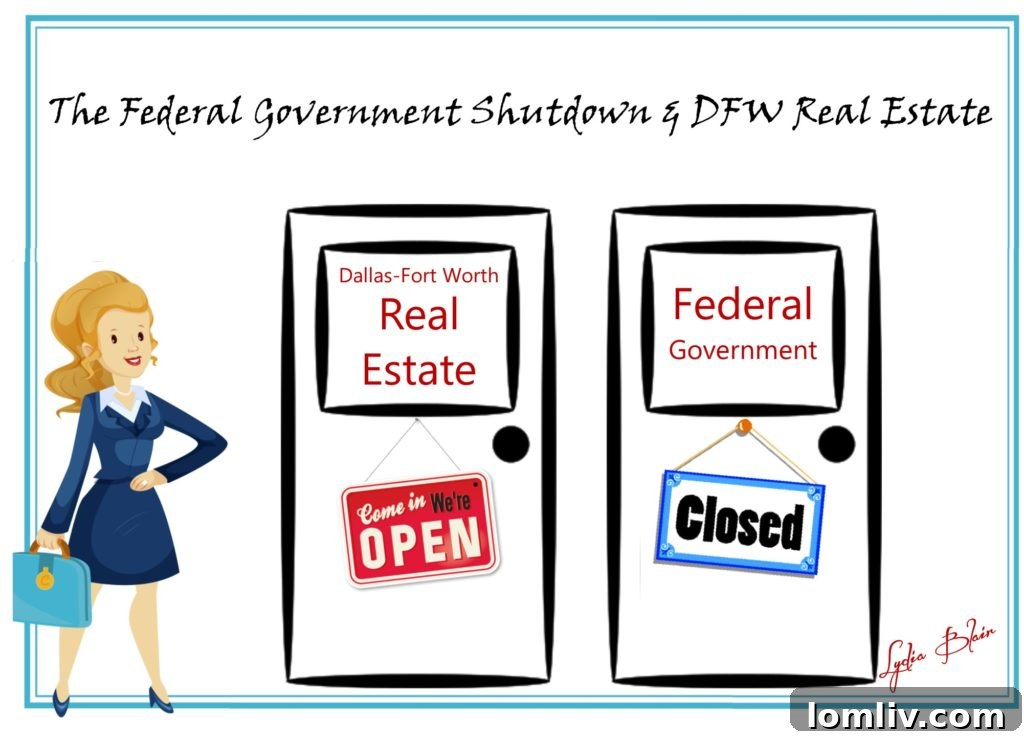
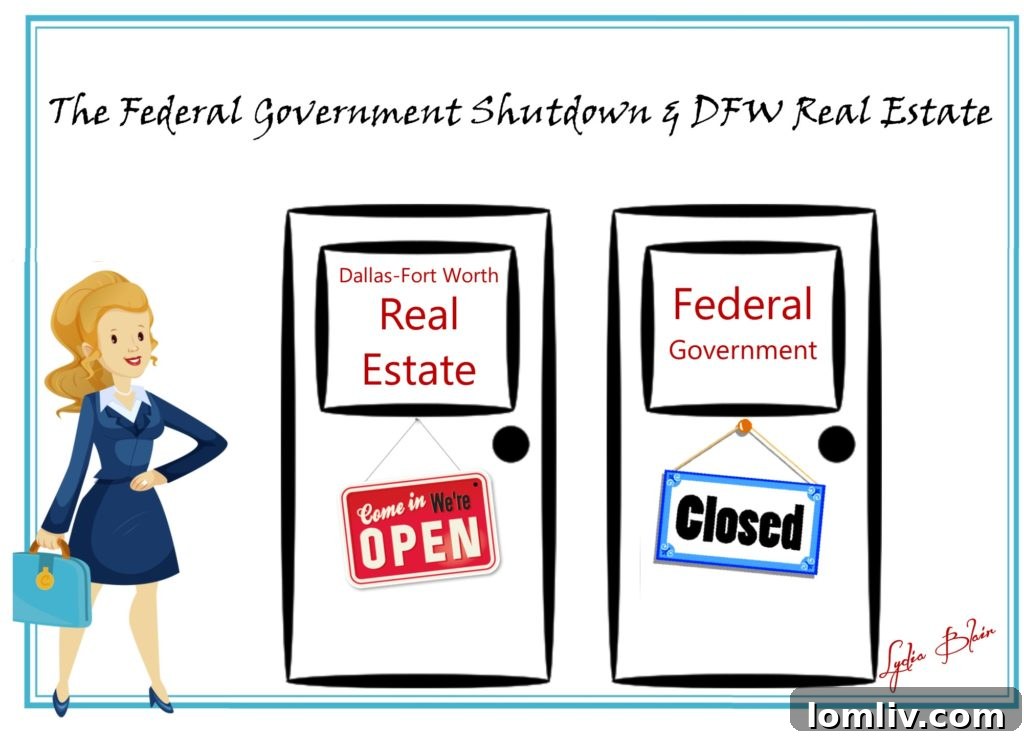
In the complex and ever-evolving landscape of the United States, a federal government shutdown, while infrequent, casts a wide net of uncertainty across various sectors. The U.S. government rarely halts its operations, yet when it does, the ripple effect can be felt far and wide. While some areas of the economy might experience immediate and profound disruptions, others, like the robust real estate market, often face a more subtle, yet equally concerning, series of challenges. For the Dallas-Fort Worth (DFW) real estate market, the initial impact on title businesses might seem minimal, but the longer such a shutdown persists, the greater the likelihood of significant negative consequences.
Understanding the intricacies of how a government shutdown can slow down or complicate real estate transactions is crucial for buyers, sellers, and industry professionals alike. From the nuances of mortgage approvals to the critical process of property title clearances, federal involvement is more pervasive than many realize. This article delves into the specific ways a government shutdown can reverberate through the DFW real estate scene, offering insights into potential delays, challenges, and what stakeholders can expect if these events linger.
Understanding the Federal Government Shutdown and Its Initial Ramifications
What is a Government Shutdown?
A federal government shutdown occurs when Congress fails to pass appropriation bills or continuing resolutions to fund government operations by the deadline. Essentially, without approved funding, non-essential government agencies and services cease to operate. This typically involves the furloughing of “non-essential” federal employees, meaning they are sent home without pay until funding is restored. Essential services, such as national security, emergency services, and certain critical public safety functions, usually continue, but the majority of federal operations come to a standstill. This often leads to disruptions in services that, while not immediately life-threatening, are fundamental to the daily functioning of the economy and society.
The Immediate Ripple Effect
The immediate aftermath of a government shutdown sends ripples through various segments of the economy. While the stock market might react with volatility and consumer confidence could dip, the real estate sector feels a distinct type of pressure. Many federal agencies play direct or indirect roles in real estate transactions, from loan approvals to critical documentation. Initially, the DFW real estate market might not feel a seismic shift, primarily because many critical processes are handled at state and local levels. However, as days turn into weeks, the cumulative effect of stalled federal services can create bottlenecks that lead to significant delays and complications, impacting everything from individual home purchases to broader market stability.
How a Shutdown Disrupts the Mortgage and Financing Landscape
One of the most immediate and significant impacts of a federal government shutdown on real estate is felt within the mortgage and financing sector. The process of securing a home loan is heavily reliant on federal agencies for verification, approval, and oversight. When these agencies are operating at minimal capacity or are entirely furloughed, the entire timeline for loan processing can be severely disrupted, directly affecting homebuyers and sellers.
Key Federal Agencies Affected: HUD, IRS, and Social Security Administration
A typical government shutdown targets all “non-essential” government employees, and this often includes critical personnel within departments vital to the mortgage industry. For instance, a significant portion of the workforce at the Department of Housing and Urban Development (HUD) is frequently furloughed during a shutdown, sometimes as much as 95 percent. HUD is pivotal for overseeing various housing programs, including FHA (Federal Housing Administration) loans, which are a cornerstone for many first-time homebuyers and those with lower down payments. Delays in HUD operations can mean that FHA loan approvals are stalled, property appraisals under FHA guidelines are postponed, and even basic inquiries go unanswered.
Beyond HUD, the Internal Revenue Service (IRS) and the Social Security Administration (SSA) also experience significant slowdowns. The IRS is crucial for income verification, providing tax transcripts that lenders require to confirm a borrower’s financial standing. The SSA is essential for identity verification, ensuring the borrower’s Social Security Number is legitimate and their identity is accurately established. With employees in these departments either furloughed or operating with a skeleton crew, the turnaround time for these vital verifications can extend from days to weeks, creating a frustrating bottleneck in the loan approval process.
The Verification Bottleneck: Income and Identity Checks
Mortgage companies are legally and financially obligated to rigorously confirm all application information before approving a loan. This due diligence includes verifying a borrower’s income, employment history, and identity. The inability to promptly access necessary records from the IRS and SSA means that lenders cannot complete their verification checks. While some information might still be accessible through automated systems or minimal staff, the comprehensive verification process often grinds to a halt. This leads to a critical delay in issuing “clear to close” notices, which is the final step before a loan can be funded.
For borrowers, this means waiting in limbo, sometimes for an indeterminate period, until federal operations resume. These delays are not merely inconvenient; they can jeopardize a home purchase, especially if rate locks expire or if the seller has a strict timeline for closing. The uncertainty created by such bottlenecks can also deter new buyers from entering the market, further cooling demand.
Potential Delays for Homebuyers and Sellers
The direct consequence of these verification bottlenecks is a cascade of delays impacting both homebuyers and sellers. Buyers, having gone through the exhaustive process of finding their dream home, applying for a loan, and receiving initial pre-approval, could face unexpected setbacks in obtaining final loan approval. This, in turn, inevitably leads to delays in the closing process. Sellers, who might have their own timelines for moving, purchasing a new home, or managing existing financial obligations, must be prepared to adjust. Contingency clauses might need to be invoked, or new agreements negotiated, to accommodate these unforeseen extensions. The emotional and financial stress associated with these delays can be substantial, making careful communication and preparation paramount for all parties involved in a real estate transaction during a shutdown.
The Role of Title Companies Amidst Federal Uncertainty
While the mortgage process bears the brunt of a federal shutdown, title companies also navigate a unique set of challenges and responsibilities. Fortunately, many of their core operations remain largely unaffected, but specific areas can introduce significant hurdles.
Business as Usual for State and Local Level Operations
A significant silver lining during a federal government shutdown for the real estate industry is that most of the governmental entities title companies interact with are at the state and local levels, not federal. This means that critical functions related to title searches and closings can largely proceed as normal. Title plants, which maintain vast databases of property records, can still access information on property deeds, existing liens, judgments, and easements recorded at the county level. The offices of county clerks and recorders typically remain open, allowing for the filing of new deeds and other property documents. Local tax statements can still be confirmed, and the operations of surveyors, HOA management companies, and appraisers usually continue without interruption.
Therefore, for the bulk of a title search—which involves examining the chain of title, identifying property boundaries, and ensuring there are no undisclosed burdens on the property—it’s business as usual. This allows title companies to continue their essential work of preparing for closings, assessing property risks, and ensuring the legality of transactions for properties with clear, localized histories.
Navigating the Challenges: Federal Liens and Payoff Confirmations
Where title companies encounter significant difficulty is in securing payoff amounts for certain types of federal liens. The fundamental role of a title company is to provide clear title, ensuring that a property is free from any encumbrances that could challenge its ownership. This necessitates confirming the payoff and release of all existing liens before insuring the title and closing the transaction. If a federal government entity holds a lien on a property, and that agency is impacted by a shutdown, confirming the payoff amount becomes a formidable obstacle.
IRS Tax Liens
One common example is an IRS tax lien. If a seller has outstanding federal tax debts, the IRS may place a lien on their property. To clear the title, the exact payoff amount of this lien must be obtained directly from the IRS. During a shutdown, with IRS personnel furloughed or operating minimally, obtaining this crucial information can be impossible. A title company cannot provide a clear title or issue title insurance without absolute certainty that the federal tax lien has been satisfied or will be satisfied at closing.
HUD Loans and Property Liens
Similarly, properties with existing HUD loans or other forms of federal government-backed financing can present challenges. If a previous owner obtained a loan through HUD programs and there’s an outstanding balance or a lien associated with it, the payoff amount must come directly from HUD. With HUD departments shut down, securing this figure can lead to indefinite delays. The title company’s inability to confirm and facilitate the payoff of these federal liens creates an impasse, as they cannot proceed with insuring the title, which is a prerequisite for nearly all real estate transactions.
In essence, the transaction stalls. There is simply nothing the title company can do until the relevant federal government departments are back in full operation and can provide the necessary information. This highlights the delicate balance between federal and local functions in the real estate ecosystem.
Broader Economic Implications and the Outlook for DFW Real Estate
While the immediate impact of a short federal government shutdown might be contained, prolonged closures carry significant economic consequences that extend far beyond delayed real estate transactions.
Short-Term vs. Long-Term Shutdown Effects
Experts widely agree that a shutdown lasting more than two weeks can negatively affect economic growth throughout the country. In the short term, the direct costs include furloughed federal workers losing wages, which impacts consumer spending. Indirectly, businesses reliant on federal contracts or permits experience disruptions. For real estate, a brief shutdown might cause a few closing delays, but the market typically absorbs this without major shifts. However, a long-term shutdown introduces a different kind of ripple. Consumer confidence erodes as economic uncertainty grows. Potential homebuyers might postpone their decisions, fearing job instability or future economic downturns. Sellers might hesitate to list their homes, anticipating a slowdown in buyer demand.
This prolonged uncertainty can lead to a contraction in housing market activity, potentially softening prices and increasing inventory. The DFW real estate market, known for its dynamic growth and strong demand, could face headwinds if a shutdown persists. While DFW’s diverse economy and robust job market offer some resilience, sustained federal paralysis could still dampen enthusiasm and slow its impressive pace of growth.
Protecting Your Real Estate Transaction During a Shutdown
For those engaged in a real estate transaction during a federal shutdown, proactive communication and flexibility are paramount. Buyers should maintain close contact with their lenders to understand any potential impacts on loan processing and ensure their rate locks remain valid. It’s advisable to factor in potential delays and be prepared for extended closing timelines. Sellers should work with their real estate agents and title companies to identify any federal liens or federal loan involvements early in the process. Having contingency plans, such as agreeing to extended closing dates, can help manage expectations and avoid transaction breakdowns.
Real estate professionals, including agents, lenders, and title officers, play a crucial role in guiding clients through these challenging times by providing accurate information, managing expectations, and exploring all available avenues to keep transactions moving forward as smoothly as possible.
Expert Insights and Navigating the Current Climate
The DFW real estate market has consistently demonstrated resilience, but even the most robust markets are not immune to external shocks. While the immediate upset from the current shutdown might be minimal in DFW, the cumulative effect of prolonged federal inaction is a concern for all stakeholders. Industry experts emphasize the need for vigilance and adaptability. Staying informed about the duration and specific impacts of the shutdown is critical for making timely decisions and mitigating potential risks. Ultimately, the ability of the federal government to resolve its funding issues promptly will dictate the severity and longevity of the shutdown’s influence on the housing market.
The opinions expressed are of the individual author for informational purposes only and not for the purpose of providing legal advice. Contact an attorney to obtain advice for any particular issue or problem.
About the Author: Lydia Blair
Lydia Blair (formerly Lydia Player) brings a wealth of experience and expertise to the real estate and title industry. Before transitioning to the title side of the business in 2015, Lydia spent a decade as a highly successful Realtor, navigating countless transactions and building a deep understanding of the market from a client-facing perspective. Her journey in real estate began even earlier, with extensive personal experience in buying, remodeling, and selling homes – a precursor to the modern “house flipping” phenomenon. This hands-on involvement gave her invaluable insights into property value, renovation potential, and the intricacies of the buying and selling process.
With her diverse background, Lydia has experienced the real estate closing process countless times, serving in various capacities: as a buyer, a seller, a Realtor, and now as an Escrow Officer for Carlisle Title. In her current role, Lydia thrives on solving complex problems and efficiently cutting through bureaucratic “red tape.” Her comprehensive understanding of real estate transactions from multiple vantage points enables her to foresee potential issues and proactively work towards smooth, successful closings. For Lydia, one of the most rewarding aspects of her job is the satisfaction of handing people keys to their new home or a check from their sale, symbolizing the culmination of a significant life event.