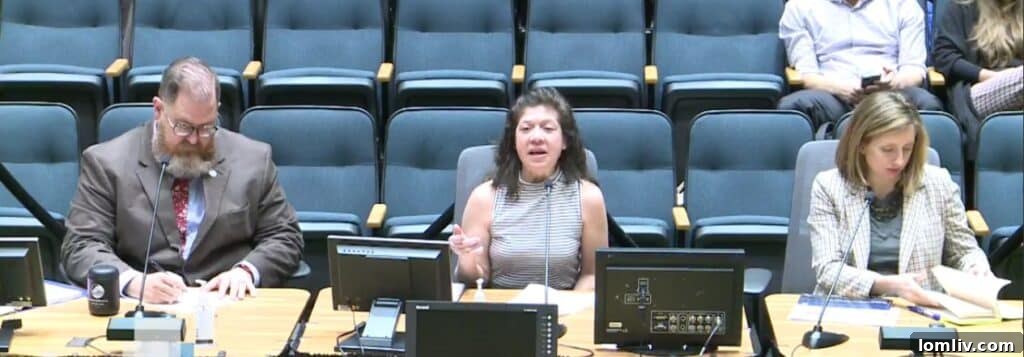
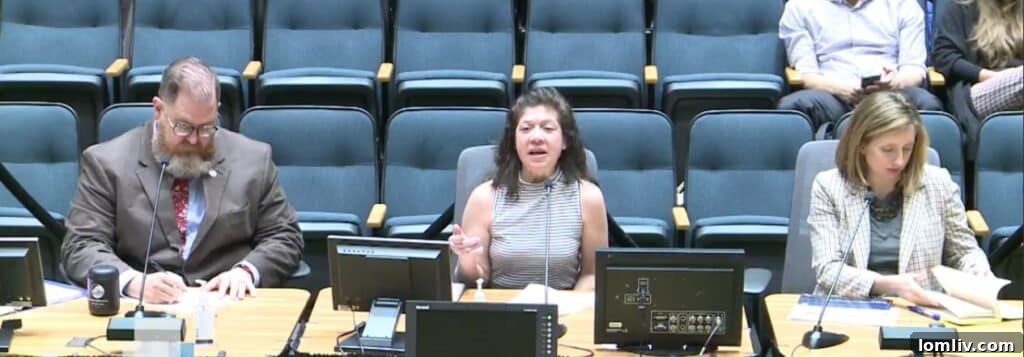
Dallas, a vibrant and rapidly expanding metropolitan hub, is currently navigating a significant paradox: while it boasts considerable development opportunities and economic growth, a substantial segment of its population continues to grapple with pervasive poverty and profound housing insecurity. This intricate challenge was brought into sharp focus during a recent, pivotal session of the Dallas City Council’s Housing and Homelessness Solutions Committee. Following an exhaustive review and discussion of the Child Poverty Action Lab’s (CPAL) comprehensive study on the intricate dynamics of the Dallas rental market, committee members arrived at a stark and critical conclusion. The city, despite its apparent abundance of housing stock, faces an urgent need to address the deeply rooted issues of poverty that directly impede residents’ access to stable, affordable, and appropriate housing. This revelation underscores the imperative for evidence-based strategies to bridge the critical gap between housing availability and the pressing needs of the city’s most vulnerable communities, ensuring that growth benefits all residents.
The committee, under the astute leadership of District 2 Councilman Jesse Moreno, engaged in an intensive dialogue centered on the formal adoption of CPAL’s robust data. This discussion was not merely procedural; it represented a strategic commitment to integrate this crucial information into the foundational framework for developing actionable strategies for the forthcoming Dallas Housing Policy 2033. The move signifies a clear understanding that future housing initiatives must be grounded in empirical evidence, moving beyond anecdotal observations to systematically address the city’s most acute housing and affordability challenges. By formally adopting CPAL’s findings, Dallas aims to craft a housing policy that is not only ambitious but also precisely targeted and highly effective, ensuring that every decision is informed by comprehensive data.
Unpacking Dallas’s Significant Housing Affordability Gap
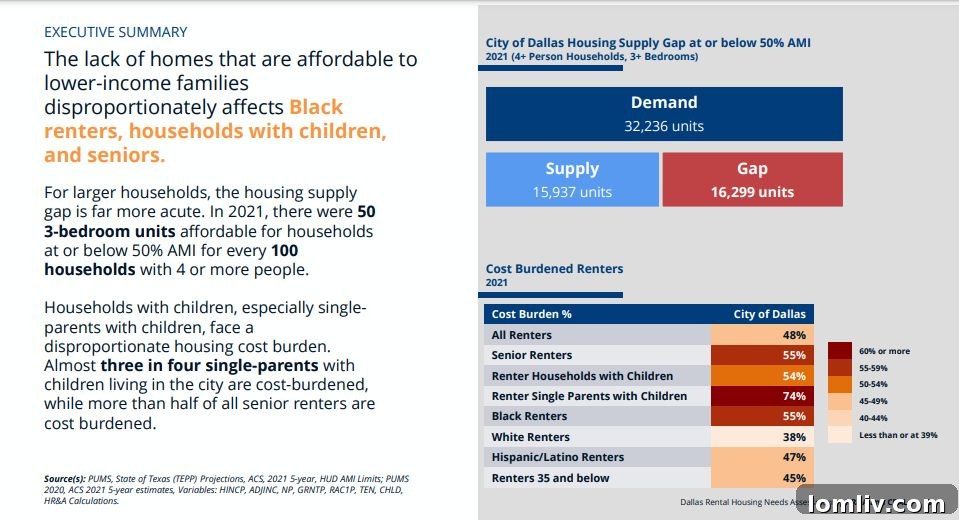
At the heart of CPAL’s illuminating report, presented by Senior Director Ashley Flores, lies a deeply concerning reality: Dallas currently faces a profound housing gap, with a deficit exceeding 33,600 units between the available rental properties and the actual demand from its renter population. This substantial shortfall creates immense pressure on the market, but its impact is far from evenly distributed. The data unequivocally shows that this deficit disproportionately affects larger households—specifically, families comprising four or more individuals—who earn incomes at or below 50 percent of the Area Median Income (AMI). For these families, the constraints within Dallas’s rental housing market are not just challenging; they are often insurmountable, leading to precarious living situations. The 50% AMI threshold is particularly critical, as it defines a segment of the population for whom finding safe, stable, and appropriately sized housing becomes an exhaustive and often futile search.
“When our analysis zeroed in on three-bedroom rental units that would qualify as affordable for households earning at or below 50 percent AMI, the findings were stark: we discovered that the existing supply accounts for only about half of what is truly needed,” Flores articulated with a sense of urgency, highlighting the severe scale of the problem. She further elaborated on the human element of this crisis: “Families, in particular, are encountering extraordinary difficulties in their search for rental units that simultaneously meet the dual criteria of being both affordable and appropriately sized for their household needs. This isn’t merely a matter of economic strain; it’s about the fundamental inability to secure living spaces large enough to accommodate growing children and multiple generations. The scarcity of such units contributes directly to overcrowding, housing instability, and a pervasive reduction in the overall quality of life, effectively perpetuating and intensifying cycles of poverty across Dallas neighborhoods.” The struggle to find adequate family housing forces many into substandard conditions or pushes them further away from essential services and job centers.
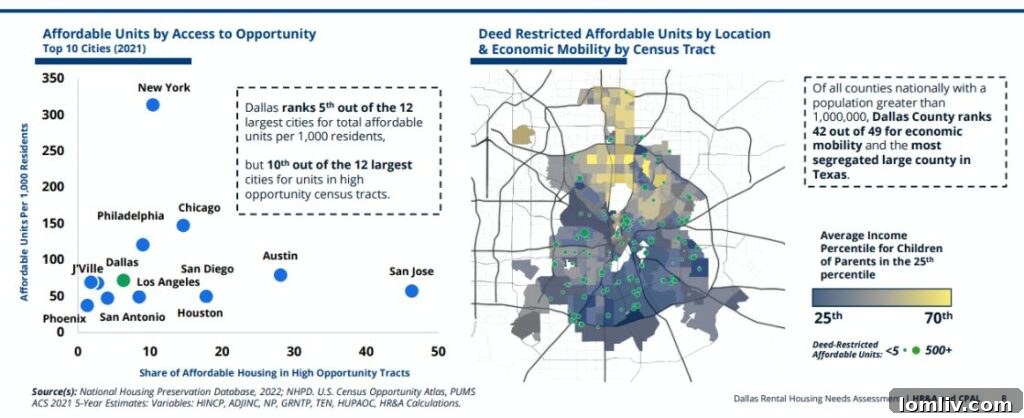
Beyond the sheer numerical deficit, the CPAL report meticulously detailed disturbing trends within the broader Dallas rental market. Rents across the city are experiencing an unrelenting upward trajectory, often escalating at rates that far outstrip wage growth for a significant portion of the workforce. This affordability crisis is further compounded by a critical spatial imbalance: income-restricted housing, specifically designed to be accessible to lower-income households, is heavily concentrated within the city’s southern sector. Conversely, the vast majority of new market-rate multifamily developments, which often comprise luxury apartments, are predominantly materializing in the affluent “city center” and along the high-value Dallas North Tollway corridor. As Ashley Flores critically observed, these new developments, while increasing the total housing stock, are conspicuously absent from the areas where the need for genuinely affordable and accessible housing is most acute. This profound geographical disparity not only creates a severe spatial mismatch between where people need to live and where new housing is being built but also deepens existing socioeconomic segregation, further entrenching inequalities and limiting opportunities for Dallas’s low-income residents.
This wealth of critical information arrives at a particularly opportune moment for the city’s leadership. Thor Erickson, Assistant Director of Housing and Neighborhood Revitalization, indicated that city officials are actively engaged in the crucial process of identifying and selecting specific target investment areas for future affordable housing initiatives. The direct incorporation of CPAL’s granular findings into the forthcoming Dallas Housing Policy will enable the city to strategically allocate its resources, implement targeted incentives for developers, and ensure that new housing projects are not just built, but built precisely where they are most needed and for the populations most in need. The ultimate objective is to foster a more equitable distribution of affordable housing across Dallas, thereby cultivating stronger, more resilient, and genuinely inclusive neighborhoods that support all residents, regardless of their income level.
Integrating CPAL Data for a Robust Dallas Housing Policy 2033
The comprehensive report from the Child Poverty Action Lab, meticulously developed in close collaboration with seasoned consultants from HR&A Advisors, delivers two unequivocal and foundational insights that are set to shape Dallas’s housing future. Firstly, it undeniably highlights a substantial and ever-widening gap between the existing supply of affordable housing units and the escalating demand from low-income renters across the city. This imbalance creates a chronic shortage that leaves countless families struggling to find stable housing. Secondly, the report critically points out that even where affordable housing does exist, it is not consistently accessible across all areas of the city, thereby erecting significant barriers to equitable community development and economic opportunity. These two core findings are not merely observations; they are paramount for the judicious and impactful formulation of a truly effective Dallas Housing Policy 2033, ensuring it addresses the root causes of the housing crisis.
To further empower Dallas policymakers, urban planners, and various community stakeholders with actionable tools, CPAL recently unveiled an innovative and highly practical production calculator. This digital tool serves as an indispensable companion to their thorough rental needs assessment. The calculator is specifically engineered “to help vividly illustrate how local gap funding can be strategically utilized to effectively support the production of critically needed affordable housing.” By offering dynamic data visualizations and scenario planning capabilities, it provides tangible evidence of how targeted investments can directly stimulate the development of affordable housing, guiding decisions on the most impactful ways to deploy financial resources and overcome existing market failures to create a more equitable housing landscape.
Addressing the Growing Homeownership Deficit in Dallas
The pervasive housing challenge in Dallas extends significantly beyond the rental market, reaching deep into the aspirations of homeownership, as powerfully articulated by Lisa Neergaard, Assistant Director of buildingcommunityWORKSHOP (bcWORKSHOP). During her presentation, Neergaard underscored that the long-cherished dream of owning a home has become an increasingly elusive goal for a growing number of Dallas residents. The city currently faces an alarming deficit of approximately 16,000 affordable single-family homes, painting a stark and concerning picture of the systemic barriers to wealth building, intergenerational stability, and long-term security for countless families in the region. This deficit not only impacts individual households but also has broader implications for community stability and economic equity.
“Similar to the dynamics observed within the rental market, our comprehensive analysis reveals a critical disconnect: while Dallas may technically possess a sufficient number of overall housing units, a severe shortage exists when it comes to housing that is genuinely affordable for our median- and low-income households,” Neergaard meticulously explained. She delved further into the core economic drivers of this crisis: “We frequently engage in discussions about how the availability and escalating cost of land profoundly influence overall housing expenses. This direct correlation is strikingly reflected in the types of homes currently being constructed across the city. Any potential cost savings that might theoretically have been realized through the development of smaller lot sizes are, regrettably, being entirely absorbed by the construction of larger, more expensive houses. Consequently, what consumers are ultimately acquiring is not necessarily a more affordable housing product; rather, they are simply receiving a bigger house situated on a smaller piece of land, a trend that unfortunately perpetuates and exacerbates the existing affordability crisis.” This phenomenon highlights a market failure where density increases but the benefits of reduced land footprint do not translate into lower prices for the end buyer, making homeownership a distant reality for many.
Neergaard also made a crucial point regarding the evolving nature of household needs, noting that the traditional housing model of a standard three-bedroom, two-bath unit no longer adequately serves the diverse and dynamic requirements of Dallas’s rapidly changing population. “This reality underscores an urgent and undeniable necessity for a far greater variety of housing stock within our city’s development pipeline,” she asserted. “To truly address the broad spectrum of housing needs, we must actively encourage, incentivize, and facilitate the widespread development of alternative housing types, such as thoughtfully designed condominiums, efficient duplexes, and versatile townhomes. These diversified options can strategically offer a wider range of price points, varied sizes, and flexible configurations, thereby catering more effectively to the multifaceted compositions of modern households and their diverse income levels. This diversification is not just about expanding options; it’s about fundamentally enhancing overall housing accessibility and affordability, making housing a reality for more Dallasites.”
Proactive Solutions and Essential Policy Reforms for Dallas Housing
In direct response to these compelling findings and the urgent need for action, District 1 Councilman Chad West underscored the impending comprehensive code reform, a significant undertaking for the city. However, he also passionately advocated for the immediate implementation of “low-hanging fruit”—practical, achievable measures that can yield swift positive impacts. Specifically, he suggested supporting initiatives that would simplify and significantly accelerate the process of building fourplexes on land parcels already zoned for such multi-unit development. This pragmatic approach would allow the city to rapidly increase housing density and, critically, enhance affordability in specific areas without necessitating a prolonged and complex overhaul of the entire zoning regulatory framework. Such targeted reforms could unlock immediate opportunities for creating more moderate-income housing, providing much-needed relief to families struggling to find suitable homes.
Councilman West has been a consistent and vocal critic of the perceived lack of clearly defined, quantifiable, and targeted goals within the initial drafts of Dallas Housing Policy 2033. To address this fundamental concern and ensure broad community input, a robust public engagement effort is currently in full swing, actively gathering extensive feedback from residents, community leaders, and various stakeholders across the city. A comprehensive presentation synthesizing this crucial feedback is strategically scheduled before the Housing and Homelessness Solutions Committee in January. Further solidifying his commitment to data-driven policy, West, during Tuesday’s impactful HHS briefing, formally proposed that the City Council officially adopt the CPAL report. This critical endorsement would serve to seamlessly integrate the lab’s extensive and rigorously gathered data as official benchmarks and concrete targets within the city’s housing policy, thereby establishing clear metrics for measuring success and ensuring accountability for progress.
“A significant component that I felt was notably absent from our policy framework was a robust and evidentiary foundation of data to accurately inform and logically justify what those specific goals should genuinely entail,” Councilman West articulated with conviction. “I am absolutely convinced that CPAL’s meticulously collected data can serve as exceptional, quantifiable benchmarks for all our future housing endeavors. If we, as a collective council, were to make the decisive choice to formally adopt CPAL’s data as our official targets, the subsequent and equally crucial step would be to strategically determine the most effective methods for implementing these targets and meticulously tracking our progress over time.” This visionary move would fundamentally transform the city’s housing policy from a set of general aspirations into a tangible, measurable, and highly accountable plan, fostering greater transparency and allowing for continuous, data-backed evaluation of Dallas’s ongoing efforts to resolve its complex housing challenges.
Thor Erickson confirmed that the invaluable data meticulously compiled by both CPAL and bcWORKSHOP is already being actively leveraged to inform key municipal initiatives. Specifically, this robust data has played an instrumental role in guiding the housing activity subcommittee of the 2024 Community Bond Task Force, demonstrating the city’s proactive commitment to harnessing evidence-based insights from the outset. “Once we achieve a clear and granular understanding of these designated targeted investment areas, a deep and thorough dive into all pertinent data will be meticulously undertaken,” Erickson affirmed with certainty. “We are unequivocally committed to forging strong partnerships with both CPAL and bcWORKSHOP to meticulously analyze and comprehensively understand the prevailing market conditions within these areas. This vital collaborative effort is absolutely essential because it will furnish us with the precise, data-driven insights needed to accurately inform what specific types of housing are most critically required in those particular markets. This understanding, in turn, will enable us to more effectively recruit and strategically guide developers to build exactly what our community needs, ensuring that development aligns perfectly with genuine demand and contributes meaningfully to solving our housing crisis.” This proactive, intelligence-led approach aims to optimize the impact of city resources and developer contributions, fostering truly responsive urban development.
Availability Versus Affordability: Dallas’s Central Housing Dilemma
The ongoing discourse surrounding Dallas’s intricate housing landscape frequently oscillates between two distinct, yet inextricably linked, critical issues: the sheer availability of housing units and their inherent affordability. District 12 Councilwoman Cara Mendelsohn brought a nuanced perspective to this debate, cogently pointing out that “affordable housing does not necessarily need to be distributed equally among all council districts.” She emphasized that her specific area in North Dallas, which extends into portions of Collin and Denton counties, already boasts “plenty of affordable apartments.” This observation suggests that the core problem might not be a citywide scarcity of *all* types of housing units, but rather a significant misdistribution of affordable options or, more acutely, a severe lack of affordability at precise income tiers that align with the greatest community need.
Councilwoman Mendelsohn further delved into the widely accepted definition of “cost-burdened” households, which, even according to U.S. Census standards, refers to those individuals or families dedicating 30 percent or more of their gross income to housing expenses. She proposed a critical re-evaluation of this conventional threshold, suggesting that perhaps contemplating 35 percent or even 40 percent as the benchmark for defining cost-burdened households might offer a more realistic, accurate, and ultimately actionable understanding of the profound financial strain experienced by a multitude of families in Dallas. Such an adjustment to the definition could fundamentally alter the perceived scope and scale of the city’s affordability crisis, necessitating a significant reorientation of current policy responses and resource allocation. In response, Ashley Flores confirmed that she was meticulously compiling a comprehensive list of all questions raised by committee members during the Tuesday session and would furnish detailed, data-backed answers via an official memo, ensuring that all perspectives are thoroughly addressed and informed by factual evidence.
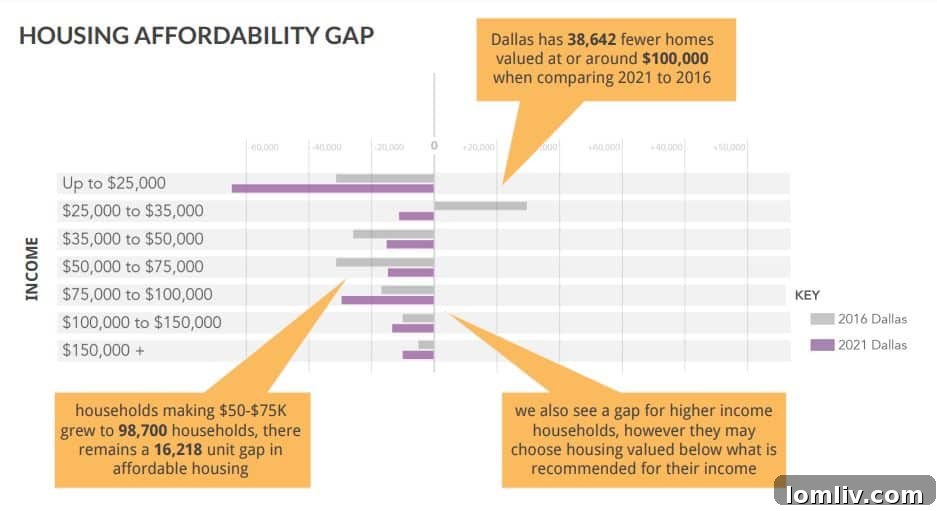
Councilwoman Mendelsohn also critically challenged the efficacy of certain existing initiatives, observing that while the City Council has approved several Public Facility Corporation (PFC) projects—designed to provide units for those earning at or below 80 percent of the Area Median Income—these projects might not be effectively targeting the most acute and pressing housing needs within the city. “I just want to ensure I fully grasped your point,” Mendelsohn reiterated pointedly during the meeting. “From what I understand, we actually have a sufficient quantity of housing units overall. The profound challenge we undeniably face, however, is a vast amount of poverty.” This deeply insightful and profound statement encapsulates the central paradox at the core of Dallas’s housing challenge: the sheer volume of physical structures does not automatically translate into housing security when a substantial segment of the population simply cannot afford the available options. Flores concurred with this assessment, adding that Dallas indeed possesses an overabundance of Class A luxury units, which are priced “way far out of reach” for the vast majority of its residents, effectively creating a surplus at the highest market tier while simultaneously exacerbating a severe deficit at the lower- and middle-income levels.
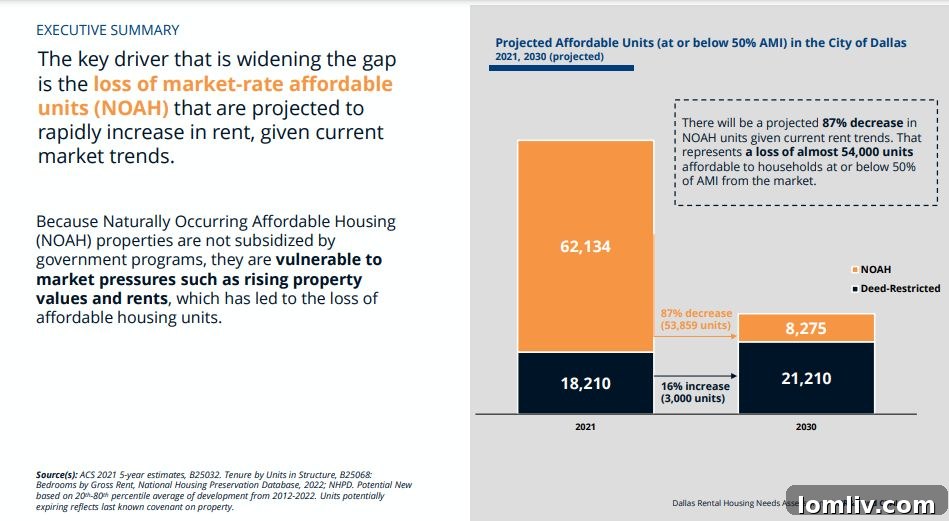
Furthermore, Mendelsohn raised a profoundly crucial point concerning the visualization and accurate representation of affordable housing data. She took significant issue with a specific map that was presented, depicting units built after 1990, which erroneously suggested an overwhelming concentration of affordable housing exclusively in southern Dallas. “There are, in fact, two Dallas Housing Authority properties situated within my district that were conspicuously absent from that particular map,” she pointed out with precision. “I would strongly advocate for the essential inclusion of another map—one that accurately and comprehensively illustrates the true distribution of naturally occurring affordable housing (NOAH) throughout our entire city. What this current map falsely conveys is the misconception that all affordable housing resides solely within southern Dallas. The reality, however, is significantly different; districts such as District 10 and District 12, for example, possess a substantial and vital amount of affordable housing when NOAH is properly identified and accounted for. I firmly believe it is imperative that we present the complete and unbiased story, rather than a partial or misleading narrative, to prevent misguided policy decisions and ensure equitable resource allocation.” This emphasis on NOAH—referring to older, unsubsidized housing units that remain affordable due to their age, less desirable locations, or general condition—is critically important. Failing to accurately include NOAH in analytical assessments can lead to a severe underestimation of the existing affordable housing stock and potentially misdirect invaluable efforts and financial resources. A truly holistic and accurate view, meticulously incorporating both subsidized and naturally occurring affordable housing, is absolutely essential for formulating and implementing truly effective, equitable, and sustainable housing policy in Dallas that serves all its diverse communities.
In conclusion, the detailed discussions and critical findings presented by CPAL and bcWORKSHOP to the Dallas City Council’s Housing and Homelessness Solutions Committee serve to brilliantly illuminate a complex and deeply multifaceted housing crisis within the city. It is unequivocally clear that the solution is not merely about increasing the sheer volume of homes; rather, it demands a strategic and nuanced approach centered on building the correct types of homes, in the most appropriate and needed locations, and, critically, at genuinely affordable price points that cater to the diverse needs and income levels of Dallas residents. The successful integration of robust, meticulously data-driven insights into the upcoming Dallas Housing Policy 2033, coupled with proactive and progressive code reforms, and a comprehensive, balanced understanding of both housing availability and affordability dynamics, will collectively be paramount in forging a definitive path towards a more equitable, resilient, and sustainable housing future for every single citizen of Dallas. This unified, data-led approach is the cornerstone upon which a truly inclusive city can be built.