
For many Canadians, the age-old question echoes loudly: “Should I rent or buy?” This isn’t just a simple comparison of monthly rent versus a mortgage payment. It’s a deeply personal financial and lifestyle decision, often complicated by fluctuating interest rates, the myriad of homeownership costs, and the critical question of how long you plan to stay in one place. Navigating the complex landscape of the Canadian housing market requires a nuanced understanding of both options.
The decision isn’t merely about the present but profoundly shapes your financial future and lifestyle for years to come. Instead of generic advice, this guide aims to provide a comprehensive, SEO-friendly analysis to help you determine which path truly aligns with your financial health, career stability, and long-term aspirations. We’ll delve into the granular details of each choice, examining the hidden costs, long-term benefits, and crucial lifestyle considerations that often go overlooked.
Decoding the Financial Realities: Renting vs. Buying in Canada
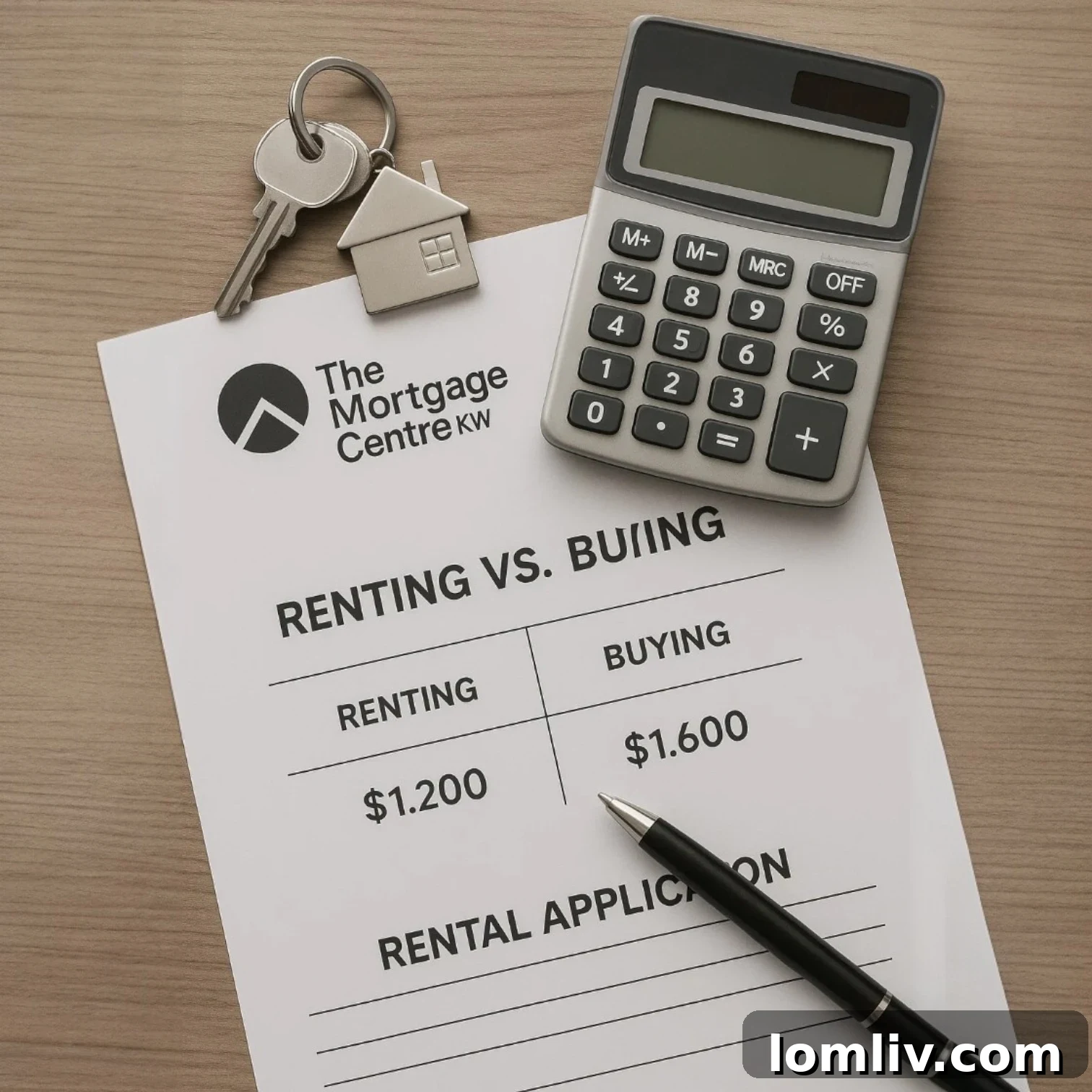
Before committing to either renting a home or buying a home, it’s essential to look beyond the advertised monthly figures. Both options come with a distinct set of financial obligations that extend well beyond the headline payment, impacting your overall budget and long-term wealth accumulation strategies. Understanding these financial realities is the cornerstone of making an informed decision about the Canadian housing market.
The Financial Commitment of Buying a Home
Purchasing a property involves a significant financial outlay, both upfront and on an ongoing basis. These homeownership costs are critical to factor into your financial planning for homebuyers.
- Upfront Costs: These are the initial expenses required to secure a property.
- Down Payment: In Canada, a minimum of 5% is required for the first $500,000 of the purchase price, and 10% on the portion between $500,000 and $1 million. For a $600,000 home, this means a minimum $35,000 down payment. A larger down payment can reduce your monthly mortgage payments and potentially eliminate the need for mortgage default insurance.
- Closing Costs: These typically range from 1.5% to 4% of the purchase price and include legal fees, title insurance, property appraisal fees, and survey costs. These are one-time expenses paid when the ownership officially transfers.
- Home Inspection Fees: An essential step to identify potential issues with the property. Costs generally range from $300 to $500.
- Land Transfer Tax: This is a provincial or municipal tax applied when a property changes ownership. It varies significantly by province and sometimes by municipality (e.g., Toronto has an additional municipal land transfer tax), potentially adding thousands or even tens of thousands to your initial expenses.
On a $600,000 home, the aggregate of these upfront costs can easily range from $35,000 to $50,000, underscoring the significant initial capital required for buying a home.
- Ongoing Costs: These are the recurring expenses associated with property ownership.
- Principal and Interest Mortgage Payments: This is your primary monthly payment, directly influenced by the purchase price, down payment size, amortization period, and current interest rates. Fluctuations in interest rates can significantly impact variable mortgage payments.
- Property Taxes: Paid to your municipality, these taxes fund local services and are calculated based on your home’s assessed value. They are a non-negotiable ongoing expense.
- Home Insurance: Mandatory for mortgage holders, this insurance protects your property against damage, theft, and liability. Premiums vary based on location, property type, and coverage.
- Maintenance and Repairs: Unlike renting, homeowners are responsible for all upkeep. This can range from routine lawn care and minor repairs to significant unexpected expenses like a new roof, furnace replacement, or plumbing issues. Financial experts often recommend budgeting 1% to 3% of your home’s value annually for maintenance.
- Utilities: Costs for electricity, heating, water, and internet can vary widely based on property size, age, and personal consumption habits.
- The Long-Term Benefit: Despite the extensive costs, buying a home offers substantial long-term advantages. You build equity with each mortgage payment, creating a valuable asset. Furthermore, if property values climb, you stand to gain from real estate investment appreciation, contributing significantly to your overall wealth accumulation. This equity can be leveraged in the future for other investments or financial needs.
The Financial Commitment of Renting a Home
Renting typically presents a lower financial barrier to entry and more predictable monthly expenses, making it an attractive option for many, particularly those seeking flexibility.
- Upfront Costs: These initial expenses are generally less burdensome than those associated with buying.
- Security Deposit: Often equivalent to half a month’s rent, held by the landlord to cover potential damages.
- First and Last Month’s Rent: Typically required upfront, meaning you pay for the first month and provide a deposit equivalent to the last month’s rent.
- Moving Expenses: Costs associated with hiring movers, renting a truck, or purchasing packing supplies.
- Ongoing Costs: These are generally more straightforward and predictable.
- Monthly Rent: Your primary and most consistent expense. While rent increases are regulated in some provinces, they are a possibility over time.
- Utilities: Depending on your lease agreement, you may be responsible for some or all utilities (electricity, heat, water, internet).
- Renter’s Insurance: While often optional, this affordable insurance protects your personal belongings from theft or damage and provides liability coverage. It is highly recommended.
- Potential Upside: Renting offers unparalleled flexibility, allowing for easier relocation for job opportunities or personal reasons. It entails a lower financial commitment, freeing up capital for other investments or savings goals. Crucially, renters are shielded from unexpected and often costly home repair bills, which fall under the landlord’s responsibility, leading to fewer financial surprises.
Ultimately, the choice between renting vs buying comes down to a careful assessment of affordability, your current financial standing, and your personal and professional plans for the next five to ten years. If you’re unsure about your financial readiness, a quick, personalized consultation with a reputable mortgage advisor can provide a clear, fact-based breakdown tailored to your unique situation, helping you understand your borrowing capacity and the true cost of homeownership.
Understanding Canadian Housing Market Trends in 2025
The Canadian housing market is a dynamic entity, constantly influenced by economic factors, population growth, and government policies. As of May 2025, the average asking rent across Canada stood at approximately $2,129 per month. While this figure might represent a slight decrease from the previous year, it remains significantly elevated compared to pre-2020 levels, indicating sustained pressure in the rental market, especially in major urban centers.
When we compare this to the costs of buying a home, the discrepancy becomes even more apparent. Based on prevailing home prices and current interest rates, the average monthly mortgage payment for a typical Canadian home can range anywhere from $3,500 to $5,500. This substantial gap between average rent and mortgage payments highlights a critical challenge for aspiring homeowners.
However, the comparison extends beyond just the monthly payment. Buying a home introduces additional layers of recurring costs such as property taxes, home insurance, and a dedicated budget for ongoing maintenance and potential repairs. Renting, conversely, bypasses these direct homeownership costs, offering a more predictable monthly expense. Nonetheless, renters must contend with the possibility of annual rent increases and, fundamentally, the absence of equity building, which is a significant component of long-term wealth creation through real estate investment. The current market trends underscore the importance of a thorough cost-benefit analysis before making a decision, considering both immediate cash flow and future financial growth.
Lifestyle Factors: Beyond the Numbers in Rent vs. Buy

While financial considerations are paramount, the decision between renting vs buying a home profoundly impacts your daily life and future aspirations. It’s not just about money; it’s about the flexibility, stability, and freedom that each option offers. Understanding these lifestyle implications can be just as crucial as crunching the numbers when making your choice in the Canadian housing market.
When Renting a Home Makes Strategic Sense
Renting offers unique advantages that cater to specific life stages and preferences, especially for those prioritizing adaptability and a lighter financial burden.
- Enhanced Mobility and Flexibility: If your career path or personal circumstances suggest you might change cities, provinces, or even just neighborhoods within the next few years, renting keeps you highly flexible. Breaking a lease is significantly less complex and costly than selling a property, especially in a fluctuating market where transaction costs (real estate agent commissions, legal fees) can eat into any short-term gains. This freedom allows you to seize new opportunities without the encumbrance of a property sale.
- Minimal Upkeep Responsibilities: One of the most attractive aspects of renting is the transfer of maintenance responsibilities to your landlord. A leaky faucet, a broken appliance, or a malfunctioning furnace? These are typically the landlord’s problems to fix, saving you from unexpected repair bills and the time and effort required for coordination. This translates to lower homeownership costs in terms of unexpected expenses and frees up your time for other pursuits.
- Lower Financial Commitment: A rental lease typically lasts for one year, providing a relatively short-term commitment. This contrasts sharply with a mortgage, which can tie you down for 20 to 30 years. The lower upfront costs and predictable monthly expenses of renting allow for greater liquidity, which can be beneficial for those saving for other major life goals or simply preferring to keep more capital accessible.
- Access to Amenities: Many rental properties, especially in urban areas, come with access to shared amenities like gyms, pools, and common areas, without the homeowner’s responsibility for their maintenance or repair.
When Buying a Home Works Better for Your Lifestyle
For those seeking stability, personalization, and a long-term investment, buying a home often emerges as the more suitable option.
- Unmatched Stability and Security: Homeownership provides a profound sense of stability. You eliminate the worry of a landlord deciding to sell the property, raising your rent, or not renewing your lease. This security allows for deeper roots in a community, which can be invaluable for families and individuals seeking a permanent base. Knowing your housing costs (excluding variable interest rates) are more predictable over the long term provides peace of mind.
- Freedom for Customization and Personalization: A key advantage of owning your home is the ability to customize it to your exact preferences. Want to paint the walls a bold color, renovate the kitchen, add a garden, or even knock down a non-load-bearing wall? Homeownership allows you to create a living space that truly reflects your style and needs without seeking permission. This personal touch can significantly enhance your quality of life.
- Strategic Long-Term Planning and Real Estate Investment: If you plan to remain in a location for five years or more, buying allows you to start building equity. Each mortgage payment contributes to your ownership stake, transforming housing costs into a form of forced savings and a tangible asset. Over time, property values typically appreciate, making your home a significant real estate investment and a cornerstone of your long-term wealth plan. This accumulation of wealth is a primary driver for many considering homeownership.
- Community Integration: Homeowners often feel a stronger sense of connection to their community, potentially leading to more involvement in local initiatives and a greater sense of belonging.
Ultimately, the financial planning for homebuyers or renters hinges on whether you prioritize the freedom to move and minimal responsibility or the security, autonomy, and wealth-building potential of homeownership. The ideal choice is deeply personal, evolving with your career trajectory, relationship status, and your comfort level with financial risk and responsibility.
Identifying Your Path: Key Questions for Your Rent vs. Buy Decision

When faced with the monumental choice between renting a home and buying a home, simplifying the decision-making process can bring clarity. By asking yourself three fundamental questions, you can better align your housing choice with your personal circumstances and financial goals within the Canadian housing market.
How Long Do You Intend to Stay Put?
The duration of your stay in a particular location is perhaps the most critical factor influencing the rent vs. buy decision due to the significant transaction costs involved in buying and selling property.
- Less Than 3 Years: In most scenarios, if you anticipate moving within three years, renting usually wins out financially. The upfront costs of buying (down payment, closing costs, land transfer taxes, real estate fees upon selling) are substantial. It typically takes several years for property appreciation and equity buildup to offset these expenses, making a short-term ownership period potentially more costly than renting. Flexibility and lower commitment are key advantages here.
- Five Years or More: If your plans involve staying in one place for five years or longer, buying a home begins to make significant financial sense. Over this extended period, you have sufficient time to build substantial equity through your mortgage payments and benefit from potential property value appreciation. This duration allows the initial homeownership costs to be amortized over a longer period, making the investment worthwhile and aligning well with long-term wealth planning and real estate investment strategies.
- The “Breakeven” Point: While not an exact science, financial models often suggest a breakeven point between 2 to 7 years, depending heavily on market conditions (appreciation rates, interest rates) and individual costs. The longer you stay, the more likely buying becomes the financially superior option.
How Stable is Your Income?
Your income stability and financial resilience play a crucial role in determining your capacity to handle the responsibilities of homeownership.
- Volatile or Potentially Changing Income: If your paycheck could take a hit due to job instability, industry changes, or if your job might require you to relocate, renting provides a crucial safety net. The flexibility of a lease agreement allows you to adapt to financial shifts without the immense pressure of maintaining mortgage payments or the complexity of selling a home under duress. This keeps your options open during periods of uncertainty.
- Steady Income and Robust Emergency Fund: For individuals with a reliable, consistent income and a well-established emergency fund (typically 3-6 months of living expenses), the financial demands of homeownership are far more manageable. This stability empowers you to absorb unexpected costs that invariably arise with owning a home, such as major repairs or sudden property tax increases. A strong financial foundation also instills confidence when navigating the financial planning for homebuyers process and approaching mortgage lenders.
- Future Income Growth: Consider your career trajectory. If you anticipate significant income growth in the coming years, it might influence your ability to save for a down payment or comfortably afford a mortgage in the future.
What is Your Debt-to-Income Ratio?
Your debt-to-income (DTI) ratio is a critical metric that mortgage lenders scrutinize closely, as it indicates your ability to manage monthly payments.
- Understanding DTI: This ratio compares your total monthly debt payments (including credit card minimums, car loans, student loans, and proposed mortgage payments) to your gross monthly income. Lenders typically prefer a DTI ratio below 36% for the back-end ratio (total debts including housing) and below 28% for the front-end ratio (housing costs only).
- High DTI Ratio: If your current debt-to-income ratio is high, it can significantly hinder your ability to qualify for a mortgage or secure favorable interest rates. In such cases, renting might be the more prudent choice while you actively work on reducing your outstanding debts. This period can be invaluable for improving your credit score, saving a larger down payment, and positioning yourself for a stronger, smarter entry into the real estate market later on.
- Impact on Affordability: A high DTI can also limit the size of the mortgage you qualify for, potentially restricting your housing options and making it harder to find a suitable property within your budget. Addressing this proactively is key for aspiring homeowners.
These personalized answers will illuminate the path that best aligns with your financial capacity, current life stage, and future aspirations, allowing you to make a decision grounded in reality rather than swayed by market noise or external pressures. The right choice is the one that fits your financial capacity and personal journey.
Your Informed Next Move: Navigating the Rent vs. Buy Dilemma
In 2025, the decision of renting vs buying a home in Canada is far from a universal math problem with a single correct answer. It’s a complex, deeply personal calculation that intertwines your current financial health, job stability, willingness to commit long-term, and your philosophical view on housing as an investment. The Canadian housing market continues to evolve, presenting both opportunities and challenges for renters and prospective homeowners alike.
For some, the appeal of building equity, customizing a personal space, and making a significant real estate investment outweighs the upfront costs and ongoing responsibilities. They see homeownership as a cornerstone of their long-term wealth accumulation strategy and a source of enduring stability. For others, the freedom, lower initial financial commitment, and absence of maintenance worries that come with renting are paramount. They might choose to rent, preserve their financial flexibility, and actively invest the difference in other assets, or simply wait for what they perceive as a more favorable market shift.
What truly matters is making a decision based on real numbers, a comprehensive understanding of all associated costs and benefits, and a meticulously crafted plan that genuinely fits your unique situation. This means looking beyond generalized advice, filtering out market chatter, and setting aside outdated rules of thumb. Consult with financial advisors, mortgage professionals, and real estate experts to gain personalized insights. Equip yourself with knowledge about the specific nuances of your local Canadian housing market, including regional rent trends, property values, and tax implications. By doing so, you can make an empowered, confident choice that supports your financial goals and enhances your desired lifestyle for the years to come.