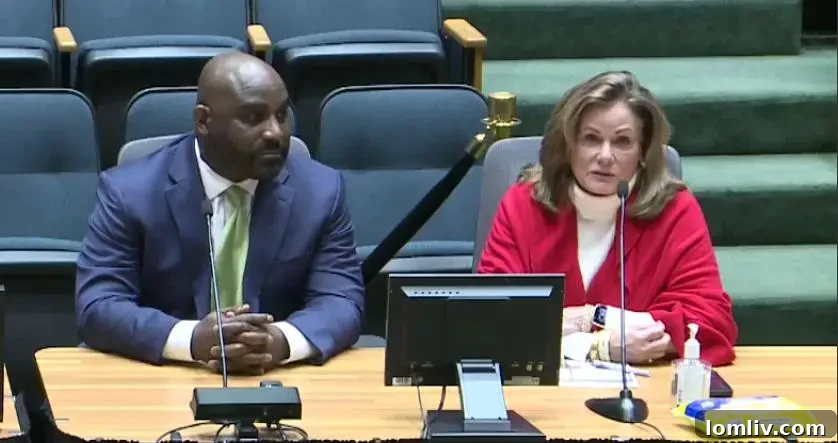
Ben Glispie of Local Initiatives Support Corporation and Linda McMahon of The Real Estate Council discuss the Dallas Housing Opportunity Fund on Dec. 4.
Dallas, a rapidly growing economic powerhouse in Texas, is grappling with an escalating challenge: the urgent need for affordable housing. As the city’s population and prosperity soar, so too do living expenses, leaving many working families and essential service providers struggling to find stable, reasonably priced homes. In response to this pressing social and economic issue, the Dallas Housing Opportunity Fund (DHOF) has emerged as a crucial initiative, designed to bridge the gap in affordable housing availability. Recent discussions among officials and members of the Dallas City Council’s Economic Development Committee earlier this month underscored the fund’s significant progress and its immediate need for increased investor funding to finalize a robust pipeline of “shovel-ready” affordable housing projects.
The December 4th committee meeting served as a vital platform for key stakeholders to articulate the DHOF’s mission and impact. Linda McMahon, President and CEO of The Real Estate Council (TREC), delivered a comprehensive review of the Dallas Housing Opportunity Fund, emphasizing its strategic importance for the city’s sustainable development. Her presentation meticulously detailed the fund’s operational framework, its achievements to date, and the critical financial commitments required to achieve its ambitious goals in fostering a more equitable and livable Dallas.
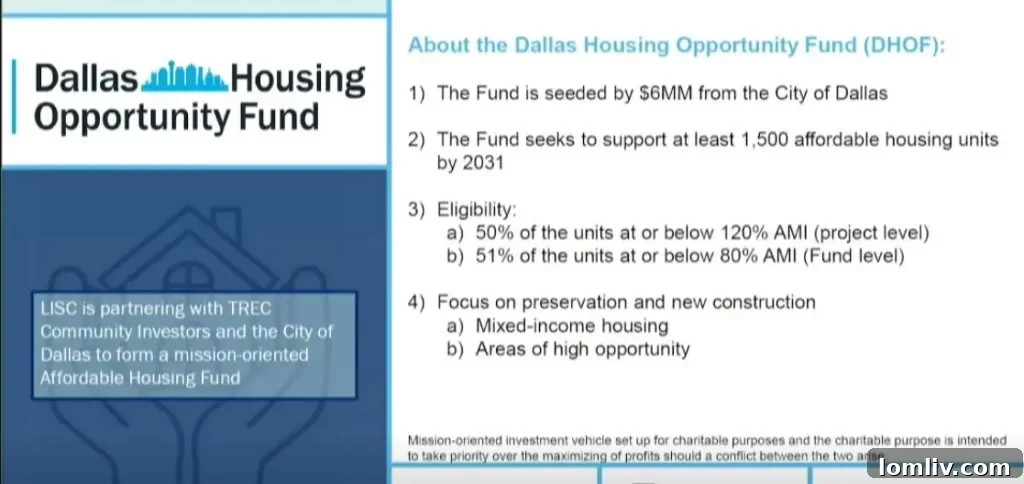
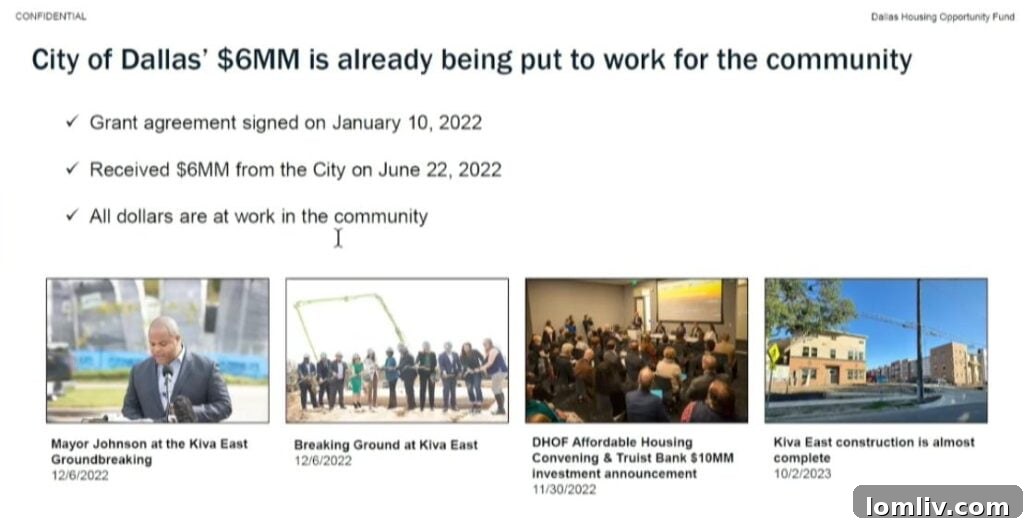
The genesis of the Dallas Housing Opportunity Fund dates back to 2021 when the Dallas City Council provided foundational seed funding of $6 million. This initial investment was a clear signal of the city’s dedication to tackling its housing crisis. As co-managers of this innovative public-private partnership, The Real Estate Council (TREC) and the Local Initiatives Support Corporation (LISC) jointly committed to a substantial undertaking: to raise an additional $40 million in private capital and facilitate the creation of 1,500 new affordable housing units across Dallas by 2031. This collaborative model harnesses TREC’s deep expertise in the local real estate market and its extensive network, combined with LISC’s national experience in community development and sophisticated affordable housing finance mechanisms, creating a powerful engine for change.
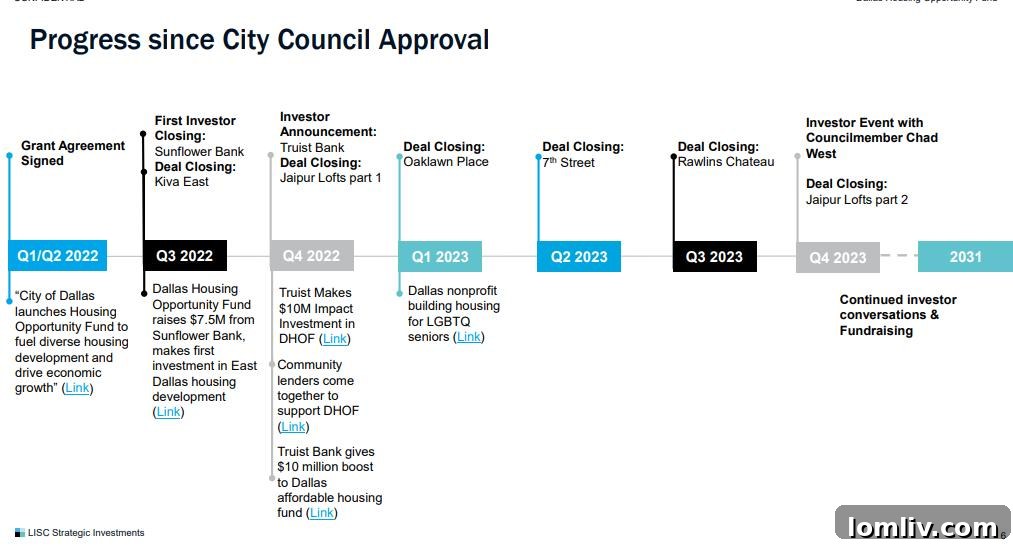
Ben Glispie, Director of Affordable Housing for LISC Strategic Investments, provided critical insights into the fund’s rigorous project selection criteria. He explained that all projects seeking DHOF support must be situated within the geographical boundaries of Dallas and commit to offering at least half of their rental units at an affordable rate. A crucial stipulation for long-term impact is that this affordability must be maintained for a minimum of 15 years, ensuring that the benefits extend far beyond initial occupancy. Glispie proudly announced the DHOF’s tangible successes since its inception: the fund has attracted two new investors, bringing the total capital raised to a robust $17.5 million. Moreover, five significant deals have successfully closed, and the DHOF has already allocated $22 million towards projects that are actively under construction. This swift deployment of capital into ready-to-build developments was highlighted during the Economic Development Committee meeting, showcasing the fund’s efficiency and immediate impact on increasing affordable housing stock in Dallas.
Empowering Progress: How the Dallas City Council Can Further Support Affordable Housing Initiatives
The severity of the housing crisis deeply resonated with members of the City Council. District 1 Councilman Chad West articulated a widespread concern, stating emphatically that “housing is the biggest challenge in Dallas.” His remarks underscored the critical need for a united, city-wide strategy involving all sectors. “We’ve got to take it seriously as a city, and we’ve got to work with our staff and our industry partners,” West urged, directly posing the question to the DHOF’s leaders: “What can we do as a council to help you?”
Linda McMahon’s response was refreshingly direct and unequivocal: “The answer, simply, is money.” Her candor illuminated the core obstacle facing the DHOF: despite a robust pipeline of viable projects and an efficient operational structure, the availability of sufficient capital remains the primary constraint for accelerating affordable housing development.
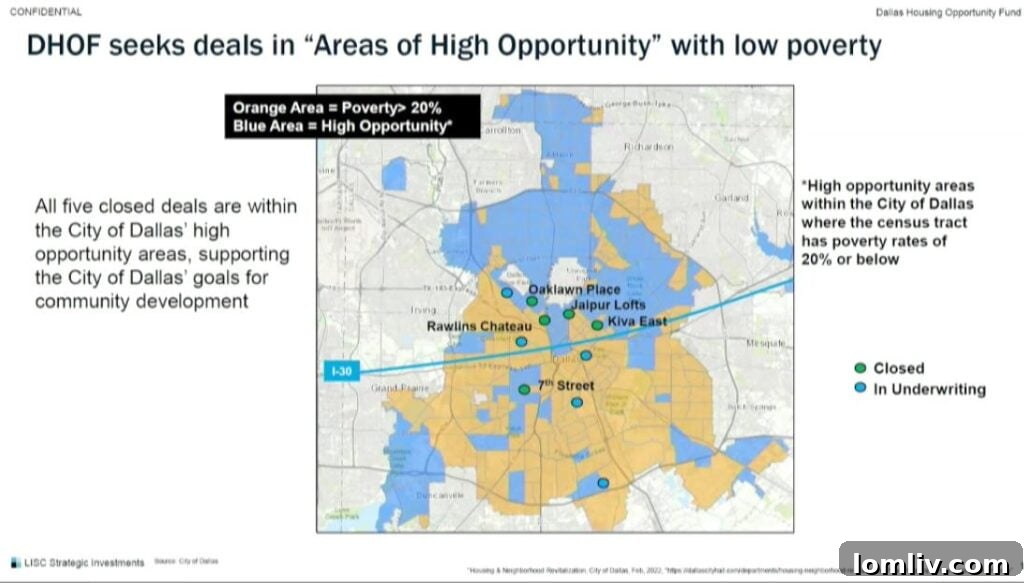
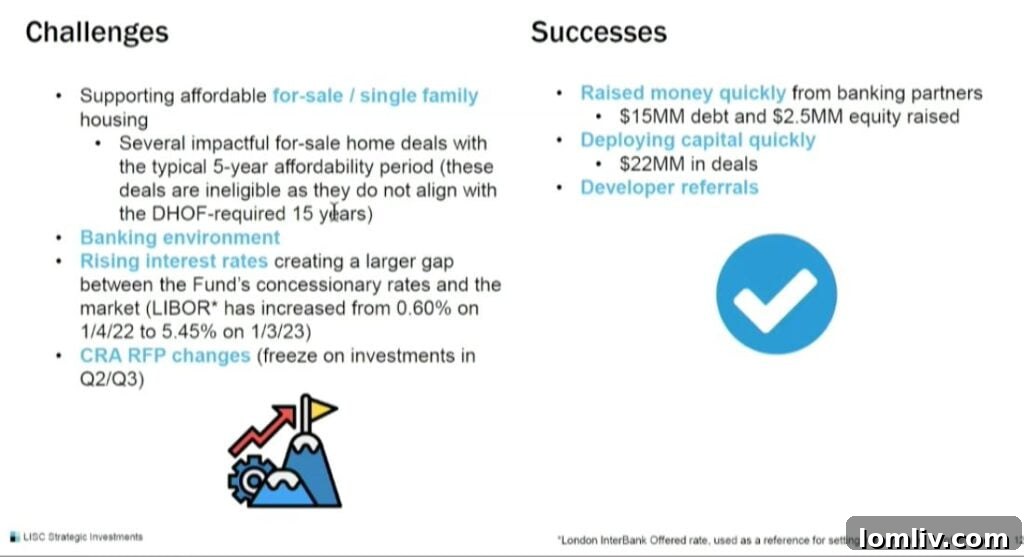
McMahon further addressed common misunderstandings about affordable housing, clarifying that DHOF-supported projects frequently adopt a “mixed-income” model. This approach promotes diverse and economically integrated communities, moving beyond the outdated notion of solely low-income housing. She stressed that the principal challenge lies in fundraising, not in the scarcity of viable development opportunities. “We have no problems getting deals because there are a lot of opportunities that frankly don’t have financing, and this is the perfect vehicle for that,” McMahon articulated. This inherent efficiency is a hallmark of the DHOF, which boasts a highly streamlined process that facilitates rapid project closures. This quick turnaround time is a compelling selling point to potential investors, particularly major financial institutions, who are assured that DHOF is a “project-ready fund [that can] close projects quickly.”
Despite its efficiency and a healthy pipeline of ready-to-go projects, attracting substantial investment has presented persistent difficulties. McMahon highlighted that traditional investors, especially large banks, often seek higher financial returns than what an affordable housing fund like the DHOF can typically offer, given its social mission. Moreover, the philanthropic community in Dallas has yet to embrace the fund with the desired level of support. “We haven’t really gotten any support from the philanthropic community in Dallas,” she stated, noting their perception that it “just doesn’t find this to be an attractive investment for them at this particular time.” This sentiment, echoed by both large and smaller banks, points to a crucial disconnect regarding the perceived return on investment. McMahon’s direct appeal to the City Council, and by extension to potential investors, was unambiguous: “So I guess the answer to your question is if you want to help develop affordable housing in Dallas, we need you to invest in this fund.” The message is unequivocally clear: addressing Dallas’s dire housing shortage mandates direct and substantial financial commitment.
Recognizing the urgency and the DHOF’s proven capability to deliver, Councilman West issued a powerful call to action. He implored charitable trusts, foundations, and corporations across Dallas—entities that share concerns about the burgeoning housing crisis—to seriously consider investing in the DHOF. He underscored that such an investment is not merely an act of charity but a strategic decision offering tangible returns. “This is an opportunity to invest and there is a return on your investment—not just capital in terms of housing for people, but also you get your money back and you make interest,” West explained. This unique proposition, combining significant social impact through housing stability with a financial yield, positions the DHOF as an exceptionally compelling investment for socially conscious entities committed to community development.
Strategic Funding: Leveraging Dallas Bond Funds for Affordable Housing Solutions
In a forward-thinking proposal aimed at swiftly addressing the DHOF’s capital needs, Councilman West suggested a powerful strategy: allocating a portion of the forthcoming 2024 Dallas bond funds directly to the Dallas Housing Opportunity Fund. This innovative approach directly tackles a common critique leveled against municipal bond initiatives for housing.
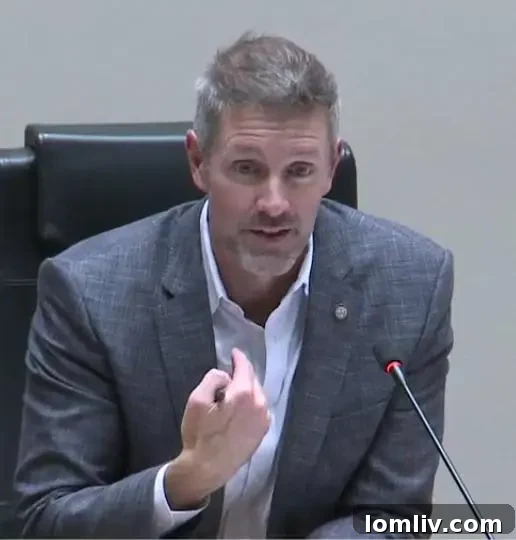
“One of the critiques of the money in our bond that’s proposed for housing is that there are no shovel-ready projects identified, and that there hasn’t been a track record of pushing out money for housing,” West observed. This recurring issue often leads to frustrating delays and inefficiencies in deploying public funds for much-needed housing development. The DHOF, with its established pipeline and operational readiness, offers a compelling solution to this challenge. By channeling bond funds into the DHOF, the city could bypass typical bureaucratic hurdles and immediately inject capital into projects that are already planned, approved, and primed for construction. “If we had $20 million, or what have you, that’s allocated in the bond for housing, it could be poured into the LISC trust for housing projects,” he suggested, emphasizing the fund’s proven capacity to accelerate housing creation and demonstrate immediate results for Dallas residents.
McMahon unequivocally endorsed the legality and immense potential of West’s proposition. “As you can see from the pipeline of opportunities, there are quite a few deals that are ready to go, but because of the interest rate environment and the lack of capital available from banks, they don’t have the ability to close,” she elaborated. The current economic landscape, marked by a “firestorm of increasing construction costs and increasing interest rates,” has created a significant funding gap, stalling numerous otherwise viable affordable housing projects. This is precisely where the DHOF proves indispensable. McMahon further highlighted the fund’s exceptional efficiency: “We closed more deals faster. We closed deals faster than they ever saw any other fund close deals in the country when they started these funds up.” This impressive track record solidifies the DHOF’s ability to rapidly convert financial capital into tangible housing units. “The deals are here, and they’re ready to close. So… we’ve got the pipeline; we just need the money,” she reiterated, underscoring the fund’s operational readiness and critical need for investment to actualize its potential.
Support for the DHOF within the City Council was broadly positive, with several members recognizing its strategic importance. District 6 Councilman Omar Narvaez and Deputy Mayor Pro Tem Carolyn King Arnold both expressed strong endorsements, viewing the fund as an essential tool for accelerating affordable housing development. Arnold voiced a desire for the project to gain even greater strength, stating, “I would love to see this project get stronger so we can give housing support to those who need it.” She also echoed the larger question regarding philanthropic engagement: “We need more housing, we know that, but what can we do better to get those philanthropic dollars to be interested in the quality of life and the equity in this city as we preach it?” This sentiment reflects a shared commitment not only to constructing housing but also to fostering a more equitable, stable, and thriving Dallas for all its residents.
District 7 Councilman Adam Bazaldua offered a realistic, yet vital, perspective on the philanthropic challenge. While acknowledging that direct financial contributions to the Dallas Housing Opportunity Fund might not always possess the immediate public appeal or perceived glamour of other charitable endeavors, he stressed its profound and undeniable necessity. He underscored that direct investment in the DHOF is, in fact, “one of the only ways the work is going to get done,” suggesting that traditional philanthropic models may not always align with the direct capital infusion required by such a fund, yet its impact on community well-being is paramount.
McMahon wholeheartedly concurred with this assessment, reinforcing the long-term vision and overarching societal benefits. “The biggest investment we can make in the future of this city is more housing,” she asserted. This powerful statement encapsulates the fundamental link between housing stability and broader urban prosperity. “We can’t grow our economy unless we have a place for people to live,” she continued, emphasizing that a robust, dynamic economy is inextricably tied to the availability of affordable and stable housing for its diverse workforce. Providing a stable home, alongside meaningful employment, represents one of the most significant contributions a city can make to the welfare of its families. “And so our investment in more housing is critical to the future of this city,” McMahon concluded, cementing the idea that the DHOF is not merely about constructing buildings, but about strategically investing in a more resilient, equitable, and prosperous Dallas for current and future generations. The time for concerted action and investment in the Dallas Housing Opportunity Fund is now, to transform shovel-ready projects into vibrant, thriving communities and secure the city’s long-term growth and success.