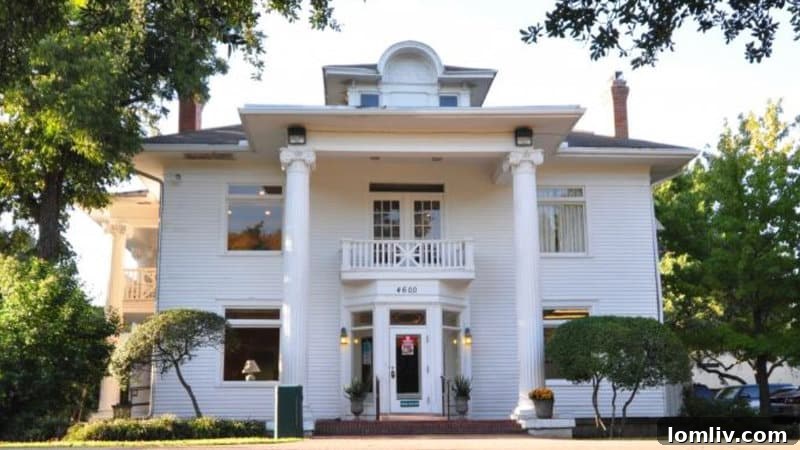
The Timberlawn Dilemma: Community Unites Against Homeless Shelter Proposal in Dallas
The proposal to convert the historic Timberlawn Mental Health facility into a homeless shelter has ignited a fervent response from the Dallas community, with a rapidly growing petition showcasing overwhelming opposition. Initiated by Buckner Terrace resident Abbi Reynolds, the petition has quickly garnered hundreds of signatures, signaling a unified stance against the proposed development. As of this evening, the number of signatories has soared past 900, with momentum building rapidly. Should Mayor Rawlings and the Dallas City Council choose to disregard this significant public protest, it could prove to be a grave political misstep, potentially leading to widespread public dissatisfaction and severe political repercussions.
Initially, the idea of utilizing Timberlawn for social services might have seemed plausible. My own City Councilman first suggested the site, and given Timberlawn’s expansive layout, I admit to having fleeting thoughts about its potential as a comprehensive homeless center—a place where vital social and psychiatric services could be centrally offered. Furthermore, the property’s current Dallas Central Appraisal District (DCAD) valuation of approximately $2.6 million might have appeared economically attractive. However, a deeper look into the community’s concerns, clearly articulated through numerous petition comments, reveals compelling reasons why this proposal is fundamentally misguided and unacceptable.
Why Timberlawn is Unsuitable: A Community’s Perspective
The residents’ objections are multifaceted, touching upon historical preservation, neighborhood impact, public safety, and logistical challenges. These points collectively argue against the conversion, advocating for a more thoughtful and sustainable approach to addressing homelessness in Dallas.
1. Preserving History and Maximizing Cultural Potential
One of the foremost arguments against the conversion is Timberlawn’s significant historical and architectural value. The building stands as a testament to a bygone era and should be preserved, not repurposed in a manner that could diminish its legacy or structural integrity. Instead of a homeless shelter, Timberlawn could be reimagined as a vibrant museum or a dynamic cultural center, offering invaluable educational and communal benefits to Dallas residents. Alternatively, it presents a unique opportunity for commercial revitalization, potentially transforming into a luxury hotel and conference center.
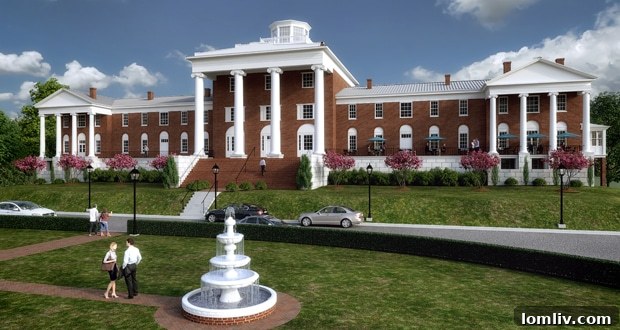
This vision is not without precedent. Consider the inspiring transformation of the Blackburn Inn in Staunton, Virginia. This magnificent luxury hotel was once a mental institution, built in 1828 by Thomas Jefferson’s architect as the nation’s second mental hospital. Known historically as the Western State Lunatic Asylum, this long-abandoned facility and former prison underwent an arduous 12-year renovation for its 33,000 square feet. Despite the complexities of adapting such a historic structure, the developers successfully converted it into a high-end destination, complete with elegant bathrooms featuring vessel tubs, ensuring guests enjoy a peaceful and luxurious stay. Furthermore, the developers are actively expanding the project to include condos, apartments, helipads, and meticulously restored houses, demonstrating the immense economic and cultural potential in preserving and adaptively reusing historical properties. Our personal experience staying there confirmed the comfort and quality that can arise from such visionary projects, reinforcing the belief that Timberlawn deserves a similar, dignified future.
2. Safeguarding Neighborhood Character and Investment
The Buckner Terrace neighborhood is currently undergoing a significant real estate transformation, a process often described as gentrification, which brings positive development and increased property values for homeowners. Introducing a large-scale homeless shelter in the heart of this evolving community threatens to halt, or even reverse, this progress. Such a development would be fundamentally unfair to the homeowners who have invested in the neighborhood, contributing to its positive trajectory.
As one resident eloquently stated in the petition comments: “This location is not conducive for the proposed shelter due to lack of adequate job training, educational, and rehabilitative facilities. Such a shelter in this neighborhood at this time would not benefit the neighborhood, nor its residents. Our neighborhood has seen positive transformation and development. I strongly suggest a more suitable location closer to social services, mental health services, public transportation, and job training opportunities. At this stage, our residential neighborhood is not the appropriate location for a shelter.” This comment highlights not only the economic concerns but also the crucial absence of support infrastructure necessary for effective rehabilitation and integration of the homeless population, which Timberlawn’s location simply cannot provide.

3. Proximity to Schools and Public Safety Concerns
A significant concern echoed by residents involves the close proximity of Timberlawn to educational institutions. The site is reportedly near two elementary schools and Skyline High School. This raises legitimate safety concerns among parents and community members, who fear for the well-being of their children. One resident starkly warned: “We have two elementary schools and Skyline High School close to Timberlawn, so if you pass this obscene suggestion, then hire police to actually stay at the schools.” In an era when Dallas is already facing challenges with police staffing shortages, relying on increased law enforcement presence to mitigate potential safety issues around schools seems both impractical and unsustainable. The safety and peace of mind of students and their families should be paramount in any urban planning decision.
4. Operational Challenges and Inefficient Resource Allocation
Beyond the social and economic implications, there are practical considerations regarding the maintenance and suitability of historic structures for high-traffic, intensive use. As one resident aptly pointed out: “Not a good use of resources. Historic structures cost too much to maintain and are not built for mass traffic and wear.” Older buildings, while possessing unique charm and historical value, often come with prohibitive maintenance costs and are not designed for the heavy foot traffic and operational demands of a large social service facility. Diverting resources to adapt and perpetually maintain such a structure for a purpose it was not intended for would be an inefficient use of taxpayer money, better spent on purpose-built or more readily adaptable facilities.
5. Lack of Essential Services and Transportation Accessibility
Perhaps one of the most critical arguments against the Timberlawn location is its severe lack of accessibility to the very services the homeless population needs most. “It just doesn’t make sense in this residential neighborhood. Public transportation is minimal at best (one bus line). There are not many businesses for job opportunities. Residents would have difficulty getting to and leaving from the area. A location with more businesses, adequate transportation, and a higher number of social services makes more sense.” This resident comment encapsulates the core logistical problem. Effective homeless shelters must be strategically located near robust public transportation networks, diverse job opportunities, and a wide array of social, medical, and mental health services to facilitate rehabilitation, employment, and reintegration into society. Timberlawn, situated in a predominantly residential area with limited bus routes and commercial activity, fails on all these counts, creating an isolated environment that would hinder rather than help those in need.
Towards Sustainable Solutions: Decentralization and Strategic Placement
The inherent problem with current approaches to homelessness in Dallas stems from the centralization of social services. Most essential services are concentrated in downtown Dallas and the Parkland area. This concentration inadvertently leads to large congregations of homeless individuals in these specific zones, an issue becoming increasingly apparent as encampments emerge in various parts of the city, such as those I’ve observed near Forest Lane and North Central Expressway.
Homeless experts consistently advocate for a more decentralized approach: establishing smaller, more manageable homeless centers spread strategically across the city. This philosophy, often summarized as “spreading the problem out to get a solution,” suggests that each District should contribute a suitable, well-located building to address the issue effectively. Ideas such as Kevin Felder’s suggestion of utilizing abandoned DISD schools offer promising avenues. Personally, I continue to lean towards locations like Dawson Jail or within the Parkland area, despite the existing challenges there.
The experiences shared by those working directly within these concentrated areas further underscore the need for rethinking shelter placement. Nicole Barnett, who works in the hospital district, offers a stark perspective:
Nicole Barnett·4 days ago“I work in the hospital district. The homeless population there is very high with the Salvation Army shelter where most of the homeless sleep on the street/sidewalks right outside the building. It got so bad it closed the old Rusty Taco down and is causing the 7-11 to lose business. This is not what you want for the old Timberlawn area. It’s not safe for those who have little ones to be around the type of behavior that these individuals show. There are no major bus lines or ease of access to the train from the Timberlawn location so the homeless would be less likely to go out and look for work. Yes, the homeless need help but not in a residential area with no access to public transportation.”
Barnett’s testimony vividly illustrates the profound negative impacts on local businesses and the safety concerns, especially for families with young children, when homeless populations are concentrated in areas ill-equipped to support them. Her points reinforce the exact reasons why Timberlawn, a residential area lacking public transportation and job opportunities, is an unsuitable location for a shelter. The goal should be to provide help in a manner that fosters rehabilitation and community integration, not one that exacerbates existing problems for both the homeless and the surrounding residents.
Conclusion: A Call for Thoughtful Urban Planning
The widespread opposition to converting Timberlawn into a homeless shelter is not merely a NIMBY (Not In My Backyard) sentiment; it is a meticulously reasoned argument rooted in historical preservation, neighborhood equity, public safety, and sound logistical planning. The Timberlawn facility holds significant historical value, offering immense potential for adaptive reuse that could enrich Dallas culturally and economically, much like the successful transformation of the Blackburn Inn. Placing a large shelter in Buckner Terrace risks undermining years of positive community development and unfairly burdens existing homeowners.
Moreover, the proposed location fails to meet the fundamental needs of the homeless population itself, lacking adequate access to public transportation, job opportunities, and comprehensive social services. True solutions to homelessness require thoughtful, decentralized strategies that place shelters in areas where support systems are readily available, enabling individuals to rebuild their lives effectively. As the debate continues, it is imperative for the Dallas City Council to listen to the resounding voice of its constituents and pursue solutions that serve both the homeless population and the well-being of all Dallas neighborhoods. Ultimately, it’s a simple truth: if you choose to purchase a home in the vicinity of any social service agency, there is an inherent likelihood that you will encounter homeless individuals within your community. This reality underscores the critical need for balanced, city-wide planning that accounts for the diverse needs and impacts on all residents.