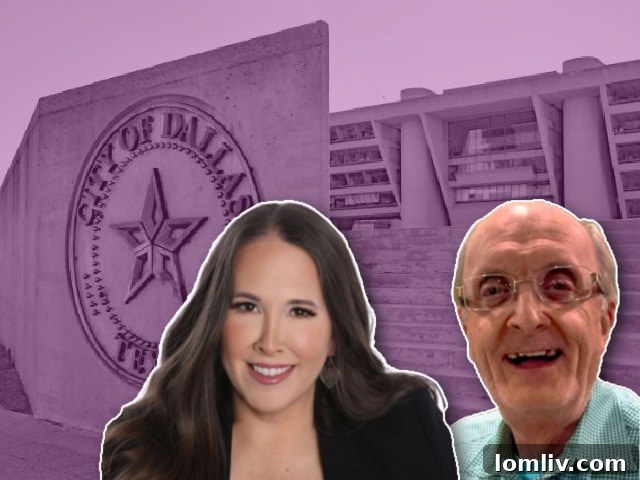
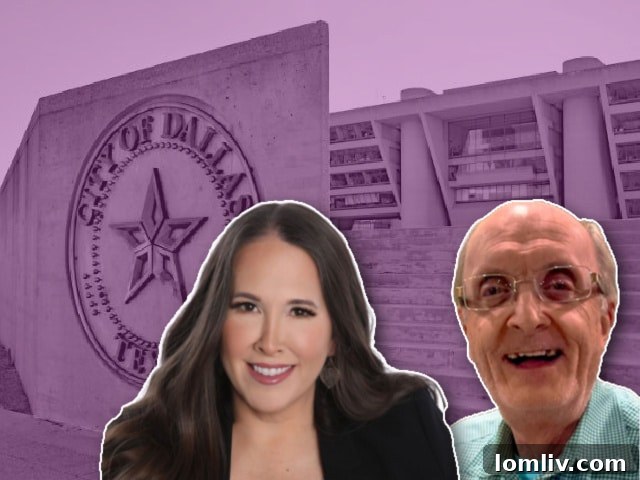
Editor’s Note: This article represents the sixth and final installment in an extensive series of responses provided to daltxrealestate.com questionnaires. These questionnaires were meticulously distributed to all candidates actively campaigning for office in the upcoming May 6 Dallas City Council election. It is noteworthy that candidates participating in the races for Districts 1, 4, 5, 6, 7, 8, 9, and 12 regrettably did not submit responses to the questionnaire. Residents are reminded that early voting is scheduled to commence on April 24, providing an opportunity for citizens to cast their ballots ahead of the main election day. This final article features the insights and perspectives of candidates vying for crucial positions, offering voters a comprehensive understanding of their platforms on key urban issues.
Candidate Spotlight: Amanda Schulz
Opponent: Incumbent Paul Ridley (did not respond to questionnaire), Joseph Miller

In a candid discussion about Dallas’s remarkable growth, Amanda Schulz, a candidate for Dallas City Council, shared her perspectives on what drives the city’s appeal and how she plans to address critical urban challenges. Her insights offer a detailed look into her vision for District 14 and the broader Dallas community.
Dallas’s Enduring Appeal: A Magnet for Corporations and Residents
Schulz attributes Dallas’s consistent ability to attract corporate relocations and new residents at a higher frequency than much of the nation to a compelling combination of factors. Despite the rising cost of living, Dallas maintains a strong competitive edge, offering a high quality of life at a comparatively affordable price point. She highlights that rental costs in Dallas are approximately half of those found in major metropolitan areas like New York City, and grocery expenses are about 40% lower. Furthermore, the absence of state and local income tax significantly enhances the financial attractiveness for both individuals and businesses. Beyond the economic incentives, Dallas boasts abundant job opportunities, a vibrant culinary scene, bustling nightlife, rich arts and culture experiences, and an ever-expanding network of greenspaces through its extensive park and trail system. These elements collectively paint a picture of a dynamic city with much to offer newcomers. Schulz also emphasizes Dallas’s reputation as a welcoming city that fosters commerce and growth through policies supportive of both nascent small businesses and large corporations seeking to relocate, although she acknowledges that surrounding suburbs often lead in large-scale corporate relocations. This blend of economic advantages and lifestyle amenities makes Dallas an irresistible destination for many seeking new opportunities and a vibrant urban experience.
Envisioning a Housing Boom in District 14
When considering future housing growth, Schulz unequivocally points to the Uptown area of District 14 as ripe for the most significant development. She foresees growth not only in business development but also in residential capacity, driven by a natural desire for people to live closer to where they work. This trend is particularly pronounced as these areas evolve into more walkable urban environments, complete with essential amenities such as grocery stores, coffee shops, pharmacies, and diverse restaurants. The transformation into self-sufficient, pedestrian-friendly neighborhoods will undoubtedly spur demand for housing, making Uptown a prime candidate for a substantial housing boom in the coming years. This integrated approach to urban planning, where living, working, and leisure blend seamlessly, is central to her vision for a thriving District 14.
Unlocking Growth Potential and Streamlining Permitting
Schulz identifies the abundance of vacant and underutilized real estate within District 14 as a significant catalyst for future growth. The availability of developable land, or “dirt availability,” inherently creates potential for expansion. Capitalizing on these opportunities, however, will necessitate a critical re-evaluation of outdated zoning regulations and, more importantly, a comprehensive overhaul of the city’s notoriously complex permitting process. Schulz vows to make straightening out permitting a top priority if elected to the city council, recognizing its crucial role in attracting and facilitating development. She asserts that the current commercial permitting system is “largely a disaster,” creating significant uncertainty for developers regarding timelines and project funding. This inefficiency escalates costs and deters investment, making Dallas less attractive for business development, job creation, and the provision of affordable housing. Schulz’s commitment to solving this problem underscores her belief that efficient governance is paramount to the city’s continued prosperity and ability to remain competitive in a dynamic economic landscape. She highlights that proposed House Bill 14, aimed at municipalities struggling with permitting, serves as a clear indicator that Dallas must improve its processes to avoid external mandates.
Improving the Redistricting Process for Stronger Communities
Addressing the historically problematic nature of redistricting at all government levels, Schulz emphasizes its dual purpose: ensuring proportional representation for minority groups and preserving the integrity of communities of interest. She advocates for an ongoing commitment to valuing neighborhood cohesion and ensuring that minority communities have a legitimate “seat at the table” and fair representation in decision-making processes. By prioritizing these principles, Schulz believes that any district, including District 14, will become inherently stronger and more reflective of its diverse populace. Her approach seeks to foster unity and equitable voice within the city’s political landscape, reinforcing the democratic foundation of local governance.
A Nuanced Stance on Short-Term Rentals
Schulz expresses concerns about “hardline mandates” on short-term rentals (STRs), recognizing that many owners are not just large corporations but local Dallas neighbors responsibly managing properties to make a living or cover housing costs. She points out that only a small percentage of STRs are classified as “bad actor” properties, yet an entire industry, employing numerous workers and generating significant city revenue, now exists around them. For Schulz, the core issue lies not in the existence of STRs themselves, but in “ineffective administration as to code enforcement.” She advocates for revisiting the city’s code to implement appropriate regulatory measures and to introduce more stringent penalties that effectively address the actions of “bad-actor” owners, rather than imposing blanket restrictions that harm responsible homeowners and a burgeoning local industry. Her stance reflects a desire for balanced regulation that preserves neighborhood quality without stifling economic activity.
Scrutinizing Public Facility Corporation Financing
While acknowledging Public Facility Corporation (PFC) financing as a definitive mechanism for increasing affordable housing in Dallas, Schulz raises significant concerns about its long-term implications. Her primary reservation revolves around taking properties off the tax rolls for extended periods—often for decades—without clear accountability and rigorous reporting requirements. For a city that consistently struggles to adequately fund essential basic services, vital infrastructure projects, and critical school needs, removing potential tax revenue for such a lengthy duration demands meticulous evaluation. Schulz emphasizes that the public benefit derived from any PFC project must definitively outweigh the projected losses in revenue to justify its implementation. Her cautious approach reflects a commitment to fiscal responsibility and ensuring that solutions for affordable housing do not inadvertently undermine the city’s capacity to provide other crucial public services. This careful balancing act is essential for sustainable urban development.
Enhancing Public and Media Engagement
Schulz places robust public engagement at the forefront of her platform, viewing it as a key component of effective representation. She aims to move beyond a basic council newsletter, which she considers suitable for district-wide issues, towards much more detailed and connected interactions with individual neighborhood organizations and residential buildings. Her plan involves providing tailored communication on issues specifically relevant to each community, ensuring that residents receive information pertinent to their immediate quality-of-life concerns. Furthermore, Schulz intends to foster significantly more collaborative relationships with vital public safety departments, including the police and fire departments, as well as with DISD school administrators, trustees, and parent organizations. She also seeks stronger partnerships with strategic organizations involved in the arts, culture, and parks. Regarding local media, Schulz expresses a willingness to actively respond to outlets that demonstrate a commitment to responsible and accurate journalism, underscoring her dedication to transparency and informed public discourse.
Preserving Neighborhood Character Through Historic and Conservation Districts
Schulz expresses strong support for the use of historic and conservation districts as a means to preserve a neighborhood’s unique character. She views the process of creating these districts, which requires extensive petitioning and application procedures where neighbors collaboratively make preservation decisions, as inherently beneficial. This community-driven approach fosters engagement and often leads to the continuation of historical legacies and the safeguarding of the unique appeal of local communities. Drawing from personal experience, Schulz reveals that she resides in a conservation district herself, having specifically sought out an older home due to her appreciation for history and the distinct character of her neighborhood. She notes that most existing conservation districts in District 14 have successfully accommodated growth while meticulously maintaining their original beauty and charm. Given that District 14 has not seen a neighborhood application for a new conservation district in over a decade, Schulz does not anticipate a significant increase in their formation in the foreseeable future, at least within her district, suggesting a stable and well-established framework for preservation is already in place.
Defining Roles in Affordable Housing: Developers and the City
Addressing the complex issue of affordable housing, Schulz asserts that the responsibility cannot solely rest on the shoulders of developers. Instead, she champions a collaborative model, advocating for mixed-income, multi-family projects that involve strategic partnerships between non-profit organizations, private developers, and the city. She believes this synergistic approach is the most effective way to deliver the best affordable housing solutions for all Dallas residents. Schulz’s perspective highlights the shared responsibility in tackling this critical urban challenge, emphasizing that a collective effort, leveraging diverse resources and expertise, is essential for creating sustainable and equitable housing options across the city.
Priorities for the 2024 Bond Program
For the upcoming 2024 bond program, Schulz emphasizes that it will be a crucial juncture for District 14 to allocate funds responsibly. Her priority is to direct dollars towards improvements that first address the fundamental needs of citizens, rather than focusing on elaborate “pet projects” adorned with numerous “bells and whistles.” At the absolute top of her list for bond allocation are the myriad infrastructure issues plaguing the district. Following these essential infrastructure repairs and upgrades, Schulz would prioritize capital improvements for public safety facilities. This pragmatic approach underscores her commitment to ensuring that bond funds are utilized effectively to enhance the basic quality of life and safety for District 14 residents, reflecting a foundational governance philosophy.
Candidate Spotlight: Joseph Miller
Opponent: Incumbent Paul Ridley (did not respond to questionnaire), Amanda Schulz

Joseph Miller, another formidable candidate for the Dallas City Council, provided insightful responses to key questions impacting the city’s future. His platform focuses on practical solutions to urban development, housing, and community preservation, offering a distinct vision for Dallas and District 14.
Dallas’s Enduring Attractiveness: A Hub for Commerce and Growth
Joseph Miller attributes Dallas’s remarkable success in attracting corporate relocations and new residents to its fundamentally business-friendly environment. He highlights the strategic advantage of Dallas’s two major airports, positioning the city as a central hub for national and international commerce. Beyond its logistical prowess, Miller points to Texas’s lack of a state income tax as a significant draw, making the region financially appealing for both businesses and individuals. Furthermore, he notes that Dallas actively offers tax breaks and incentives, strategically designed to entice new corporate entities to establish their presence within the city. This combination of geographic advantage, favorable tax policies, and proactive economic development strategies makes Dallas a compelling destination for sustained growth and inward migration.
Identifying Future Housing Hotspots in District 14
Miller foresees a significant housing boom primarily within Downtown Dallas. He predicts that numerous office buildings, currently unoccupied or only partially utilized due to the rise of remote and hybrid work models, will undergo transformation into modern, luxurious apartments. These renovated spaces, he notes, will be equipped with state-of-the-art communication systems, catering to the demands of contemporary urban living. Additionally, Miller identifies the Uptown area, specifically the region between North Hall Street and Cedar Springs Road, as ripe for extensive renovation. He believes that such revitalization efforts in Uptown will not only stimulate increased business activity but also contribute positively to a reduction in crime, fostering safer and more vibrant communities. His vision for housing growth is closely tied to repurposing existing structures and strategically developing key urban corridors.
Catalyzing District Growth Through Mixed-Use Development
Miller identifies mixed-use real estate developments, particularly those incorporating condominiums with retail spaces on the ground floor, as a significant driver for growth within his district. He believes this integrated approach to urban planning creates vibrant, self-sufficient communities where residents can live, work, and shop within close proximity. If elected, Miller pledges to support this trend by engaging in voter education initiatives aimed at securing approval for necessary zoning changes. He understands that successful mixed-use development often requires adjustments to existing zoning ordinances, and he is committed to informing the public about the benefits of such changes to foster community buy-in and facilitate progressive urban development. His strategy emphasizes thoughtful planning that blends residential and commercial elements to enhance livability and economic vitality.
Enhancing the Redistricting Process: A Focus on Resident Population
Miller proposes a straightforward yet impactful improvement to Dallas’s redistricting process: basing district boundaries solely on the actual population of individuals living within Dallas, specifically verified by their identification addresses. His approach emphasizes precision and accuracy, aiming to ensure that electoral districts truly reflect the resident demographics of the city. By adhering strictly to the documented residency of the population, Miller believes the city can create more equitable and representative districts. This method would eliminate ambiguities and ensure that political representation is directly tied to the communities served, fostering a fairer and more transparent electoral system that genuinely reflects the will of the Dallas populace.
Opposing Short-Term Rentals in Residential Neighborhoods
Joseph Miller takes a firm stance against allowing short-term rentals (STRs) in residential areas, stating unequivocally that he would vote “AGAINST” such provisions. His opposition stems from a concern that STRs can negatively impact the property values of surrounding homes. When property values decrease, he argues, it directly leads to a reduction in the city’s overall tax revenues, which are crucial for funding public services. Miller’s position prioritizes the stability and financial well-being of permanent residential communities and the city’s tax base over the economic activities associated with short-term rental operations. He advocates for policies that protect the long-term value and character of residential neighborhoods, ensuring that they remain primarily spaces for permanent residents rather than transient accommodations.
Evaluating Public Facility Corporation (PFC) Financing for Multifamily Development
Miller provides a comprehensive analysis of Public Facility Corporation (PFC) financing, acknowledging its growing traction as an alternative funding source in an era of historically low public funding for critical projects like affordable housing. He explains that PFCs are primarily utilized for developing mixed-income/workforce housing, where 50% of units are reserved for families earning at or below 80% of the area median income (AMI), while the remaining 50% are rented at market rates. This structure, he notes, specifically aims to provide housing for the “missing middle”—the 60% to 80% AMI population not adequately served by existing housing tax credits or other market-rate developments. Miller lists the noble primary goals of PFCs: ensuring alignment with Dallas’s Comprehensive Housing Policy, adhering to broader affordable housing industry standards, preventing income discrimination, and ensuring a diverse unit mix for families with children.
However, Miller quickly transitions to highlight the significant costs associated with PFCs, asserting that “there is no such thing as a free lunch.” The major concern, he explains, is that PFC-financed developments are taken off the property tax rolls for an astonishing 75 years, representing a “huge tax break.” He poses a critical dilemma for the Dallas City Council and its residents: will Dallas property owners be prepared to accept an increase in their property taxes, or a reduction in vital services such as schools, road maintenance (potholes), libraries, emergency services, hospital districts, and local government services, to cover this substantial tax burden shortfall? Miller’s detailed breakdown underscores the complex trade-offs involved, presenting a stark choice between increasing affordable housing options and potentially impacting the city’s broader financial stability and service provision for existing taxpayers. This challenge, he concludes, will be a defining issue for the 14 Dallas City Councilors.
Engaging with the Public and Local Media
Joseph Miller outlines a straightforward approach to public and media engagement. He states his intention to engage directly with the public primarily through town hall meetings. These forums would provide opportunities for direct interaction, allowing residents to voice their concerns, ask questions, and offer feedback on local issues. Regarding local media, Miller commits to responding in a timely manner, emphasizing efficiency and accessibility in his communications with journalists. His strategy focuses on traditional, direct methods of engagement to ensure transparency and responsiveness to both his constituents and the broader public through media channels.
Wholehearted Support for Historic and Conservation Districts
Miller expresses his “100% agreement” with using historic and conservation districts as crucial tools to preserve the character of neighborhoods. He elaborates on the intrinsic value of these districts, noting that people often choose to move into such neighborhoods with the expectation that their new environment will not only possess but also maintain an “Old World charm.” This charm, as Miller describes it, encompasses distinct character, traditions, attitudes, and beliefs. He suggests that some residents actively seek neighborhood architecture that enhances a slower, more deliberate pace of life, often associated with “Old World” Europe, in contrast to the perception of the “New World” of America as relatively new, commercial, and faster-paced. His strong endorsement reflects a deep appreciation for the cultural and historical continuity these districts provide, ensuring that Dallas neighborhoods retain their unique identities amidst ongoing urban development.
The Collaborative Role of Developers and the City in Affordable Housing
Joseph Miller acknowledges the “critically important” role of developers in addressing the pervasive affordable housing shortage. However, he emphasizes a vital distinction: while developers are essential partners, it must be recognized and respected that they are entitled to make a profit. Miller believes that a successful strategy for tackling the affordable housing crisis hinges on the city and developers building mutual trust and collaborating as a cohesive team. This collaborative spirit, where both parties understand and respect each other’s roles and motivations, is, in Miller’s view, fundamental to finding sustainable and effective solutions. His perspective highlights the need for a pragmatic partnership that balances public good with economic realities to achieve meaningful progress in affordable housing.
Prioritizing Projects for the 2024 Bond Program
For the 2024 bond program, Joseph Miller prioritizes the provision of more walking and bicycle trails within his district. He specifically highlights the non-profit Katy Trail in District 14 as an exemplary project, referring to it as “the jewel in the crown.” Miller explains that such trails are not only beneficial for the residents of Dallas, promoting health and recreation, but also advantageous for local businesses, by increasing foot traffic and overall community vitality. His focus on green infrastructure and active transportation reflects a commitment to enhancing the quality of life, environmental sustainability, and economic vibrancy of District 14 through strategic public investment. He sees these trails as key assets that contribute significantly to the city’s appeal and functionality.