Redfin Direct: Reshaping Real Estate Transactions in Texas and Beyond
The real estate industry is no stranger to disruption, and at the forefront of this evolution is Redfin, the Seattle-based brokerage that has consistently challenged traditional models. Its latest groundbreaking service, Redfin Direct, has now expanded its reach to the vibrant Texas market, promising a new era of home buying. Following a quiet soft launch two weeks prior, the service was publicly announced last week and has already seen enthusiastic participation.
Unlocking Commission-Free Home Buying in Texas Cities
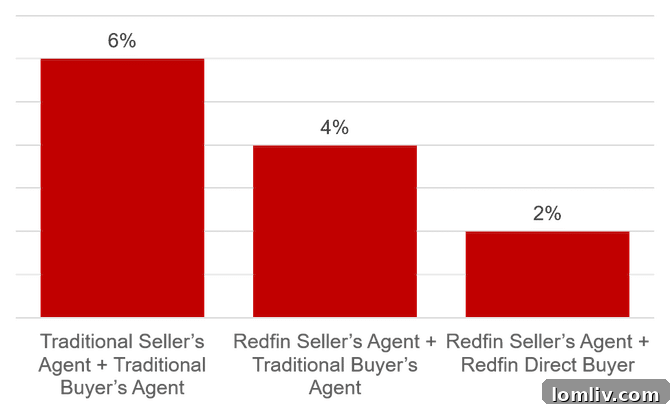
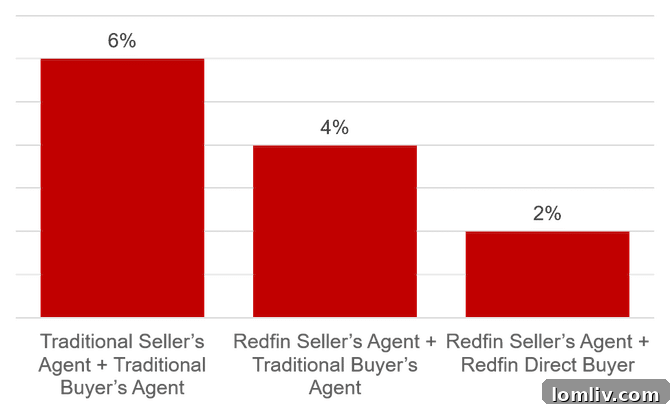
Redfin Direct empowers real estate buyers in major Texas metropolitan areas – including Dallas, Houston, Austin, and San Antonio – with an unprecedented capability: the option to submit direct, online offers on Redfin-listed homes. What makes this particularly revolutionary is the explicit promise of doing so without the assistance of a buyer’s agent, which, in essence, translates to paying zero commission for the buyer.
This move by Redfin targets a significant pain point for many buyers, offering a streamlined path to homeownership that bypasses traditional commission structures. With 231 active listings in North Texas alone, Redfin holds a discernible presence, commanding a 0.7 percent market share for units and an 0.8 percent market share for sales volume, according to NTREIS data. This solid foundation provides ample opportunity for Redfin Direct to gain traction.
Early Success and Diverse Buyer Profiles
The initial reception in Texas has been notably positive. “We have seen 10 offers thus far,” confirmed Tony King, Redfin’s Texas broker, highlighting the immediate demand for such an innovative service in North Texas. King shared insights into the varied demographic of early Redfin Direct adopters, noting that while high-end luxury sales haven’t yet materialized through this channel, the buyers span a wide spectrum.
Participants include seasoned investors, highly informed home buyers who have meticulously researched the market, and even some first-time homebuyers confident in navigating the process online. King emphasized the significant value Redfin represents in affluent areas like the Park Cities and Preston Hollow, where potential savings from reduced commissions can be substantial.
The Traditional Perspective: Valuing the Buyer’s Agent
Despite Redfin’s bold stride, not all industry veterans view Redfin Direct as a paradigm shift. Local brokers maintain that the ability for consumers to purchase homes without an agent is not new. Chris Kelly, President and CEO of the Ebby Halliday Companies, articulates this sentiment: “Consumers have always had the ability to purchase direct from a seller and listing agent; that part isn’t new.”
However, Kelly firmly underscores the profound value a buyer’s agent brings to the table. He argues that merely identifying a property is a rudimentary step in a complex transaction. The true essence of buyer agency lies in guiding the buyer, protecting their specific interests, and navigating the myriad intricacies of a real estate deal. “Helping to identify the property is just step one of about 100 that the buyer’s agent does, and is likely one of the smallest parts of their value proposition,” Kelly explained. He advocates for an expansion, not a diminution, of the role of buyer representation, stressing its critical importance in safeguarding buyer interests.
A Dual Advantage: Attracting Both Buyers and Sellers
Redfin’s strategic vision for Direct isn’t solely focused on buyers. The company also anticipates that this service will significantly boost its own listing volume. If sellers can make their properties more attractive by reducing the overall cost of sale – for instance, by eliminating or significantly lowering the customary 3 percent buyer’s agent commission – they might be more inclined to list their homes with Redfin. This creates a compelling value proposition that caters to both sides of the transaction, enhancing market competitiveness for Redfin sellers.
The “One-Stop Shop” Evolution: Redfin’s Comprehensive Suite
Redfin Direct first premiered in Boston in March, followed by Northern Virginia in July, demonstrating a calculated expansion strategy. However, Texas stands out as the first state where Redfin is rolling out a “complete suite of services designed to help Redfin’s clients make their move seamless,” as described by Adam Wiener, Redfin’s chief growth officer. This comprehensive approach underscores Redfin’s long-standing ambition to build a genuine one-stop shop for real estate transactions.
By bundling an array of services, Redfin aims to deliver amplified value at every stage of the home buying and selling journey. Wiener elaborates on how this integrated model unlocks novel capabilities for clients, particularly the “move-up buyer.” For such individuals, Redfin’s ecosystem, which includes services like RedfinNow (allowing sellers to sell their current home to Redfin for a quick cash offer), can facilitate obtaining a down payment for their next home in as little as seven days.
Redfin’s strategic positioning also involves thoughtful partnerships. While the company maintains an alliance with Opendoor in key markets like Phoenix and Atlanta, it notably concluded its partnership with RE/MAX, reflecting a dynamic and adaptable business strategy in a rapidly changing industry landscape.
Demystifying the Buyer’s Agent Commission: A Call for Transparency
The intricacies of real estate commissions, especially those pertaining to buyer’s agents, often remain opaque to the average consumer. As industry expert Mike Delprete aptly observes, “The buyer’s agent commission is one of the least understood aspects of real estate in the U.S.” He highlights a critical misconception: most consumers are unaware that the home seller, not the home buyer, typically covers the buyer’s agent commission.

Rethinking Buyer Representation: The Hourly Model Proposal
As it happens, this idea of paying buyer agents by the hour solves all of the current problems with buyer agency.
You instantly eliminate the problem of explaining fiduciary duty while getting paid by the other side based on the price of the house. “You pay me $100 per hour, so I work for you and protect your interests.” That’s about as clean an explanation there is.
You can’t have consumers thinking the buyer agent is overpaid because they get an invoice detailing all the work that the buyer agent did for them. It’s hard to say “You didn’t earn that!” when the agent drove you around for five hours looking at houses at the agreed-upon rate of $100 per hour.
You eliminate the risk-shifting that goes on because now, even those buyers who flake on buying a house paid along the way and the agent no longer has to get huge paydays out of the buyers who do end up buying a house. Per-transaction income goes down, but you get income from doing work, not from transactions; I think the entire thing ends up smoothing out and the agent might come out quite a bit ahead.
Finally, we’ll have price signals at last. A top notch expert agent who is constantly in demand can charge $500 an hour and have clients lined up waiting for her help. A less experienced agent might have to charge $15 an hour to build up experience, and some clients who are looking for a bargain might hire that agent.
Redfin’s Vision: Empowerment, Not Displacement
Tony King emphasizes that Redfin Direct is tailored for buyers who possess a certain level of comfort and confidence in independently navigating the home purchase process. However, he clarifies that Redfin is not abandoning its clients; “Every step of the way we can reach out to them with a Redfin agent.” King likens Redfin Direct to a “Turbotax” for real estate – a powerful tool that simplifies complex processes, making them more accessible to consumers. “Takes a 1099 form and makes it easier to fill out. Turbotax did not replace CPAs. Our software is not out to replace the agent,” he asserts.
This analogy sparks a crucial question: is Redfin’s overarching mission to streamline the process or fundamentally challenge the traditional commission structure? King responds by affirming Redfin’s fiduciary duty to its seller clients, focusing on maximizing their home’s value. He champions Redfin’s transparency in delivering savings to consumers. While direct buying isn’t exclusive to Redfin – “every listing agent will accept a non-represented offer” – King highlights Redfin’s unique advantage: a systematic, transparent platform designed specifically for this purpose.
The Future of Home Buying: An End-to-End Digital Experience
Redfin is undeniably pushing the boundaries toward creating an entirely online, comprehensive real estate experience. The company’s integrated services allow consumers to tour homes without an agent through Redfin Now, gaining convenient keybox access via their iPhone. By bundling mortgage and title services with Redfin Direct, a buyer could theoretically tour, purchase, and finance a home with minimal, or potentially even zero, direct human interaction. “We want to create an amazing end-to-end customer experience,” King states, envisioning a future that transcends a mere one-stop shop.
Anyone who has navigated the complexities of buying a home understands the mix of “agony and ecstasy” involved. Programs like Redfin Direct aspire to make this process more palatable and efficient. The potential for widespread success is significant, with industry giants like Realogy and Warren Buffett’s real estate ventures likely to replicate the concept if it proves overwhelmingly popular. The core question remains: Will Redfin Direct fundamentally alter consumers’ buying behavior?
Will Consumers Truly Abandon Agents?
Despite the allure of direct buying and potential savings, industry experts like Chris Kelly express skepticism regarding a mass exodus from professional agent services. “I think in short the answer is no for a vast majority of consumers,” Kelly concludes, citing recent NAR (National Association of Realtors) polling data. This research indicates that approximately 90 percent of consumers intend to utilize a Realtor for their next real estate transaction, a statistic that holds true for both buyers and sellers. This suggests that while innovative models offer alternative pathways, the perceived value of expert guidance and representation remains deeply entrenched for most consumers.
Redfin’s Enduring Legacy as a Real Estate Disruptor
Redfin’s journey began in Seattle, Washington, in 2004, founded by David Eraker, Michael Dougherty, and David Selinger. Its name, an inversion of “finder,” perfectly encapsulates its mission. Redfin was among the pioneering companies to envision how real estate transactions could be modernized, made more transparent for consumers, and offer cost savings through an online platform. Long before the advent of Google Maps, Redfin, largely thanks to ex-Amazon data mining trailblazer Selinger, ingeniously combined satellite maps with robust real estate data. This technological prowess was soon paired with an innovative agent model: salaried agents.
From its inception, Redfin has been hailed as one of the most serious disruptors in the real estate industry, a status that came with significant challenges. In 2006, CNN reported that Redfin even received threats from competitors who sought to “break their kneecaps.” In May 2007, shortly after being featured on the renowned program 60 Minutes, Redfin faced a $50,000 fine from The Northwest Multiple Listing Service (serving Puget Sound, Washington) and was compelled to shut down one of its agent review blogs, underscoring the fierce resistance it encountered from established players.
Despite these formidable obstacles, Redfin has accumulated numerous accolades. In 2012, Business Insider recognized Redfin as one of “The DIGITAL 100: World’s Most Valuable Private Tech Companies.” The following year, Inman News, a leading real estate industry publication, honored Redfin with its prestigious Innovator of the Year award for the second time, cementing its reputation as a consistent force for change and innovation.
Redfin transitioned to a publicly traded company in 2017, with its Initial Public Offering (IPO) raising an impressive $138 million at an offering price of $15 per share. The stock closed its first day of trading at $21.72, giving the company a robust market capitalization of $1.73 billion. As of October 16, 2019, Redfin’s market capitalization stood at $1.49 billion, reflecting its sustained presence and influence in the evolving real estate market.