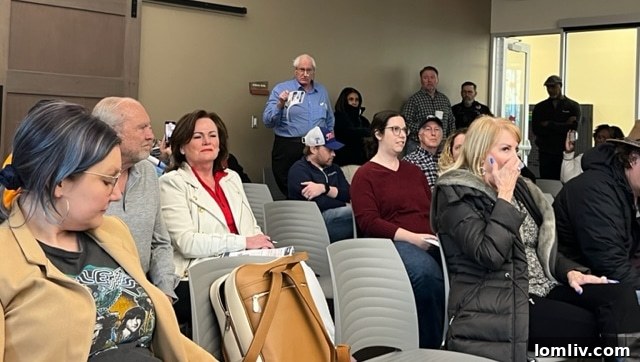
The air was thick with tension and unwavering resolve at a recent community meeting convened to discuss the proposed Cypress Creek at Forest Lane Public Facility Corp. (PFC) apartment project. Before the gathering even began on Saturday morning, a developer involved in the initiative candidly remarked to a reporter, “I don’t expect to accomplish anything. People aren’t coming here to have their minds changed.” His prediction, it seems, was largely accurate, as residents from all perspectives voiced their deeply entrenched views, underscoring the profound divisions surrounding the development.
Amidst a charged atmosphere punctuated by fervent accusations of deceit and “BS,” and highly sensitive claims that Lake Highlands residents were resistant to living alongside lower-income individuals, every neighbor present was given an opportunity to articulate their stance. Despite the high emotions, with some attendees displaying “No Apartments” signs and departing early, uniformed officers stationed at the rear of the room maintained order, ensuring that no one was compelled to leave, even as the debate grew increasingly heated.
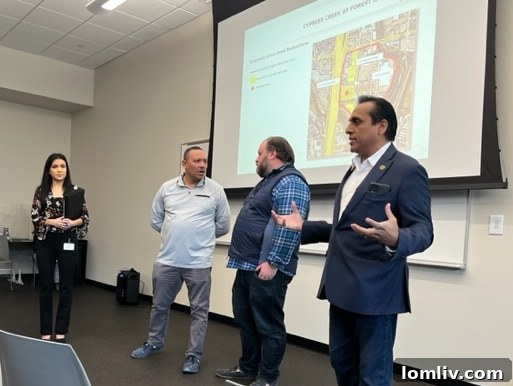
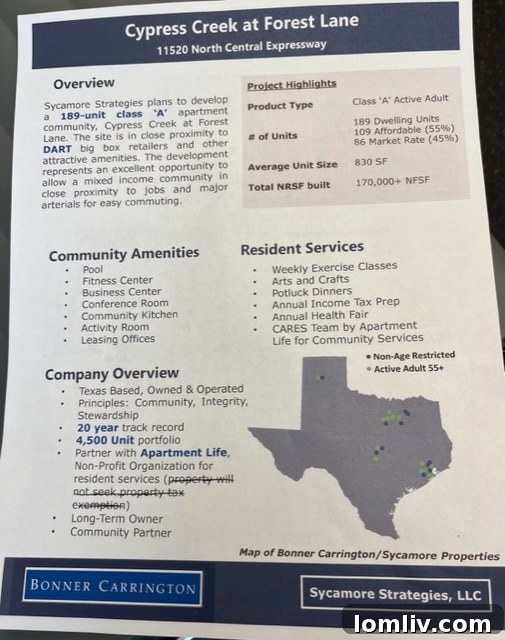
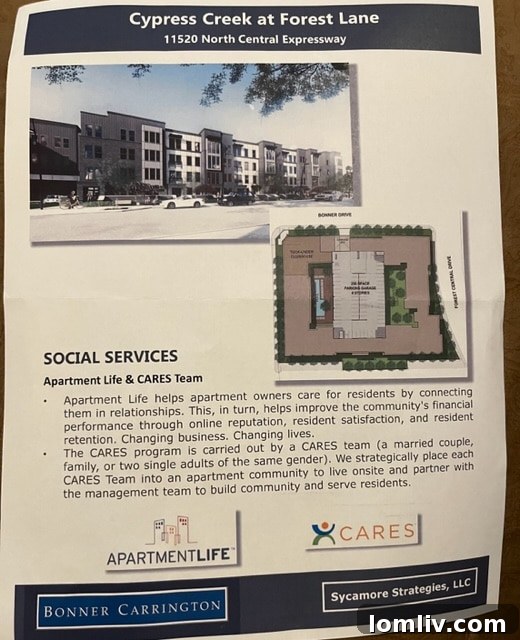
The proposed 189-unit multifamily complex, slated for 11520 North Central Expressway within Dallas’s District 10, has become a focal point of intense local debate. Councilman Adam McGough, representing this area, was unable to attend the pivotal meeting due to the recent passing of his father. However, his recorded statement, played for the attendees, left no doubt about his position and sentiments regarding the project’s journey thus far.
In his message, Councilman McGough revealed that he had voted against the project two years prior, citing a significant lack of genuine community engagement and a clear absence of support from the surrounding neighborhoods. He emphasized his commitment to his constituents, stating, “If this community is supportive, I will support it.” McGough vehemently rejected any blanket accusations of “Not In My Backyard” (NIMBY) sentiment directed at the neighborhood, calling such claims “false, ill-advised, and outright offensive.”
McGough also directed strong criticism towards Zachary Krochtengel, the developer from Sycamore Strategies, asserting that Krochtengel “had zero respect for the community.” He lauded the “thoughtful members on the PFC [board]” for having “finally tapped the brakes” on the project, suggesting that their intervention had brought the process to a necessary halt. “The breakdown is in trust,” McGough elaborated, “I do not trust the process this developer has undertaken, and quite honestly I don’t have any reason to. I am willing to try again. Let’s start over. Give this community respect. Let them engage and give feedback.” His words highlighted the critical need for renewed, transparent dialogue and genuine stakeholder involvement, setting a challenging tone for future discussions.
The Cypress Creek at Forest Lane Project: Bridging Housing Gaps in North Dallas
At the heart of the controversy is the Cypress Creek at Forest Lane project, a Class A apartment complex designed to provide essential low-income housing through a federal tax-credit program. David Noguera, the Dallas Director of Housing and Neighborhood Revitalization, provided crucial details, explaining that the development would feature approximately 109 affordable units, accounting for 55 percent of the total, alongside 86 market-rate units, making up the remaining 45 percent. This blend aims to create a diverse community while addressing critical housing needs.
A central point of contention revolves around the project’s utilization of the Public Facility Corporation (PFC) structure. Due to existing deed restrictions that prohibit residential construction on the site, developers in January requested to proceed through a PFC. This mechanism allows developers to pay an upfront development fee and lease the land from the PFC on a tax-exempt basis, effectively bypassing certain local property taxes and potentially local zoning hurdles. After a deferral in late February, the project is scheduled to go before the PFC Board for a second review on March 28, with District 10 PFC Board member Mark Holmes notably present at Saturday’s meeting.
Zachary Krochtengel, the Sycamore Strategies developer, faced an uphill battle from the moment he attempted to speak. Before he could fully articulate his points, a resident from Northwood Estates interrupted, unequivocally stating that neighbors did not want the Cypress Creek project. “You need to leave,” the resident declared, “You’re the problem.” Krochtengel, visibly frustrated by the constant interruptions and hostility throughout the meeting, steadfastly maintained that the proposed development is “extremely necessary in North Dallas.” He underscored a critical demographic and economic challenge, noting that a new affordable housing development has not been constructed in District 10 in over three decades.
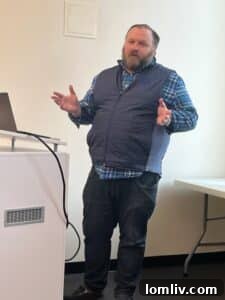
Krochtengel passionately argued for the project’s vital role in supporting the local economy: “These apartments are for people who work in our community. If you want to eat in a restaurant and you want to go grocery shopping, [the neighborhood] needs to have people who probably can’t afford to live in a single-family home in Preston Hollow or Northwood Estates. Without this type of housing, they can’t live near their jobs.” He pointed out that while numerous apartments are being built along the US 75 and Dallas North Tollway corridors, North Dallas has historically lacked affordable options. “If you look at the locations of affordable housing in Dallas, they’re in East Dallas, West Dallas, and South Dallas,” he said, attributing this disparity to “decades of purposeful public policy that has stopped [affordable housing in North Dallas].”
Adding a broader perspective, David Noguera highlighted Dallas-Fort Worth’s rapid expansion, noting it is the fourth largest metropolitan area in the U.S. with 7.6 million residents, soon expected to surpass Chicago as the third largest. “With that growth comes the need for housing production,” Noguera explained. “The City of Dallas has to figure out how we continue to produce housing. What you see us doing is looking for opportunities to bring on new housing in both established communities, like what you have here, and in areas that have green land.” This contextualization aimed to frame the Cypress Creek project not as an isolated incident but as a necessary response to the region’s dynamic growth and the increasing demand for diverse housing solutions across all income levels.
Neighborhood Feedback: Concerns and Opposition Mount
The community meeting provided a powerful platform for residents to articulate their deep-seated concerns, particularly regarding the Cypress Creek development. Woot Lervisit, a resident of the Floyd Lake Drive area, presented a comprehensive outline of the key issues troubling his neighborhood, reflecting widespread sentiment against the project.
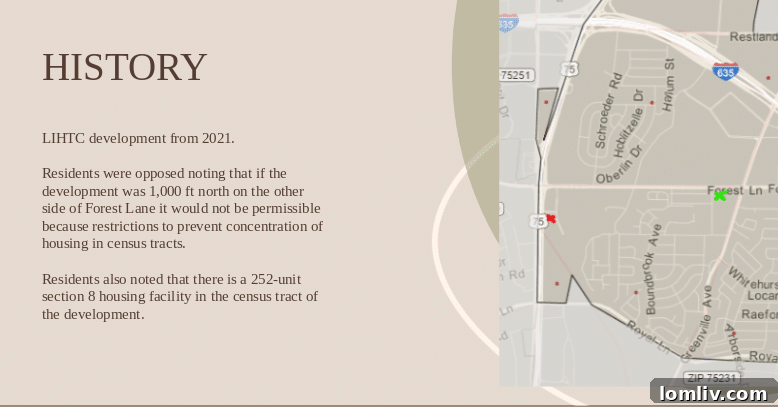
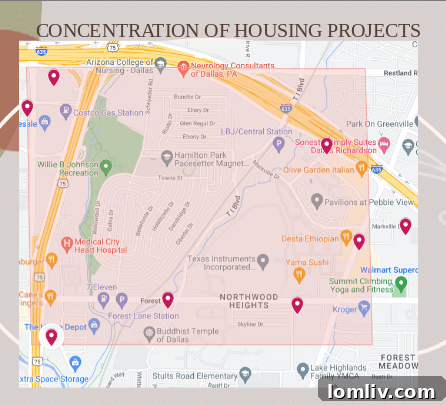
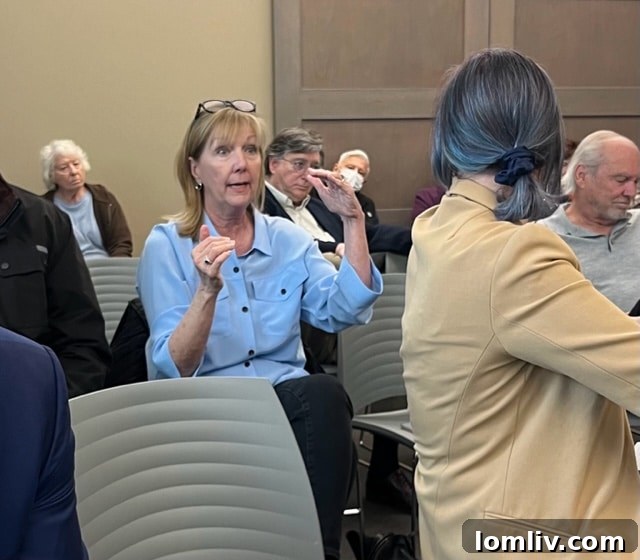
A primary point of contention, and a legal linchpin for many residents, centered on existing deed restrictions. William Roth, who owns a substantial 75,000-square-foot office building directly adjacent to the proposed Cypress Creek site, forcefully addressed this issue. “The deed restriction does not allow apartments on that property,” he asserted. Roth conveyed a profound sense of injustice, arguing that any city action to disregard these restrictions would constitute an improper “taking of our private property rights.” He clarified that his opposition was not a referendum on affordable housing or the quality of the apartments but a fundamental defense of property owners’ rights to control development in their area. “For the city to be able to take that right away from us for the enrichment of a private developer does not seem to be the right thing to do,” Roth concluded, articulating a widely shared sentiment of betrayal and overreach by public bodies.
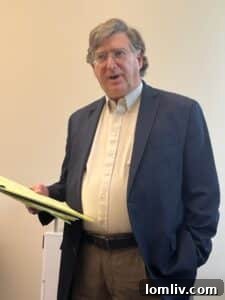
While the overwhelming majority of attendees voiced strong opposition, a few individuals, including the outreach director for the Inclusive Communities Project, spoke in favor of the development, highlighting the critical need for diverse housing options. However, the dominant sentiment among meeting participants gravitated toward deep skepticism and concern regarding developer tax credits, potential impacts on crime rates, and, most prominently, the disregard for established deed restrictions.

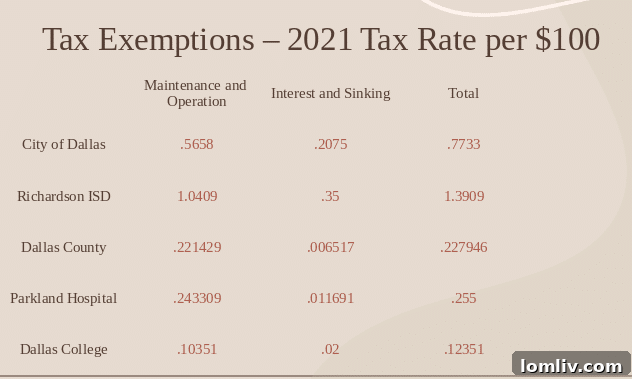
Regarding the controversy surrounding tax exemptions, David Noguera attempted to clarify the city’s perspective. He explained that the fundamental costs of constructing an apartment complex—such as windows, concrete, and labor—remain constant, regardless of the income level of future residents. “When you’re looking at costs, you have to look at where you can create a subsidy so you can offer rents at a lower price,” Noguera stated. He pointed out that grants are one method for lowering development costs, and the elimination of property tax through mechanisms like PFCs is another, directly contributing to the feasibility of affordable rental rates.
However, the explanations did little to assuage the frustrations of many. Mike Nelson of Northwood Estates epitomized this sentiment of exasperation, questioning the very purpose of the Saturday meeting. “Why are we here?” he demanded. His analogy succinctly captured the community’s feeling of being ignored: “When there’s a red light on the street, you stop. You don’t yield and then enter. This has been stopped before. Why is this political chicanery happening?” Nelson’s powerful query underscored the pervasive sense that the community’s previous rejections of the project were being circumvented by political maneuvering and development structures, rather than being respected. The ongoing debate highlights the complex challenges cities face in balancing urban growth and affordable housing needs with existing community rights and deep-seated local concerns.