

The demographic landscape of major American cities is in constant flux, but few shifts are as significant as the ongoing migration of the Millennial generation. Often defined by their unique experiences growing up in the digital age, Millennials are increasingly choosing new urban and suburban havens. Among the most prominent beneficiaries of this trend are two dynamic Texas cities: Frisco and Dallas. It comes as no surprise to see these vibrant hubs emerge as preferred destinations, not just for the previous generation, but for young professionals and families eager to build their futures.
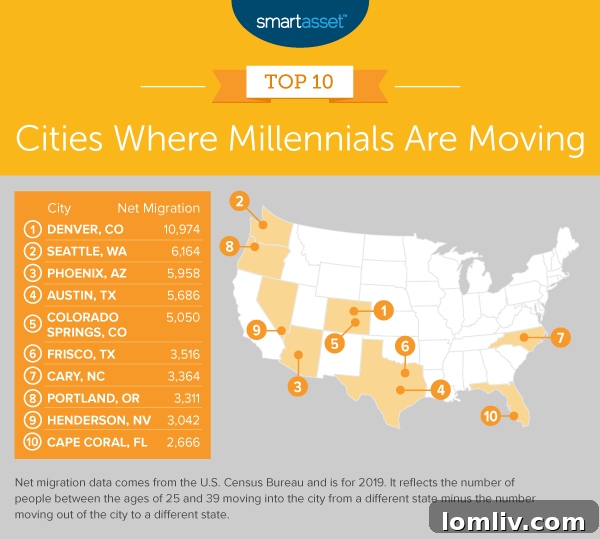
This generational movement is more than just anecdotal; it’s a measurable phenomenon. A recent and comprehensive analysis by SmartAsset vividly illustrates this shift. The study, now in its fifth annual iteration, meticulously reviewed U.S. Census Bureau data, focusing on the migration patterns of individuals aged 25 to 39. The findings are compelling: Frisco secured an impressive sixth place nationally, while its larger neighbor, Dallas, ranked eleventh among the top cities witnessing a significant influx of Millennials.
The Great Millennial Migration: A National Trend
For over a decade, starting notably after the economic challenges of the Great Recession between 2007 and 2009, and accelerating even further before and during the COVID-19 pandemic, Millennials have been progressively departing from the nation’s traditionally largest and most expensive metropolitan areas. This exodus is driven by a complex mix of factors, including the soaring cost of living, diminishing housing affordability, and a persistent desire for an improved quality of life. Cities like New York City, which experienced a net loss of nearly 40,000 Millennials in 2019 alone, and Chicago, with a net decrease exceeding 11,000 in the same year, exemplify this trend.
Where are they headed? The data points to emerging tech hubs and more affordable, yet opportunity-rich, urban centers. Denver, Seattle, Phoenix, Austin, and Colorado Springs have consistently attracted this demographic, offering a compelling blend of robust job markets, particularly in technology, and a more attainable cost of living. These cities present an attractive alternative to the hyper-competitive and often prohibitive environments of traditional gateway cities, allowing Millennials to achieve financial stability and personal growth.
Texas: The Lone Star Magnet for a Generation
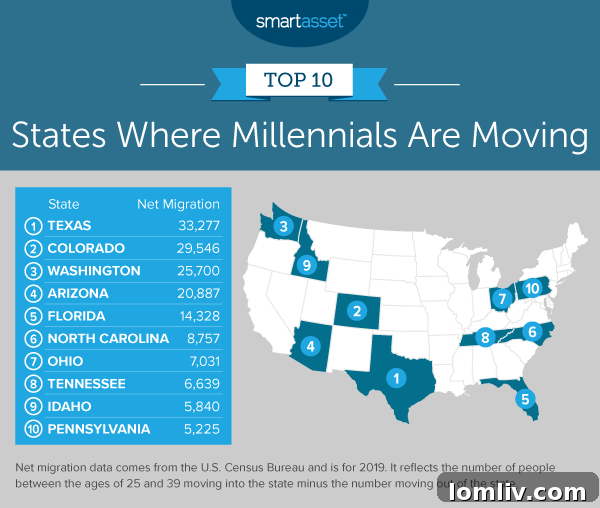
Amidst this nationwide demographic recalibration, one state stands out as a clear frontrunner: Texas. For the second consecutive year, the Lone Star State proudly claimed the top position for net Millennial migration. According to 2019 data, a remarkable net influx of over 33,000 Millennials chose Texas as their new home, with more than 187,000 individuals aged 25-39 moving in, while approximately 154,000 departed. This unparalleled magnetism underscores Texas’s growing appeal as an economic powerhouse and a desirable place to live.
The reasons behind Texas’s extraordinary success are multifaceted. The state boasts a pro-business environment, characterized by favorable tax policies and less stringent regulations, which has fueled an impressive economic boom across various sectors. The absence of a state income tax is a significant financial draw, allowing residents to retain more of their earnings. Furthermore, the cost of living, particularly housing, remains considerably more affordable in many Texas cities compared to coastal metropolitan areas. This affordability, combined with a diverse and expanding job market, especially in technology, healthcare, and energy, creates a potent combination for Millennials seeking both career advancement and a sustainable lifestyle.
Deep Dive into North Texas: Frisco and Dallas Leading the Charge
While the entire state of Texas is thriving, the Dallas-Fort Worth metroplex, anchored by Frisco and Dallas, is particularly hot. These cities offer distinct yet complementary attractions that resonate deeply with the Millennial demographic. Let’s delve into the specific appeal and growth statistics of these two North Texas giants.
Frisco: The Suburban Oasis with Urban Amenities
Frisco, a rapidly expanding city north of Dallas, embodies the ideal suburban environment for many Millennials transitioning into family life or seeking a higher quality of life without sacrificing career opportunities. The SmartAsset report highlighted Frisco’s exceptional growth, with its Millennial population increasing by a robust 9.15 percent. This translates to a net influx of 3,516 Millennials from out of state. Currently, Millennials constitute a significant portion of Frisco’s demographic makeup, representing 19.16 percent of its total population – approximately 38,419 out of 200,513 residents. This substantial presence underscores Frisco’s success in attracting and retaining younger generations.
Frisco’s allure stems from its master-planned communities, top-tier schools, abundant recreational facilities, and a growing array of dining and entertainment options. It’s a city designed for modern living, offering a perceived safety and community spirit that appeals to those looking to plant roots. The presence of major corporate campuses and a burgeoning tech sector also means that residents don’t have to commute far for high-quality employment opportunities.
Dallas: A Dynamic Urban Core Reimagined
Dallas, the sprawling urban heart of North Texas, offers a different, yet equally compelling, proposition. With a net gain of 2,524 Millennials, Dallas continues to solidify its position as a magnet for young professionals. The city’s transformation over the past decade has been remarkable, with revitalized downtown districts, a burgeoning arts and culture scene, and diverse neighborhoods catering to every lifestyle. Dallas strikes a balance between big-city amenities and a relatively lower cost of living compared to other major U.S. metropolises.
The job market in Dallas is a significant draw. Beyond its traditional strengths in finance and energy, Dallas has rapidly emerged as a prominent tech hub. A recent study by CompTIA, analyzing job-posting data from Burning Glass Technologies Labor Insights, revealed Dallas’s impressive rise to third place among U.S. cities for tech job postings, with a staggering 13,336 openings. This positions Dallas just behind tech giants New York and Washington, D.C., signaling its undeniable ascent in the digital economy. The availability of diverse tech roles, from software development to cybersecurity and data science, provides ample opportunities for Millennials seeking dynamic and well-paying careers.
Texas’s Broader Appeal: Other Millennial Hotspots
The appeal of Texas extends beyond just Frisco and Dallas. Several other Texas cities also made significant impressions in the SmartAsset rankings, further cementing the state’s status as a top destination for Millennials. Austin, the state capital and a long-established tech and creative hub, ranked an impressive fourth nationally, attracting a substantial net gain of 5,686 Millennials. Its vibrant culture, innovative tech scene, and outdoor lifestyle continue to be a powerful draw.
Houston, another economic titan, secured the 18th spot, leveraging its massive job market, particularly in energy, healthcare, and aerospace. San Antonio, known for its rich history and growing medical and cybersecurity sectors, ranked 27th, demonstrating a broader statewide trend of Millennial influx. These cities collectively paint a picture of a state offering diverse opportunities and lifestyles, catering to a wide range of Millennial preferences and career paths.
The Voice of Influence: Mark Cuban on Texas’s Rise
The growing recognition of Texas, and particularly Dallas, as a prime destination for the “wired generation” is not lost on influential figures. Entrepreneur and investor Mark Cuban, a long-time resident and champion of Dallas, eloquently articulated this sentiment during his appearance at SXSW. While his comments were initially directed at business leaders, their implications resonate deeply with the Millennial workforce. Cuban’s perspective provides valuable insight into the tangible and intangible assets that make North Texas so appealing.
“Put aside the tax element, you’ve got a great workforce, you’ve got a willing workforce that wants to work, people who like coming to the job every day. You’ve got a young, vibrant, educated community,” Cuban emphasized. This statement encapsulates the core attributes driving Millennial migration: a robust job market, a motivated and skilled labor pool, and a dynamic community that values education and innovation. The “wired generation” seeks environments where their skills are valued, opportunities are abundant, and quality of life is high – precisely what cities like Dallas are increasingly offering.
Beyond the Numbers: Lifestyle and Community
While economic factors and job availability are undeniably critical, Millennials also prioritize lifestyle, community, and cultural vibrancy. Frisco and Dallas excel in these areas, offering a rich tapestry of experiences. Dallas, with its diverse culinary scene, world-class museums, extensive park systems, and lively entertainment districts, provides a cosmopolitan urban experience. Its commitment to public transport and walkable neighborhoods further enhances its appeal to younger generations who often prefer an active, less car-dependent lifestyle.
Frisco, on the other hand, offers a family-friendly atmosphere with an abundance of green spaces, community events, and state-of-the-art sports and entertainment venues. Its planned growth has ensured that infrastructure keeps pace with population expansion, maintaining a high standard of living. Both cities boast a strong sense of community, with numerous social groups, volunteer opportunities, and cultural festivals that foster engagement and belonging – elements highly valued by Millennials seeking to integrate into their new homes.
The Road Ahead: Sustaining Growth and Attracting the Future
The consistent ranking of Frisco and Dallas among the top destinations for Millennials is a testament to their dynamic economies, diverse opportunities, and evolving urban landscapes. As the Millennial generation continues to mature, their choices for where to live, work, and raise families will profoundly shape the future of American cities. Texas, with its business-friendly climate, economic resilience, and growing tech sector, is well-positioned to maintain its appeal. However, the ongoing influx also presents challenges related to infrastructure, housing affordability, and sustainable development. As these North Texas cities continue to attract talent and investment, their ability to adapt and innovate will be key to sustaining this remarkable growth and remaining beacons for future generations.