Navigating Urban Challenges: The San Francisco Homelessness Crisis and Its Impact on Major Events
San Francisco, a city renowned for its innovation, stunning landscapes, and cultural vibrancy, often serves as a magnet for global conferences and events. However, beneath its polished facade, the city grapples with significant urban challenges, particularly a highly visible and escalating homelessness crisis. This issue came into sharp focus during a recent Inman Real Estate Connect conference, prompting considerable debate and even a formal petition to reconsider the event’s location. The experiences of attendees, including my own, shed light on a complex problem that extends beyond mere inconvenience, touching upon matters of personal safety, public health, and the very image of one of America’s most iconic cities.
The Growing Discomfort: Calls for Relocation
The prestigious Inman Real Estate Connect conference, an annual gathering of real estate industry leaders and innovators, took place in San Francisco last week. While the conference itself was, as always, a valuable and engaging experience, the surrounding urban environment sparked significant concern among participants. A Change.com petition, initiated by industry voice Rob Hahn from Houston, Texas, quickly gained traction, advocating for the relocation of the conference away from San Francisco’s Tenderloin district. The petition articulated a sentiment widely shared by attendees, highlighting a stark contrast between the high-caliber professional event and its challenging surroundings.
ICSF is a great event held in a horrifyingly bad location. Whether we’re getting more sensitive, or the vagrants and panhandlers around the Hilton are getting worse, things have never been as bad as they were this year. We are now actually afraid and worried about our physical safety. Networking with our industry peers should not have to include fending off a half-dozen super aggressive panhandlers, or getting screamed at by mentally unstable homeless people, or dealing with sexual harassment from vagrants. It’s time. Move the ICSF conference out of the Tenderloin. The homeless problem in San Francisco is bad and getting worse.
This powerful testimony underscores the depth of concern felt by many. The petition’s emphasis on physical safety and the increasing aggression of panhandlers and mentally unstable individuals suggests that the problem has evolved beyond mere visibility to become a direct threat to the comfort and security of visitors. For an event designed to foster networking and collaboration, an environment that induces fear and necessitates constant vigilance poses a significant challenge. My immediate, somewhat lighthearted, suggestion was for the conference to consider Texas – albeit not during its notoriously hot August months – a testament to the desire for a more welcoming and secure locale.
Personal Encounters and Industry-Wide Complaints
The call to move the conference location resonates deeply with my own observations and the numerous complaints I heard throughout the week. The anecdotal evidence gathered from various attendees paints a vivid picture of the deteriorating conditions. For instance, colleagues Clay Stapp and James Bohan-Pitt recounted witnessing individuals openly engaging in heroin use on the streets, a disturbing sight that, to their astonishment, seemed to be an everyday occurrence in the area. Such blatant displays of illicit drug activity create an unsettling atmosphere, impacting the overall perception of safety and order.
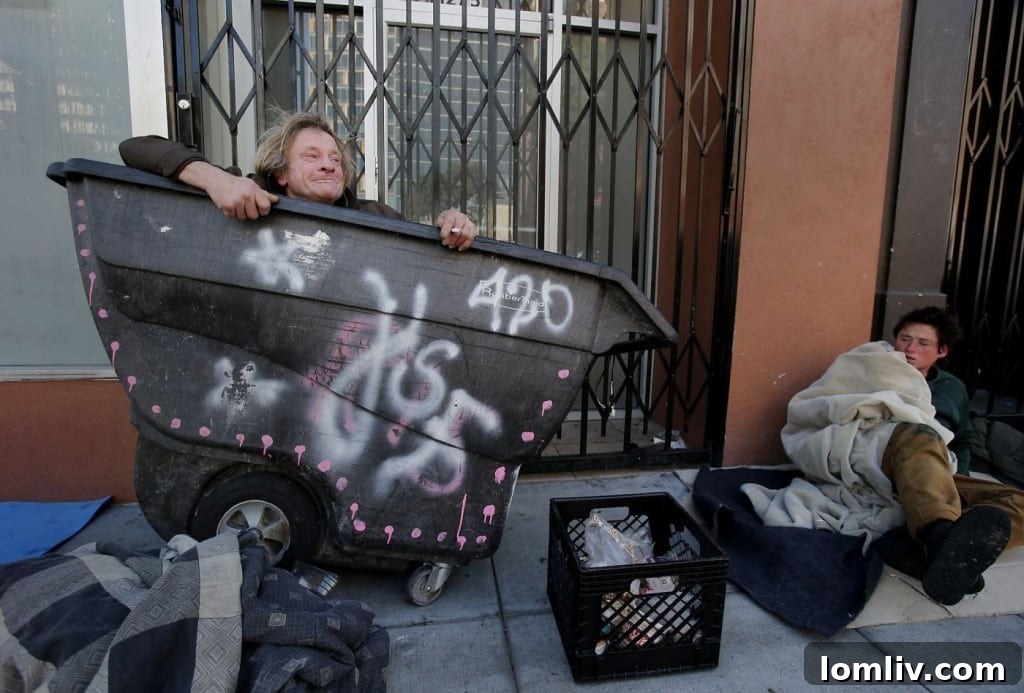
Another exhibitor shared a particularly harrowing experience: his brand-new Apple computers were stolen from his car on the very first night of the conference. This incident not only resulted in a substantial financial loss but also triggered a frantic scramble to secure replacement equipment overnight to ensure his booth was adequately stocked for the following days. Such incidents of property crime not only affect individuals but can also deter businesses from participating in future events in the city. The professional attendees, many of whom were real estate agents, frequently expressed frustration about having to navigate around homeless individuals, their makeshift encampments, and the pervasive presence of garbage and human waste. The visual and olfactory assault detracts significantly from the conference experience, making simple commutes between venues feel like an arduous journey.
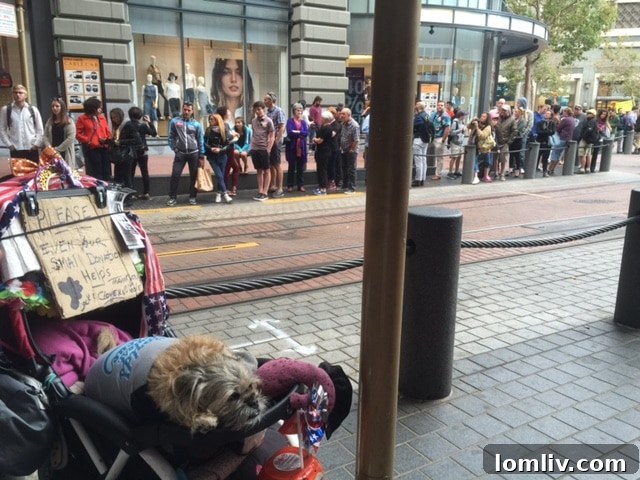
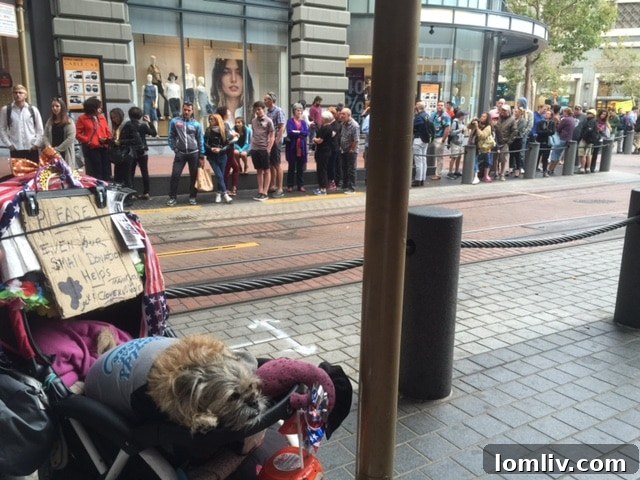
One particularly distressing observation was the visible shift in demographics among those begging on the streets. It was no longer just men or individuals accompanied by pets seeking aid; increasingly, women cradling infants were seen with begging cups, a heart-wrenching sight that highlights the deepening severity and human cost of the crisis. These vulnerable individuals add another layer of complexity to an already intractable problem, challenging conventional approaches to relief and public engagement. My own arrival in San Francisco, following an early morning flight, lost luggage, and little rest, was compounded by an immediate and unsettling personal encounter, revealing that the city’s “inflated commodities” extended beyond real estate prices.
Seeking a quick meal across from the Hilton at the Old Siam Restaurant, I settled down to catch up on emails. My moment of quiet was abruptly interrupted when a man entered and seated himself directly at my table. For a fleeting second, I wondered if I knew him, as his appearance wasn’t overtly disheveled – a testament to the city’s unique challenge of distinguishing between the diverse array of its residents. His opening line, “You are so beautiful,” immediately signaled that this was not a genuine social overture. While a part of me briefly considered the intriguing possibility of buying him lunch for a unique story, the immediate thought of traveling alone swiftly cautioned against it. When I politely tried to convey my busyness, he directly propositioned, “Just give me $10, and I’ll leave.” The implied baseline for begging in San Francisco, a demand for a ‘tenspot’, further underscored the audacity and escalating nature of these street interactions. Alerting the cashier to the situation, I was met with her surprising admission: “I thought he was with you.” This interaction epitomizes the blurred lines and challenges faced by both residents and visitors in areas heavily impacted by homelessness and aggressive panhandling.
San Francisco’s Struggle: Unconventional Solutions and Unenforced Laws
The experiences of conference attendees are not isolated incidents but symptoms of a larger, systemic issue that San Francisco has been battling for decades. The problem of vagrancy and aggressive street behavior appears to be worsening, compelling the city to resort to increasingly unconventional measures. In a desperate attempt to curb rampant public urination, for example, the city has implemented a rather unique solution: nine public walls have been coated with a special repellent paint. This innovative coating causes urine to spray back onto the shoes and pants of the person urinating, acting as a deterrent.
Signs reading “Hold it! This wall is not a public restroom. Please respect San Francisco and seek relief in an appropriate place,” hang above some walls. The signs don’t explicitly state that the wall will fire back, the newspaper reports. Public urination has long been a problem in San Francisco. Legislation banning it in 2002 has seen little success, despite a fine of up to $500.
While amusing in its ingenuity, this measure highlights the severity of the problem and the city’s struggle to find effective solutions to basic public hygiene issues. The pungent odors pervading many parts of the city, often noted by visitors and residents alike, are a direct consequence of this widespread public urination, a problem that a 2002 legislative ban and a hefty $500 fine have failed to meaningfully address.
The Paradox of Laws Without Enforcement
Contrary to perceptions held by some, San Francisco does possess a legal framework designed to address many of these public disturbances. Laws exist banning sitting or lying on sidewalks, as well as prohibiting yelling and threatening passersby. However, as numerous reports and local residents attest, these laws frequently lack enforcement, rendering them largely ineffective.
Despite several laws on the books that Newsom promoted (and that have been blasted by homeless advocates as being mean-spirited), there’s not much police enforcement of them. Newsom’s voter-approved 2010 ban on sitting or lying on sidewalks isn’t enforced much outside the Haight, for example. More significantly, open-air drug dealing and drug use persist, public urination and defecation are widespread, and downright creepy behavior such as screaming at and threatening passersby is tolerated. The Ten Year Plan avoided much discussion of law enforcement.
This lack of consistent enforcement creates a paradoxical situation where regulations exist on paper but fail to translate into tangible improvements on the streets. The tolerance of open-air drug dealing, public defecation, and aggressive behavior not only erodes the quality of life for residents but also creates an environment that deters tourism and business.
The Scale of the Crisis and Past Efforts
The scale of San Francisco’s homelessness problem is immense. Research suggests there could be as many as 6,500 homeless individuals in the city at any given time, a staggering figure for such a compact urban center. Over a decade ago, the city embarked on significant initiatives, spending an estimated $1.5 billion and successfully moving 19,500 homeless individuals off the streets. However, this impressive effort highlights a fundamental challenge: the “revolving door” nature of homelessness. As one individual finds shelter, another often falls into homelessness, making sustained progress difficult to achieve.
A program that directly paid homeless individuals, intended to provide immediate support, was discontinued in 2007, reflecting the ongoing debate about the most effective and sustainable approaches to alleviating the crisis. More recently, the current Mayor, who has faced criticism for allegedly prioritizing tech job growth over housing solutions for the city’s most vulnerable, has focused on clearing out large homeless encampments. For instance, efforts have been made to address the estimated 400 homeless individuals camping in the Mission District and surrounding neighborhoods, a response to mounting complaints from residents and businesses. While these actions aim to improve public spaces, they also ignite discussions about displacement versus providing long-term, stable housing solutions.
A Look at Dallas: Lessons and Comparisons
The challenges faced by San Francisco are not unique, though perhaps more pronounced in its specific context. Many major American cities grapple with similar issues of homelessness, poverty, and urban decay. Examining other metropolitan areas, such as Dallas, Texas, can offer valuable insights and potential lessons.
In Dallas and Collin counties, the problem of homelessness has also seen fluctuations. The number of chronically homeless individuals, defined as those who have been homeless for a year or more, or have had at least four episodes of homelessness in the past three years, reportedly rose by 26 percent in a recent annual count. This metric is crucial because chronically homeless individuals often require more intensive and sustained support, including mental health services and substance abuse treatment.
According to an annual report by the Metro Dallas Homeless Alliance, the total homeless population in Dallas County increased from 2,972 in 2013 to 3,314 in 2014. However, it’s notable that during the same period, the number of chronically homeless individuals in Dallas dropped significantly by 37 percent to 413. This apparent contradiction highlights the complexity of measuring homelessness. A rise in the total homeless population might be offset by success in reducing chronic homelessness, suggesting that targeted interventions can be effective for specific segments of the homeless community. Dallas’s ability to reduce its chronically homeless population, even as the overall numbers fluctuated, could offer valuable strategies for San Francisco.
The Future of Conferences and Urban Responsibility
The concerns raised by Inman Real Estate Connect attendees underscore a critical dilemma for cities that aspire to host major conferences and maintain their status as global hubs. As urban challenges like homelessness, public safety, and hygiene become more pronounced, event organizers and attendees are increasingly evaluating the overall experience offered by a host city, not just the quality of its convention centers.
It will be particularly interesting to observe how future decisions are made regarding the location of conferences like Inman. Will event organizers opt to distance themselves from problem areas, perhaps by shunning hotels bordering districts like the Tenderloin? Or will they, in more drastic scenarios, choose to relocate to entirely different cities that offer a more secure and welcoming environment? The economic implications for cities like San Francisco, which rely heavily on tourism and convention revenue, are significant. A consistent decline in attendance or a shift in conference venues could have a cascading effect on local businesses, hotels, and the city’s overall economy.
Beyond the immediate economic concerns, the ongoing debate serves as a crucial reminder of the broader civic responsibility that cities bear. Maintaining public safety, addressing social inequalities, and ensuring a reasonable quality of life for all residents – and by extension, visitors – are not merely optional endeavors but fundamental pillars of a thriving urban center. There may indeed be profound lessons for Dallas and other growing metropolitan areas in these ongoing challenges, urging them to proactively address burgeoning urban issues before they escalate to the point where they deter critical economic activities and tarnish a city’s global reputation. The call to action is clear: for cities to remain competitive and attractive, a holistic approach to urban management, encompassing both economic development and social welfare, is paramount.