Typically, municipal budgets allocate a smaller portion of their overall funds to housing initiatives, as a significant portion of these investments often originate from diverse external sources. These can include federal grants, specialized state programs, tax-increment financing districts, and various other established financial mechanisms designed to support housing development and revitalization. However, the City of Dallas is distinguishing itself by making affordable housing a clear and undeniable priority within its broader strategic vision. This commitment prompts a deeper investigation into whether the city’s financial blueprint truly reflects its stated goals. Is Dallas genuinely putting its money where its mouth is when it comes to addressing the critical need for accessible and affordable housing options for its residents?
As daltxrealestate.com delves into the specifics, the initial findings point to a robust, multi-faceted approach. The city’s dedication to this cause is not merely rhetorical but appears to be embedded within its fiscal planning, signaling a significant shift in how Dallas addresses one of its most pressing urban challenges. Understanding the nuances of this budget and its implications for housing is crucial for residents, developers, and policymakers alike, as it will shape the urban landscape and quality of life in Dallas for years to come.
Dallas’s Ambitious Budget Proposal Prioritizes Fiscal Responsibility and Community Needs
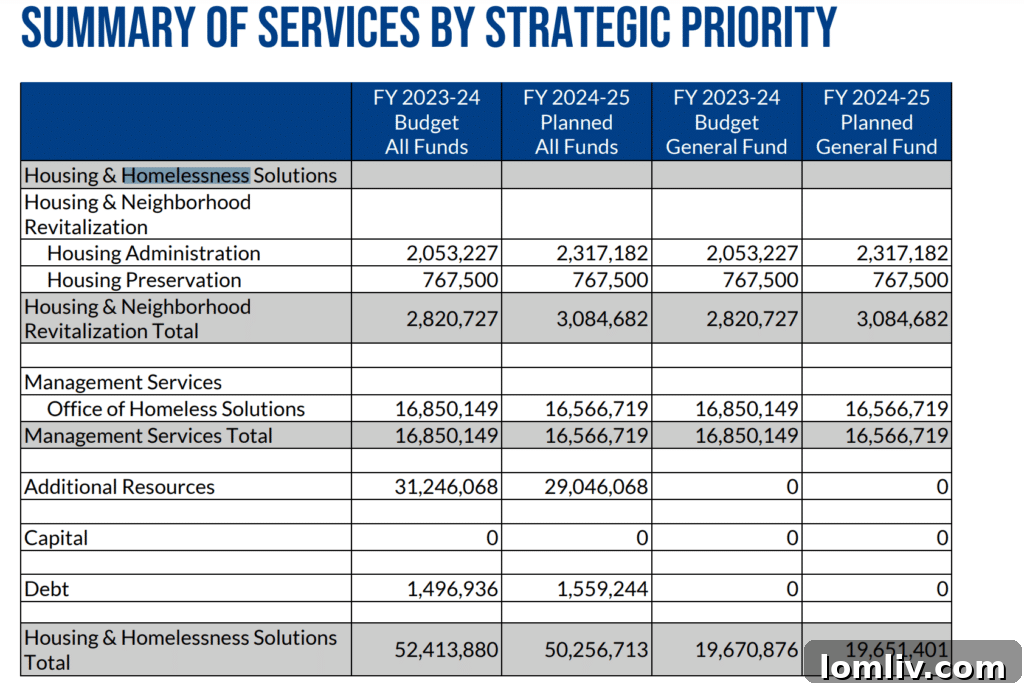
Dallas City Manager T.C. Broadnax has unveiled a comprehensive and ambitious $4.63 billion recommended budget for the upcoming fiscal year. This substantial proposal is built upon a foundation of fiscal prudence, notably featuring a proposed decrease in the property tax rate to 73.93 cents per $100 of assessed valuation. If this recommendation receives approval from the City Council in September, it will mark a significant milestone: the eighth consecutive year that the Dallas City Council has successfully reduced the property tax rate. This sustained commitment to lowering the tax burden on its citizens underscores a broader strategy to foster economic stability and enhance affordability across the city.
Despite the optimism surrounding this proposal, the path to final approval is a deliberate and multi-stage process, ensuring thorough public input and legislative scrutiny. The budget’s journey begins with extensive community engagement, allowing residents to voice their perspectives and concerns. A series of critical budget town hall meetings have been meticulously scheduled in every City Council district, running from August 10 through August 24. These meetings are vital forums for transparent dialogue, enabling direct interaction between city officials and the communities they serve.
Furthermore, the Dallas City Council convenes for its initial budget workshop of the season at 9 a.m. on Tuesday, August 8. This workshop marks the formal commencement of the council’s detailed review of the proposed budget. Throughout this process, council members are expected to propose various amendments, reflecting specific district needs and evolving city priorities. The culmination of these deliberations will lead to the budget’s official adoption, slated for late September, just before the new fiscal year commences on October 1. For those interested in the granular details of the city’s financial planning, City Manager Broadnax’s comprehensive 724-page recommended budget book, along with previous years’ budgets, is readily accessible online. This commitment to transparency ensures that all stakeholders can thoroughly examine and understand the city’s fiscal strategy.
Strategic Investments in Dallas Housing and Neighborhood Revitalization
While the housing budget, at first glance, may not appear “massive” when juxtaposed with the impressive $4.63 billion total city budget, its strategic importance and impact are profound. This segment of the budget is not merely a line item; it represents a critical engine for community development, fueled by a steady and reliable revenue stream derived from federal grants, state programs, and reimbursements. These external funds act as essential multipliers, significantly amplifying the city’s direct investment in housing. Moreover, the city’s broader commitment to economic development, robust infrastructure, and innovative homeless solutions collectively contributes to cultivating an appealing and stable environment for both builders and real estate developers, encouraging further private sector engagement in addressing housing needs.
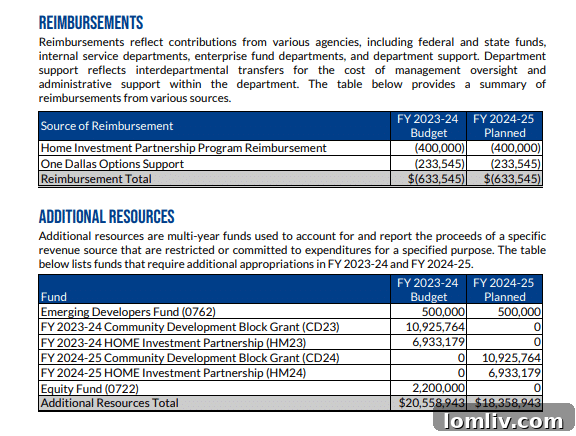
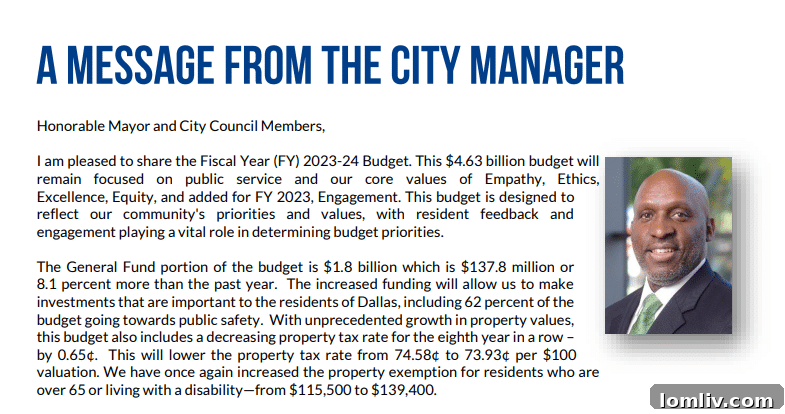
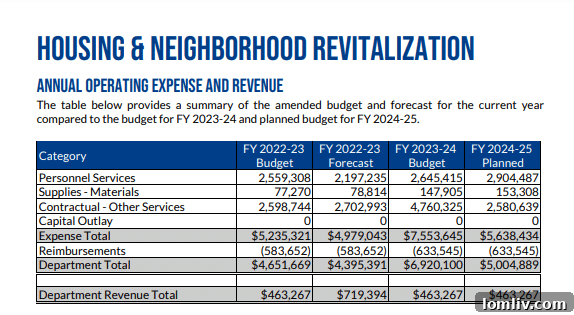
For the 2023-24 fiscal year, the City of Dallas is proposing an allocation of approximately $6.9 million for Housing and Neighborhood Revitalization. This represents a substantial increase from the previous year’s budget of about $4.7 million, underscoring the city’s escalating commitment to this vital sector. These funds are meticulously earmarked to support a trifecta of crucial areas: efficient housing administration, diligent housing preservation efforts to maintain existing affordable units, and the energetic promotion of new housing development across various income levels. This holistic approach ensures that resources are directed towards both sustaining current housing stock and expanding future opportunities.
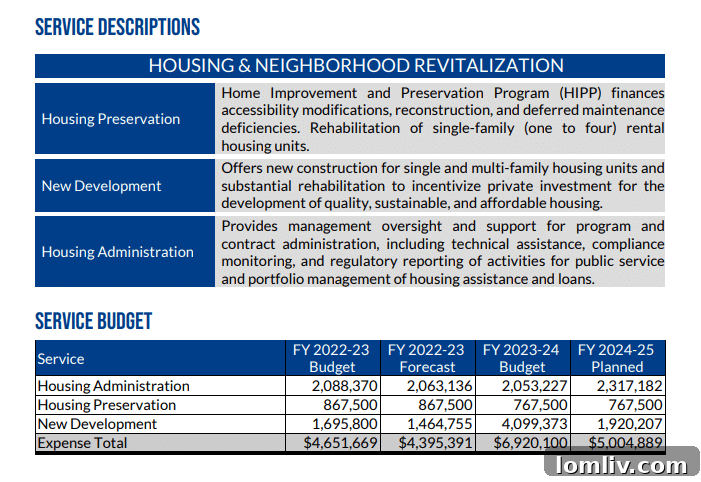
In a recent exclusive budget preview, City Manager Broadnax highlighted several key initiatives poised for significant boosts. Foremost among these is the senior home repair program, which is set to receive an additional $1.7 million. This critical investment will enable more elderly residents to safely and comfortably remain in their homes, addressing essential maintenance and accessibility needs. Beyond senior housing, other allocations are strategically directed towards vital infrastructure investments within the city’s designated equity priority areas. These investments aim to correct historical disparities and foster equitable growth across all communities.
Broadnax emphasized the city’s dedication to fair housing practices, stating during a webinar with local reporters, “We’re going to invest $100,000 into our fair housing equity plan to really bring it into alignment with our city’s Racial Equity Plan, particularly from a housing perspective.” This alignment ensures that housing policies not only promote affordability but also actively combat discrimination and ensure equitable access for all residents, regardless of background.
Addressing the complex issue of homelessness, the recommended budget includes approximately $1.5 million for contractual services dedicated to the humane and effective decommissioning of homeless encampments. This initiative is coupled with efforts to provide alternative, stable housing solutions and support services for those experiencing homelessness. Furthermore, as the popularity of transient accommodations continues to grow, about $1.4 million is recommended for a dedicated short-term rental “regulations enforcement team.” This team will play a crucial role in ensuring that short-term rentals operate in compliance with city ordinances, mitigating potential negative impacts on long-term housing availability and neighborhood character. Rounding out the city’s housing financial framework, the budget projects approximately $20.5 million from “additional resources.” These include significant federal contributions such as the Community Development Block Grant (CDBG), which provides flexible funding for community development activities, and the HOME Investment Partnerships Program (HOME), specifically designed to create affordable housing for low-income households. These external funds are indispensable in supplementing local efforts and expanding the reach of Dallas’s housing initiatives.
Amplifying Voices: Dallas Housing Advocacy and Funding Scrutiny
The Dallas housing landscape is not only shaped by municipal decisions but also significantly influenced by the dedicated efforts of community advocates and organizations. Adam Lamont, the visionary founder of Dallas Neighbors for Housing and an impassioned teacher residing in District 10, stands as a prominent voice in the call for more affordable housing solutions across the city. His organization is committed to scrutinizing the city’s fiscal commitments, ensuring that budget allocations genuinely translate into tangible progress. As Lamont articulated on Friday, his plans include a meticulous review of the draft budget, with a particular focus on how new and innovative funding streams are being managed and deployed.
One area of specific interest for Lamont, as he shared with daltxrealestate.com, is the destination of revenues generated from “fee-in-lieu” deals associated with the city’s Mixed-Income Housing Development Bonus (MIHDB) program. The MIHDB fund, established by the Dallas City Council just last year, represents a crucial policy innovation designed to incentivize the creation of affordable housing. Under this program, developers are offered various development incentives—such as increased building height, greater floor area ratio, higher density allowances, or reductions in parking requirements—in exchange for integrating a certain number of on-site affordable units into their projects. However, the MIHDB framework also provides an alternative: developers can opt to pay a “fee in lieu” of providing these on-site affordable units. While this allows developers flexibility, it also means that some projects benefiting from city incentives may not directly contribute to the supply of affordable housing on their own sites. Instead, their financial contributions are directed into a dedicated fund specifically designated to support other affordable housing initiatives across the city.
Lamont further voiced concerns regarding another significant, yet somewhat opaque, funding mechanism: the Public Facility Corporation (PFC). “Related, I haven’t heard anything about how the [Public Facility Corporation] is going to spend the revenues that they have generated from all of their deals in the past year,” Lamont added. PFCs are governmental entities empowered to issue bonds and enter into various agreements to finance public facilities, which can include affordable housing projects, often providing property tax exemptions in exchange for public benefits. These entities have the potential to generate substantial revenues that could be redirected towards housing solutions. “These are both income streams from housing that the city hasn’t had before, and I have not heard a lot of specifics about those plans,” Lamont concluded, highlighting a desire for greater transparency and detailed planning regarding how these novel funding sources will be strategically utilized to maximum effect in addressing Dallas’s housing challenges.
The budget proposal, while commendable in many aspects, presents a disappointing, though not entirely surprising, outlook from a housing perspective. With the overall budget for Housing and Homelessness standing at $52 million out of a massive $4.6 billion, the allocation highlights a persistent challenge. Compounding this issue is the impending exhaustion of federal COVID-19 relief funds, which previously provided a vital lifeline for housing initiatives. This significant lack of direct funding for housing within the city’s budget underscores an urgent need for the city to make substantial, transformative investments in affordable housing, primarily through the upcoming 2024 bond program. Given the relentless increase in the cost of housing across Dallas, it is imperative that we adopt a proactive stance, extending robust support to the communities and families most severely impacted by these rising expenses.
Beyond social equity, increasing the housing supply in Dallas is also an economic imperative. It is essential for more equitably distributing the tax burden across a broader base, thereby alleviating the strain of increased taxes on current residents. Urban planning and budget experts consistently demonstrate that low-density development patterns inherently create significant financial strain on cities, requiring extensive infrastructure and services for fewer taxpayers. To truly provide the high quality of services that Dallas residents rightfully deserve, we must strategically explore and implement methods to expand our tax base and facilitate the construction of more diverse and dense housing options throughout the city. This isn’t just about housing; it’s about the long-term fiscal health and vitality of Dallas.
Dallas Neighbors for Housing
The advocacy efforts extend beyond community organizations to influential non-profits. Ashley Brundage, the executive director of housing stability at United Way of Metropolitan Dallas, also provided her expert insights into the city’s housing situation. Brundage pointed out a critical imbalance, telling daltxrealestate.com on Sunday, “Our rental housing supply isn’t keeping pace with the demand, and the city continues to lag in the production of for-purchase single-family homes and multifamily products like condos and duplexes.” She further elaborated that these significant housing gaps are not a result of a single factor but are instead driven by a confluence of issues, including, but not limited to, the consistent underinvestment of city funds into dedicated affordable housing initiatives. This creates a challenging environment for residents seeking stable and affordable living options across various housing types.
While acknowledging these systemic issues, Brundage expressed commendation for specific budgetary highlights. She applauded the allocation of an additional $1.7 million to the senior housing repair program, describing it as a welcome boost within “an otherwise predictable budget for the Housing and Neighborhood Revitalization Department.” Her assessment underscores the reality that the department annually receives less than 1 percent of the city’s general fund, with its primary financial sustenance coming from federal grant programs. This dependency on external, often categorical, funding sources limits the department’s flexibility and overall capacity to address the city’s complex housing needs comprehensively. “This is why the 2024 bond is so important,” Brundage asserted. “The Housing and Neighborhood Revitalization Department needs access to a new, larger, and more flexible funding source through the bond for housing preservation and new development.” The bond, therefore, is not merely an additional fund but a potential game-changer, offering the scale and adaptability necessary to truly move the needle on housing affordability and availability in Dallas.
The Pivotal 2024 Bond Election: A Blueprint for Dallas’s Future
Recognizing the urgent need for substantial, flexible funding to tackle Dallas’s escalating housing crisis, Ashley Brundage, in collaboration with esteemed Dallas consultant Bryan Tony, took a decisive step in June by launching the Dallas Housing Coalition. This powerful alliance was specifically formed to advocate vigorously for a significant increase in housing dollars within the highly anticipated 2024 bond election. Their mission is clear: to ensure that the city’s financial commitments align robustly with its stated policy goals and the pressing needs of its residents.
Brundage eloquently articulated the profound opportunity that lies ahead: “We have a golden opportunity to match funding with the city’s new housing policy and land use update.” This statement underscores the critical synergy between policy and funding; a progressive housing policy, no matter how well-intentioned, cannot achieve its full potential without the necessary financial backing. The city’s recent land use updates and strategic housing policies are designed to foster sustainable growth and increase housing options, but these initiatives require significant capital investment to translate into tangible outcomes. Brundage continued, highlighting a fundamental aspect of civic leadership: “Devoting the energy and resources necessary to end the housing crisis we face is simply a question of political will to prioritize housing.” This powerful assertion frames the challenge not merely as an economic one, but as a test of the city’s collective resolve and leadership to place housing solutions at the forefront of its agenda.
The city’s ambitious vision for the future is encapsulated in its proposal to utilize a massive $1 billion in bond funds. This monumental investment, if approved by Dallas voters in May, is earmarked for a wide array of transformative projects essential for the city’s continued growth and improved quality of life. These critical areas of investment include comprehensive improvements to streets and transportation infrastructure, enhancement and expansion of parks and green spaces, robust flood control measures to protect communities, strategic economic development initiatives to foster prosperity, substantial investments in housing solutions to address affordability and availability, effective programs to combat homelessness, and the development and upgrading of vital critical facilities across Dallas. This holistic approach aims to bolster the city’s foundational infrastructure and services across multiple sectors, ensuring a well-rounded and sustainable future for all residents.
Specifically for housing, city officials have proposed allocating up to $150 million towards housing infrastructure within the bond issue. This dedicated allocation signifies a strong commitment to directly addressing housing needs through significant capital investment. The process for finalizing these crucial allocations is carefully structured: a specially appointed panel will meticulously review and present its recommended allocations to the City Council in December. This rigorous review process ensures that the bond funds are distributed judiciously and strategically, maximizing their impact on housing affordability, development, and overall community well-being in Dallas. The outcome of the 2024 bond election, therefore, represents a pivotal moment for Dallas, with the potential to fundamentally reshape its housing landscape and forge a more equitable and prosperous future for generations to come.