

Louis Lambert: A Texas Visionary Redefining Cuisine and Design
Louis Lambert is a name synonymous with innovation, a true polymath whose influence spans the culinary world and architectural design. To simply label him a chef would be an understatement; he is a Culinary Institute of America-trained master, a celebrated cookbook author, a pioneering restaurateur, and an accomplished builder, designer, and tinkerer. His creative endeavors are deeply intertwined with his sister Liz Lambert, the visionary behind Austin’s uber-chic Hotel San Jose and Hotel Saint Cecilia, and San Antonio’s charming Hotel Havana, marking a powerful family legacy in the hospitality and design landscape.
The essence of Louis Lambert’s unique approach is rooted in generations of Texas heritage. His inspirations are as vast and diverse as the Lone Star State itself, drawing from the boundless horizons of West Texas to the rich, salty ecosystems of the Gulf Coast. This profound connection to his home state manifests in every project he undertakes, whether it’s crafting a dish or designing a structure.
The Evolution of a Texas Culinary Icon: From “Haute Cowboy” to Restaurateur
Lambert’s signature “haute cowboy” cuisine is a direct reflection of his upbringing on a family ranch near Odessa, where he learned the art of cooking from the revered ranch cook, Lalo. This style masterfully blends sophisticated culinary techniques with the hearty, authentic flavors of Texan ranch life, creating a dining experience that is both refined and deeply comforting. His culinary philosophy celebrates local ingredients and time-honored traditions, elevating them to an art form.
Beyond the plate, Lambert’s aesthetic style echoes a heartfelt nostalgia for the fishing cabins of the Texas Coast, cherished locales from his paternal grandparents. These humble, yet charming, structures embody a relaxed, authentic sensibility that he consistently weaves into his designs. Early in his career, his stint as the founder and chef of Lambert’s Downtown Barbecue in Austin further solidified this relaxed, outdoorsy tendency, influencing both his restaurant concepts and his personal design choices.
In 2006, Louis Lambert brought his considerable talents to Fort Worth, where he quickly made his mark. He opened Dutch’s Hamburgers, strategically located across from TCU, which rapidly earned a reputation as one of the best burger establishments in Texas. Dutch’s isn’t just a burger joint; it’s an institution, reflecting Lambert’s ability to elevate classic comfort food into a memorable culinary experience. Patrons still deeply miss the legendary steaks served at his former White Settlement Road restaurant, also named Lambert’s, which closed its doors in 2012. The closure left a void, a testament to the unforgettable dining experiences he created. Whatever project Louis Lambert dedicates himself to, it is invariably infused with a captivating originality and a distinctive charm, setting him apart as a rare individual who consistently enhances and transforms the environments he inhabits.
Designing the Impossible: A Sui Generis Home on the Trinity River
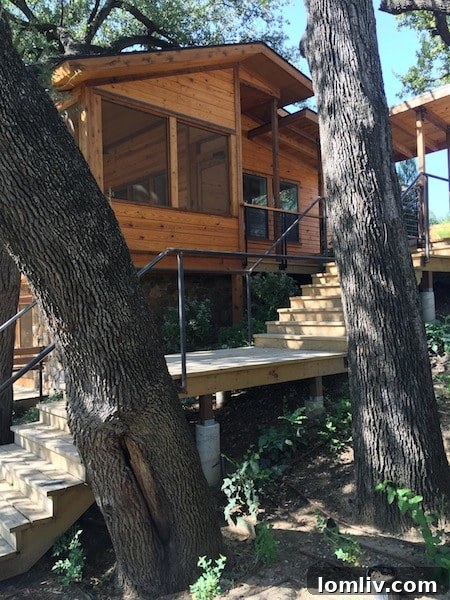
It comes as no surprise, then, that a house designed by Louis Lambert would be truly *sui generis*—one of a kind. This particular architectural endeavor began with Lambert’s long-held admiration for a specific acreage along the picturesque banks of the Trinity River. His opportunity arose when his friend, Bill Bostlemann, purchased the tract for the new location of his home and shop, Flowers on the Square. Bostlemann needed the road frontage, presenting Lambert with the chance to acquire the much-more-challenging-to-build-on back acre and a half. This plot, formerly the site of a trailer park, was perched atop a live oak-covered hill, offering both immense potential and significant hurdles.
“You couldn’t have chosen a more Austin-looking site,” an observer noted, capturing the unique, natural beauty of the location. Lambert’s immediate response underscored his deep connection to the land: “That’s what drew me to this place.” The site boasts tranquil, expansive views with hardly another house in sight, yet it remains remarkably accessible, less than five minutes from the conveniences of Rivercrest. This blend of secluded natural beauty and urban proximity was a key factor in his vision for the property.
Overcoming Site Challenges: Engineering a Foundation for Durability
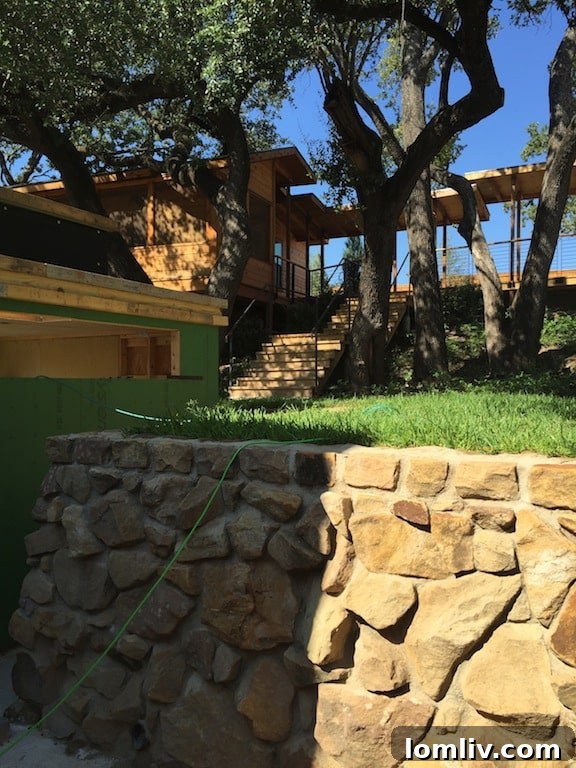
The journey to realize this architectural vision was not without its formidable challenges, particularly in site preparation. “People ask me why construction has taken so long,” Lambert explained. “Just look at all of the retaining walls and site preparation I had to do before we could even build.” Indeed, the plot’s history as a trailer park meant it harbored rather bizarre landfill, including extensive rubble from old building demolitions and even the unlikely discovery of a 1964 Dodge pick-up truck. All of this debris had to be meticulously cleared, the land precisely graded, and new fill brought in to create a stable base.
The rigorous site work culminated in an impressive feat of engineering. “We ended up excavating to bedrock, which made for sturdy foundations,” Lambert proudly stated. This painstaking process ensured the structural integrity and longevity of the home, a hallmark of Lambert’s commitment to quality and permanence. The challenging topography also dictated the construction sequence: “Of course, we had to begin construction at the back for access,” he added, illustrating the intricate planning required for such an ambitious project.
Harnessing Nature: Managing a Spring and Integrating Landscape
Further demonstrating the site’s unique complexities, road work above the property inadvertently exposed a natural spring. Rather than viewing this as an obstacle, Lambert saw an opportunity. The spring has since been tamed and contained, with plans to potentially tap it later for irrigation, providing a sustainable water source for the landscape, and to create a distinctive water feature in the main courtyard. This thoughtful integration of natural elements into the design showcases a deep respect for the environment. Crucially, despite the presence of the spring and the extensive ground disturbance, the basements of the developing complex have remained dry, a testament to the meticulous planning and execution of the drainage and foundation systems.
“Fish Camp” Aesthetic: A Masterclass in Cultivated Simplicity
The architectural expression of Lambert’s Trinity River home is a profound dialogue between structure and nature. Natural stone and wood are meticulously integrated, allowing the buildings to cling organically to the hillside and seamlessly blend into the surrounding landscape. What appears to be a cultivated simplicity in the design subtly conceals an unperceived complexity. Far from being a singular dwelling, the home is a sophisticated complex comprising a main house, various outbuildings, multiple basements, and even connecting subterranean passageways—a true testament to Lambert’s visionary planning.
Lambert himself affectionately dubs the style “Fish Camp,” a direct callback to his treasured boyhood holidays spent on the Texas Coast near Port Arthur. This aesthetic is not merely decorative; it’s a philosophy. It evokes a sense of unpretentious comfort, rugged durability, and a deep connection to the water and the outdoors. The construction process itself was an organic evolution. While a general plan provided the initial framework, a significant portion of the design and execution was invented and refined on-site, a reflection of Lambert’s hands-on approach and creative flexibility. At every stage, Louis acted as the ultimate impresario, maintaining tight control over the project and personally shaping its intricate design details.
“I told my builder this was not going to be a built-from-plans kind of project,” Lambert stated, highlighting his preference for a dynamic, iterative design process. This bespoke approach allowed for spontaneous innovations and adjustments, ensuring that the finished home would be perfectly attuned to its unique site and Lambert’s evolving vision, truly embodying the spirit of custom home design.
Inside the Vision: Textured Interiors and Entertainment-Focused Design
The interiors of Lambert’s home are a masterclass in textured materiality, a sophisticated blend of slick, modern finishes and rusticated, natural elements. Smooth maple and terracotta floors create a warm, inviting base, while surfaces of marble, granite, and poured concrete introduce a refined, contemporary edge. Slick gallery walls provide a canvas for art, contrasting beautifully with the organic warmth of river rock fireplaces, which serve as focal points in various living spaces. This thoughtful juxtaposition of materials creates a dynamic visual and tactile experience, reflecting the layered complexity of his “Fish Camp” aesthetic.
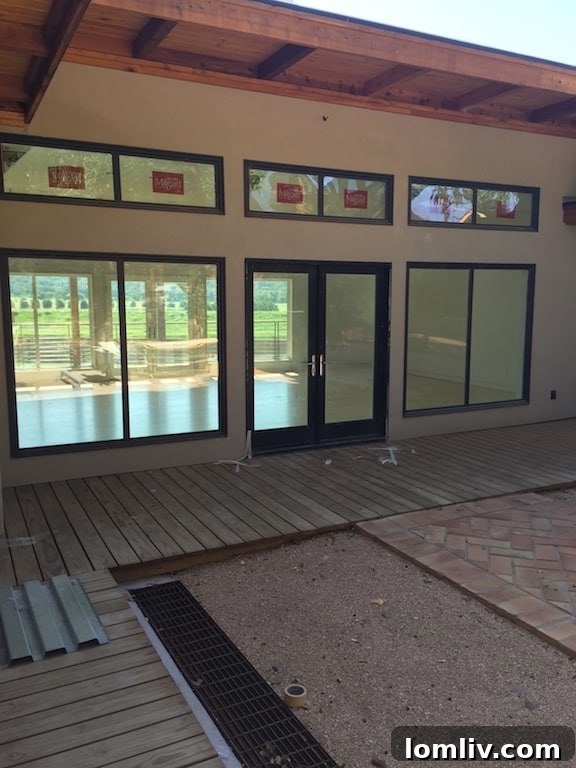
The living spaces are designed with both grandeur and intimacy in mind. The main living room boasts impressive ten-foot ceilings, yet the illusion of a lower, more intimate profile is artfully sustained by the room’s expansive length and strategically placed clerestory windows, which flood the space with natural light while maintaining privacy. The overarching design philosophy unequivocally prioritizes entertaining. A large, state-of-the-art chef’s kitchen opens completely to the main living area, fostering a seamless flow for social gatherings. The central fireplace in the living room isn’t merely for ambiance; it’s ingeniously designed to function as an additional wood-burning oven, a nod to Lambert’s culinary expertise and passion for cooking.
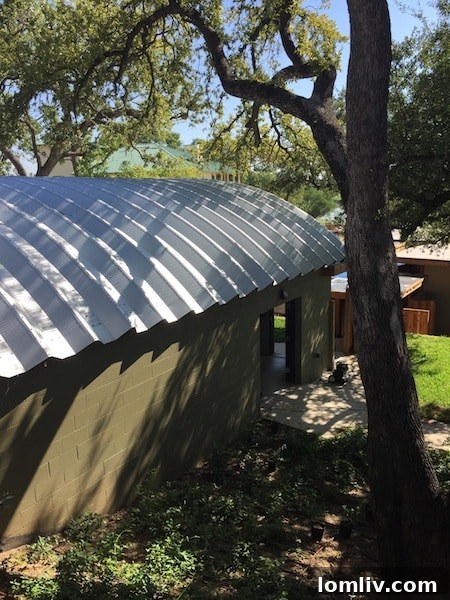
For even larger events, the home offers unparalleled versatility. The spacious garage, distinguished by its unique, self-supporting quonset-hut roof, can be easily emptied and transformed into an expansive event space. Furthermore, a secondary, fully equipped kitchen can be deployed for use during such occasions, ensuring that catering and culinary preparation for grand gatherings are handled with absolute ease and efficiency. Every detail, from the choice of materials to the functional layout, speaks to a home designed for both elegant living and exceptional hospitality.
Seamless Integration: Maximizing the Stunning River Views
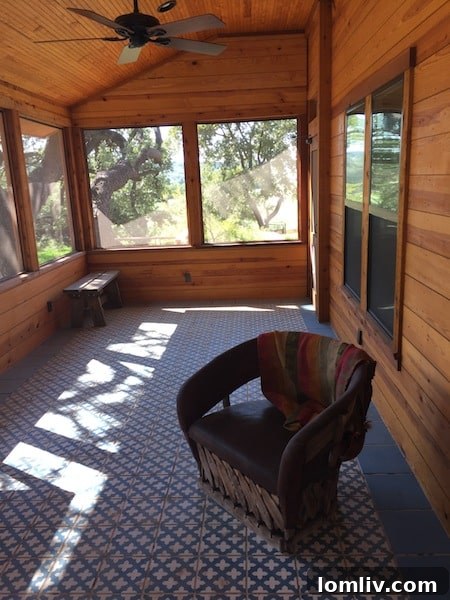
Throughout the design and construction of this remarkable home, every conceivable opportunity has been seized to “harvest” the stunning views of the Trinity River. This commitment to integrating the natural beauty of the surroundings is evident at every turn, from the architectural details of the guest house to the subtle design choices within the landscape. The screens of the guest house are meticulously crafted not only for privacy and shade but also to frame specific vistas of the river, turning mere openings into dynamic picture windows.
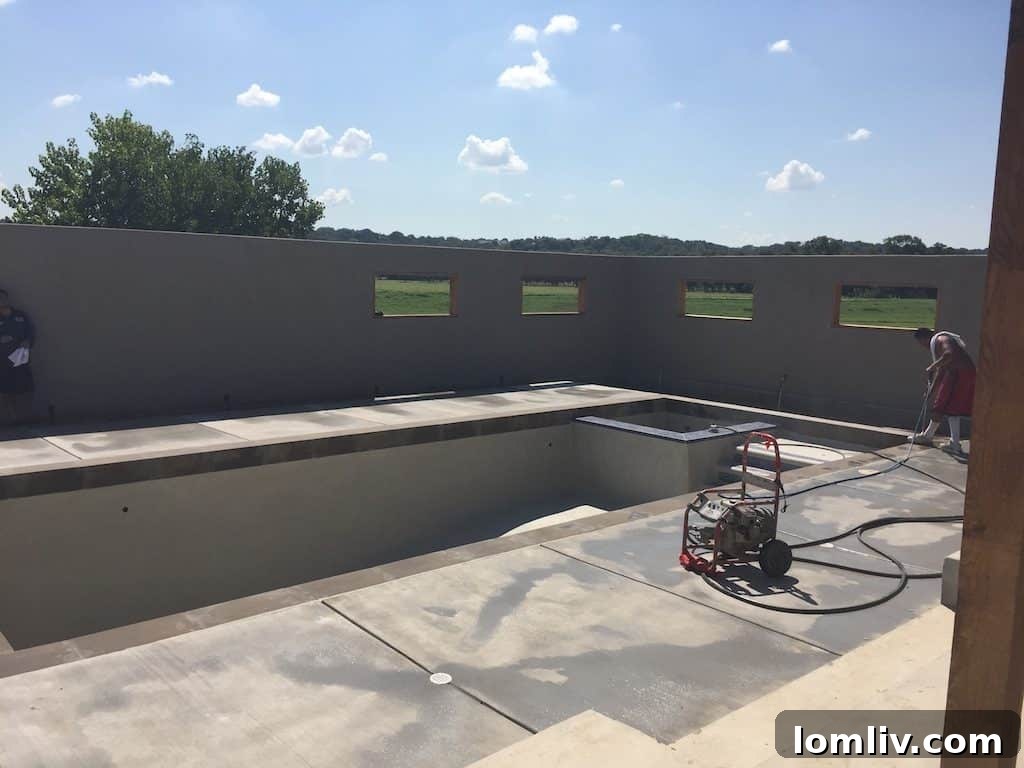
Similarly, the slats in the exterior fences are strategically spaced and oriented to guide the eye towards the tranquil waters, creating a continuous visual connection to the river. Even the seemingly utilitarian elements, like the “windows” thoughtfully incorporated into the pool wall, serve to draw the river’s presence into the recreational spaces, allowing swimmers and loungers alike to enjoy the breathtaking scenery. These deliberate design choices ensure that the Trinity River remains an ever-present, integral part of the living experience, turning the home into a truly immersive environment.
The Anticipated Completion of a Legacy Project
With an optimistic timeline of approximately 45 days until completion, according to Lambert, this extraordinary residence is rapidly approaching its final form. Even in its near-finished state, the place already emanates the undeniable aura of a timeless retreat. It stands as a profound testament to Louis Lambert’s unparalleled vision—a culmination of his deep Texas roots, his sophisticated culinary artistry, and his innovative design prowess. This home on the Trinity River is not just a structure; it is a living expression of his legacy, seamlessly blending rugged Texas authenticity with refined architectural elegance, poised to become a landmark of Fort Worth design.
Eric Prokesh is an interior designer whose work has appeared on HGTV, and in books and publications including D Home, Southern Accents, House Beautiful, and House and Garden. In January 2005, HG named Eric one of the 50 tastemakers in America and D Home has included him as one of Dallas’ Best Designers for 10 years. Having lived most of his life in Dallas, he now calls Fort Worth home and is one of our experts on beautiful Fort Worth Dirt.