

Dallas City Council member Cara Mendelsohn, representing District 12, has issued a stark warning regarding the city’s burgeoning budget. Despite the recent announcement of a property tax rate decrease by Dallas City Manager T.C. Broadnax, Mendelsohn argues that the proposed budget still constitutes an effective tax increase for many property owners. Her concerns highlight a looming fiscal challenge that, if left unaddressed, could lead to severe financial instability for the city.
Mendelsohn articulated her apprehension, stating, “It is deeply concerning that we are aware of a significant, impending challenge to our city’s fiscal health and that there is not a proposed course correction before we come to the edge of the cliff.” She emphasized the critical need for fiscal prudence, especially given the foreknowledge of future financial pressures. Instead of preparing for potential economic downturns, she contends that the current budget proposals accelerate the city towards a “financial cliff” by introducing new spending initiatives rather than prioritizing restraint.
In a detailed memorandum addressed to Dallas Mayor Eric Johnson, Mendelsohn advocates for a revised budget that would trim $121 million from the proposed $4.63 billion in city expenditures. Her comprehensive “No New Revenue” (NNR) strategy is designed to roll back departmental spending through various measures. These include eliminating funding for full-time equivalent (FTE) positions that remain unfilled, implementing department-wide budget reductions, and identifying other efficiencies across city operations. This proactive approach aims to stabilize the city’s finances and ensure long-term sustainability.
The distinction between a “tax rate decrease” and an “effective tax increase” is central to Mendelsohn’s argument. While the city manager’s proposal indeed lowers the property tax rate, the continuous rise in property valuations across Dallas means that many residents and businesses will still see a higher overall property tax bill. As property values climb, even a reduced rate can result in a greater tax burden. In her August 17 memo, Mendelsohn underscored this point: “The FY23-24 proposed budget provides for a slight tax rate reduction, but still increases the tax burden on residents and businesses. The decisions we make about levels of taxation are important, and we must be ever-mindful of how taxpayer funding is used to provide needed services. In short, we must control spending.” This highlights her core belief that true fiscal responsibility must translate into lower overall costs for taxpayers, not just a lowered rate that masks an increased financial obligation.
Mayor Johnson has publicly supported Mendelsohn’s stance, acknowledging the validity of her concerns. He has committed to requesting City Manager Broadnax to develop a revised Dallas budget that incorporates Mendelsohn’s NNR suggestions. This revised proposal would then be presented to the full city council for consideration. The Mayor’s endorsement signifies a crucial step towards potentially reining in city spending and reflects a growing consensus on the need for greater fiscal accountability within Dallas city government. This collaborative effort between council members and the mayor is vital for addressing complex financial challenges and ensuring the city’s long-term prosperity.
Update: Mayor’s response to my memo regarding the FY23-24 budget @DallasMayor @Johnson4Dallas https://t.co/D7UtJl2r11 pic.twitter.com/CtIT6nt1yZ
— Cara Mendelsohn 🟦 (@caraathome) August 18, 2023
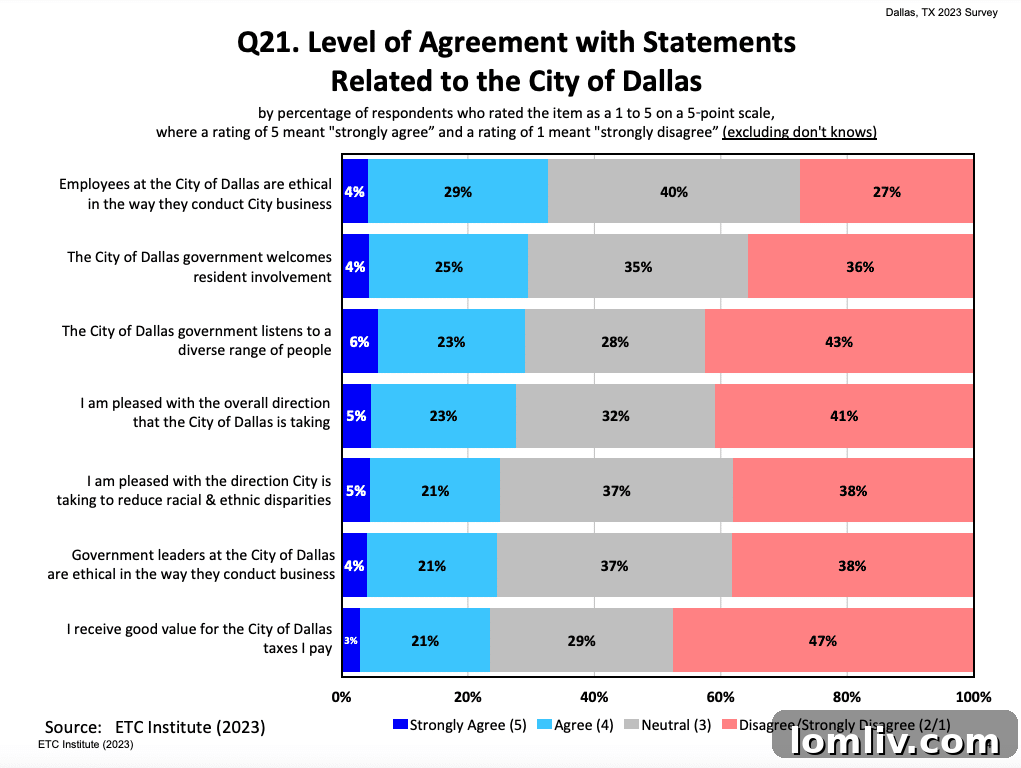
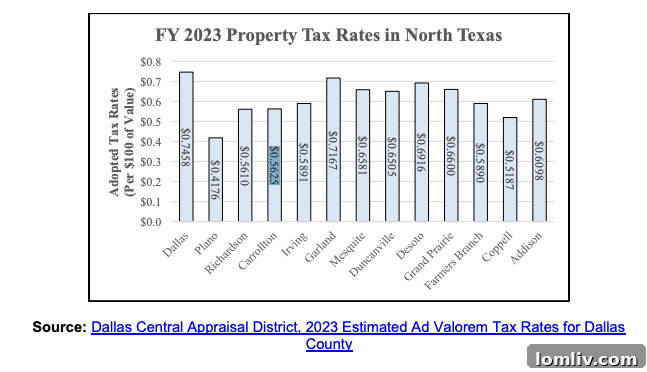
A significant factor driving Mendelsohn’s call for fiscal reform is Dallas’s position as having the highest property tax rate in North Texas. This elevated tax burden places considerable pressure on both homeowners and businesses, potentially hindering economic growth and making the city less competitive compared to neighboring municipalities. Further evidence of resident dissatisfaction comes from the ETC Institute’s Community Survey, where a mere 24 percent of respondents strongly agreed that the city provides good value for the services residents receive. This low approval rating suggests a disconnect between the taxes paid and the perceived quality or quantity of public services, reinforcing the argument that taxpayers are not getting sufficient return on their investment. Addressing this perception is crucial for building trust and ensuring public support for city initiatives.
Unmasking “Ghost FTEs”: A Pathway to Budgetary Efficiency
Perhaps the most compelling argument for trimming the budget revolves around the city’s largest expense: its employees. Mendelsohn’s memorandum shines a spotlight on a practice she terms “ghost FTEs” – full-time equivalent positions that are budgeted for but remain unfilled for extended periods. This practice, she argues, effectively allows departments to create de facto budget increases. Funds allocated for the salaries and expenses of these non-existent employees are often repurposed within the department, bypassing direct oversight and proper allocation procedures.
Mendelsohn provided a salient example using the Dallas Police Department (DPD). In the most recent budget cycle, the DPD aimed to hire 250 new officers. However, despite these ambitious targets, the department was only able to recruit 185 individuals. The budget, however, still reflected allocations for the full 250 positions. The funds designated for the 65 unhired officers, instead of being returned or re-evaluated, could then be reallocated within the DPD’s existing budget. This practice not only distorts budget transparency but also means residents are taxed for services that are not ultimately delivered. “To unrealistically budget and overtax residents for something we know is unlikely to occur and then repurpose those dollars is wrong,” Mendelsohn asserted, highlighting the ethical and fiscal concerns associated with this practice. Eliminating ghost FTEs would ensure that taxpayer money is only allocated for actual staffing needs, promoting greater accountability and efficiency across all city departments.
Beyond addressing ghost FTEs, Mendelsohn’s memorandum outlines several other strategic cuts designed to foster a more sustainable financial future for Dallas. One key proposal is to reduce department budgets across the board to their Fiscal Year 2022-23 levels. This rollback would halt the continuous upward trend in spending and encourage departments to operate within tighter, proven financial constraints. Additionally, she suggests implementing a mandatory 5 percent budget reduction for all departments that have seen their budgets increase by 50 percent or more over the last five years. This targeted reduction aims to curb rapid, potentially unsustainable growth in specific areas, ensuring that resource allocation remains proportionate to actual need and performance.
Another area for significant savings involves re-evaluating the city’s role in social services. Mendelsohn proposes shifting the burden of low-income senior transportation services to Dallas Area Rapid Transit (DART). DART, with its established infrastructure and expertise in public transportation, is better equipped to manage and optimize these services, potentially leading to more efficient delivery and reduced costs for the city. Furthermore, the memo calls for nixing redundant contingency funding. Often, departments maintain separate contingency funds that overlap or are unnecessary, leading to idle capital that could be better utilized or saved. By streamlining these reserves, the city can free up significant funds without compromising its ability to respond to emergencies. These measures collectively aim to create a leaner, more focused city government that maximizes the impact of every taxpayer dollar.
Intriguingly, one of Mendelsohn’s strategies to reduce spending involves an initial investment. The Far North Dallas council member is advocating for the allocation of $5 million to hire an independent, outside firm to conduct a comprehensive audit of city operations. This strategic expenditure is not a splurge but a critical investment in long-term efficiency. The purpose of this audit would be to thoroughly examine existing processes, identify inefficiencies, uncover wasteful spending, and recommend structural improvements that staff might not be able to identify or implement internally. Mendelsohn elaborated on the rationale, writing, “Change is difficult, and sometimes old ways become ingrained, or the change needed is too large and complicated for staff alone to evaluate and initiate.”
The vision behind this audit is to fundamentally transform Dallas’s city government into a truly “efficient, effective organization.” An external audit provides an unbiased perspective, leveraging specialized expertise to pinpoint areas for improvement that might be overlooked by internal teams. The $5 million investment is projected to yield far greater savings over time by optimizing resource allocation, streamlining bureaucratic processes, and enhancing overall operational performance. This commitment to external review underscores a proactive approach to fiscal health, ensuring that the city is not just cutting costs arbitrarily, but doing so based on data-driven insights and best practices.
The departments specifically targeted for review and potential optimization under Mendelsohn’s proposal include critical public services and administrative functions. These encompass the Dallas Police Department (DPD) and Dallas Fire-Rescue (DFR), whose significant budgets and crucial roles in public safety warrant thorough examination for efficiency. Other departments highlighted are Planning and Urban Design, vital for the city’s growth and development; Public Works, responsible for essential infrastructure; Environmental Quality & Sustainability, addressing critical environmental concerns; ITS (Information Technology Services), which underpins all city operations; and Human Resources, overseeing the city’s vast workforce. A comprehensive audit of these key areas could unlock substantial savings and improve service delivery for all Dallas residents.
The call for fiscal restraint by Council member Mendelsohn, backed by Mayor Johnson, signals a critical juncture for Dallas. With rising property tax burdens, evidenced by the city’s top-tier rates in North Texas, and a significant portion of residents feeling they receive poor value for services, the need for budgetary reform is pressing. The proposed “No New Revenue” scheme, coupled with the strategic audit, aims to address systemic inefficiencies like “ghost FTEs” and accelerate Dallas towards a more transparent, accountable, and sustainable financial future. This proactive approach to budget management is not merely about cutting costs but about fundamentally transforming city government to better serve its citizens and navigate future economic challenges effectively. The full memorandum outlining these comprehensive proposals is accessible for public review here.