Thomas Heatherwick stands as a visionary force in contemporary design, celebrated globally for his extraordinary ability to infuse architectural projects with a captivating blend of sculptural artistry and profound functionality. His studio, Heatherwick Studio, consistently pushes the boundaries of conventional design, delivering structures that transcend mere utility to become interactive experiences, sparking curiosity and inspiring awe. From iconic urban landmarks to transformative adaptive reuse projects, Heatherwick’s distinctive vision has left an indelible mark on cityscapes across the globe, defining an era of design where innovation meets imagination.
Many first encountered Heatherwick’s genius through his high-profile collaborations, such as the Google headquarters buildings in London and Silicon Valley, developed in partnership with the Amsterdam-based Bjarke Ingels Group (BIG). These projects showcased his commitment to creating human-centric spaces that are both sustainable and aesthetically striking. For those with an appreciation for public art and groundbreaking design, his “Provocations” show at the Nasher in 2014 offered a deeper dive into his creative process and diverse portfolio, revealing the intellectual rigor behind his seemingly playful forms.
The London Olympics Cauldron: A Symbol of Unity
A testament to his innovative spirit and capacity for creating powerful symbols, Heatherwick designed the flame and cauldron for the 2012 London Olympic and Paralympic Games. This breathtaking design featured a circular array of 204 copper “petals,” each representing a participating nation. As the torch relay concluded, these individual petals were dramatically lit and mechanically raised to converge into a single, magnificent cauldron, symbolically uniting the competing nations in a shared spirit of global athletic endeavor. This ephemeral yet impactful structure captivated audiences worldwide, demonstrating Heatherwick’s mastery in delivering designs that resonate on both an emotional and symbolic level. The cauldron lighting ceremony remains a memorable moment in Olympic history.
Kinetic Marvels: The Rolling Bridge and Fan Bridge
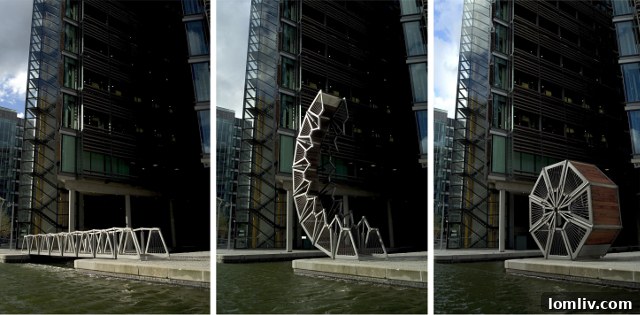
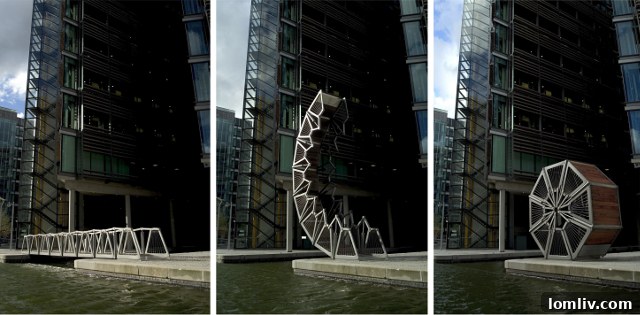
The image above showcases Heatherwick’s celebrated Rolling Bridge, completed in 2004 as an integral part of the dynamic revitalization of London’s Paddington Basin area. This pedestrian bridge is more than just a crossing; it’s a kinetic sculpture designed to curl into an octagonal form each Friday at noon, allowing boats to pass through the canal. Its unique hydraulic system retracts the eight hinged sections of the deck, creating a mesmerizing, wheel-like movement that blurs the lines between engineering and performance art. The Rolling Bridge has garnered numerous awards for its ingenuity and aesthetic appeal, establishing itself as a beloved local landmark and a prime example of Heatherwick’s innovative approach to urban infrastructure.
It is one of two pedestrian bridges that enrich the mixed-use commercial and residential project in Paddington Basin, both celebrated for their dual role as functional crossings and public art installations. The other remarkable structure is the Fan Bridge, an equally inventive design that features five steel beams. These beams open and close with elegant precision, fanning out like an exquisite Asian hand fan to allow waterway traffic. Observing both bridges in action provides a captivating glimpse into Heatherwick’s playful yet sophisticated kinetic architectural philosophy, where movement and transformation are core design elements.
Pier 55: An Unfulfilled Vision for New York
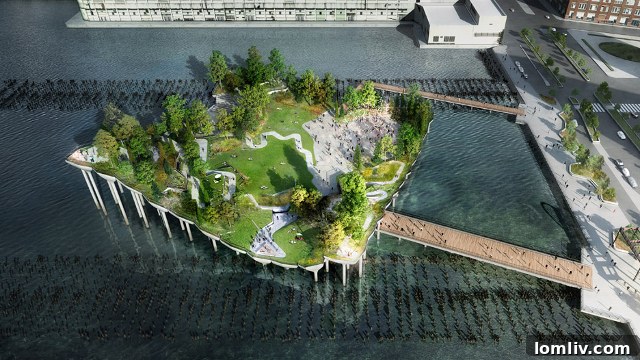
Even for architects of Heatherwick’s caliber, some of the most ambitious and inspiring projects regrettably never transition from concept to concrete reality. Such was the fate of two spectacular park-like designs envisioned for New York and London. In New York, the proposed Pier 55, depicted above, aimed to transform a disused pier into an undulating, stilted park gracefully rising from the Hudson River, adjacent to Manhattan’s vibrant Chelsea neighborhood. Conceived as an elevated landscape supported by a forest of mushroom-shaped piles, it promised a serene green oasis and performance venue with unparalleled views of the city and river. Privately funded by visionary philanthropists Barry Diller and fashion designer Diane Von Furstenberg, the project initially garnered immense public enthusiasm, celebrated for its potential to introduce groundbreaking public space. However, despite its popularity and generous backing, Pier 55 tragically succumbed to a barrage of opposition lawsuits, ultimately leading to its abandonment. This unbuilt marvel remains a poignant reminder of the complexities and challenges inherent in large-scale urban development, leaving many to wonder what a unique attraction it would have been for residents and visitors alike.
The Garden Bridge: London’s Lost Green Pathway
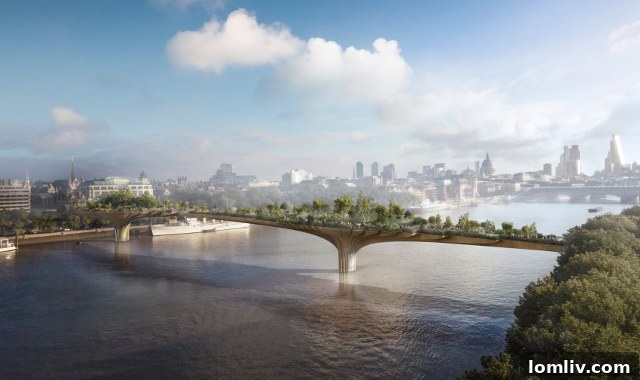
Across the Atlantic, London faced a similar disappointment with the proposed Garden Bridge, another ambitious Heatherwick Studio project that aimed to span the iconic River Thames. Envisioned as a wide, verdant pedestrian bridge, it promised to be a lush, tree-lined oasis connecting Temple station on the north bank to the South Bank. The design proposed a unique landscape, a botanical crossing designed to provide breathtaking views and a tranquil escape within the bustling city center. Unlike Pier 55, which was halted by legal challenges, the Garden Bridge’s downfall was primarily financial. The ambitious plan, projected to cost over £200 million, struggled to secure sufficient private funding, with only approximately a third of the required budget materializing. The economic and political landscape, coupled with escalating costs and public scrutiny, eventually led to the project’s cancellation. Both Pier 55 and the Garden Bridge represent lost opportunities for innovative urban green spaces, highlighting the often-precarious journey from architectural dream to realized public amenity.
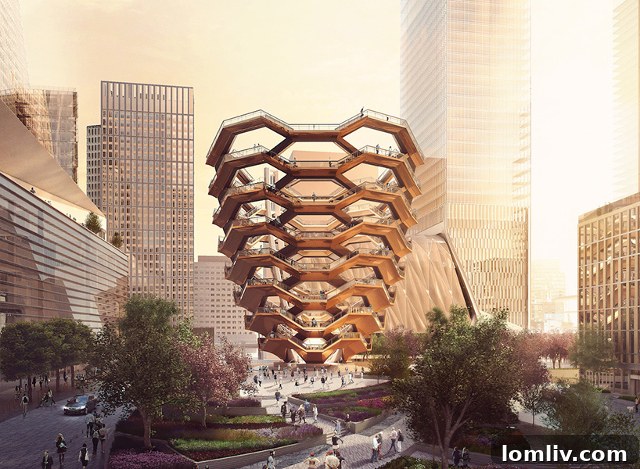
Vessel: A Vertical Public Space in Hudson Yards, New York
Returning to New York, Heatherwick Studio’s nearly complete “Vessel” stands as an undisputed anchor within the sprawling Hudson Yards development on Manhattan’s west side. This breathtaking freestanding structure is a monumental series of interconnected staircases and observation decks, forming the centerpiece of a vibrant public plaza. Aptly named “Vessel” for its organic, container-like form, this 150-foot-tall, shimmering copper-clad marvel evokes a colossal honeycomb. When strung together, its intricate network of pathways comprises over a mile of walkable surface, featuring an astonishing 2,500 individual steps for those eager to embark on an architectural ascent. For visitors with mobility considerations or those seeking a less strenuous exploration, a conveniently integrated elevator ensures universal access to its various levels, making it an inclusive urban experience.
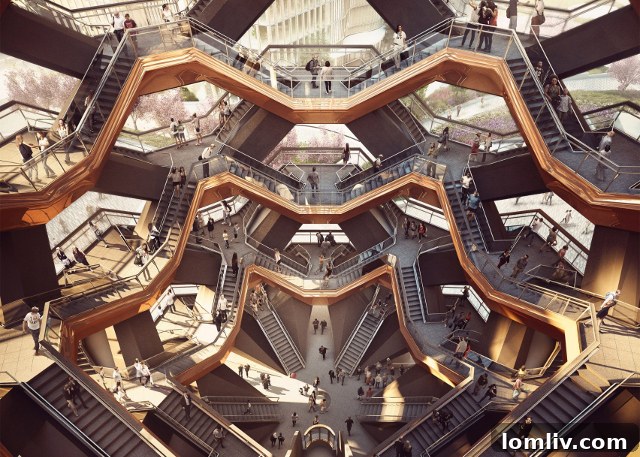
Heatherwick’s profound inspiration for the Vessel is unmistakably drawn from the mind-bending works of Dutch graphic artist M.C. Escher, particularly his iconic depictions of “impossible” or endless staircases. The design creates an optical illusion of continuous motion, inviting visitors to engage with the structure from countless perspectives. The construction of this intricate masterpiece was a logistical triumph; the 154 interconnected stair flights were meticulously manufactured in Italy, then transported across the Atlantic. Upon arrival, these colossal sections were carefully lifted from barges and expertly maneuvered through the bustling streets of Manhattan during the quiet hours of the night. The Vessel is not merely a building but a dynamic public sculpture, a symbol of urban innovation that offers unparalleled views and an unforgettable architectural journey, solidifying its place as a contemporary New York icon.
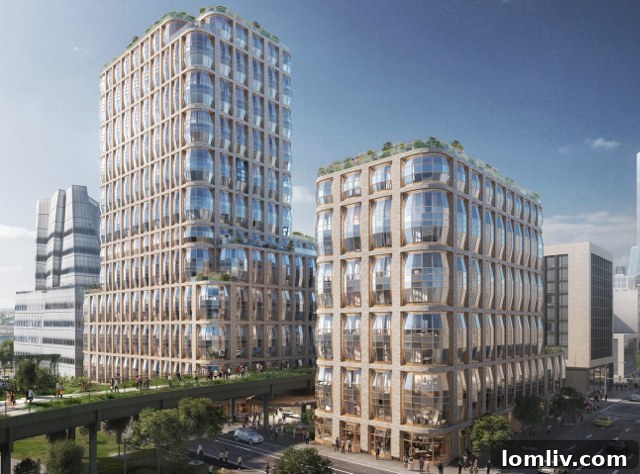
Hudson Residences: Curvilinear Forms on the High Line
At the opposite end of Manhattan’s famed High Line park in Chelsea, construction has commenced on Heatherwick Studio’s striking Hudson Residences. These residential towers, separated by the elevated greenway, immediately capture attention with their most distinctive feature: the windows. The facade appears as if an invisible force has gently inflated pockets behind a grid of concrete, creating a series of elegant, bulging glass forms. This innovative design departs from traditional flat glass surfaces, imparting a soft, organic quality to the otherwise rectilinear structure, making the buildings feel as if they are breathing or gently pushing outwards from within.
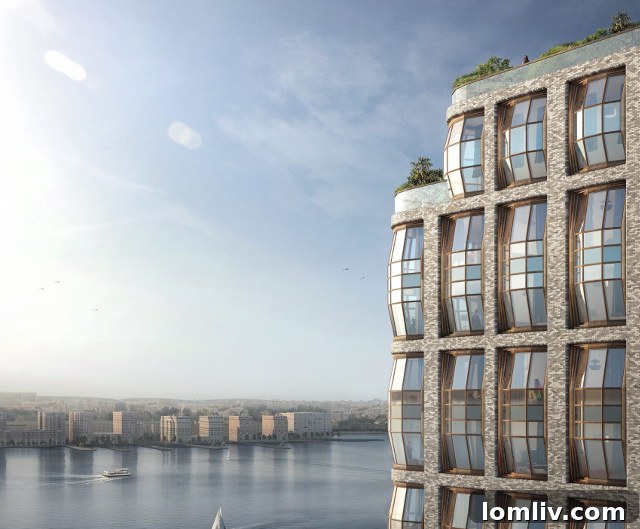
Upon closer inspection, these unique windows reveal a sophisticated geometric and crystalline interpretation of the classic bay window. By tucking in at the top and bottom, the design allows residents to stand directly within the glass enclosure, offering not only expansive left and right panoramic views, akin to a traditional bay, but also extended sightlines both upwards and downwards. This creates an almost ethereal, floating sensation for occupants, immersing them more deeply in the cityscape. While some have affectionately dubbed these “pillow windows,” the term “bulging” more accurately conveys the dynamic visual effect—as if the entire building is gently attempting to blow a delicate soap bubble, lending a playful yet elegant character to the residential experience.
It is worth noting the transformative impact of New York’s High Line, which has become a magnet for visionary starchitect-designed residential and commercial buildings. Luminaries such as Heatherwick and the late Zaha Hadid have contributed to this architectural renaissance, establishing a new paradigm for urban development that seamlessly integrates public green space with cutting-edge design. This contrasts sharply with other urban trails, where development can often be characterized by less imaginative or contextually aware designs.
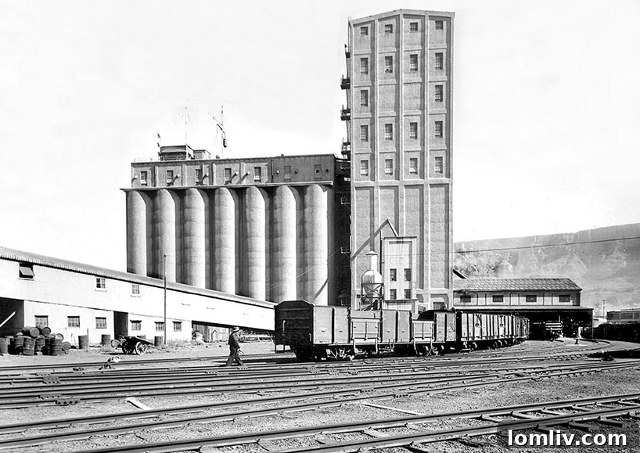
Zeitz MOCAA and The Silo Hotel: Adaptive Reuse in Cape Town
The Victoria & Alfred (V&A) Waterfront in Cape Town boasts a rich maritime history, dating back to 1654 when it served as a vital fresh water and resupply depot for Dutch East India Company ships voyaging to the Far East. The modern harbor’s foundations were laid in 1860, notably by a young midshipman named Alfred, who dropped the first load of stone for the breakwater. After gradually falling into disuse in the latter half of the 20th century, ambitious plans were conceived in the late 1990s to revitalize the expansive 304-acre waterfront, transforming it into a dynamic hub of commerce, culture, and tourism.
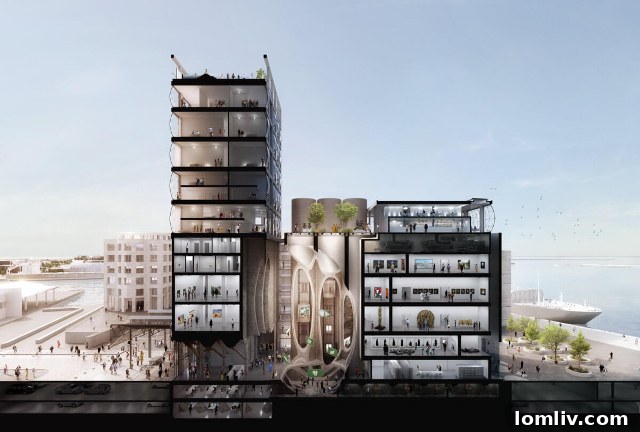
Central to this revitalization was the formidable challenge of repurposing the historic grain silo complex, originally opened in 1924 and decommissioned in 2003. This towering structure consisted of 42 cylindrical grain silos and a largely windowless, rectilinear lift tower, posing a unique architectural conundrum. Heatherwick Studio’s ingenious solution involved a radical transformation that honored the building’s industrial heritage while creating state-of-the-art contemporary spaces. The answer unfolded in two distinct, yet integrated, parts.
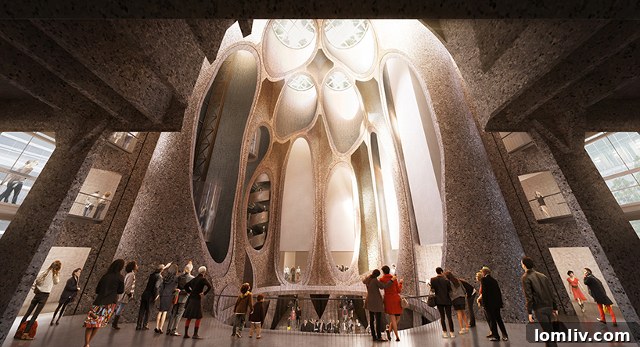
The lower sections of the monumental structure have been spectacularly reimagined as the Zeitz Museum of Contemporary Art Africa (Zeitz MOCAA). This involved a daring feat of engineering and design: carving out a massive, cathedral-like atrium from the heart of the cellular silos, creating a dramatic, light-filled central space that serves as both circulation and a grand sculptural element. Above the museum, the upper floors of the lift tower, once an industrial shell, were meticulously transformed into The Silo Hotel, a luxurious 28-room boutique hotel, complete with breathtaking panoramic windows.
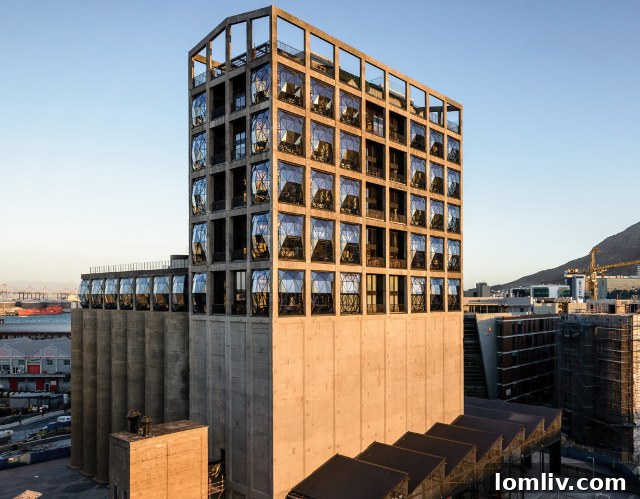
The final result is a magnificent architectural statement that skillfully marries industrial heritage with avant-garde design. The exterior of the building is strikingly transformed, yet its robust, historical character remains palpable. It was in The Silo Hotel project that the distinctive bulging windows, later seen in the Hudson Residences, were first conceived and implemented. These multi-faceted windows protrude from the concrete facade, maximizing views and light while creating dynamic, gem-like surfaces that reflect the ever-changing Cape Town sky. What were once windowless industrial spaces have been ingeniously converted into elegant balconies and expansive viewing platforms, offering unparalleled vistas.
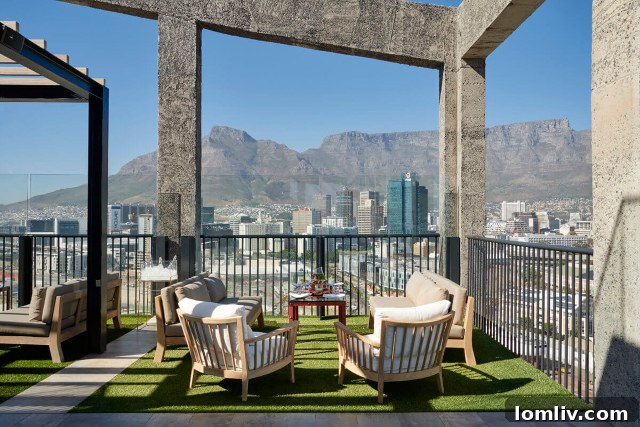
The rooftop of The Silo Hotel elevates the experience further, featuring an exquisite infinity pool and an outdoor lounge area. From this elevated vantage point, guests are treated to sweeping views of the city, the bustling V&A Waterfront, and the majestic Table Mountain, a landmark I’ve had the pleasure of climbing. This towering, waterfront hotel offers a compelling modern interpretation of the awe-inspiring sights that ships from centuries past must have encountered as they approached Cape Town’s shores. Heatherwick Studio’s work here is a masterclass in adaptive reuse, transforming a derelict industrial structure into a vibrant cultural institution and a luxurious hospitality destination, breathing new life into a significant piece of urban heritage.
Kush Hotel: An Unbuilt Vision for Hong Kong
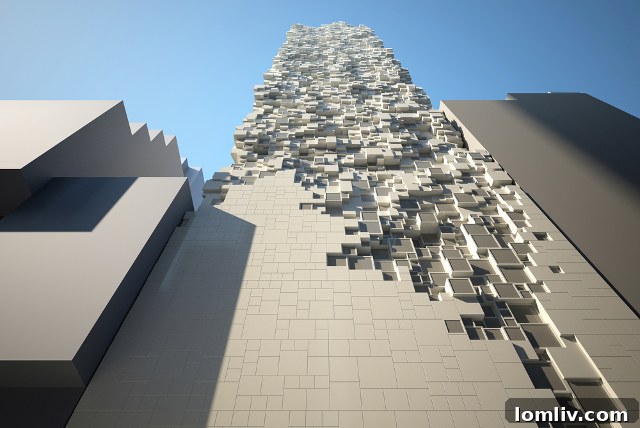
Imagine the dramatic addition of the 400-foot-tall Kush Hotel skyscraper gracing the skyline of a city like Dallas. While its general form might evoke comparisons to Ole Scheeren’s iconic MahaNakhon tower in Bangkok, the proposed Kush would have presented a definitively more three-dimensional and intricately articulated facade, characteristic of Heatherwick’s unique design language. This ambitious project for Hong Kong, though ultimately unbuilt, offers a fascinating glimpse into Heatherwick Studio’s imaginative approach to high-rise architecture.
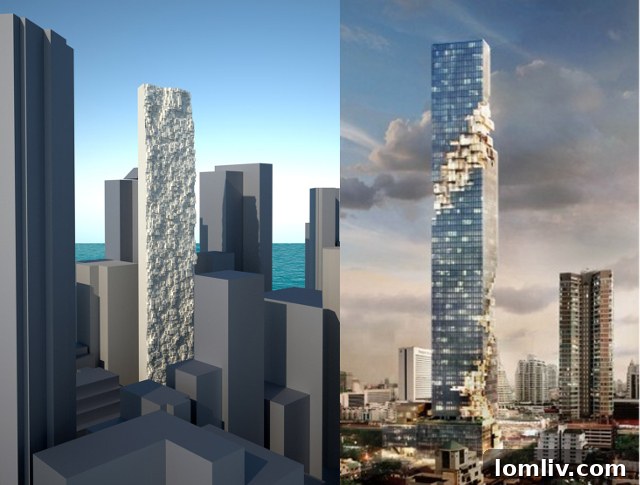
In contrast to MahaNakhon’s “pixelated” spiral of seemingly removed blocks, Kush would have been solidly articulated from top to bottom, with deep, sculpted cutaways. Crucially, Kush was not conceived as a typical curtain-wall glass building. Instead, many of its distinctive block cutaways were designed to be solid, creating a compelling interplay of mass and void. This intentional solidity would have artfully guided the eye towards the fenestrated spaces, accentuating our perception of its dramatically irregular, yet precisely crafted, surface. The design represented a bold reinterpretation of skyscraper aesthetics, moving away from purely glazed facades towards a more textured, sculptural, and tactile expression of form, promising a truly unique addition to any urban vista.
Bombay Sapphire Distillery: A Fusion of History and Sustainability (2014)
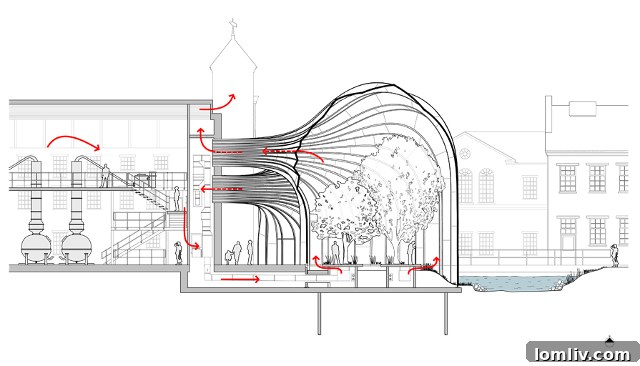
While I may have left my gin-drinking days (and “pine trees” cocktails) back in college, the opportunity to witness Heatherwick Studio’s breathtaking reimagining of the Bombay Sapphire Distillery in Hampshire, England, would certainly be worth the 65-mile trek from London. This extraordinary project involved the transformation of a 300-year-old paper mill, comprising 23 historic buildings, into a state-of-the-art distillery and visitor experience. The initial graphic (not included here, but described in original) would illustrate the ingenious layout: the primary distillery operations are housed within one of the venerable mill buildings, from which immense glass and steel “umbilical” cords emerge from its upper windows, dramatically extending to unfurl into a pair of stunning botanical greenhouses.
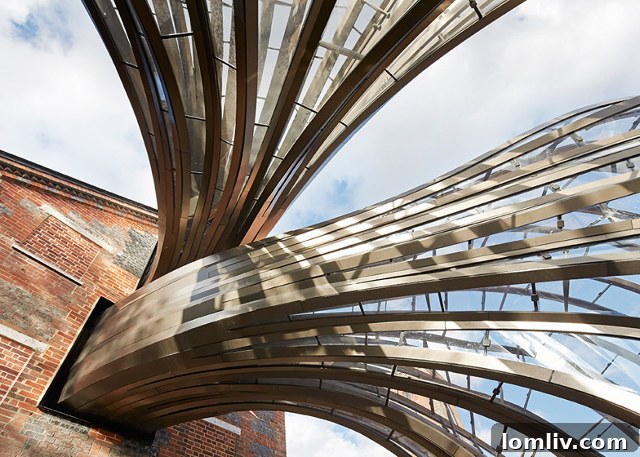
The visual impact of these structures is immediately striking, more reminiscent of something from a science fiction narrative, perhaps even evoking the fantastical architecture of Doctor Who, than a traditional distillery. The steel and glass components jut dynamically from the aged brick building, creating a frenetic yet harmonious interplay between industrial heritage and futuristic design. This bold intervention encapsulates Heatherwick’s talent for juxtaposing historical context with revolutionary modern elements, transforming a functional industrial site into an artistic and educational destination.
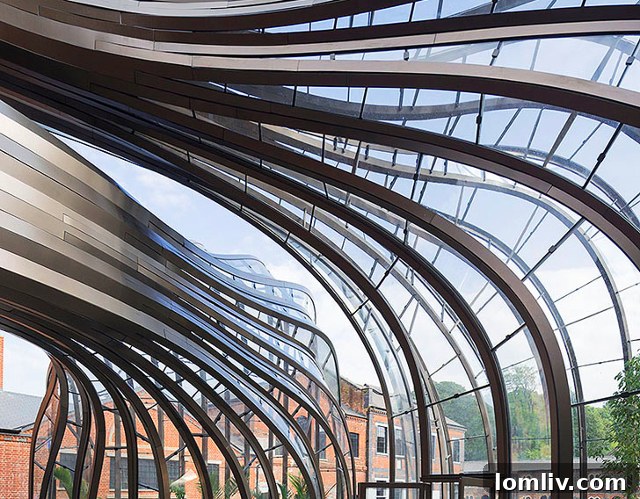
These magnificent glass structures gracefully curve outwards and downwards towards the ground, culminating in forms that evocatively resemble outstretched alien hands, poised at the edge of a serene pond. This poetic design choice is not merely aesthetic; it serves a crucial and intelligent purpose. The two dramatic greenhouses each contain distinct climatic environments: one housing a tropical habitat, the other a Mediterranean one. The reason for this precise botanical curation is intrinsic to the product itself: both climates are essential for cultivating the diverse array of herbs and botanicals required to produce Bombay Sapphire gin, making the greenhouses a living, breathing ingredient list for the distillery.
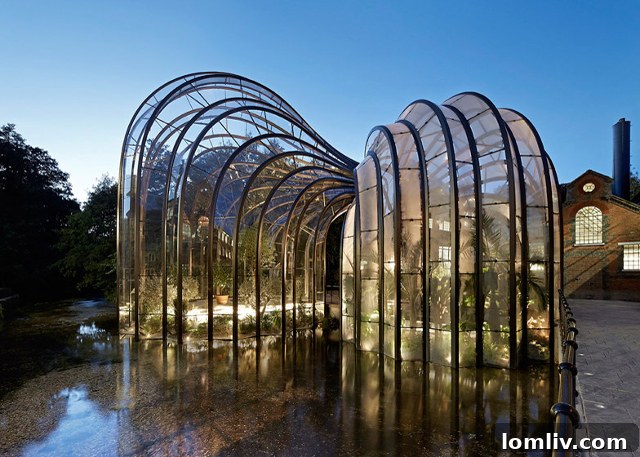
Beyond their beauty and direct functional relevance, the greenhouses are also a cornerstone of the distillery’s impressive sustainability strategy. Excess heat generated during the gin distillation process is intelligently recirculated and utilized to maintain the optimal temperatures within the glasshouses. This innovative closed-loop system means that the very ingredients used to create the gin are, in a sense, nourishing the botanicals growing in the greenhouses. It’s a remarkably ingenious and circular approach to industrial design and environmental responsibility, showcasing Heatherwick Studio’s commitment to integrating ecological principles seamlessly into their architectural solutions.
Bund Financial Center: A Dynamic Icon in Shanghai
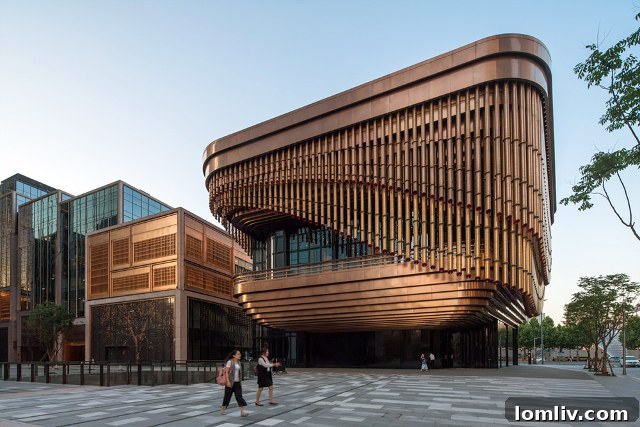
In Shanghai, the Bund Financial Center stands as a testament to powerful collaboration, a monumental project designed by Heatherwick Studio in partnership with Foster + Partners. Situated along the historic Huangpu River, this extensive development comprises multiple buildings, including impressive towers reaching nearly 600 feet in height. While the scale of these skyscrapers is undeniably grand, it is one particularly diminutive building within the complex that consistently captivates attention and showcases the project’s most innovative feature: the Cultural Center.
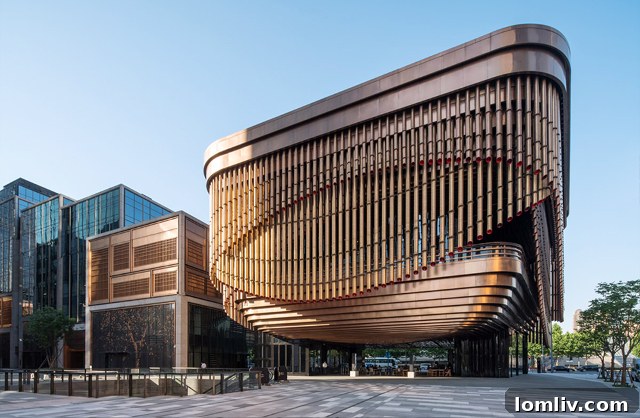
The Cultural Center houses versatile performance spaces, but its true marvel lies in its exterior: a multi-layered, rolling curtain composed of stylized bronze “bamboo” tubes. This dynamic facade is not static; it gracefully transforms, adapting to different events and times of day. A comparison between the initial project photos (like the one above) and others clearly demonstrates this kinetic elegance. The curtain shifts, altering the building’s appearance and revealing or concealing the activity within, creating a constantly evolving urban spectacle. This unique architectural element evokes the traditional Chinese theater curtain, reinterpreted through a contemporary, mechanized lens, reflecting the blend of heritage and modernity that defines Shanghai.
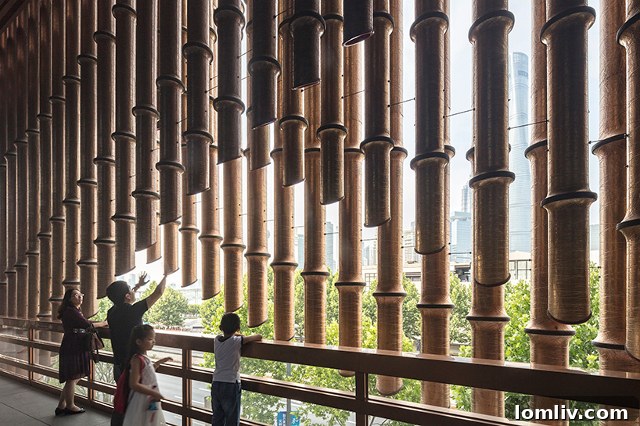
Behind this mesmerizing, permeable curtain lies an inviting outdoor space, offering visitors a unique opportunity to interact with the slowly moving, sometimes gently swaying sculpture. This interstitial zone blurs the lines between indoor and outdoor, private and public, inviting engagement and contemplation. The ever-changing facade creates a sense of anticipation and wonder, transforming the building into a living, breathing entity within the urban fabric. It’s a bold statement about architecture’s capacity for dynamism and interaction, proving that buildings can be responsive and expressive rather than merely static enclosures.
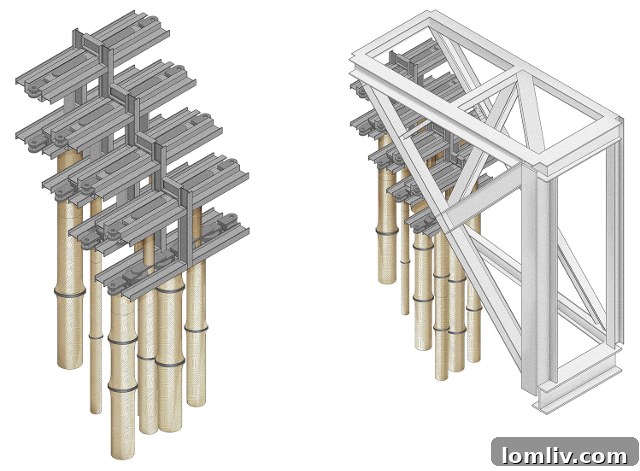
The ingenious mechanics behind this architectural ballet are truly remarkable. The entire system operates through a series of five carefully designed tracks, subtly recessed along the roofline. These tracks guide and control the differing sizes and lengths of the “bamboo” tubes, orchestrating their synchronized movement. The precision engineering allows for fluid, almost silent transitions, creating an awe-inspiring spectacle. This eight-second video provides a captivating demonstration of the building in graceful motion, highlighting the seamless integration of technology and artistry that defines this iconic Shanghai landmark.
Thomas Heatherwick’s Enduring Legacy: Crafting Experiential Architecture
Heatherwick Studio boasts an impressive and diverse portfolio, encompassing a wide array of projects that are both celebrated for their completion and, at times, mourned for their abandonment. What consistently emerges across this body of work is Thomas Heatherwick’s distinctive organic leaning in his architectural approach. Yet, this design language is never so prescriptive that one can instantly identify a Heatherwick project from a distance. Instead, his brilliance lies in crafting unique responses to each context, leading to designs that are often surprisingly varied in form but consistently unified by an underlying philosophy of ingenuity and sculptural presence. Like all truly great architecture firms, his works often evoke a sense of specialness and wonder in viewers, even if they cannot immediately attribute the design to a specific hand.
Beyond merely holding the eye, Heatherwick’s structures frequently incorporate a second, deeper sensory layer, actively inviting the viewer to experience, touch, and interact with them. This emphasis on engagement is partly a natural consequence of his proclivity for designing public spaces over strictly private ones. His work transforms passive observation into active participation, whether through the playful movement of a bridge, the immersive journey of a vertical park, or the dynamic transformation of a building facade. One can only imagine the transformative impact his design philosophy could have on urban landscapes yearning for innovation—for instance, his vision for a deck park in Dallas or his potential to revitalize historic but underutilized areas like Fair Park. Such projects would undoubtedly become not just landmarks, but vibrant, interactive hearts of their communities, pushing the boundaries of what urban spaces can achieve.

Disclaimer: My focus areas include high-rises, HOAs, and property renovations. However, I also hold a deep appreciation for modern and historical architecture, always considering it within the context of progressive urban development movements like YIMBY (Yes In My Backyard). My writing on real estate and architecture has been recognized by the National Association of Real Estate Editors, earning me three Bronze awards in 2016 (for this article), 2017 (for this piece), and 2018 (for this report), along with two Silver awards in 2016 (for this feature) and 2017 (for this insight). If you have a compelling story to share or a proposal to make, please reach out via email at [email protected]. You are welcome to search for me on Facebook and Twitter, though I maintain a minimal online presence on those platforms.