A functional garage door is more than just a convenience; it’s a vital component of your home’s security, efficiency, and curb appeal. Yet, for many homeowners, the garage door remains an afterthought until it grinds to a halt, makes alarming noises, or worse, poses a safety risk. Dealing with a stubborn, squeaky, or entirely unresponsive garage door can be incredibly frustrating, disrupting your daily routine and potentially leading to significant expenses.
Overlooking routine garage door maintenance is a common mistake that often escalates minor issues into major, costly repairs or even dangerous accidents. While modern garage doors are robust, they are also complex systems with numerous moving parts that endure constant stress. Proactive care is not just about extending the lifespan of your door; it’s about ensuring the safety of your family and protecting your property from unexpected malfunctions. The question then becomes: how often should you service your garage door, and what essential checks should this service entail?
The Undeniable Importance of Regular Garage Door Maintenance
Many homeowners underestimate the power and potential danger of a malfunctioning garage door. These massive, heavy mechanisms operate under immense tension, making them highly effective when working correctly, but incredibly hazardous when compromised. The U.S. Consumer Product Safety Commission reports that over 20,000 individuals are treated in emergency rooms annually due to garage door-related injuries. A significant portion of these incidents could have been prevented with proper and timely maintenance.
A modern overhead garage door is an intricate symphony of components, including powerful torsion or extension springs, sturdy cables, smooth rollers, precisely aligned tracks, advanced electronic openers, and crucial safety sensors. For the door to operate safely and efficiently, every single part must work in perfect harmony. If even one component — be it a worn spring, a frayed cable, or a misaligned sensor — fails or shifts out of place, the entire system can become unstable. This instability can manifest as a jammed door, a sudden uncontrolled drop, or the failure to detect an obstacle, leading to potential damage or severe injury. Investing in regular garage door maintenance is a small price to pay for the peace of mind that comes from knowing your family is safe and you’re avoiding potentially expensive emergency repairs down the line.
How Often Should You Service Your Garage Door?
The general consensus among garage door professionals is that most residential garage doors should undergo a comprehensive inspection and service at least twice a year. The optimal times for these checks are typically in the spring and fall. These transitional seasons are ideal because significant temperature fluctuations can impact the metal components of your garage door system, affecting lubricants, spring tension, and overall balance. For instance, extreme cold can cause grease to stiffen, hindering smooth operation, while intense heat and dust, particularly in climates like Phoenix, can dry out vital lubricants and accelerate wear on moving parts.
However, the frequency of use is also a critical factor. If your garage door is a high-traffic gateway, opening and closing more than ten times daily – perhaps serving a busy family with children, multiple vehicles, or frequent deliveries – a bi-annual service might not be sufficient. In such cases, having your garage doors inspected and serviced every few months (quarterly) is highly recommended. Increased usage translates directly to increased wear and tear on all components, making more frequent checks essential to ensure continuous smooth and safe operation throughout the year. Ignoring these signals can lead to premature component failure and higher repair costs.
What a Standard Garage Door Maintenance Service Includes
When you’re selecting a professional garage door company for service, it’s crucial to ensure their standard maintenance package covers a thorough inspection and adjustment of all key components. A reputable service will typically include:
- Comprehensive Inspection of Springs and Cables: Technicians will meticulously check for any signs of rust, corrosion, fraying, or excessive wear on both torsion and extension springs, as well as the high-tension cables. These components bear the brunt of the door’s weight, and their integrity is paramount for safe operation.
- Evaluation of Rollers and Tracks: The rollers facilitate the smooth movement of the door along the tracks. A service includes inspecting them for signs of wear, cracks, chips, or excessive play. Tracks will be checked for proper alignment, tightness, and any obstructions or bends that could impede movement.
- Testing of Safety Features: Modern garage doors are equipped with crucial safety mechanisms, most notably the auto-reverse system and photoelectric eyes (sensors). These features are designed to prevent the door from closing on people, pets, or objects. A technician will rigorously test these systems to ensure they respond correctly and promptly.
- Lubrication of Moving Parts: Proper lubrication is vital for reducing friction, minimizing wear, and ensuring quiet operation. High-quality, silicone-based oil or a specialized garage door lubricant will be applied to rollers, hinges, springs, and other pivot points, excluding the tracks themselves, which should remain free of grease.
- Tightening of Hardware: Vibration from daily operation can cause bolts, nuts, and screws to loosen over time. A professional service includes checking and tightening all hardware to prevent instability and component failure.
- Balance Test: An unbalanced door forces the opener to work harder, leading to premature wear. Technicians will test the door’s balance, adjusting spring tension as needed to ensure the door moves smoothly and stays put when manually opened halfway.
- Opener Force and Limit Settings Adjustment: The opener’s force settings determine how much power it uses to open and close the door, while limit settings dictate how far the door opens and closes. These settings are crucial for safety and efficiency and will be adjusted for optimal performance.
Understanding Garage Door Service Costs in Phoenix
The cost of garage door services can vary significantly based on the nature of the issue and your location. According to 2025 HomeAdvisor data, general garage door repairs typically range from $150 to $400 for homeowners nationwide. However, more extensive problems, such as complete spring failures, opener replacement, or significant track damage, can easily push costs past the $500 mark, sometimes even higher depending on parts and labor.
In contrast, routine maintenance service is a much more affordable investment, usually costing somewhere between $100 and $150. This fee typically covers a thorough inspection, lubrication of all moving parts, minor adjustments, and safety checks. While it might seem like an added expense, regular upkeep is a preventative measure that offers substantial long-term savings. A well-maintained garage door can last an impressive 15 to 20 years or even longer, significantly delaying the need for a costly full replacement. Conversely, doors that are neglected tend to develop issues much sooner, often failing within 5 to 10 years, leading to unexpected and expensive emergency repairs. Spending a small amount on regular service not only protects your budget from sudden financial strain but also proactively safeguards the safety of everyone using the garage door.
Common Garage Door Issues to Watch For
Even with diligent routine service, garage door problems can occasionally arise. Being aware of the most common issues and knowing the early warning signs can help you respond quickly, potentially preventing minor nuisances from escalating into hazardous, expensive breakdowns.
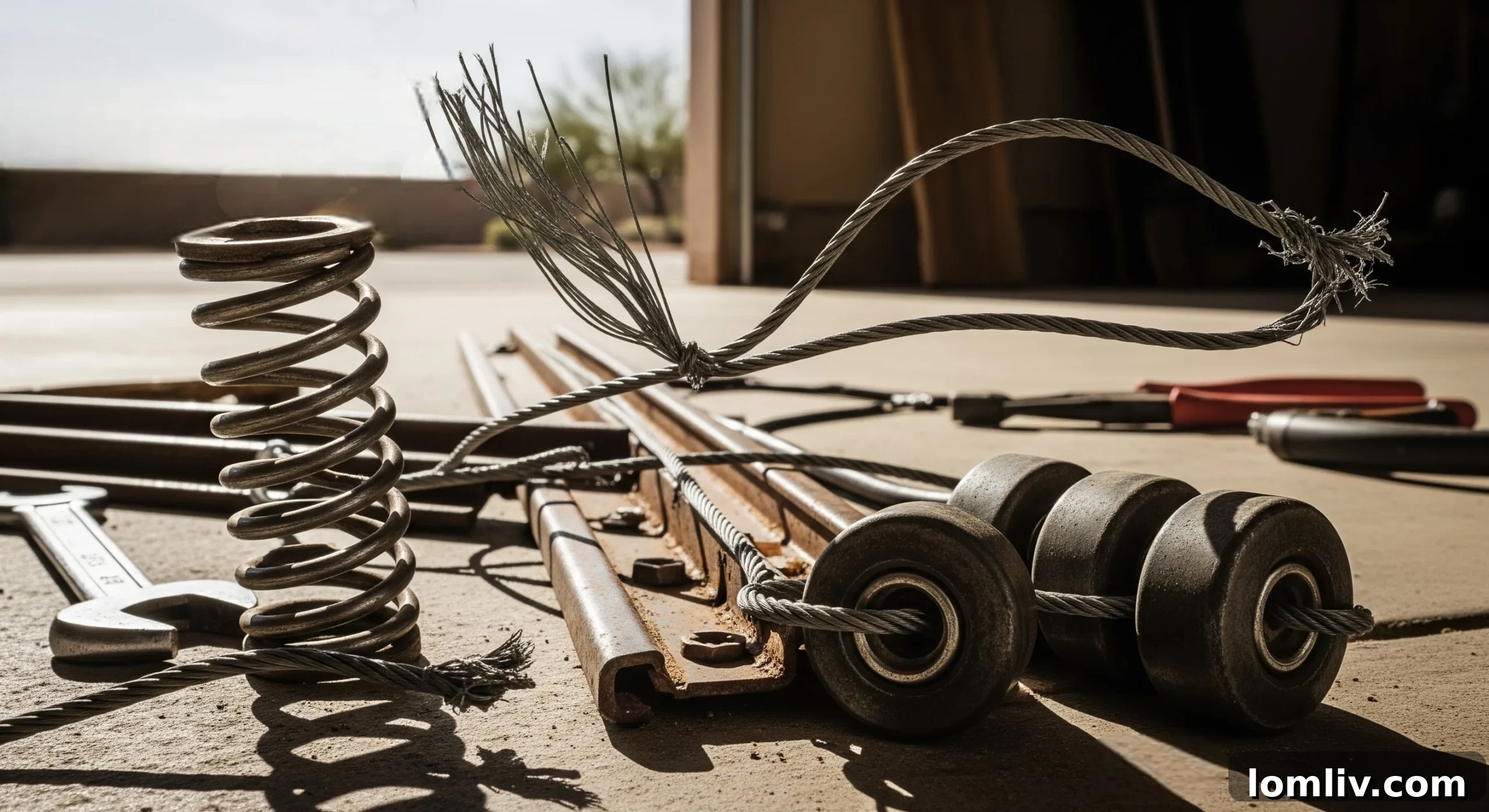
- Broken Springs. Garage door springs, whether torsion or extension, are the workhorses of the system, counterbalancing the door’s immense weight. Over time, due to consistent tension and operation cycles, they naturally wear out and eventually break. Before a spring completely gives out, you might observe tell-tale signs such as visible rust on the coils, a slight gap appearing in the spring that wasn’t there before, or a noticeable increase in the effort required to manually lift the door. When a spring finally breaks, it often creates a loud “snap” sound, and the door will either slam shut abruptly or become impossibly heavy and refuse to move at all. Attempting a DIY repair on broken springs is extremely dangerous due to the stored energy. This repair should always be handled by a trained and experienced garage door technician.
- Frayed or Snapped Cables. Just like springs, garage door cables are under constant, high tension, especially when lifting the heavy door. Over time, these steel cables can fray, weaken, or even snap, particularly in arid climates where dry conditions can impact metal resilience. If you notice visible fraying, rust, or an uneven appearance on the cables, it’s a strong indicator that professional attention is needed. When a cable snaps, the door can drop unevenly, causing it to jam, go off its tracks, or become a significant safety hazard. Catching cable wear early through regular inspections is the most effective way to prevent this serious safety risk and ensure the door operates smoothly and securely.
- Misaligned or Bent Tracks. The tracks guide the rollers and ensure the garage door moves smoothly up and down. Even a slight bend, ding, or misalignment in the tracks can cause significant operational problems. You might notice your garage door jerking, rattling excessively, or stopping abruptly halfway through its travel. If the track gap widens too much, or if debris accumulates within the tracks, the rollers can pop out completely, leaving the door jammed or dangerously askew. Regular maintenance includes clearing debris from the tracks and verifying their proper alignment and tightness, which prevents most track-related failures and ensures consistent operation.
- Worn Rollers. Garage door rollers are crucial for the smooth, quiet movement of the door along its tracks. They are typically made from steel (known for durability but can be noisy) or nylon (offering quieter operation and less vibration). Both types, however, degrade over time due to friction and wear. Worn rollers might have flat spots, cracks, or excessive play, leading to a straining door and forcing the opener to work harder than it should. This increased strain on the opener can shorten its lifespan and lead to more significant repair costs. Regular lubrication and inspection of rollers during maintenance help prevent premature wear and ensure the door glides effortlessly.
- Opener Malfunctions. The garage door opener serves as the system’s brain, controlling its movement, safety features, and overall functionality. When the opener begins to malfunction, you might observe several symptoms: slow response times, erratic stops and starts, the door reversing unexpectedly, or flashing lights that indicate sensor issues. Sometimes, the fix is relatively simple, such as adjusting the opener’s limit switches (which dictate how far the door travels) or realigning the photoelectric safety sensors. In other instances, however, the internal electronics of the opener can fail, or the motor might burn out, necessitating a complete replacement of the unit. Professional diagnosis is key to determining whether a repair or replacement is the most cost-effective solution.
DIY Garage Door Maintenance vs. Professional Service: What You Need to Know

For diligent homeowners, there are several simple garage door maintenance tasks that can be safely performed without significant risk, contributing to the system’s longevity and smooth operation. These include lubricating the rollers and hinges, tightening any visibly loose bolts, clearing debris (such as leaves or dirt) from the tracks, and routinely testing the auto-reverse safety feature. Incorporating these small habits into your home maintenance routine can go a long way in reducing wear and tear and ensuring the system operates more smoothly between professional service visits.
However, it is critically important to understand that many other garage door tasks carry substantial hazards. Components like springs and cables are under immense tension, housing significant stored energy. Improper handling or adjustment of these parts by an untrained individual can lead to catastrophic failure, causing severe injuries such as lacerations, broken bones, or even worse. Attempting complex repairs without the proper tools, expertise, and safety knowledge is a risk that is simply not worth taking.
Hiring a professional for periodic garage door maintenance offers numerous advantages that extend far beyond just safety. A qualified garage door specialist will provide a level of expertise and thoroughness that DIY efforts cannot match:
- Comprehensive Safety Inspection: Professionals conduct a multi-point safety check, meticulously examining every component to ensure it meets safety standards and operates correctly. They are trained to spot subtle signs of wear or impending failure that an untrained eye might miss.
- Expert Replacement of Worn Springs and Cables: Should springs or cables show signs of significant wear or break, specialists have the tools, training, and experience to safely remove and replace these high-tension components, ensuring correct installation and tensioning.
- Precise Adjustment of Sensors and Openers: Garage door technicians can fine-tune opener force and limit settings, and accurately realign safety sensors, optimizing performance and ensuring crucial safety features function flawlessly.
- Proactive Identification of Hidden Wear: Professionals possess the experience to identify hidden wear patterns, minor structural fatigue, or developing issues that could lead to significant failure in the future, allowing for proactive repairs rather than reactive emergency interventions.
- Specialized Tools and Lubricants: They use industry-specific tools and high-quality lubricants designed for garage door components, ensuring effective and lasting maintenance.
Ultimately, investing in professional garage door maintenance often proves to be more cost-effective in the long run. It significantly reduces the likelihood of expensive emergency repairs, prevents parts from failing prematurely, and effectively extends the overall lifespan of your entire garage door system. This proactive approach saves you money, time, and potential headaches, while also ensuring the consistent safety and reliability of your home’s most prominent moving part.
Stay Ahead of Garage Door Problems with Proactive Care
Understanding the proper maintenance schedule for your garage door is crucial for its longevity, efficiency, and most importantly, your family’s safety. For most residential homes, a twice-yearly professional service is the sweet spot, ideally scheduled in the spring and fall to counteract seasonal changes. However, if your garage door is a busy hub, opening and closing dozens of times a day for daily commutes, children’s activities, or frequent deliveries, increasing that frequency to quarterly checks will provide an added layer of protection and ensure consistent, smooth operation.
Beyond scheduled maintenance, adopting a vigilant approach is key. Always keep an eye and an ear out for any unusual signs: loud squeaks, grinding noises, jerky or uneven movement, visibly loose or frayed cables, or an opener that hesitates or malfunctions. These are not just minor annoyances; they are critical warning signals from your garage door. When something feels or sounds off, don’t delay. A quick professional service visit can pinpoint hidden issues and address them before they escalate into a full-blown breakdown, saving you from significant inconvenience, costly emergency repairs, and potential safety risks. Proactive care is the best defense against unexpected garage door problems.