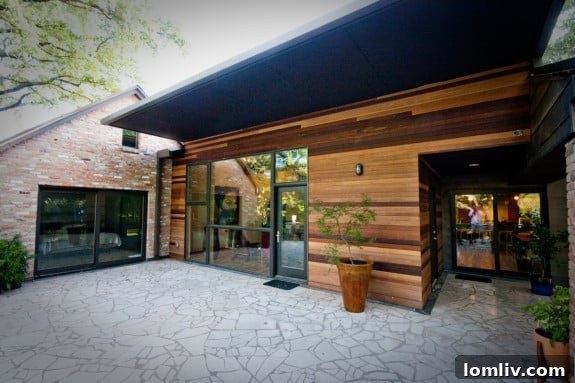
In an era where home comfort and sustainability are paramount, Bauhaus Custom Homes stands out by making energy efficiency not just functional, but also stylish and modern. This commitment was brilliantly demonstrated during a recent severe weather event, dubbed “Icemageddon,” which swept through earlier this month. While many residents experienced widespread electricity outages and struggled with the freezing temperatures, homeowners in Bauhaus-built residences remained notably cozy and warm. This stark contrast highlighted the profound benefits of their innovative construction philosophy, leaving others without power enduring the severe cold.
Recognizing the critical importance of preparedness for future weather challenges, we engaged Marc Kleinmann, the visionary founder of Bauhaus Custom Homes—a daltxrealestate.com Approved Builder. Our aim was to uncover the specific materials and strategies homeowners can employ, both in new construction and renovations, to fortify their homes against the next cold snap. Questions naturally arise: are radiant barriers a worthwhile investment? What about new windows? Kleinmann, an authority in sustainable building, graciously provides invaluable insights into achieving true energy efficiency and lasting comfort. His expertise extends beyond mere suggestions, offering a comprehensive guide to building resilience into your home’s very foundation.
The Core of Energy Efficiency: A Robust Building Envelope
According to Marc Kleinmann, the single most effective strategy for combating heat loss in winter and heat gain in summer is to eliminate drafts and construct an exceptionally tight “building envelope.” In simpler terms, this means meticulously designing and building an exterior wall structure and roof that are as airtight as possible. This foundational principle forms the cornerstone of genuine energy efficiency, creating a protective barrier that seals your home from the outside elements.
Debunking Radiant Barriers: A Deeper Look at What Truly Works
When discussing materials, Kleinmann offers a direct perspective on radiant barriers. While they are often touted as a miracle solution, his experience suggests otherwise. He states, “Radiant barriers won’t do anything significant for you. In fact, while it’s better than just plain roof decking, it is a much over-hyped product, and the benefits are way overstated.” This isn’t to say radiant barriers have no purpose; they are designed to reflect radiant heat. However, their impact is often marginal compared to the foundational work of comprehensive air sealing and insulation. Many homeowners mistakenly believe installing a radiant barrier will solve all their energy problems, diverting resources from more impactful improvements. Real, measurable gains in energy efficiency come from addressing the primary pathways of heat transfer: conduction, convection, and radiation, with a strong emphasis on preventing air leakage.
The Critical Role of Air Sealing: Preventing Invisible Energy Leaks
Before insulation can perform optimally, air sealing is paramount. Kleinmann emphasizes that all building penetrations—such as plumbing pipes, vent pipes, and electrical lines—must be meticulously sealed. This isn’t a task to be rushed; it requires careful attention using durable materials like high-quality tape and silicone. Furthermore, the connections between walls and the roof are notorious for tiny gaps and openings that allow conditioned air to escape and unconditioned air to infiltrate. These junctions must be sealed tightly. Kleinmann offers a straightforward rule of thumb: “If you can see the light shine through somewhere, air will leak.” This visual test underscores how even the smallest gaps can compromise the entire building envelope, leading to significant and often unseen energy loss. Beyond major penetrations, homeowners should also consider sealing around electrical outlets, recessed lighting, attic hatches, and any other discontinuity in the thermal boundary. These seemingly minor leaks can add up to the equivalent of an open window, constantly draining your home’s energy.
Advanced Insulation: The Power of Spray Foam and Conditioned Attics
Once the rough envelope is sealed, the focus shifts to insulation. Bauhaus Custom Homes exclusively utilizes spray foam insulation for its superior performance characteristics. This involves sealing all exterior walls and, crucially, foaming the underside of the roof deck. This approach represents a significant departure from traditional building practices and offers profound benefits, especially for homes with ductwork in the attic.
Transforming the Attic into Conditioned Space
In a traditional build, the attic ceiling is insulated, while the attic itself remains an unconditioned space, often experiencing extreme temperature swings. Imagine winter: you’re pumping 90-degree air through a duct system that runs through an attic sitting at a frigid 35 degrees. By the time that heated air travels from the air heating unit to the supply grill, it can lose as much as 40 percent of its energy due to the drastic temperature difference. This is an enormous waste of energy and a significant contributor to high utility bills.
To combat this inefficiency, Bauhaus Custom Homes insulates the underside of the roof deck with spray foam. This effectively brings the attic space within the home’s thermal and air boundary, transforming it into a “conditioned space.” Now, the air ducts are enclosed within an area that has a temperature only 7 to 10 degrees different from the living spaces below. This drastically reduces thermal transfer from the ducts, ensuring that the heated or cooled air reaches your living areas with minimal energy loss. The advantages extend beyond energy savings: equipment (like HVAC units) placed in a conditioned attic operates in a more stable environment, leading to longer lifespan and fewer maintenance issues. Furthermore, eliminating the traditional vented attic improves indoor air quality by reducing the infiltration of pollutants, dust, and allergens.
The Unbeatable Performance of a Tight, Insulated Home
The combination of a meticulously sealed envelope and superior spray foam insulation results in a home that performs exceptionally well, even when the power goes out. Kleinmann highlights two primary reasons for this outstanding resilience:
1) A well-insulated house boasts sufficient thermal storage to retain heat for extended periods. The dense, insulating properties of spray foam, combined with the structural components, create a thermal mass that slows down temperature changes within the home.
2) The house is exceptionally tight. With virtually no holes or penetrations in the building envelope, cold air cannot leak in, and warm air cannot leak out. This prevents uncontrolled air exchange, which is a major source of energy loss in conventionally built homes.
The real-world performance of this approach is compelling. Kleinmann recounts a project recently completed that found itself without electricity during a severe cold spell. Despite external temperatures plummeting into the teens and 20s for three consecutive days, the interior temperature of the building remained a comfortable 61 degrees Fahrenheit, without any active heating. This remarkable anecdote underscores the profound difference a truly energy-efficient building envelope makes in ensuring comfort, safety, and resilience during extreme weather events.
Retrofitting Existing Homes: Strategies for Improvement
Existing homes present a unique set of challenges when it comes to enhancing energy efficiency. There’s only so much that can be done to eliminate drafts without undertaking significant renovation work, such as removing existing sheetrock to gain full access to wall cavities. Many homeowners mistakenly believe that replacing old windows is the first and most impactful step in improving energy performance. While better windows undoubtedly help and contribute to reducing drafts, Kleinmann cautions against this as a primary initial investment, emphasizing that it’s often not the most cost-effective or impactful first step.
The Bauhaus Approach to Existing Home Renovations
Bauhaus Custom Homes views designing, building, and renovating homes as a sophisticated blend of art, craft, science, and technology – pillars that deeply resonate with the original Bauhaus movement’s philosophy. For existing homes, their approach is methodical and data-driven. The very first step is comprehensive diagnostic testing. This involves specialized equipment, such as blower door tests and thermal imaging cameras, to precisely identify where the house leaks the most and, critically, where the duct system leaks. These tests provide invaluable data, pinpointing hidden energy drains that are often invisible to the naked eye.
Once the leakage points are accurately identified, a tailored improvement strategy can be developed. This ensures that resources are allocated to the areas that will yield the greatest return on investment and energy savings. When undertaking a whole-house remodel, Kleinmann asserts that the most effective strategy is to strip the house down to its studs. This provides unparalleled access to the wall cavities, allowing for optimal sealing of the building envelope and the installation of high-performance insulation, such as spray foam. While this level of renovation is a significant undertaking, it offers the opportunity to transform an old, leaky home into a highly efficient, modern living space that rivals new construction in its thermal performance and comfort.
Prioritizing for Maximum Impact: The Installation Factor
In closing, Marc Kleinmann underscores the singular most important factor when evaluating a home’s performance in both hot and cold conditions: installation. He states unequivocally, “Installation is everything. Period.” The quality of materials, no matter how advanced, is only as good as their application. Poor installation can negate the benefits of even the highest-rated insulation or most efficient HVAC system. Homeowners, therefore, should focus less on simply acquiring new windows or new HVAC systems in isolation, and far more on the integrity and proper installation of their building envelope. This holistic approach to the exterior shell of the home is where you will achieve the “best bang for your buck,” delivering superior comfort, lower energy bills, and enhanced resilience for decades to come. Investing in a properly sealed and insulated building envelope is a foundational decision that impacts every other aspect of your home’s energy performance.
Marc Kleinmann is the esteemed founder of the design/build powerhouse Bauhaus Custom Homes. Under his leadership, the company has garnered significant recognition, including being named “Best of Houzz.com 2013” and consistently featuring on “Best Builder” lists. Furthermore, Bauhaus Custom Homes holds the distinction of being a “daltxrealestate.com Approved Builder.” If your vision is a modern luxury home that seamlessly blends sophisticated design and aesthetics with uncompromising sustainability and peak performance, then the expert team at Bauhaus Luxury Dallas custom home builders is ideally suited to bring your dream to fruition.