Dallas’ Fiscal Battle: Unpacking the Police and Fire Pension Crisis and Billions in Legal Disputes
The city of Dallas finds itself at a critical juncture, grappling with a financial conundrum of unprecedented scale that threatens its stability and the livelihoods of its dedicated public safety personnel. At the heart of this crisis are multiple interlocking challenges: a massive pension shortfall, a multi-billion dollar lawsuit brought by its own police force, and intense scrutiny over a controversial retirement program. These issues collectively represent one of the most significant fiscal hurdles any U.S. city has faced in recent memory, demanding immediate and strategic resolution.
A City on the Brink: The $1.1 Billion Pension Shortfall
The Dallas Police and Fire Pension System (DPFP) is currently facing a staggering $1.1 billion shortfall, a deficit that leadership is asking Dallas taxpayers to cover. This monumental sum isn’t just a number; it represents a fundamental imbalance in the system, jeopardizing the retirement security of thousands of police officers and firefighters who have committed their lives to protecting the city. The potential impact of such a shortfall extends far beyond the pension fund itself, casting a long shadow over Dallas’s overall financial health, its credit rating, and its capacity to fund essential municipal services from parks and libraries to crucial infrastructure projects. The urgency of this situation necessitates transparent discussions and difficult decisions to forge a sustainable path forward, balancing fiscal responsibility with the city’s commitment to its public safety heroes.
The $4 Billion Back Pay Lawsuit: Police vs. City
Adding another layer of complexity and financial peril to Dallas’s woes is a formidable lawsuit filed by the Dallas Police Department against the city itself. This legal battle, which dates back to a 1994 dispute and has been significantly influenced by a state law passed in 2005, seeks an astonishing $4 billion in back pay. The core of the lawsuit revolves around a “pay differential” argument. Police officers contend that an implicit agreement or legal mandate dictates that if any single member or group within the force, such as new recruits, receives a pay raise, then *every single officer* on the force should also receive an equivalent increase. This interpretation challenges the city’s long-standing compensation practices and has escalated into a demand for substantial retroactive payments. Should the police prevail in this lawsuit, the financial ramifications for Dallas taxpayers would be catastrophic, dwarfing the current pension shortfall and potentially crippling the city’s budget for years to come. This high-stakes legal battle underscores the deep-seated financial tensions between the city administration and its vital public safety departments.
The Controversial Deferred Retirement Option Program (DROP)
Amidst the pension crisis and the lawsuit, the Deferred Retirement Option Program (DROP) has emerged as a particularly contentious issue, with critics arguing it has exacerbated the fund’s financial difficulties. Dallas Mayor Mike Rawlings has personally taken legal action against the pension fund, demanding an immediate halt to the DROP program, which he asserts is “bleeding” the system dry. DROP allows eligible employees nearing retirement to “retire” on paper, accumulate their pension benefits in an interest-bearing account while continuing to work, and then receive a lump sum or annuity upon actual termination of employment. While intended as a retention tool, the program’s design in Dallas has come under intense scrutiny due to its remarkably generous interest rates.
A recent briefing highlighted alarming statistics regarding the program:
- The highest individual DROP account value recorded stands at an incredible $4.3 million.
- The average DROP account value across participants is a substantial $597,000.
- A staggering 517 accounts currently hold over $1 million.
Crucially, Dallas DROP accounts were credited with an exceptionally high interest rate, ranging between 8-10%, with an average compound annual growth rate of 8.9%. This stands in stark contrast to other major Texas cities. For instance, Fort Worth, San Antonio, and El Paso offer no interest on their DROP programs. Even Austin and Houston, while offering DROP, do not provide interest for their police officers’ accounts. This disparity underscores the unique financial burden posed by Dallas’s overly generous DROP terms, directly contributing to the pension fund’s insolvency and sparking intense debate over its future.
Diving Deeper into Dallas’ Financial Landscape and Public Safety Compensation
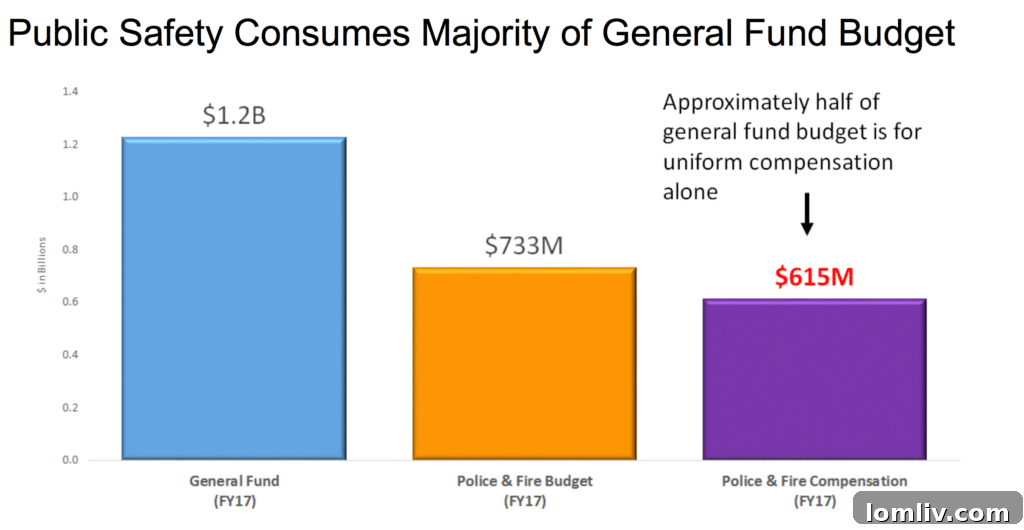
To fully grasp the scope of Dallas’s fiscal challenges, it’s essential to understand the city’s budgetary allocations. While the City’s overall budget stands at $3.1 billion, the crucial general fund budget, which supports most of the services citizens directly interact with—such as Police, Fire, Parks, Libraries, and Streets—is $1.2 billion for the current year. Within this general fund, Police and Fire services command a significant financial footprint, accounting for $733 million, or a commanding 61% of that budget. A substantial portion of this—$615 million—is allocated specifically to Police and Fire compensation, highlighting the immense investment Dallas makes in its public safety personnel.
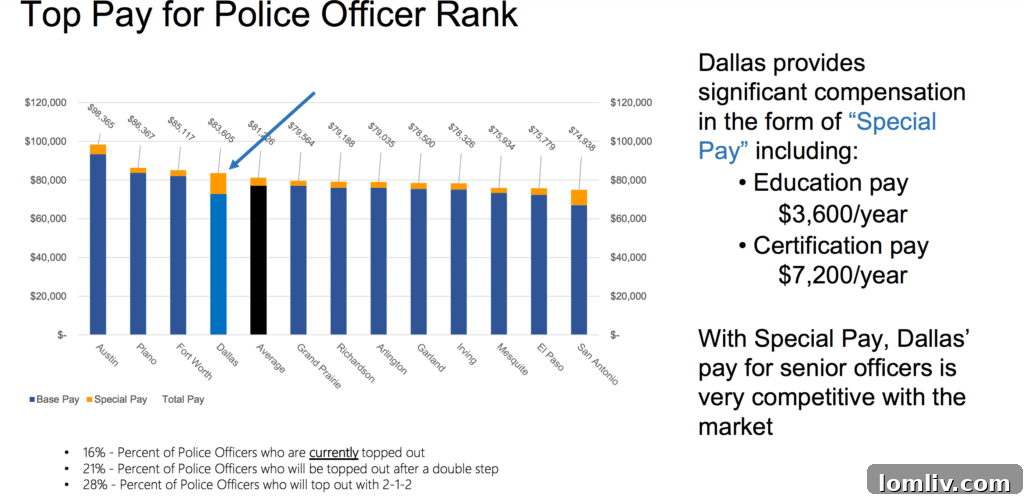
Compensation for Dallas police officers is designed to be competitive, attracting and retaining top talent. For instance, a Police Officer starting with a bachelor’s degree can expect a base pay of approximately $55,288. However, the compensation package includes significant “Special Pay” components that considerably boost overall earnings. These include:
- Education pay: An additional $3,600 per year for officers with higher education.
- Certification pay: Up to $7,200 per year for those holding specific certifications, enhancing skills and expertise.
These special pay incentives ensure that Dallas’s compensation for senior officers remains highly competitive within the market, aiming to prevent attrition and reward experienced personnel. The system also accounts for pay progression:
- Approximately 16% of Police Officers are currently “topped out” in their pay scale.
- This figure will rise to 21% after a “double step” increase.
- And further to 28% with a “2-1-2” pay progression model, indicating structured pathways for salary growth over an officer’s career.
This detailed compensation structure, while designed to support and motivate the force, is now under scrutiny as the city grapples with its overarching financial obligations.
Tri-Party Conflict: Mayor, Council, and Pension Fund in Urgent Discussions
The severity and multifaceted nature of these financial issues have placed them at the forefront of Dallas’s political agenda. The Dallas City Council is scheduled for intensive, day-long discussions to deliberate these complex matters, emphasizing the immediacy required to find resolutions. The public’s right to information has been championed by figures like Jennifer Staubach Gates, known for her commitment to transparency, who ensured that comprehensive briefings on these critical issues were disseminated widely. Even the peripheral connections highlight the deep roots of this crisis within the city’s fabric: the Mayor’s lawyer in his suit against the pension fund, Mike Gruber, has significant ties to the city’s real estate community through his wife, Diane Gruber, and daughter, Becky Gruber, both associated with Dave Perry-Miller. These connections underscore the interwoven nature of Dallas’s economy and governance, where a crisis in one sector inevitably sends ripples through others.
The Road Ahead: Navigating Dallas’s Fiscal Future
The convergence of a massive pension shortfall, a multi-billion dollar police lawsuit, and the contentious DROP program presents Dallas with an unprecedented challenge. The decisions made in the coming days and weeks will have long-lasting consequences for the city’s financial health, its ability to provide essential services, and the trust between its government and its dedicated public safety personnel. Navigating this intricate web of financial, legal, and political pressures will require innovative thinking, courageous leadership, and a commitment to sustainable solutions that prioritize both fiscal prudence and the welfare of those who serve the city. The road ahead is undoubtedly difficult, but finding an equitable and lasting resolution is paramount for Dallas’s future prosperity.
It is also noteworthy that these crucial discussions take place against a backdrop of historical significance, coinciding with Pearl Harbor Day, a solemn reminder of past challenges overcome through unity and resolve.