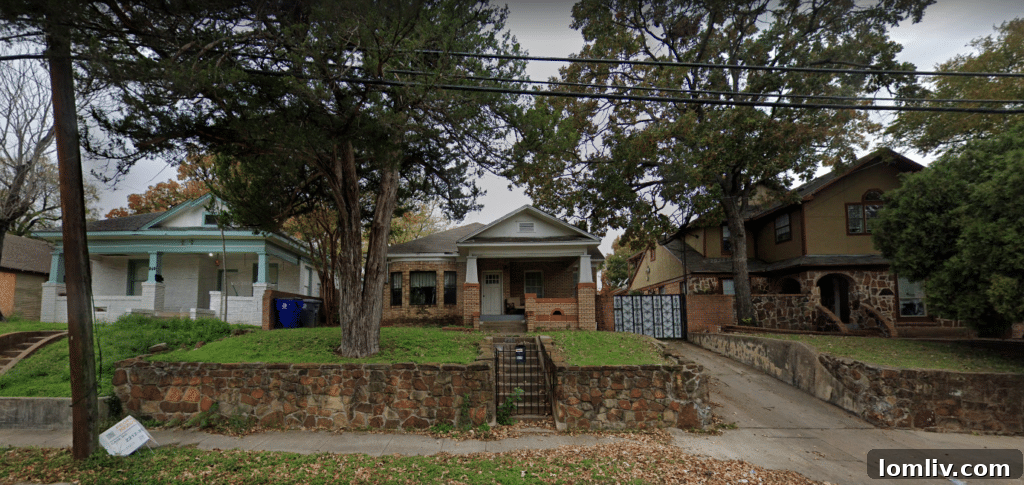
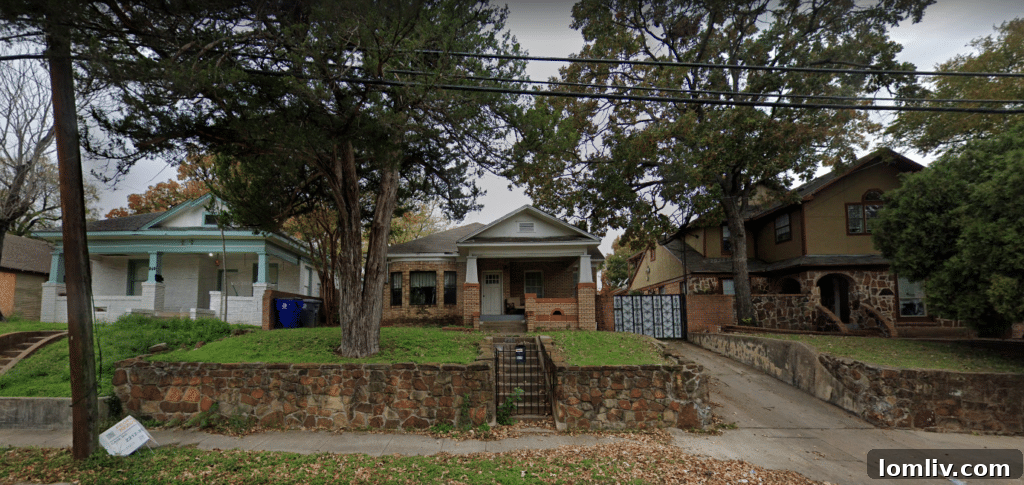
Nestled just south of downtown Dallas, the Lake Cliff neighborhood serves as a pivotal gateway to the vibrant heart of Oak Cliff. Defined by its historical charm and a prime location, Lake Cliff is bordered by E. 5th Street to the north, E. Davis and E. 8th Street to the south, and sits between N. Zang and N. Marsalis avenues on its west and east flanks, respectively. For generations, this area has been characterized by its collection of aging historic homes and well-established local businesses, creating a distinctive ambiance cherished by its residents. However, a significant shift began in 2015 with the implementation of the Oak Cliff Gateway rezoning. This transformative policy has accelerated urban development across Lake Cliff, leading to a rapid proliferation of new apartment complexes and commercial ventures. The pace of this urban evolution raises a critical question for both residents and city planners: how will this surge in new dwellings and developments ultimately reshape the unique character and historical identity of Lake Cliff?
While urban rezoning is often championed as a tool for progress and revitalization, it frequently comes with unforeseen consequences that can ripple through communities, impacting daily lives and long-held neighborhood values. A compelling illustration of this lies in the experience of Katrina Whatley, a long-time resident and local Realtor whose duplex on N. Beckley Avenue found itself directly adjacent to the newly rezoned Oak Cliff Gateway area following the 2015 decision. Whatley’s property, notably located next door to the historic boarding house where Lee Harvey Oswald spent his final days as a free man, is protected under the Lake Cliff Historic District overlay, a designation specifically designed to preserve architectural heritage and neighborhood character. Yet, the parcel immediately next door lacked this crucial protection. This distinction allowed the developer who acquired the adjacent property to construct a new building almost flush against the shared brick wall that separates Whatley’s kitchen from what is now an apartment balcony. This scenario starkly highlights the immediate and intimate impacts of zoning changes on individual property owners and the delicate balance between development and preservation in evolving urban landscapes.
Rising Concerns and Community Mobilization in Lake Cliff
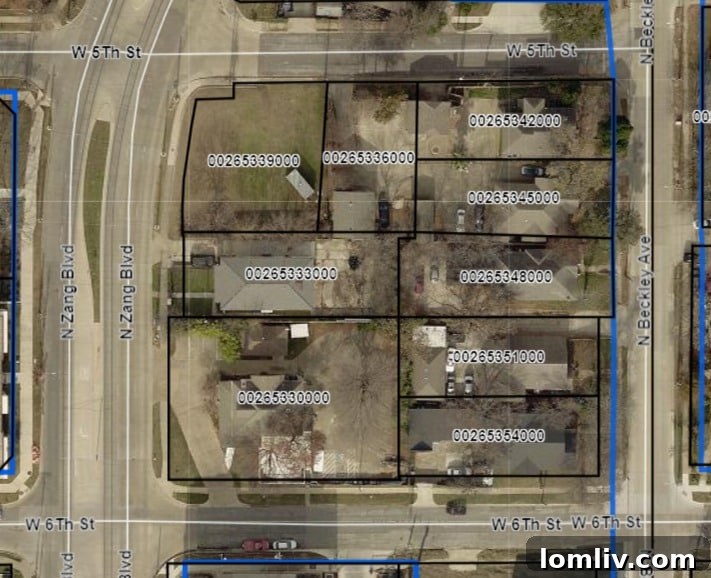
The prospect of increased density and multi-story apartment buildings emerging just a block from her home naturally triggered significant concern for Katrina Whatley, not only as a resident but also as a dedicated advocate for North Oak Cliff’s unique heritage. Recognizing the potential erosion of her neighborhood’s charm and the precedent such developments could set for future projects, she initiated a powerful grassroots movement. Whatley launched a Change.org petition. This petition specifically targets a proposed zoning amendment for properties situated between E. 5th and E. 6th streets to the north and south, and N. Beckley and N. Zang avenues to the west and east. Within a remarkably short period, the petition garnered over 700 signatures, underscoring a widespread and palpable concern among Lake Cliff residents regarding the future trajectory of their community and the preservation of its established character.
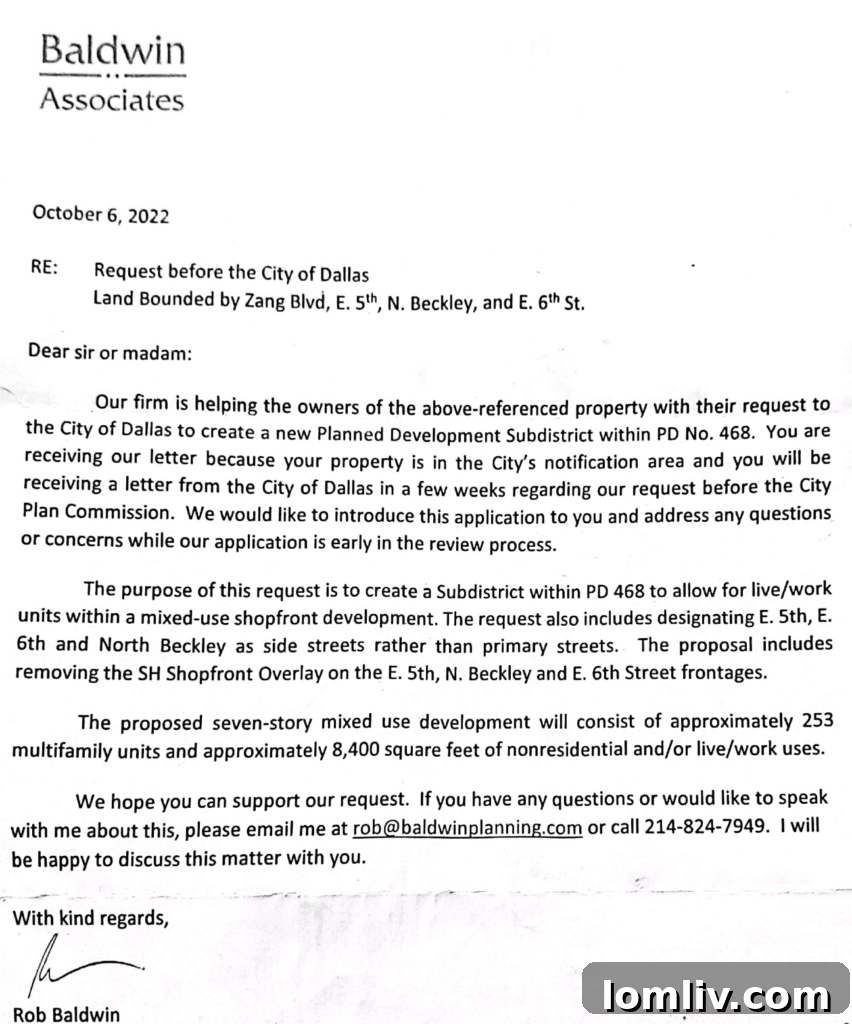
The developer’s proposed rezoning seeks two primary modifications to the existing framework for this specific block. Firstly, it aims to significantly reduce or eliminate the street-level retail requirements along E. 5th and E. 6th streets. Secondly, it proposes a refinement of the street-level usage on N. Beckley Avenue, transitioning it towards a live/work configuration or potentially townhomes, offering a more flexible approach to mixed-use. The overarching project envisions a substantial seven-story multifamily development, comprising an impressive 253 residential units. While this proposed structure adheres to the existing zoning in terms of density and height, the requested adjustments to the retail component have sparked intense debate and raised questions about the balance between developer profitability and community benefit. Whatley voiced her apprehension to daltxrealestate.com, stating, “If the city council approves the developer’s request to remove the retail requirement, it could send a signal that the developers who want more profits come before the benefit to the neighborhood.” This sentiment encapsulates a broader concern that community needs and established neighborhood character might be sidelined in favor of developer interests, potentially undermining the long-term vision for a vibrant, walkable Lake Cliff and setting an unfavorable precedent for future urban development in Dallas.
Developer’s Perspective: Navigating Urban Development with Community Engagement
In response to the community’s concerns, Reid Beucler, the principal of Slate Properties, has offered a contrasting perspective, emphasizing collaboration and adherence to city planning principles. Beucler asserts that the project his firm intends to present to the City of Dallas’ Plan Commission, documented in a detailed submission available to the public, is not an attempt to dramatically alter the zoning but rather a nuanced proposal born from extensive dialogue with the neighborhood. “I think that there’s a little misunderstanding,” Beucler explained to daltxrealestate.com. “We’re not looking for a major zoning change. We’re not asking for anything new in terms of density or height.” He clarifies that the core objective remains within the parameters of existing density and height regulations, aiming instead for strategic adjustments that align with practical urban planning and address community needs directly.
Beucler, alongside zoning representative Rob Baldwin of Baldwin Associates, is primarily seeking to remove the mandatory street-level retail requirements for portions of the property that face what he terms “side streets.” Their rationale centers on mitigating potential traffic congestion – a significant concern frequently voiced by nearby property owners during community consultations. The argument is that mandating retail spaces on these secondary thoroughfares would necessitate additional parking allocations, increase delivery vehicle traffic, and potentially complicate pedestrian flow, thereby exacerbating traffic challenges in an already bustling area. Instead of contributing to congestion, removing these retail mandates, according to Beucler, would allow for a more streamlined and resident-focused development. He further emphasized the proactive steps taken by Slate Properties to engage with the community: “We bought this property in January through March of last year and we’ve had multiple calls with the Lake Cliff Neighborhood Association letting them know ‘This is what we’re thinking.’” These discussions, which included several representatives of the Lake Cliff Neighborhood Association, commenced in the fall of 2021, long before the public petition, signaling a perceived effort by the developer to integrate community feedback into their planning process and to find mutually beneficial solutions for the Lake Cliff neighborhood.
Balancing Progress and Preservation: The Demolition Debate in Lake Cliff
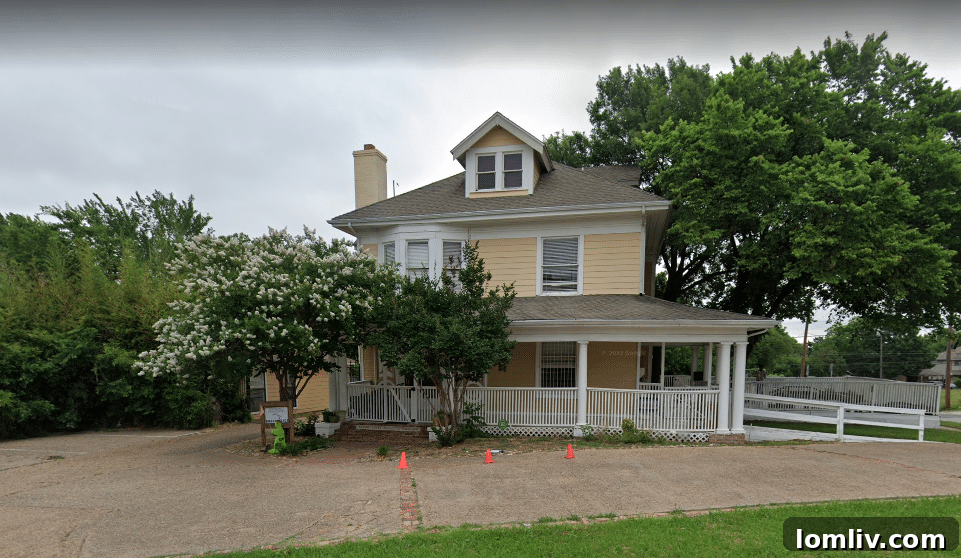
A contentious point in the Lake Cliff development discourse revolves around the fate of existing structures on the block acquired by Slate Properties. While this specific parcel does not fall directly within the official boundaries of the Lake Cliff Historic District, it does encompass several homes that many local observers and residents consider historically significant due to their age, architectural style, and contribution to the neighborhood’s unique aesthetic. The prospect of their demolition for the construction of a new seven-story apartment building presents a “tough pill to swallow” for a community deeply invested in preserving its past. This concern resonates strongly with the broader struggle unfolding across North Oak Cliff, where local activists and preservationists are actively fighting to stem a rising tide of teardowns, particularly along the culturally rich Bishop Arts District. The demolition of older, character-rich homes, even those not officially designated as historic, is seen by many as an irreversible loss to the unique fabric and charm that define Oak Cliff, replacing irreplaceable heritage with generic modern structures.
Katrina Whatley articulated this sentiment powerfully, stating, “The developer is already diminishing the character of Oak Cliff by tearing down several old homes and replacing them with a seven-story apartment building — and now they want to take even more from us by removing the retail requirement.” For her and many residents, the proposed loss of historic housing, combined with the reduction in street-level retail, represents a double blow to the neighborhood’s integrity and quality of life. Whatley argued that even a minimal retail presence could offer some degree of public benefit, stating, “At least with some retail the neighborhood would benefit from having shops to walk to and enjoy. That would be a tiny consolation for removing parts of our history and charm.” This highlights a desire for development that contributes to a vibrant, walkable urban environment, fostering local businesses and community interaction, rather than solely focusing on residential density. However, Beucler reiterated that concerns about traffic on E. 5th and E. 6th streets – the “secondary streets” in the rezoning proposal – were a major focus during his conversations with neighbors, suggesting that the removal of retail was a direct response to a community-expressed issue regarding vehicle congestion and safety, rather than a unilateral decision purely for profit maximization.
Innovative Solutions and Past Successes in Community-Focused Development
Beyond simply proposing to remove retail, Slate Properties has put forward alternative solutions aimed at fostering a more harmonious integration with the neighborhood while addressing practical concerns. Beucler highlighted that the proposed change to allow live/work units on Beckley Avenue, in place of traditional retail, “should be favorable to the neighborhood as it will actually be less traffic.” This innovative model, often envisioned as a ground-floor gallery, boutique, or small office space with a residential unit above, offers a way to maintain street-level activity and entrepreneurial opportunities without generating the same high traffic volume and extensive parking demand typically associated with conventional retail establishments. Furthermore, the developer is actively working to refine other aspects of the zoning, addressing elements that are no longer practical or feasible in the contemporary urban context. An example given by Beucler is the requirement for on-street parking on N. Zang Avenue, which has become unworkable due to the presence of the active Dallas streetcar trolley line. By “cleaning up” such outdated and impractical requirements, the project aims to create a more efficient, functional, and contextually appropriate urban space for Lake Cliff residents.
Beucler also stressed his firm’s unwavering commitment to collaborative development, underscoring their philosophy of working closely with neighborhoods and engaging stakeholders throughout the planning and implementation process. He cited a previous project, Doverhouse, a successful luxury apartment development in East Dallas near White Rock Lake, as a testament to this community-focused approach. In that instance, the community expressed significant concern about the potential loss of a beautiful historic church adjacent to the proposed development. Instead of demolishing it, Slate Properties worked diligently to integrate the church into the project’s fabric, preserving its architectural integrity. It now stands as a vibrant second location for Ascension, a popular gourmet coffee shop, breathing new life into a cherished landmark. This outcome, Beucler noted, exemplifies their goal of achieving a “win-win for both ourselves and the neighborhood for a project that everyone can be proud of in the future.” This precedent suggests a willingness to adapt plans to address community values and preserve significant local landmarks, offering a potential model for thoughtful development within the Lake Cliff project and building trust with skeptical residents.
Despite these assurances and efforts, the Lake Cliff Neighborhood Association’s official stance on the current zoning proposal remains publicly undetermined, reflecting the ongoing complexity of the issue and the need for thorough review. We reached out to Jennifer Thornton, president of the Lake Cliff Neighborhood Association, for comment on the ongoing zoning debate, but did not receive a response before the publication deadline, indicating the multifaceted nature of the discussions and the careful consideration required before forming a collective neighborhood position.
The Road Ahead: Navigating Dallas’s City Planning Process
The journey for Slate Properties’ development in Lake Cliff began in the fall of 2021, marking a prolonged period of planning, due diligence, and initial community engagement. In October 2022, Baldwin Associates, representing the developer, issued formal notices to nearby residents, informing them that a rezoning request would soon be arriving in their mailboxes. This notification marked a crucial, official step in the project’s progression toward municipal review and public scrutiny. However, as District 1 City Councilman Chad West, who recently secured reelection against opponents Mariana Griggs and Albert Mata, underscored, the rezoning case is still very much in its nascent stages within the city’s intricate planning framework, with several layers of review still ahead.
Councilman West articulated his general policy regarding significant zoning adjustments, particularly those involving the amendment of established Planned Development (PD) overlays such as PD 468 (the Oak Cliff Gateway) and PD 830 (the Bishop-Davis PD). He firmly believes that such overlays should only be modified for “a very good reason, such as additional benefits to the community that weren’t contemplated when the zoning was originally drafted and passed.” This statement sets a high bar for developers seeking changes, emphasizing that any alterations must clearly demonstrate tangible, unforeseen advantages for the community, rather than solely serving developer interests. West acknowledged the ongoing dialogue between the developer and residents: “Here, I understand that the developer’s representative has spoken at least once with the neighborhood association for that area, Lake Cliff NA, and there were some concerns from neighbors about traffic along the Beckley Ave. side (if the retail was allowed to move forward as it is, by right, there).” However, he also noted the preliminary nature of these discussions from the city’s official standpoint: “I don’t know where those discussions ended up, because the process hasn’t risen to the CPC [City Plan Commission] or Council level yet.” This highlights that while community engagement is important, the formal approval process through the City Plan Commission and then the City Council is where the definitive, legally binding decisions will ultimately be made.
For residents and interested parties eager to monitor the progression of this significant development and participate in the civic process, the City of Dallas provides transparent access to all official zoning cases. You can actively follow the unfolding of this specific case by using the official zoning case number (Z212-357) on the city’s dedicated development dashboard here. Engaging with this platform allows citizens to stay informed about scheduled hearings, submitted documents, and decisions as they are made, offering a crucial avenue for civic participation in shaping the future of Lake Cliff. The outcome of this rezoning request will not only shape the immediate landscape of Lake Cliff but could also set important precedents for future development within Oak Cliff and across Dallas, influencing the delicate balance between progress and preservation for years to come.