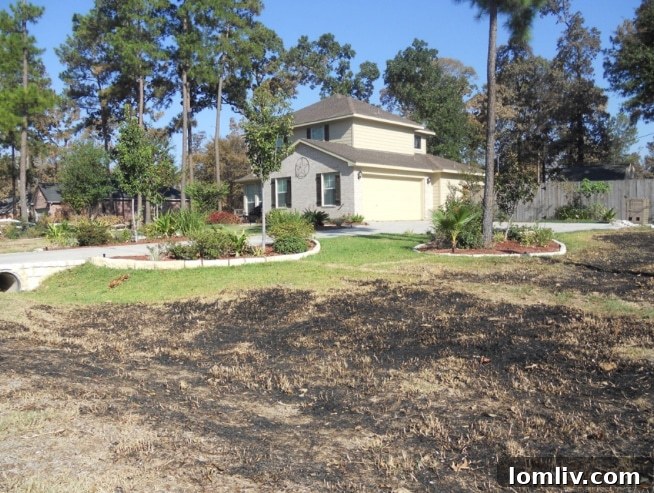
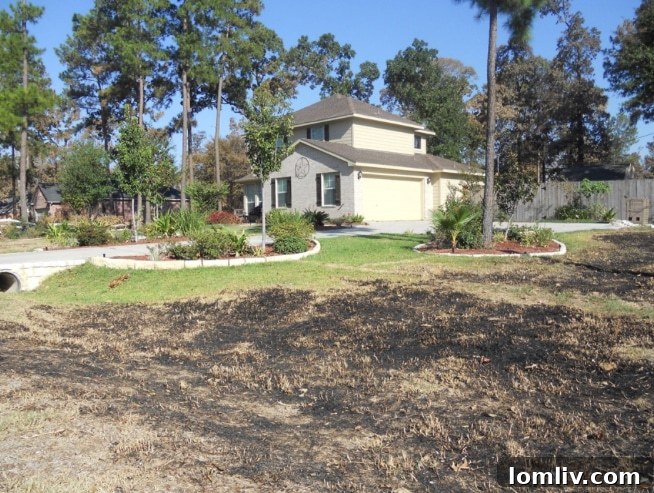
Texas, a state renowned for its sprawling landscapes and diverse ecosystems, faces a growing and often underestimated threat: wildfires. While many Texans might associate significant wildfire risks primarily with rural areas of California, the reality on the ground tells a different story. Wildfires are an increasingly prevalent concern across the Lone Star State, impacting not just remote wilderness but also urban and suburban communities.
Modern terminology reflects this changing landscape: experts no longer refer to these events simply as “forest fires.” Instead, the term “wildfires” is used to encompass the rapidly spreading blazes that frequently occur within the Wildland-Urban Interface (WUI) – areas where human developments meet or intermingle with undeveloped wildland vegetation. This means your neighborhood, your home, and your community are increasingly at risk.
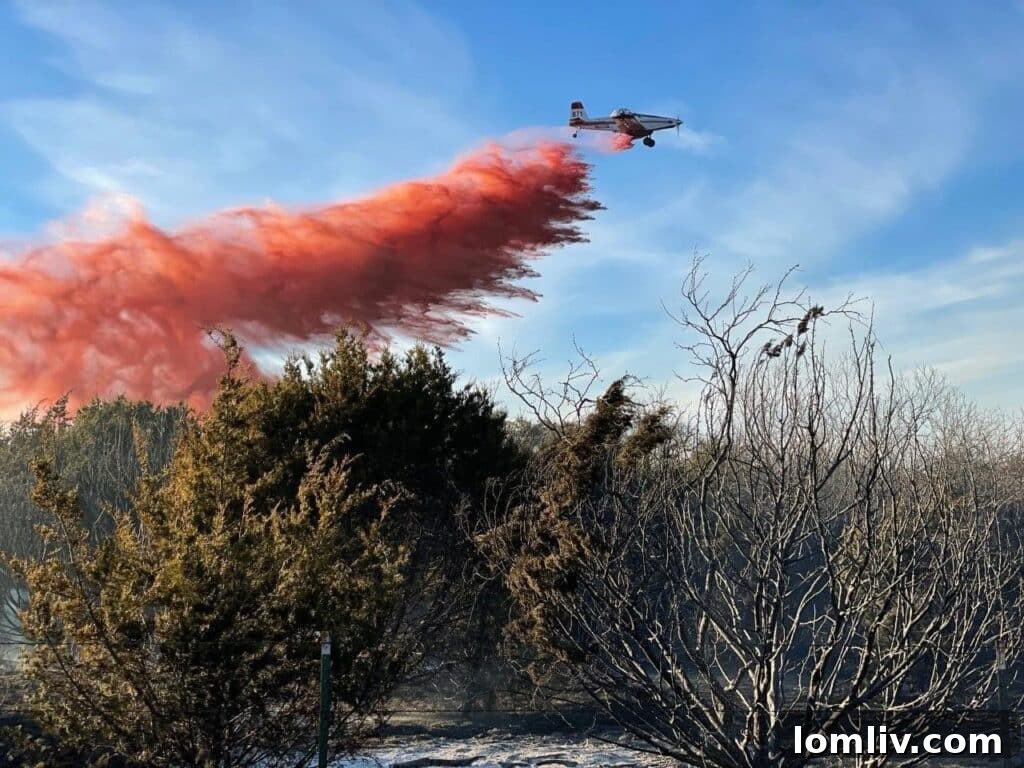
The scale of this challenge is significant. For instance, over 11,000 acres of Texas land were recently burning in Taylor County near Abilene, a stark reminder of the constant danger. Unlike structural fires, containing a wildfire can be an arduous, weeks-long process. It often involves creating “fire breaks” with bulldozers to starve the blaze of fuel and deploying air tankers to drop retardant from above, requiring immense resources and coordinated efforts.
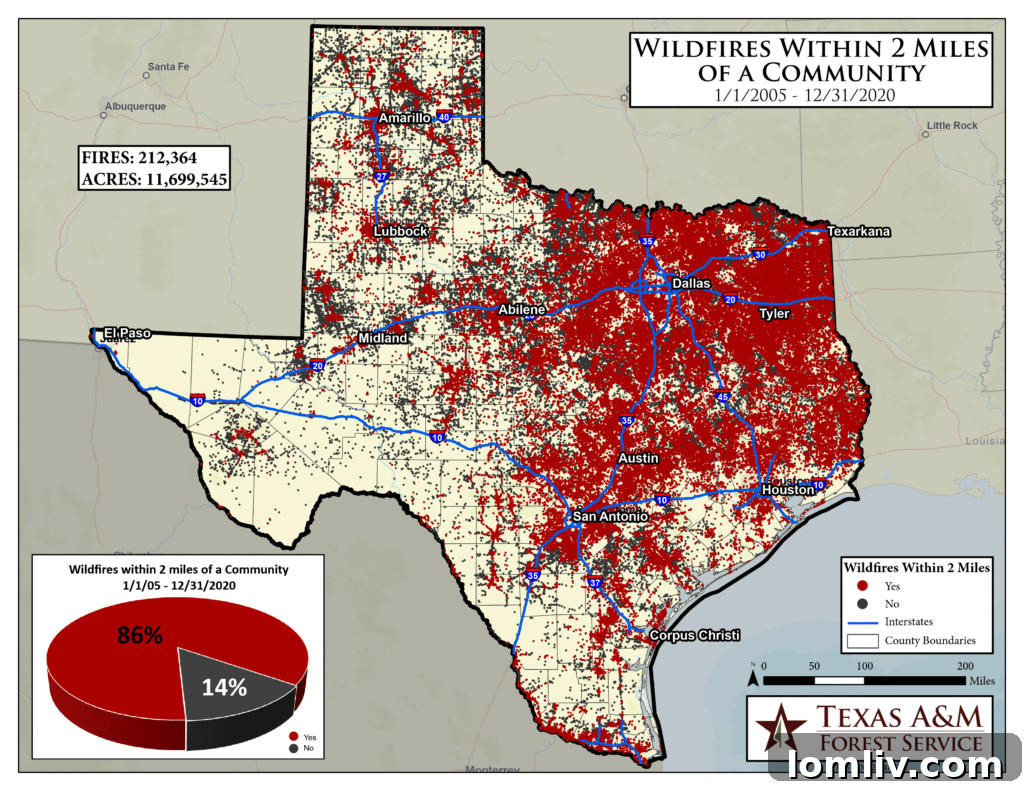
Kari Hines, the Texas A&M Forest Service Firewise program coordinator, underscores the immediacy of the threat. “While it makes us feel safer to think that wildfires only happen far away from where we are living and our cities, we know that most wildfires occur within 2 miles of a community,” she explains. This proximity makes sense when considering that human activity is the leading cause of wildfires. Unlike many other natural disasters, wildfires are largely preventable through proactive measures. “We know that there are absolutely steps that individuals and communities can take to prepare. Often these steps mesh very well with regular home and yard maintenance,” Hines adds, highlighting the actionable nature of wildfire preparedness.
Understanding the Wildland-Urban Interface (WUI) and Its Risks
The Wildland-Urban Interface (WUI) is a critical area where human development and wildland vegetation meet. As Texas continues to experience rapid population growth and urban expansion, more homes and communities are being built in or adjacent to natural landscapes prone to wildfires. This expansion significantly increases the risk, not only to structures but also to human lives and local infrastructure.
In the WUI, wildfires behave differently. Instead of just burning through forests, they encounter homes, sheds, fences, and highly flammable landscaping materials. This allows fires to spread quickly from natural vegetation to developed areas, making them incredibly difficult to control and leading to substantial property damage. Understanding your proximity to the WUI is the first step in assessing your personal wildfire risk.
The Human Factor: Primary Causes of Wildfires in Texas
It’s crucial to acknowledge that the vast majority of wildfires in Texas are human-caused. While lightning strikes can ignite fires, human negligence, accidental ignition, and sometimes arson are far more common culprits. Simple activities can inadvertently spark a devastating blaze:
- Discarded Cigarettes: A lit cigarette carelessly tossed from a vehicle or onto dry vegetation can quickly ignite a fire.
- Unattended Campfires and Debris Burns: Fires left unsupervised, or burning debris on windy days, are frequent sources of ignition.
- Equipment Use: Sparks from lawnmowers, ATVs, chainsaws, or welding equipment can easily start a fire in dry conditions.
- Arson: Intentional fires, unfortunately, contribute to a percentage of wildfire incidents.
- Fireworks: Especially during dry seasons, fireworks pose a significant risk of starting large fires.
Awareness of these common causes empowers individuals to take preventative actions, making them active participants in wildfire prevention rather than potential contributors to the problem.
Lessons from History: The 2011 Texas Wildfire Season
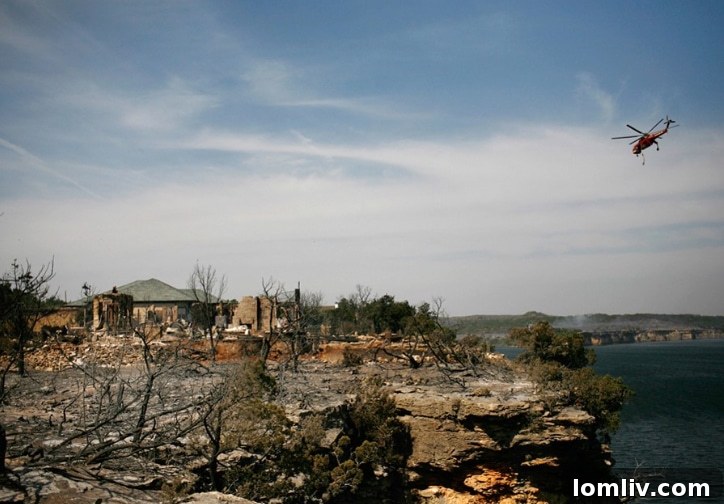
The year 2011 serves as a grim reminder of Texas’s vulnerability to wildfires. During a record-setting drought, much of the state was engulfed in flames, leading to unprecedented destruction. One of the most significant events was the PK Complex in the Possum Kingdom Lake resort area, spanning Palo Pinto, Stephens, and Young counties. This complex burned a staggering 126,734 acres and destroyed 168 homes. However, a silver lining emerged from this devastation: more than 1,200 homes within the same fire complex were saved. This incredible statistic highlights the effectiveness of smart planning and proactive preparedness measures.
That same year, the Bastrop Complex Wildfire became the most destructive in state history, tragically wiping out 1,673 homes and causing over $325 million in insured property damage. These events reshaped public perception of wildfire risk in Texas, emphasizing that these are not just remote occurrences but potent threats to established communities.
Protecting Your Investment: Check Your Wildfire Insurance Policy
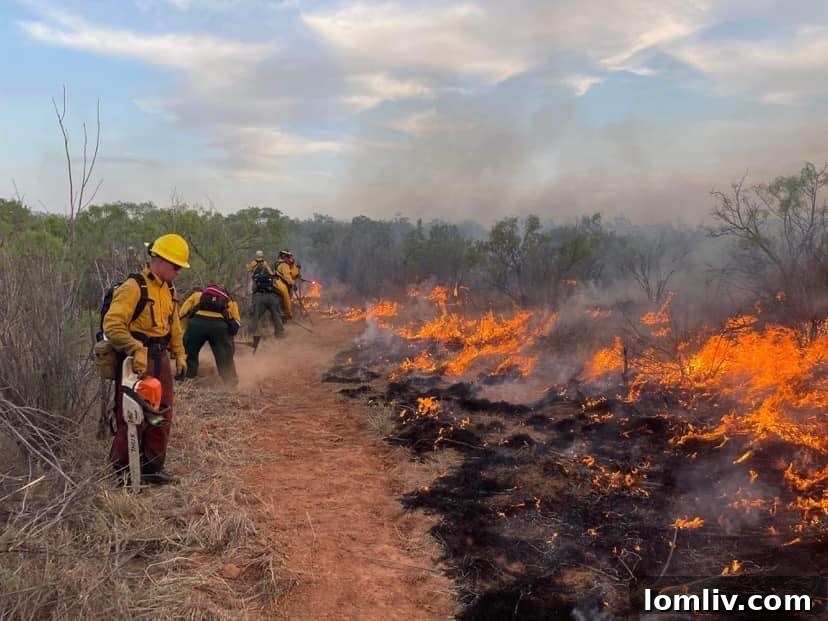
The financial ramifications of wildfires extend beyond immediate damage. In California, a state with extensive wildfire experience, insurance companies have begun dropping coverage for homes, businesses, and farms in fire-prone regions. This trend follows an alarming $30 billion in losses incurred over just the last three wildfire seasons, as reported by Courthouse News Services. This serves as a cautionary tale for Texans.
While most Texas homeowners’ policies generally cover fire damage, understanding the specifics of your coverage is paramount. Bruce Woods, head of the mitigation and prevention department at Texas A&M Forest Service, advises homeowners, “With recent price increases impacting building materials, it’s important that you review your coverage with your insurance provider to ensure that your home is not underinsured.” Rebuilding costs have escalated significantly, meaning what was adequate coverage a few years ago might be insufficient today. Regular policy reviews are not just good practice; they are essential for financial security in the face of potential disaster.
For those struggling to obtain standard coverage, the state of Texas offers a crucial safety net: the Texas FAIR Plan Association. This program provides limited coverage for one- and two-family residential dwellings, condominium units, and manufactured housing that meet its specific underwriting standards. It’s designed to be an insurer of last resort, ensuring that eligible properties can still secure essential protection.
Proactive Prevention and Mitigation: Safeguarding Your Home from Wildfire
The most effective strategy against wildfire loss is proactive prevention and mitigation. The Texas A&M Forest Service, recognized as the premier agency for forestry and wildfire response in the state, dedicates significant resources to education and prevention. Their efforts include engaging programs like Smokey Bear visits to schools and community events, robust cooperation with local fire departments, and conducting controlled, prescribed burns to safely remove dead vegetation and reduce overall fuel loads.
Beyond these broader initiatives, homeowners have access to invaluable resources detailing how to use fire-resistant construction materials and implement fire-resistant landscaping. These guides provide practical steps to harden your home against embers and flames.
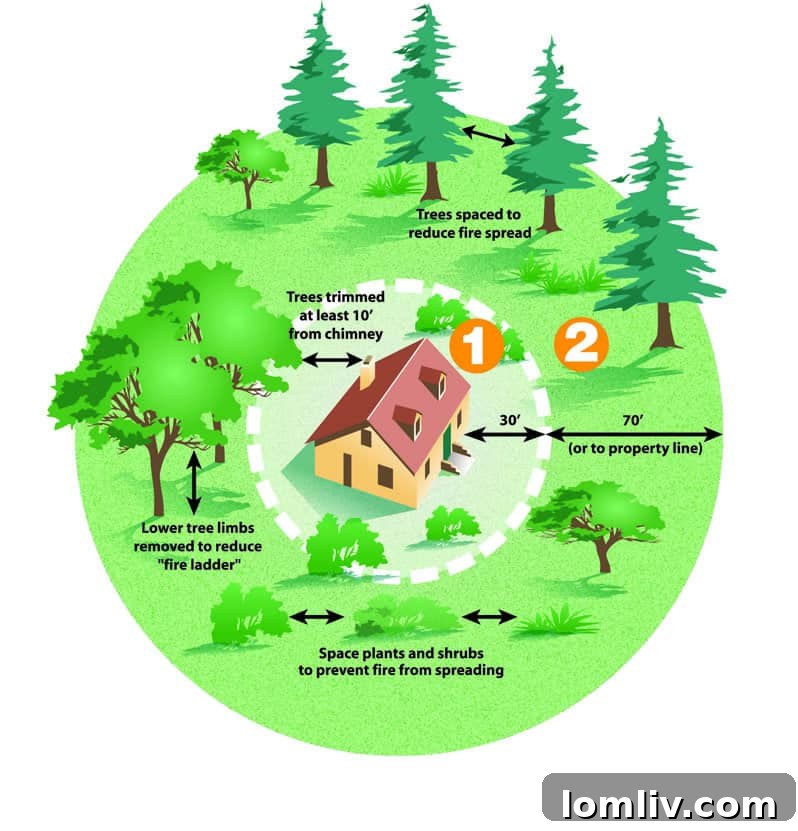
Kari Hines emphasizes the critical zone around your home. “The most impactful work to reduce structure loss happens by preparing the structure itself and the first 5 feet around it,” she explains. This “immediate zone” is where your home is most vulnerable to embers. “We know that most homes burn due to embers — small pieces of burning material that fly ahead of the main fire.” Embers can accumulate around the home in areas where leaf litter gathers and can even enter the house through openings like vents. By modifying the landscaping and materials directly around the house, homeowners can significantly decrease the chance of structure loss from these airborne threats.
Creating Defensible Space: Zones of Protection
To effectively protect your property, consider creating “defensible space” – a buffer zone between your home and potential wildfire fuels. This concept is typically divided into three zones, each requiring specific maintenance:
- Zone 1: The Immediate Zone (0-5 feet from the home): This is the most critical area. It should be entirely free of combustible materials. This means no flammable mulches (like pine needles or wood chips), no plants directly against the house, and clearing all dead leaves, pine needles, and debris from gutters, roofs, and around foundations. Use non-combustible materials like gravel, rock, or concrete for landscaping in this zone. Ensure external vents are screened with mesh no larger than 1/8 inch to prevent ember entry.
- Zone 2: The Intermediate Zone (5-30 feet from the home): In this zone, vegetation should be minimal, well-spaced, and properly maintained. Grass should be mowed to a height of 4 inches or less. Shrubs and trees should be pruned to remove dead branches and spaced to prevent a continuous fuel path to the home. Ensure there’s adequate vertical and horizontal spacing between plants to prevent fire from climbing or spreading easily. Remove “ladder fuels” – vegetation that allows fire to climb from the ground to the tree canopy.
- Zone 3: The Extended Zone (30-100 feet from the home, or to property line): This outermost zone requires less intensive management but still contributes to slowing fire spread. Remove highly flammable vegetation, thin out dense growth, and ensure proper spacing between trees. Remove dead trees, branches, and heavy accumulations of ground litter.
Keep it Low: Minimizing Fuel for Wildfires
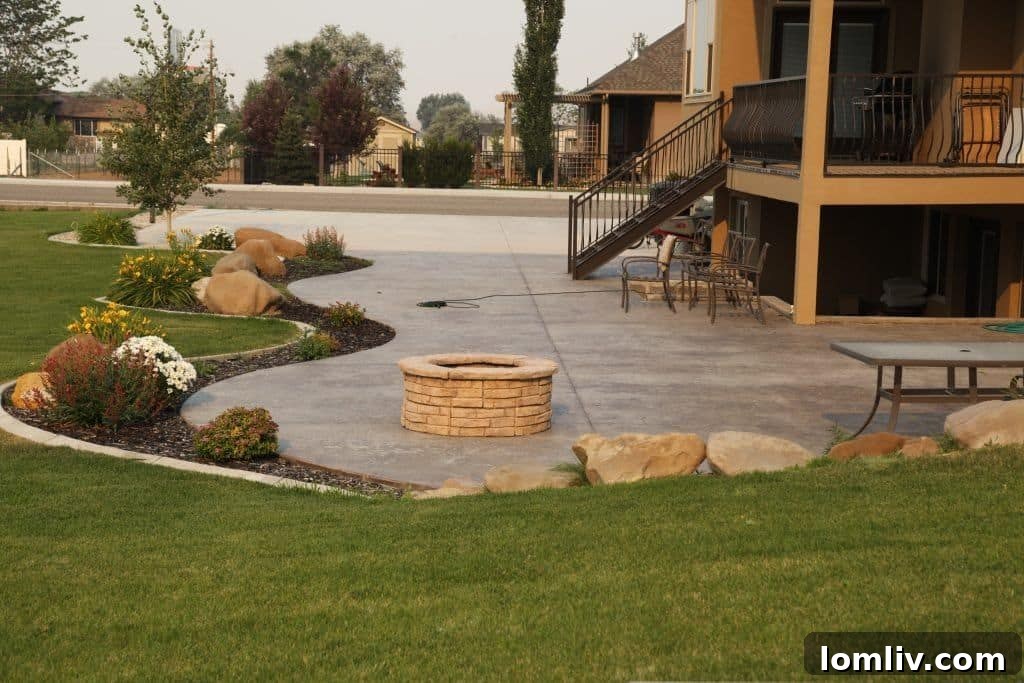
The overarching goal of wildfire preparedness on properties and around homes is to keep flames as low to the ground and to keep the wildfire as slow-moving as possible, as Kari Hines states. This strategy aims to reduce fire intensity and give firefighters a better chance to control the blaze before it causes significant damage. “To that end, using non-combustible building materials both in the landscape directly around and on the structure is best,” Hines explains, adding that “The landscape directly around the house should also contain very little combustible material.”
Combustible materials to avoid or remove from the immediate vicinity of your home include:
- Firewood Stacks: Store firewood at least 30 feet away from any structure.
- Dead Plant Material: Regularly clear all dead leaves, branches, and weeds from your yard, especially near your home and under decks. Pay close attention to gutters where dry leaves can accumulate.
- Flammable Mulch: Avoid using bark or wood chip mulches in Zone 1. Opt for rock, gravel, or inorganic alternatives.
- Highly Combustible Vegetation: Certain plants, especially those with high oil content (e.g., junipers, cedars), are highly flammable. Research fire-resistant plant alternatives for your landscaping.
- Wooden Attachments: Decks, steps, trellises, and fences directly attached to the house can act as a wick, guiding fire to your home. Consider non-combustible alternatives or create breaks in fences near the house.
The Firewise program coordinator further advises, “Where removal of a plant or wooden attachments is not possible, the reduction of ladder fuels, the mid-story items that would take a surface fire higher off the ground, and maintenance, such as proper watering, is paramount.” Regular irrigation can help keep vegetation healthier and less prone to ignition, though it’s not a substitute for proper spacing and material choices.
Community Preparedness and Evacuation Planning
Individual efforts are amplified when communities work together. Programs like Firewise USA encourage neighborhoods to collaborate on wildfire risk reduction. This collective approach creates a stronger, more resilient community that can withstand wildfire threats. Additionally, personal and family evacuation planning is crucial. Have an emergency kit ready, establish a communication plan, and stay informed about local alert systems. Knowing your evacuation routes and having a designated meeting point can be life-saving in an emergency.
Conclusion: A Proactive Stance for a Safer Texas
Wildfires are an undeniable and growing threat across Texas, extending far beyond the traditional perception of remote forest blazes. The increasing development within the Wildland-Urban Interface, coupled with periods of severe drought, means that communities and homes are more vulnerable than ever. However, this challenge is not insurmountable. By understanding the risks, reviewing insurance policies, and actively engaging in home hardening and defensible space creation, Texans can significantly reduce their exposure to wildfire damage.
The combined efforts of the Texas A&M Forest Service, local fire departments, and individual homeowners are vital. Taking proactive steps, from clearing gutters to planting fire-resistant landscaping, is not just about protecting property; it’s about safeguarding lives and building a more resilient future for all Texans. Embrace the spirit of preparedness, and together, we can reduce the devastating impact of wildfires.