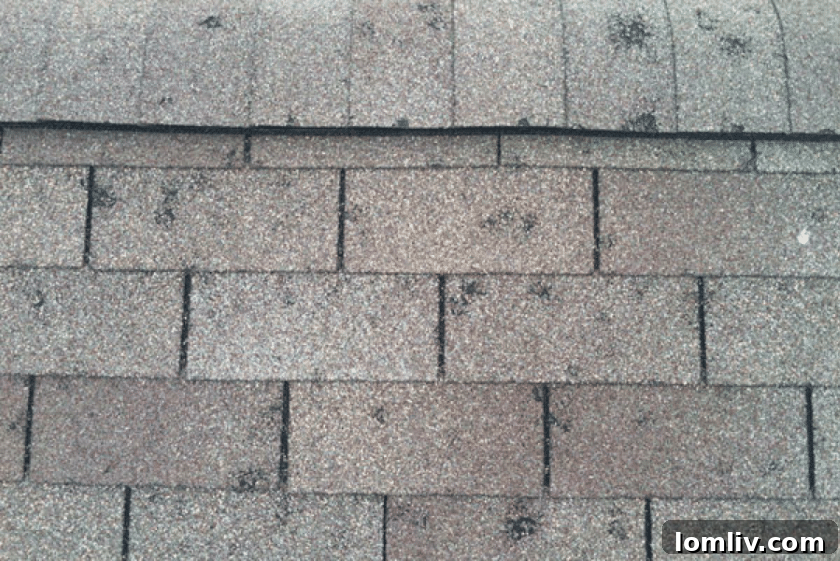
Living in areas prone to severe weather, especially in regions like North Texas, often means homeowners are no strangers to the sudden, destructive power of nature. When a hail storm strikes, the immediate aftermath can be a whirlwind of concern, ranging from damaged vehicles to compromised fences, and most critically, potential roof damage. Recently, a significant hail event swept through parts of Collin County, including communities such as Allen and McKinney, leaving many residents contemplating the integrity of their homes and the complexities of roof insurance claims.
The experience of enduring a severe hail storm is often memorable. The sound of golf-ball-sized hailstones pelting a roof can be likened to a herd of elephants, a vivid and unsettling reminder of the forces at play. For many, the storm’s fury doesn’t end when the rain subsides; it merely transitions into the daunting process of assessing damage and navigating repairs. It’s common to see a flurry of activity in neighborhoods soon after, with roofing contractors and general contractors quickly appearing, ready to offer their services. This swift response highlights the widespread nature of the damage and the immediate need for professional evaluation.
The financial implications of such an event are significant. Homeowners often face substantial insurance deductibles, transforming a summer fun budget into a necessary investment for a new, structurally sound roof. This immediate and pressing concern often shifts focus squarely onto understanding roof damage, deciphering insurance policies, and ensuring that the restoration process is handled efficiently and ethically. This week, we delve deep into everything you need to know about roofs, focusing on storm damage, crucial inspections, and wise decisions for your home’s most vital protective layer.
Understanding Hail Damage: What to Look For
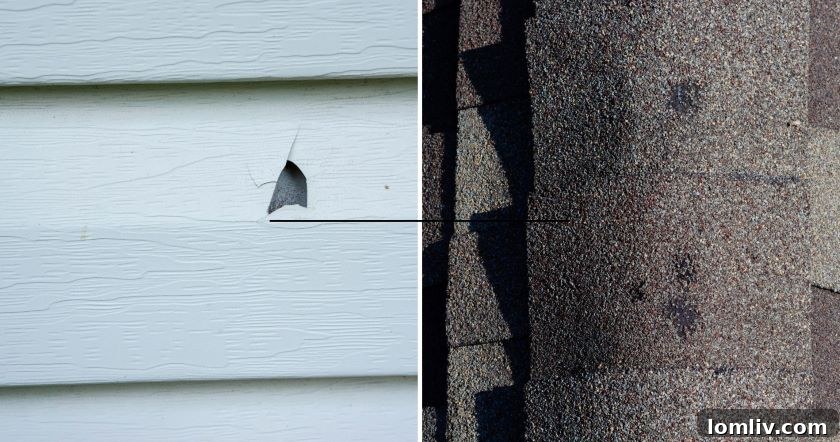
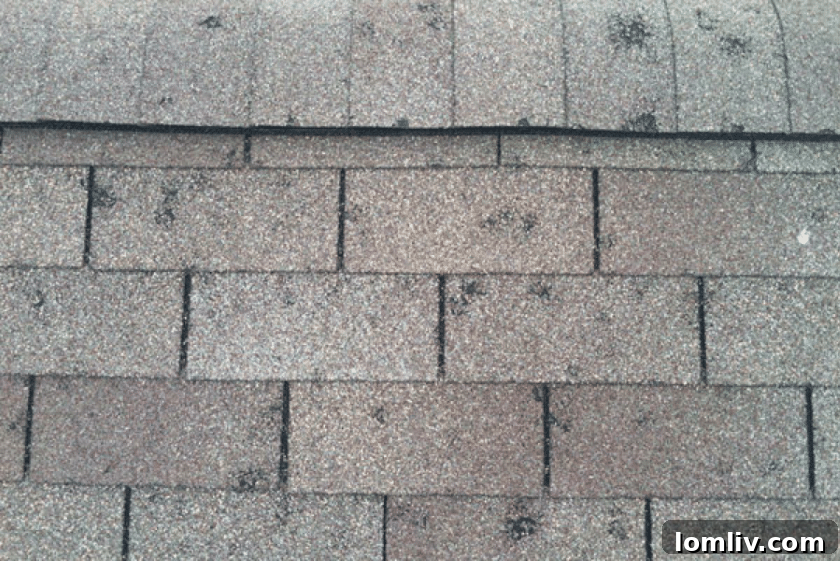
Hail damage is not always immediately obvious from the ground, yet its impact can be severe and far-reaching. It can affect various components of your home’s exterior, from delicate vinyl siding to robust roof shingles. In the images above, you can observe two distinct types of damage that homeowners across Allen and McKinney are likely encountering: a clear hail strike on vinyl siding and multiple impact marks on asphalt shingles. Understanding these visual cues is the first step in assessing the extent of the problem.
For vinyl siding, hail strikes often manifest as cracks, chips, or circular indentations, compromising its aesthetic appeal and protective barrier. Most standard homeowner’s insurance policies typically cover the replacement of vinyl siding due to storm damage, recognizing the direct and visible impact. However, roof damage assessment is often more complex, leading to a crucial decision between repair and full replacement.
The determination of whether to repair or replace a roof hinges on several critical factors. These include the age of the roof, which can influence its resilience and the remaining lifespan; whether the roof remains watertight, a primary function that must not be compromised; and, crucially, the density and severity of hail impacts. Professional roofers and insurance adjusters often employ a systematic approach: they will typically mark out a 10-foot by 10-foot “sample square” on the roof and meticulously count the number of hail “bruise marks” or impact points. While insurance policy requirements can vary, a common threshold for justifying a full roof replacement usually falls between 7 to 10 significant marks within that sample square.
When navigating a hail damage claim, proactive communication is key. Whenever possible, it is highly advisable to schedule your roofing contractor’s inspection at the same time as your insurance adjuster. This concurrent assessment ensures that both parties observe the same damage firsthand, fostering agreement on the scope of work and facilitating a smoother claims process. Furthermore, homeowners must exercise caution and integrity. Beware of contractors who suggest fabricating or exaggerating “extra damage” to inflate an insurance claim. Such practices constitute insurance fraud, a serious offense that has seen significant crackdowns from insurance companies. Engaging in fraudulent activities not only carries legal risks but also signals a lack of ethical conduct, suggesting that a contractor willing to deceive an insurance company might also be willing to mislead you. Always prioritize reputable professionals who uphold honesty and transparency in their dealings.
Beyond the Visible: The Dangers of Hidden Roof Damage and Partial Replacements
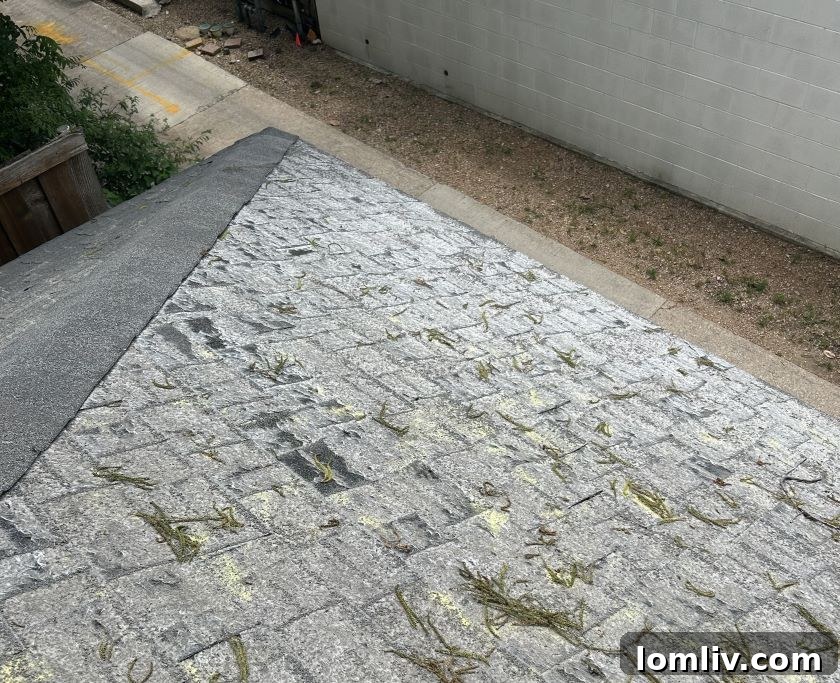
While a home listing might proudly proclaim a “new roof,” this description can sometimes be misleading. It’s a common pitfall for homeowners and potential buyers alike: believing that a newly installed front-facing roof equates to a complete, healthy roofing system. Often driven by the desire for enhanced curb appeal or the sticker shock associated with a full roof replacement, some homeowners opt for partial repairs or replacements, neglecting the less visible sections of their roof. The result, as depicted in the accompanying image, can be a backside of the roof in severe disrepair, a stark contrast to the pristine facade. This disparity highlights the critical importance of a comprehensive roof inspection that covers every inch of your home’s protective layer.
The type of roof damage illustrated here is known as granule loss. Asphalt shingles are coated with ceramic granules that serve multiple vital functions: they protect the asphalt layer from damaging ultraviolet (UV) rays, add aesthetic appeal, and provide a degree of fire resistance. When these granules are lost, whether due to prolonged hail exposure, severe wind damage, or simply accelerated wear and tear, the underlying asphalt becomes exposed. This exposure makes the shingle far more susceptible to deterioration, drying out, cracking, and ultimately, losing its waterproofing capabilities. While some granule loss is a normal part of a roof’s aging process, the condition shown in the image—extensive and uneven loss—is decidedly not normal and indicates significant underlying issues that require immediate attention. Such severe granule loss can lead to premature roof failure, leaks, and costly interior damage if not addressed promptly and properly.
A partial roof replacement, or the practice of only replacing the most visible sections, is a classic example of prioritizing short-term aesthetics over long-term structural integrity and performance. Not only does this approach leave crucial parts of your home vulnerable to the elements, but it can also create inconsistencies in the roof’s aging process and potentially void manufacturer warranties that typically cover the entire roofing system. A truly “new roof” encompasses a complete and uniform replacement that ensures consistent protection, longevity, and peace of mind for the homeowner.
Roof Replacement Pitfalls: What NOT to Do When Repairing Your Roof
@greenscenehome Multiple layers of shingles on a roof means they’ve been putting a bandaid over the issue, instead of getting a new one, adding weight and heat to that roof. In most states, you’re legally allowed two. #homeinspectionfinds #roofing #askahomeinspector #diyroofing #thatsbad #dfwrealestate
♬ original sound – Green Scene Home Inspections – Green Scene Home Inspections
When it comes to roof replacement, there are critical mistakes that homeowners should be acutely aware of, as they can lead to significant structural problems, safety hazards, and costly repairs down the line. One of the most common, yet dangerous, practices we often uncover during professional roof inspections is the layering of multiple shingle roofs without removing the original material. While some states, including Texas, legally permit up to two layers of asphalt shingles on a roof, exceeding this limit or even opting for two layers instead of a full tear-off is almost never recommended by roofing experts.
The primary reason against layering is the immense additional weight it imposes on your home’s existing roof structure. Roofing systems are designed to support a specific load, and adding successive layers of shingles, each weighing several thousand pounds, can place undue stress on the rafters, trusses, and sheathing below. This excessive weight significantly increases the risk of structural compromise, potential sagging, or, in severe cases, even a partial roof collapse, especially under additional loads like snow or ice. What might seem like a cost-saving shortcut can quickly become a catastrophic liability.
Beyond structural integrity, multiple layers of shingles also create a significant heat trap. Each additional layer insulates the roof deck, preventing proper heat dissipation from the attic space. This trapped heat can accelerate the degradation of the shingles themselves, shortening the lifespan of all layers. More alarmingly, it can elevate temperatures within the attic, creating a heightened fire hazard, particularly if electrical wiring or other combustible materials are present. The increased heat also puts a strain on your home’s cooling system, leading to higher energy bills and reduced indoor comfort.
Furthermore, layering shingles can mask underlying problems, making it impossible to inspect the roof deck for rot, water damage, or structural deficiencies. It can also complicate proper flashing installation around chimneys, vents, and valleys, leading to leaks. Always insist on a full tear-off of old roofing materials before installing new ones. This ensures a clean, stable surface for the new roof, allows for proper inspection of the roof deck, and facilitates correct installation of all components of a modern, durable roofing system, providing the best long-term protection for your home.
The Perils of DIY Roofing: Why Professionals are Essential
While the allure of saving money on home improvement projects can be strong, especially when facing a substantial deductible, certain tasks are best, and most safely, left to the experts. Roofing is unequivocally one such undertaking. The video above, showcasing a DIY patio addition, unfortunately illustrates the potential hazards and poor workmanship that can arise when homeowners overestimate their skill set for complex projects. What you observe is a startlingly wavy shingle pattern on the front section of a patio addition’s roof – a clear indication of amateur installation.
Beyond the visually jarring “M.C. Escher” shingle work, the video, by its nature, cannot convey all the underlying issues. In this particular case, the DIY enthusiasts failed to properly account for the necessary slope of the patio roof, resulting in an improper tilt to the right. Such seemingly minor errors in roofing can have profound consequences. Incorrect slope compromises drainage, allowing water to pool and seep under shingles, leading to leaks, rot in the roof deck, and mold growth in the attic and interior walls. Wavy shingles often indicate improper nailing, insufficient underlayment, or even a compromised roof deck, all of which significantly reduce the roof’s lifespan and its ability to protect your home from the elements.
DIY roofing projects carry a multitude of risks that extend far beyond aesthetics and functionality. Firstly, there are significant safety hazards involved. Working at heights is inherently dangerous, and without proper safety equipment, training, and experience, falls are a very real and often catastrophic possibility. Secondly, professional roofing requires specialized knowledge of building codes, materials, installation techniques, and ventilation systems. Mistakes can lead to costly repairs, voided material warranties, and even denial of future insurance claims if damage is linked to poor workmanship.
A poorly installed DIY roof will inevitably lead to leaks, premature failure, and reduced energy efficiency. The initial “savings” quickly evaporate when faced with subsequent professional repairs, interior damage remediation, and potentially a complete re-do of the entire roofing system. Investing in professional roofing not only ensures a safe and compliant installation but also provides peace of mind, backed by warranties and the assurance of durable, long-lasting protection for your most valuable asset.
Roofing, as we’ve explored, is a far more intricate and demanding task than it often appears from the ground. For many homeowners facing roof damage, especially after a significant storm, the temptation to undertake DIY repairs or cut corners to save on a deductible is understandable. The financial burden can feel heavy, often consuming budgets earmarked for other necessities or luxuries. However, it’s crucial to weigh these immediate concerns against the long-term health and value of your home. A properly installed, high-quality roof is not just a shield against the elements; it’s a critical investment that adds substantial value to your property, enhances its curb appeal, and significantly contributes to its energy efficiency and structural integrity.
Attempting complex roofing work without the requisite expertise, specialized tools, and safety protocols can lead to further damage, safety risks, and ultimately, more expensive problems down the road. This is work best, and most safely, entrusted to seasoned professionals. Professional roofers possess the experience to correctly assess damage, recommend appropriate solutions, ensure compliance with local building codes, and execute installations that stand the test of time and weather. They understand the nuances of various roofing materials, proper ventilation, and precise installation techniques that are vital for a leak-free and long-lasting roof.
Choosing a reputable and reliable roofing contractor is paramount. Do your due diligence: seek out companies with strong local reputations, comprehensive insurance, and clear warranties on both materials and workmanship. If you’re in need of recommendations for a good, professional roofer who you can trust, don’t hesitate to reach out to local home inspectors or real estate agents. These professionals often work closely with a network of trusted contractors and can provide valuable referrals based on their own experiences and industry knowledge. Protecting your home with a professional roof replacement or repair is an investment in its future, ensuring safety, longevity, and enduring value for years to come.