Dallas-Fort Worth’s Enduring Housing Boom: A Decade of Unprecedented Growth and Current Market Realities
The Dallas-Fort Worth (D/FW) metroplex has long been a beacon of economic opportunity and population growth, consistently attracting new residents and businesses. Its expansive landscape and thriving job market have fueled an insatiable demand for housing. For anyone living or working in the region, one observation has been undeniable over the past decade: new housing construction in the surrounding suburbs has far outpaced development in the urban core. While this fact might seem self-evident to locals, understanding D/FW’s position on the national stage, and the intricate dynamics behind its growth, reveals a more nuanced story.
D/FW Ranks High Nationally in New Housing Development
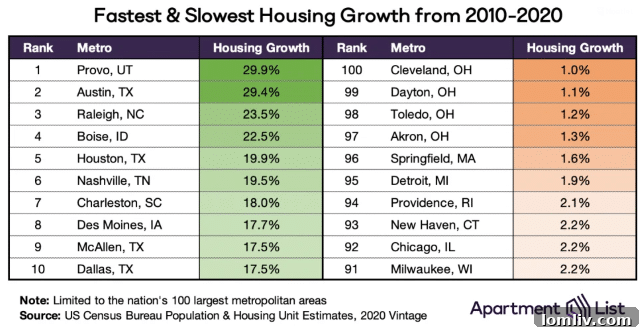
A recent comprehensive study by Apartment List sheds light on D/FW’s remarkable housing trajectory between 2010 and 2020. The findings place the D/FW metroplex at an impressive No. 9 among the nation’s top 100 largest metropolitan areas for new housing construction. While some might have expected an even higher ranking given the palpable growth, this position underscores the sheer volume of development that has occurred within this dynamic region, firmly establishing it as a national leader in residential expansion.
Suburban Sprawl: The Driving Force Behind D/FW’s Expansion
The study corroborated what many residents already know: suburban areas surrounding Dallas County experienced explosive growth. Specifically, the counties bordering Dallas saw an average increase of 20.9 percent in their housing stock from 2010 to 2020. Leading this charge was Rockwall County, which recorded an astounding 39 percent surge in new housing units. This trend highlights a fundamental shift in population distribution, as individuals and families increasingly seek out the allure of suburban living, often drawn by factors such as perceived affordability, larger homes, access to top-rated schools, and community-centric lifestyles.
Areas like Frisco, McKinney, Prosper, and Celina in Collin County, along with communities in Denton and Tarrant counties, have transformed from quiet towns into vibrant, self-contained cities, complete with extensive retail, dining, and employment opportunities. This decentralization of growth alleviates some pressure on the urban core while simultaneously fostering new economic hubs across the metroplex. The availability of developable land, coupled with robust infrastructure investments, has made these suburban frontiers prime locations for builders and homebuyers alike. For a deeper dive into the raw data, the detailed numbers can be accessed here.
Texas: A National Powerhouse for Residential Development
Beyond D/FW, Texas as a whole has cemented its reputation as a magnet for growth. The Apartment List study revealed dense pockets of housing expansion throughout the state. The Houston metropolitan area experienced significant development, fueled by its energy sector and diverse economy. Furthermore, the burgeoning corridor between Austin and San Antonio demonstrated remarkable growth, transforming into a vibrant “innovation superhighway” that attracts tech companies and skilled talent.
Among Texas counties, Hays County, situated just south of Austin, emerged as the fastest-growing with an incredible increase of over 48 percent in its housing stock between 2010 and 2020. This phenomenal growth is largely attributed to Austin’s tech boom spilling over into neighboring communities, as individuals seek more affordable housing options while remaining within commuting distance of the state capital’s thriving job market. The combination of strong job creation, a business-friendly environment, and no state income tax has made Texas an undeniable destination for internal migration, driving sustained demand for housing across its major metro areas.
Understanding the Metrics: Housing Supply Meets Job Demand
Apartment List’s comprehensive analysis wasn’t just about counting new homes. The study delved into crucial housing market dynamics, including urban-suburban growth patterns, the vital ratio of new jobs to housing units constructed, and overall housing affordability. These metrics are essential for assessing the long-term health and sustainability of a regional housing market. States demonstrating the highest growth rates nationally included North Dakota (over 20 percent), Utah (over 19 percent), and, notably, Texas (over 15 percent), showcasing the strong economic forces at play in these regions.
For the Dallas-Fort Worth metroplex, the data painted a picture of balanced growth during the 2010-2020 period. Approximately 438,000 new housing units were added, increasing the region’s housing stock by a substantial 18 percent. Simultaneously, D/FW’s robust economy generated an impressive 802,000 new jobs, representing a remarkable 29 percent increase in employment opportunities. This parallel growth is critical for market stability.
According to Apartment List, an ideal scenario for a healthy market is to have one new housing unit available for every one to two new jobs created. D/FW’s ratio of 1.8 jobs added for every new housing unit during that decade indicated that the market was largely successful in building enough new housing to keep pace with the surging demand. This equilibrium prevented runaway price appreciation and maintained a relative degree of affordability, allowing the region to comfortably absorb its influx of new residents.
The Current Market Reality: A Stark Contrast to Past Trends
However, the smooth sailing of the 2010-2020 period has given way to a dramatically different landscape in the current housing market. The delicate balance between supply and demand has been disrupted, leading to a significant shortage of available housing. This shift is not unique to D/FW but is symptomatic of broader national and global economic forces. Factors contributing to this scarcity include: persistent supply chain disruptions impacting construction materials; a shortage of skilled labor in the building trades; lingering effects of under-building in the wake of the 2008 financial crisis; and, more recently, rising interest rates that have discouraged both new construction starts and existing homeowners from selling.
The severity of the current housing crunch in Dallas-Fort Worth is often underscored by anecdotal evidence that, upon closer inspection, reveals uncomfortable truths. A local real estate talk show host recently quipped that D/FW now has more real estate agents than available homes on the market. While seemingly hyperbolic, the numbers lend credence to this sentiment. In May, the MetroTex Association of Realtors reported just 10,247 active listings. In stark contrast, Homelight.com counted approximately 16,780 active real estate agents in Dallas in 2019 alone. This imbalance highlights an extraordinarily competitive environment for homebuyers, characterized by multiple offers, bidding wars, and rapidly appreciating prices. For sellers, it presents a golden opportunity, but for the overall health of the market and the dream of homeownership for many, it poses significant challenges.
Future Outlook: Navigating D/FW’s Continued Evolution
The journey of the D/FW housing market from 2010 to the present day reflects both its incredible resilience and the complexities of managing rapid growth. While the region successfully balanced job creation with housing supply for much of the last decade, the current low inventory presents new hurdles. Addressing this requires a multi-faceted approach, including encouraging more aggressive residential construction, exploring innovative housing solutions, and potentially revisiting zoning regulations to allow for diverse housing types. As D/FW continues to attract talent and investment, its ability to sustainably house its growing population will be a critical determinant of its enduring success as one of the nation’s most vibrant metropolitan areas. The lessons learned from a decade of expansion, coupled with strategic planning for future development, will shape the landscape of Dallas-Fort Worth for years to come.