Mark Cuban’s Preston Hollow Real Estate Play: Unraveling the Jourdan Way Development Mystery
Mark Cuban, the billionaire entrepreneur, investor, and owner of the Dallas Mavericks, is renowned for his shrewd business acumen and unconventional approaches. While often making headlines for his ventures in technology, sports, and media, Cuban’s recent foray into the high-stakes world of luxury Dallas real estate has captivated local attention, particularly in the exclusive Preston Hollow neighborhood. His strategic acquisitions along Jourdan Way and Averill Way have ignited a fascinating discussion about property rights, zoning regulations, and the future character of one of Dallas’s most prestigious residential enclaves.
The core of this intriguing saga revolves around Cuban’s purchase of multiple parcels of land, culminating in a situation where his holdings grant him an unprecedented level of control over a significant stretch of Jourdan Way. This move, however, is not without its complexities, as proposed development plans have met immediate skepticism and strong community resistance, highlighting the delicate balance between urban growth and neighborhood preservation.
The Strategic Acquisitions: Cuban’s Growing Footprint in Preston Hollow
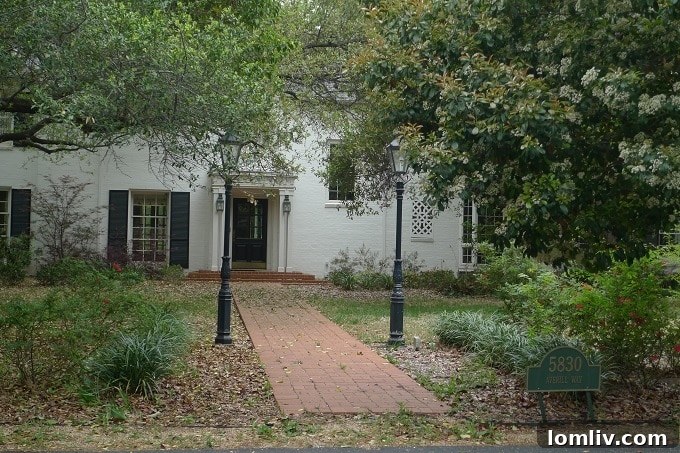
The initial spotlight on Cuban’s Preston Hollow real estate interest came to light with the acquisition of 8601 Jourdan Way. This isn’t just any property; it’s a venerable 76-year-old mansion spanning over 7,000 square feet, situated on a generous 1.46-acre lot. Cuban’s investment of $2,900,000 for this single property signaled a serious commitment to the area.
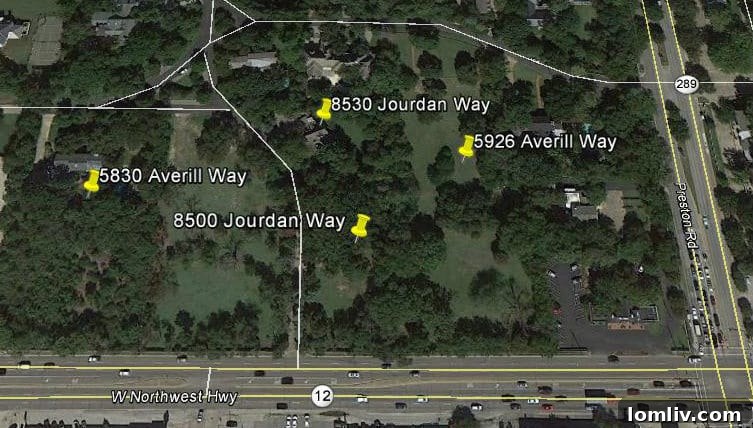
However, the full scope of Cuban’s strategic maneuvering became clearer when it was revealed that his land acquisitions extended beyond this single mansion. According to insights shared by local attorney Andrew Sommerman, who resides near Cuban’s properties, the billionaire now owns not only 8601 Jourdan Way but also adjacent and opposing parcels on both Jourdan Way and Averill Way. Specifically, these include 5830 and 5926 Averill Way, alongside 8500 and 8530 Jourdan Way. This collection of properties, particularly when considering property lines that traditionally extend to the middle of the street in this part of Preston Hollow, effectively grants Mark Cuban a remarkable level of ownership over Jourdan Way itself.
As Sommerman succinctly put it, “when you turn onto Jourdan Way from Northwest Highway, you will be on Mark Cuban’s kingdom!” This concentration of ownership presents a unique scenario, offering Cuban significant leverage and control over the immediate environment. It immediately raises questions about his long-term vision for these parcels, stirring speculation among residents, developers, and local authorities alike.
Unveiling the Controversial Development Plans
The true intrigue surrounding Cuban’s acquisitions deepens with the surfacing of proposed development plans. Attorney Sommerman shared details purportedly outlined by a real estate developer named Michael Romo. These plans, if accurately reported, suggest a dramatic transformation for the area surrounding 8601 Jourdan Way.
According to Sommerman, Romo detailed proposals for an office high-rise to be constructed on the west side of the property. Complementing this, a stouter, two-story office complex was planned for the east side. Further indicating an intent for significant commercial activity, the plans also included a proposal for a new stoplight at the intersection of Northwest Highway and Jourdan Way. This particular detail is noteworthy, as Jourdan Way is currently described as a “tiny, rutted street” situated between Preston Road and Douglas Avenue, both of which already have stoplights.
The very notion of introducing commercial office buildings, let alone an office high-rise, into this predominantly residential area immediately flags these plans as highly contentious. Such developments would represent a radical departure from the established character of Preston Hollow, setting the stage for a potential showdown between development ambitions and the fiercely protected residential integrity of the neighborhood.
The Bedrock of Resistance: Zoning, Deed Restrictions, and Community Values
The controversy surrounding the proposed commercial developments is deeply rooted in the existing regulatory framework and the strong community values of Preston Hollow residents. Andrew Sommerman, drawing on his legal expertise and personal experience, quickly pointed out the significant hurdles these plans face. Foremost among them are the area’s strict zoning laws.
Preston Hollow is a prime example of an affluent suburban-style neighborhood within a major urban center, characterized by its sprawling estates and expansive green spaces. The existing zoning regulations are meticulously designed to preserve this residential charm, making the introduction of commercial buildings a direct violation of these established land-use policies. Residents of such areas often invest heavily, not just in their properties, but in the lifestyle and tranquility afforded by strict residential zoning.
Beyond zoning, deed restrictions play an equally crucial role. Sommerman highlighted that these restrictions in the area mandate a minimum one-acre lot size for building a home. This provision is not merely a technicality; it is a fundamental element designed to prevent over-densification and maintain the spacious, low-density character of the neighborhood. As Sommerman recalled from his own experience of owning property in the area, “People who own acres are very, very protective of those hefty parcels and will guard them with their life.” The presence of one-plus acre lots in areas like Preston Hollow, Sunnybrook, and other select Dallas neighborhoods is a rarity in urban living, making them highly coveted and fiercely protected by their owners.
The implications of commercial development are profound: increased traffic, noise pollution, changes to aesthetics, and potential devaluation of surrounding residential properties. For residents who have chosen Preston Hollow precisely for its serene, estate-like environment, any threat to these qualities is met with robust and often organized opposition.
The Skepticism of the Estate Home Proposal: A Contradiction in Terms?
Amidst the revelations of proposed office high-rises and commercial complexes, Michael Romo reportedly presented a seemingly contradictory plan to Andrew Sommerman: the construction of a luxurious estate home at 8601 Jourdan Way. This estate, according to Romo, would be situated directly across the street from the very commercial buildings he was proposing – the “office high-rise on the west side of the property” and the “stouter, two-story office complex planned for the east.”
Sommerman’s response to this particular detail was unequivocal and deeply skeptical. “I don’t believe him,” Sommerman stated, inviting a direct quote. His incredulity stems from a very logical question: “Why would anyone build an estate property right across from commercial?” In the world of high-end real estate, proximity to commercial development is typically a significant deterrent for luxury residential properties. Homebuyers seeking multi-million dollar estates prioritize privacy, quiet, and unspoiled views, not the hustle and bustle of office complexes.
This apparent paradox raises serious questions about the true intentions behind the proposed developments. Is the “estate home” merely a diversion, a way to soften the blow of the commercial proposals, or perhaps a tactic to suggest a mixed-use development that might be more palatable to some? Given the fierce protection of residential character in Preston Hollow, such a contradictory proposal only fuels suspicion among residents and legal experts alike, suggesting that the path to any significant commercial development will be fraught with challenges and intense scrutiny.
A Community United: Echoes of Past Battles
The residents of Preston Hollow are not newcomers to battles against unwanted development. The community is well-organized, highly informed, and boasts a powerful network of influential individuals who are prepared to defend their neighborhood’s integrity. The current situation with Cuban’s properties and the proposed commercial plans carries strong echoes of past conflicts, particularly the vigorous opposition to the Transwestern deal located “Behind the Pink Wall” across the street.
That previous proposal was met with unified resistance from prominent neighbors, including figures like Gabriel Barbier-Mueller, Baxter Brinkmann, Lisa Blue, and Howard Rachofsky – individuals with significant influence and resources. As Andrew Sommerman recalled, the consensus then was that the Transwestern plan was “too dense for the area.” This past victory against perceived over-development serves as a potent reminder of the community’s resolve and its capacity to mobilize against projects that threaten its established character.
Adding another layer to the local fabric is Ebby Halliday’s iconic “The Little White House,” a cherished retail landmark located in the far right lower corner of the relevant area. Owned by the legendary real estate doyenne herself, Halliday has firmly stated her intention not to sell, underscoring the immovable nature of some community fixtures and further complicating any large-scale redevelopment aspirations.
The collective memory of past successful resistances, coupled with the continued presence of influential and protective residents, indicates that any attempt to push through commercial development along Jourdan Way will face formidable opposition. The community’s stance is clear: the preservation of Preston Hollow’s residential sanctity takes precedence over commercial expansion.
The High Stakes of Preston Hollow Development
The unfolding scenario around Mark Cuban’s Preston Hollow properties represents a high-stakes play in one of Dallas’s most coveted zip codes. The area’s appeal lies in its prime location, excellent schools, large lots offering a sense of privacy and space, and its undeniable prestige. For developers, the potential returns on commercial ventures in such a desirable location are immense. However, for residents, the value is tied to the preservation of their unique lifestyle and the safeguarding of their property values against the encroachment of commercialism.
This conflict sets the stage for a potential legal and community showdown. Mark Cuban, known for his disruptive style, is now at the center of a debate that transcends simple property ownership. It delves into the very identity of a neighborhood and the power of collective action. Will zoning regulations be challenged and potentially altered? Will deed restrictions withstand legal scrutiny? Or will community opposition prove too formidable, forcing a reevaluation of the proposed plans?
What Lies Ahead for Jourdan Way?
The saga of Mark Cuban’s acquisitions and the proposed developments on Jourdan Way remains a dynamic and closely watched narrative in Dallas real estate. It encapsulates the ongoing tension between urban expansion and the preservation of historic, high-value residential areas. While the allure of commercial development in a prime location like Preston Hollow is undeniable, the equally powerful force of community resistance, underpinned by strict zoning and deed restrictions, presents a significant barrier.
Whether Mark Cuban ultimately intends to pursue a full-scale commercial venture, a more nuanced mixed-use project, or perhaps a long-term strategic hold, his actions have undeniably stirred the waters of Preston Hollow. The coming months and years will likely see continued discussions, potential legal challenges, and spirited community engagement as the future of this corner of “Cuban’s Kingdom” along Jourdan Way unfolds. One thing is certain: the residents of Preston Hollow are ready to defend their unique way of life, ensuring that any transformation of the area will be met with the full force of their collective will.