Battling the Buzz: Dallas Residents Unite Against Escalating Love Field Airport Noise
In a burgeoning metropolis like Dallas, the convenience of air travel often clashes with the tranquility residents seek in their homes. This tension is particularly palpable for communities surrounding Dallas Love Field Airport. A growing chorus of local residents is now sounding the alarm over escalating noise pollution, declaring their readiness to take on what could become a monumental battle, potentially requiring an act of Congress to resolve. Their mission: to restore peace and quiet to their neighborhoods, which they believe has been steadily eroded by increased airport traffic.
At a recent gathering of the Dallas Love Field Environmental Advisory Committee, the sheer determination and meticulous preparation of these residents were undeniable. Representatives from the Briarwood, Bluffview, Elm Thicket/Northpark, Love Field West, and Highland Park neighborhoods presented a united front, armed with compelling data and irrefutable facts. Their research reveals a troubling pattern: flights routinely defy the city-imposed 11 p.m. curfew, despite a long-standing “voluntary” agreement with airlines. This late-night activity, they argue, not only disrupts their sleep but also undermines the very spirit of community cooperation.
The core of the problem lies in a jurisdictional labyrinth. While Dallas Love Field is city-owned, its operational control regarding flight paths and schedules largely rests with the Federal Aviation Administration (FAA). Unfortunately, residents report that the FAA has been largely unresponsive to their growing complaints, which have surged dramatically since the Lemmon Avenue runway officially reopened last year. This reopening, while a boon for airport capacity, has had a direct and negative impact on the quality of life for thousands living under the flight paths, intensifying the noise burden they now endure.

Leading the charge from the Elm Thicket/Northpark neighborhood is Jonathan Maples, a veteran of community advocacy. Maples is no stranger to fighting formidable opponents; his community successfully challenged Dallas City Hall over complex zoning and displacement issues just last October, emerging victorious. This experience instilled in him a profound understanding of grassroots power and the tenacity required to confront institutional giants.
When it comes to the ongoing struggle with Love Field, Maples confidently states his “slingshot is ready.” He articulates the fundamental challenge with the current system, emphasizing the limitations of voluntary agreements. “It’s going to take an act of Congress,” Maples asserted, highlighting the inherent weakness of non-binding commitments. “Any time you say ‘voluntary,’ I may and I may not. Chances are if it involves money, I may not.” He further elaborated on the airlines’ operational realities: “Those pilots work on hours in the sky and mileage. They are not going to take a delay to appease us.” This cynical but realistic assessment underscores why a voluntary curfew, without stringent enforcement mechanisms, is simply insufficient to address the community’s concerns.
Dallas Love Field Voluntary Curfew: A Broken Promise?
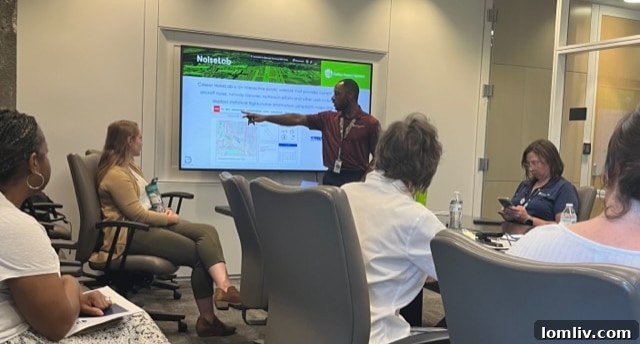
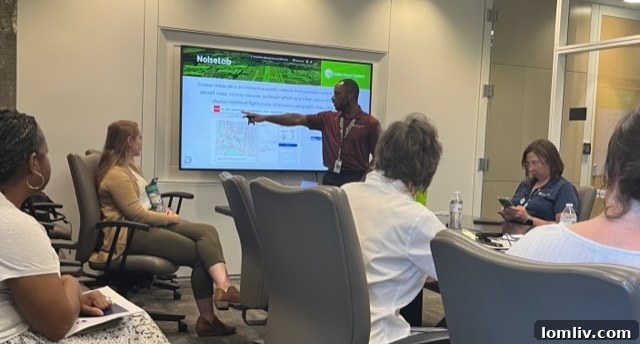
The contentious nature of the airport noise issue has kept Interim Environmental Manager Isaac Ellison busy, fielding calls and conducting meetings with concerned stakeholders over recent months. Despite the palpable frustration within the community, Ellison has managed to build a commendable rapport with the residents who attended the July 13 meeting. There’s a shared acknowledgment that the airport administration, under current regulations, possesses limited authority to unilaterally resolve the problems.
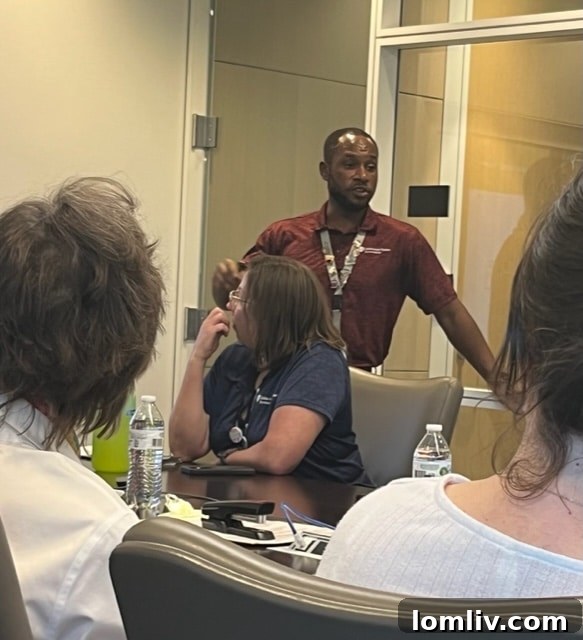
Ellison candidly addressed a group of about 25 attendees, acknowledging the limitations of his office. “I know maybe it’s not what you want to hear,” he began, “We can’t do much, but it starts with you coming to meetings and working together to come up with a solution, versus yelling at the messenger and going in circles.” His appeal for collaborative problem-solving, rather than mere complaint, resonates with the community’s desire for concrete action, even if the pathways to such action are complex.
He further clarified the intricate web of aviation governance, explaining that flight paths are meticulously coordinated by the FAA, much like a network of highways in the sky. This coordination involves seamless communication with neighboring air traffic control hubs, including those overseeing DFW International Airport and Addison Airport. “If it’s too early or too loud, our hands are definitely behind our backs,” Ellison emphasized. “It’s a voluntary program. We do what we can with the measures we have. It’s going to be the FAA that has authorization in the air. I can’t really tell an aircraft what to do, where to fly, how high to go, or when to leave. There are just no tools we have like that.” This explanation starkly illustrates the formidable regulatory wall between local airport management and the federal authority that truly controls the skies.
Steve Klein, a resident of Bordeaux Village Condos, echoed Ellison’s assessment, recognizing that the FAA is the singular entity capable of imposing definitive rules on airline operations. Klein elaborated on the specifics of the City of Dallas’s negotiated voluntary noise program, which outlines an 11 p.m. to 6 a.m. curfew for scheduled airlines, including Southwest, Alaska Airlines, and Delta. However, his data paints a grim picture of non-compliance. “Last time I looked, we had 10 flights coming in after 11 p.m. right up until midnight,” Klein stated, highlighting specific examples of Delta and Alaska Airlines flights landing around 10 minutes before midnight. This consistent disregard for the voluntary agreement sparks a crucial question for residents: “The discussion becomes, what’s more important? Is it the agreement or the fact that it’s a voluntary agreement? As a citizens group, we really want this rolled back to our 11 p.m. curfew because that’s what they agreed to.”

Klein’s observations suggest a deliberate encroachment by airlines, aiming to redefine the established curfew. He likened the situation to the proverbial “camel’s nose in the tent,” warning that if unaddressed, the entire camel will soon follow. “First there were six of them, then there were eight. Now we have 10,” he recounted, illustrating the incremental erosion of the 11 p.m. cutoff. “They’re trying to make the 11 p.m. cutoff time obsolete. That’s what it looks like from the outside looking in.” This pattern of increasing late-night flights indicates a strategic push by airlines to establish a de facto midnight cutoff, effectively negating the current agreement. Ellison confirmed that this critical matter is presently under review by the Dallas City Attorney’s Office, offering a glimmer of hope that the city may take a stronger stance.
A Deeper Look: The Human Impact of Airport Noise
Beyond the legal and regulatory frameworks, the daily reality for residents living near Love Field is one of disrupted lives. Constant aircraft noise, particularly during late-night and early-morning hours, significantly impacts sleep quality, leading to increased stress, fatigue, and potential long-term health issues. Studies have linked chronic noise exposure to higher rates of heart disease, hypertension, and impaired cognitive development in children. For families, the incessant roar of jet engines means interrupted sleep, difficulty concentrating on schoolwork, and reduced enjoyment of their outdoor spaces. Property values in affected areas can also suffer, creating a significant financial burden for homeowners who bought into neighborhoods once promised a certain level of peace.
The communities of Briarwood, Bluffview, Elm Thicket/Northpark, Love Field West, and Highland Park represent a diverse cross-section of Dallas. Yet, they are united by this shared grievance. Their commitment to documenting violations and advocating for change stems from a deep-seated belief in their right to a peaceful home environment, free from unreasonable disturbance. Their “homework” isn’t just about data; it’s about the tangible impact on their everyday existence.
Noise Abatement Plan: Future Prospects and Challenges
The leadership at Dallas Love Field has also seen recent changes, with former Aviation Director Mark Duebner retiring in November. Since then, Patrick Carreno has served as the interim director, and a permanent director is expected to be appointed soon. Love Field administrators have committed to an interview with daltxrealestate.com once the new appointment is made, signaling a willingness to engage with local media and the public.

Love Field spokeswoman Lauren Rounds recently noted that the City’s contracted search firm was nearing the conclusion of its search for a permanent director, emphasizing the airport’s desire for stable leadership to address these complex issues. Prior to his departure, former Director Duebner had unveiled a comprehensive plan outlining proposed upgrades for the airport and the critical process of renewing lease agreements, many of which are set to expire in 2028. These impending lease renewals present a unique window of opportunity for the City of Dallas to negotiate more stringent noise abatement clauses and enforce better compliance from airlines.
Ellison confirmed last week that the collective concerns and suggestions gathered from stakeholders will be formally presented to the city’s Environmental Commission and subsequently to the Dallas City Council in the fall. This upcoming engagement with city officials represents a pivotal moment for the residents, as it offers a direct channel to influence policy and potentially instigate change. To ensure transparency and preparedness, Ellison assured stakeholders that a copy of the presentation outlining their grievances and proposed solutions would be provided well in advance of these crucial briefings.
The struggle at Dallas Love Field is a microcosm of a larger national debate concerning airport operations and community welfare. For the residents of Dallas, the path forward requires not only persistent local advocacy but potentially a unified appeal to federal authorities. The “act of Congress” that Jonathan Maples speaks of may seem a daunting task, but for communities whose quality of life is severely impacted, it represents the ultimate recourse. The outcome of this battle will not only shape the future of Dallas Love Field but also set a precedent for how cities balance economic development with the fundamental right of their citizens to peace and quiet.