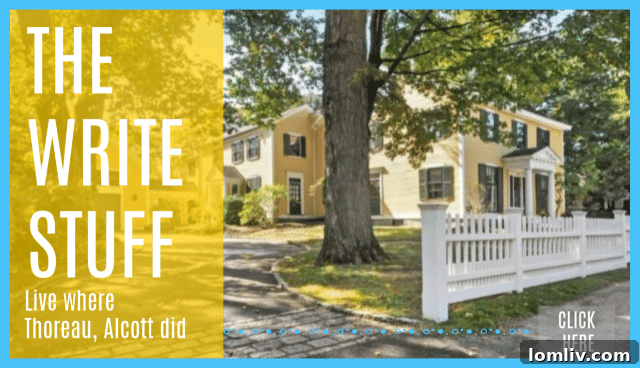
Discovering Concord’s Thoreau-Alcott House: A Treasured Historic Gem
Concord, Massachusetts, is more than just a quaint New England town; it is a cradle of American intellectual and literary history. Nestled within its tree-lined streets lies a site of profound cultural significance, often referred to as the “Thoreau-Alcott House.” While Henry David Thoreau and the Alcott family each had distinct homes, this designation popularly encapsulates the spirit of intellectual camaraderie and groundbreaking literary work that flourished in Concord during the 19th century. Primarily, this title refers to Orchard House, the beloved home of Louisa May Alcott and her remarkable family, a place where profound ideas were born and stories that continue to resonate through generations were penned.
The Enduring Legacy of Orchard House: Home of the Alcotts
Orchard House, standing proudly on Lexington Road, served as the primary residence of the Alcott family from 1858 to 1877. This seemingly modest dwelling witnessed an extraordinary period of creativity, hardship, and intellectual ferment. It was here that Amos Bronson Alcott, a visionary educator and philosopher, cultivated his progressive educational theories and hosted countless conversations with fellow Transcendentalists. More famously, it was within these walls that his daughter, Louisa May Alcott, drew inspiration for her timeless novel, Little Women, forever intertwining the house with her literary genius.
A Glimpse into the Alcott Family Life
The Alcott family — Bronson, his wife Abigail May, and their four daughters Anna, Louisa, Elizabeth, and May — embodied the ideals and struggles of their time. Bronson, a radical educator, often faced financial difficulties due to his unconventional approaches, which frequently left the family in precarious circumstances. Despite these challenges, Orchard House was a vibrant center of learning and artistic expression. The Alcott women were encouraged to read, write, paint, and engage in critical thought, a progressive upbringing for the era.
- Amos Bronson Alcott: A pioneering educator, philosopher, and Transcendentalist, Bronson Alcott’s influence shaped the intellectual landscape of Concord. He established experimental schools and believed in holistic child development.
- Abigail May Alcott: A passionate advocate for women’s suffrage and social reform, “Marmee” (as she was affectionately known) provided the emotional bedrock for the family, inspiring the beloved character in Little Women.
- Louisa May Alcott: The second daughter, Louisa, found her literary voice at Orchard House. Her semi-autobiographical novel, Little Women, chronicles the domestic lives, joys, and sorrows of the March sisters, closely mirroring her own family’s experiences.
- The Other Sisters: Anna Alcott Pratt (Meg in Little Women) was known for her domestic skills and theatrical talents. Elizabeth “Beth” Alcott (Beth) was sweet-natured but succumbed to illness at a young age. May Alcott Nieriker (Amy) was a talented artist, whose works are still celebrated.
Louisa May Alcott and the Birth of Little Women
It is impossible to discuss Orchard House without acknowledging its profound connection to Little Women. Louisa May Alcott wrote the novel at a small semicircular desk positioned between two windows in her bedroom on the second floor. The characters and events in the book were directly inspired by her family’s life in Orchard House and Concord. Meg, Jo, Beth, and Amy March are literary reflections of Anna, Louisa, Elizabeth, and May Alcott, respectively, while “Marmee” draws heavily from Abigail May Alcott. The novel captured the hearts of readers with its honest portrayal of sisterhood, aspiration, and the challenges of growing up.
First published in 1868, Little Women was an instant success, providing the Alcott family with much-needed financial stability and cementing Louisa’s place in literary history. The book’s themes of moral development, female independence, and the pursuit of artistic and intellectual passions continue to resonate globally, making it a cornerstone of American literature and a beloved classic across cultures.
“I like good strong words that mean something.” – Jo March (Louisa May Alcott)
Concord: A Crucible of Transcendentalism and Literary Genius
The “Thoreau-Alcott House” moniker emphasizes the intellectual environment of Concord, a town that attracted some of America’s most influential thinkers. Henry David Thoreau, Ralph Waldo Emerson, Nathaniel Hawthorne, and the Alcotts were all residents, forming a vibrant community of Transcendentalists. This philosophical movement, which flourished in the mid-19th century, emphasized individualism, self-reliance, the inherent goodness of people and nature, and a direct connection to the divine.
The Thoreau Connection
Henry David Thoreau, a close friend and intellectual peer of Bronson Alcott and Ralph Waldo Emerson, lived nearby. His iconic retreat to Walden Pond, where he penned Walden; or, Life in the Woods, exemplified Transcendentalist ideals of simple living and communion with nature. Thoreau was a frequent visitor to Orchard House, engaging in spirited discussions with Bronson Alcott and undoubtedly influencing the intellectual atmosphere that shaped Louisa’s formative years. While Thoreau did not live *in* Orchard House, his presence in Concord was integral to the intellectual milieu that nurtured the Alcott family’s creative and philosophical pursuits.
The bond between Thoreau, Emerson, and the Alcotts was deep. They shared ideas, supported each other’s work, and collectively contributed to an unprecedented period of American cultural awakening. Their shared commitment to social reform, abolitionism, and educational innovation transformed Concord into a beacon of progressive thought.
Orchard House Today: A Living Museum
Today, Orchard House is preserved as a meticulously maintained historic house museum, offering visitors a unique opportunity to step back in time. It is one of the few author’s homes that remains largely as it was when the author lived there. The house contains 80% of the Alcotts’ original furnishings and personal effects, creating an authentic and immersive experience. Visitors can see the very desk where Louisa wrote Little Women, the artwork of May Alcott, and the family’s personal belongings, offering tangible links to their remarkable lives.
The museum is dedicated to preserving the Alcotts’ legacy and educating the public about their contributions to literature, education, and social reform. Through guided tours, educational programs, and special events, Orchard House continues to inspire generations, demonstrating the enduring power of family, imagination, and perseverance.
Why It Remains a Treasured Historic Find
Orchard House’s status as a “treasured historic find” stems from several key aspects:
- Literary Mecca: It is the birthplace of one of the most beloved American novels, providing unparalleled insight into Louisa May Alcott’s creative process and inspirations.
- Transcendentalist Hub: The house was a vital center for the Transcendentalist movement, hosting discussions among some of America’s greatest minds.
- Authenticity: Its exceptional preservation, with most original furnishings intact, offers an authentic glimpse into 19th-century domestic life and intellectual culture.
- Educational Value: It serves as a powerful educational resource, teaching visitors about literature, history, social reform, and the power of individual thought.
- Enduring Inspiration: The stories of the Alcott family, their struggles, triumphs, and profound contributions continue to inspire visitors worldwide.
Planning Your Visit to Concord
For anyone interested in American literature, history, or the Transcendentalist movement, a visit to Concord, Massachusetts, and particularly to Orchard House, is an essential pilgrimage. Beyond Orchard House, Concord offers other significant historical sites, including:
- The Old Manse: Home to Ralph Waldo Emerson and Nathaniel Hawthorne.
- Walden Pond State Reservation: The site of Henry David Thoreau’s famous cabin and his experiment in simple living.
- Sleepy Hollow Cemetery: The final resting place of Emerson, Thoreau, Hawthorne, and the Alcotts on Authors’ Ridge.
- The Concord Museum: Featuring extensive collections related to Concord’s rich history.
These sites collectively paint a comprehensive picture of a pivotal era in American intellectual and cultural development, making Concord a truly unique destination for history buffs and literary enthusiasts alike.
Conclusion: A Legacy That Continues to Bloom
Concord’s “Thoreau-Alcott House,” understood as Orchard House and its surrounding literary landscape, is far more than just an old building. It is a vibrant testament to the enduring power of ideas, family, and the written word. It stands as a profound reminder of the individuals who shaped American thought and literature, inspiring generations to embrace creativity, individuality, and a deeper connection to both nature and humanity. Visiting this hallowed ground allows one to walk in the footsteps of literary giants and experience firsthand the profound environment that fostered some of the most influential works in American history. It truly is a treasured historic find, preserving a legacy that continues to bloom and enlighten.