Dallas’s Resilience: Navigating the Intersection of Public Health and Real Estate
The city of Dallas found itself under an unwelcome global spotlight following the 2014 Ebola outbreak. What began as a critical public health crisis quickly permeated various aspects of daily life, casting an unprecedented shadow over the city’s vibrant real estate market and challenging perceptions of urban living. This period served as a stark reminder of how rapidly unforeseen events can reshape community dynamics and economic landscapes, prompting a critical examination of urban development, public health infrastructure, and community resilience.
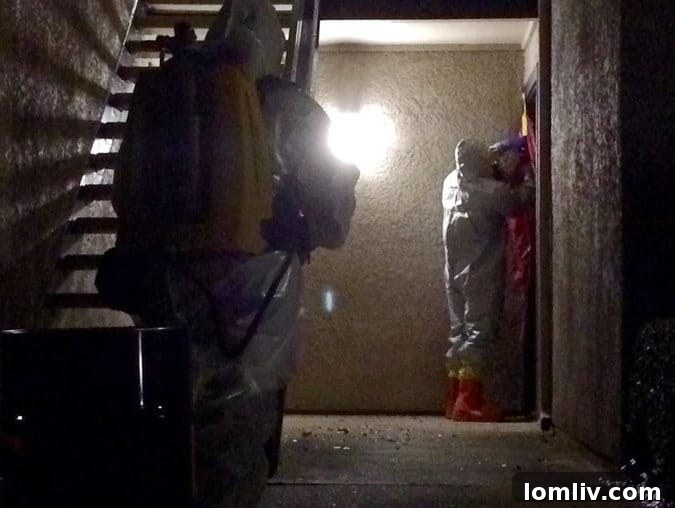
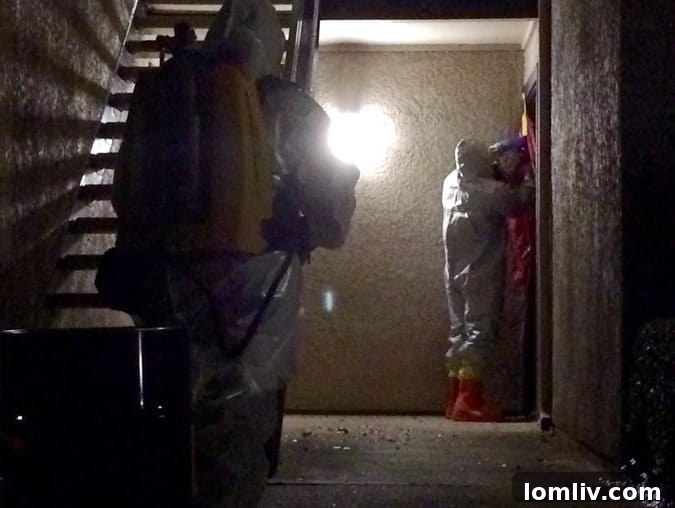
Initially, the news dominated every conversation, drawing attention away from routine concerns like property trends. The revelation that a second nurse, having treated Ebola patient Thomas Duncan, tested positive for the disease at Presbyterian Hospital of Dallas, a Texas Healthcare Resource Hospital, created widespread apprehension. Social media platforms, typically buzzing with diverse topics, became a singular forum for health-related updates, momentarily eclipsing discussions on everything else, including real estate.
The Immediate Ripple Effect on Dallas Real Estate
The impact on the Dallas real estate market was almost instantaneous and undeniably unsettling. Reports from local agents quickly surfaced, indicating a noticeable slowdown in property showings. While difficult to acknowledge, the perception of Dallas had shifted dramatically on a global scale. The city, known for its thriving economy and dynamic urban growth, was suddenly being viewed through the lens of a public health emergency, earning the unfortunate moniker of “Ebola Central.” This altered perception, though temporary, had tangible consequences on buyer confidence and market activity.
The immediate concern among real estate professionals was palpable. One agent, John Jones with Texas Urban Living, recounted a direct example of this apprehension: a prospective buyer canceled a showing in East Dallas, citing its proximity to the Village Apartments, where the second Ebola patient resided. This incident highlighted a novel and challenging factor influencing property decisions – a fear of proximity to perceived risk, unprecedented in recent memory for the Dallas market. Such individual decisions, when aggregated, can significantly influence market sentiment and transactional volumes.
Expert Perspectives: Assessing the Long-Term Market Impact
In the midst of this uncertainty, the Dallas Business Journal hosted a crucial panel discussion featuring real estate luminaries like Downtown Dallas Inc. president and CEO John Crawford and Brad Selner. The core question on the table was whether the Ebola crisis would exert a negative or halting effect on companies considering relocation to Dallas. Initially, the panel conveyed a cautious optimism, suggesting that the immediate impact on corporate relocation decisions had been limited.
“Companies aren’t saying they can’t afford to look at Dallas, or the area because of Ebola, but I would say the longer it goes on, the more impact it will have,” Selner added. “I would hope we get this corrected so it doesn’t take away from the attractiveness of the area. When you talk about families, community and health — I don’t care who you are — people get concerned.”
This sentiment underscored a critical distinction: while companies might not immediately abandon Dallas due to a health crisis, prolonged uncertainty could erode the city’s attractiveness, particularly when considering factors vital to employees and their families – community well-being and health security. The real estate market, deeply intertwined with business confidence and residential demand, faced a looming threat that transcended traditional economic indicators.
Urban Living vs. Suburban Appeal: A Renewed Debate
The Ebola scare reignited an age-old debate about the merits of high-density urban living versus the perceived safety and space of suburban environments. For years, Dallas, like many major cities, had actively promoted an urban renaissance, encouraging dense, walkable communities designed to reduce reliance on cars and foster greater social interaction. However, a public health crisis naturally prompts questions: Will more people now seek solace in the suburbs, shunning urban life for more personal space?
While the allure of an urban environment is undeniable, it inherently comes with greater proximity and, by extension, a higher potential for germ transmission. It is crucial to emphasize that the primary risk from Ebola was, and remains, for healthcare workers directly caring for patients, not the general public. Yet, the psychological impact of concentrated populations during a health scare is profound. Dallas, aspiring to be a “world-class city,” embraces growth, immigration, and increased density. This vision, while progressive, inevitably involves a diverse population living in close quarters – an ecosystem that, as history shows, can be conducive to the spread of illness.
Consider the historical parallel: immigrants arriving at Ellis Island in the early 20th century underwent rigorous health screenings, a process not replicated when visas are issued today. Thomas Duncan, an immigrant seeking refuge and community, found safety with his family and friends from Liberia in East Dallas, near Park Lane east of Greenville. While there were no reports of his family contracting the illness, largely due to isolation efforts by Presbyterian Hospital, the broader system’s failure to adequately protect its nursing staff, as highlighted by subsequent critiques of the CDC’s initial response, underscored systemic vulnerabilities.
Historical Echoes: Cities as Breeding Grounds for Disease
Looking back through history, urban centers have consistently been breeding grounds for various diseases, often far more widespread and deadly than Ebola. The very nature of city life, with its density and constant movement, facilitated rapid transmission. The words of Richard Barnett, a historian of science, resonate deeply with this reality:
“The whole history of urban life, in a sense,” says Richard Barnett, “is of living with parasites and trying to get rid of them.” Walking through London, Barnett illuminates the past: mummification, mass graves, heads on spikes, bodies washing ashore in the Thames. He emphasizes that the history of cities worldwide is inextricably linked to filth and disease—bustling docks teeming with people and rats, mysterious cargoes, overcrowded slums, inadequate diets, and pervasive pollution.
In earlier eras, before the advent of rapid international travel, the journey to new lands often took weeks, creating natural quarantine periods where the sick were identified and isolated. Today, the world is vastly different. A person can board a flight at DFW, traverse continents within hours, and potentially carry an undetected illness across borders. The notion of temperature checks at airports, while a measure, can seem a mere formality in the face of sophisticated disease transmission. The modern interconnectedness, while economically beneficial, inherently creates pathways for rapid global spread, making effective disease control paramount for any major city.
The Inevitable Interconnectedness: Why Cities Are Vulnerable
The inherent design and function of cities make them susceptible to disease propagation. Walls cannot be built against microscopic threats, as there are simply too many pathways for transmission. As Barnett aptly puts it:
Once an infection has arrived in a city, proximity enables its spread. The city is a playground for parasites. “There are a lot more exciting human beings they can jump on to,” says Barnett, “lots more opportunities for vectoring and transmission. It’s all about movement. Parasites love movement. So in that sense the city is an absolutely fantastic place for them.”
This principle is vividly illustrated in everyday urban settings. Daycares and schools, for instance, are well-known hotbeds for infections precisely because of the close proximity of individuals. A 2010 study during a swine-flu outbreak at a high school in the U.S. showcased the staggering number of close encounters – 762,868 instances within a 10-foot radius in a single day among 788 individuals. This data underscores the immense challenge of containing airborne pathogens in densely populated environments. As rapid urbanization continues globally – with projections indicating 7 out of 10 people will live in cities by 2050, up from 4 in 10 in 1970 – these challenges will only intensify. Compounding this, the global population is aging, and older individuals are typically more susceptible to illness, adding another layer of vulnerability to urban health strategies.
Furthermore, human behavior plays a significant role. Dr. Arpana Verma, a senior lecturer in public health at the University of Manchester, highlights issues like “bad respiratory etiquette.” Her research involving covert observation of people’s coughs and sneezes revealed an alarming frequency of spitting, a behavior that drastically increases the spread of germs. These seemingly minor habits, when multiplied across a vast urban population, can have substantial public health implications.
Building a Healthier Future: Prioritizing Urban Hygiene and Design
The presence of Ebola in Dallas, challenging as it was, presented a crucial opportunity for introspection and proactive change. It became evident that beyond focusing on walkability and economic growth, Dallas needed to emerge as a leader in urban hygiene and infection control. This involves a fundamental rethinking of urban infrastructure and design, moving beyond mere aesthetics to prioritize public health.
Consider public toilets, often avoided due to sanitation concerns. These are obvious breeding grounds for germs in cities. Environmental experts like Cutler suggest innovative design approaches to make such spaces easier to clean and manage, incorporating novel surfaces and structures that minimize nooks and crannies where germs can accumulate. The often-overlooked reality of toilet flush plumes, which can aerosolize fecal matter up to two meters and spread bacteria like E. coli, highlights the necessity for better ventilation and design in public sanitation facilities. Investing in such measures is not merely about convenience; it is a critical component of a robust urban public health strategy.
Implementing advanced sanitation protocols in public transport hubs, commercial buildings, and high-traffic areas also becomes paramount. This isn’t just about responding to crises but about building a resilient urban environment that mitigates everyday health risks. For a city aspiring to be world-class, public health infrastructure must match economic ambition.
Dallas’s Path Forward: Resilience, Learning, and Leadership
While the initial feelings surrounding the Ebola crisis in Dallas were grim, the city, as Dallas County Judge Clay Jenkins articulated, has a profound capacity to navigate adversity with grace and grit. The CDC’s initial response left community hospitals with significant gaps, and Presbyterian Hospital unfortunately drew the “unlucky card.” However, from every crisis comes an opportunity for profound learning and growth.
The stories of Nina Pham and Amber Joy Vinson, the two nurses who contracted Ebola while caring for Thomas Duncan, became symbols of both vulnerability and unwavering dedication. As they recovered, they emerged as beacons of light, offering invaluable information and education on the rigorous care protocols essential for managing highly infectious diseases in a metropolitan setting. Their experiences, though harrowing, contributed significantly to refining healthcare practices and bolstering preparedness for future challenges in Dallas and beyond. This period solidified Dallas’s resolve to strengthen its healthcare infrastructure and emergency response systems, ensuring that it is better equipped to protect its residents and healthcare workers.
Ultimately, the Ebola crisis, while a severe test, did not derail Dallas’s long-term economic trajectory. The real estate market, though temporarily shaken, demonstrated its underlying strength and resilience. In fact, such events can sometimes trigger unexpected market shifts, prompting some to consider alternative housing strategies, such as investments in second homes, as a buffer against urban uncertainties. Dallas’s ability to confront this public health challenge head-on, learn from its experiences, and fortify its urban and healthcare systems underscores its enduring spirit and commitment to being a thriving, safe, and world-class city for all its residents.