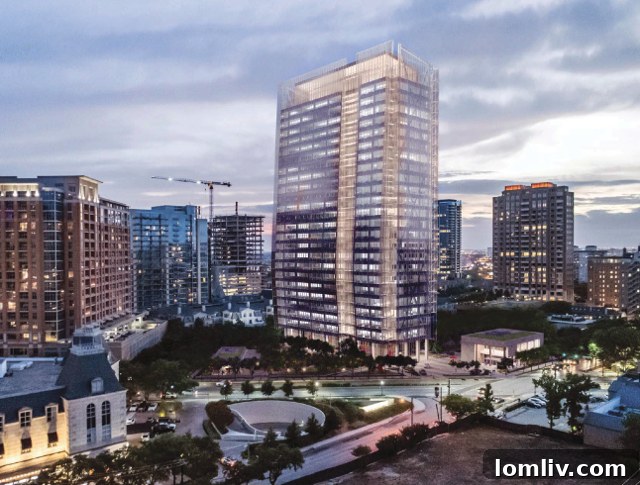
This month’s Oak Lawn Committee meeting offered a comprehensive look into the evolving landscape of one of Dallas’s most dynamic neighborhoods. Three significant projects were brought to the forefront for review, each reflecting different facets of urban growth: a crucial addition to a local school, yet another proposal for an apartment complex, and a particularly striking design for a new office building. While all projects hold their own importance for the community, it’s the latter – the visually captivating office tower – that truly commanded attention and sets a new benchmark for thoughtful development in the area. Its design promises to be a refreshing departure from conventional urban architecture, signaling a promising direction for future commercial spaces. Though the school expansion is undeniably vital, this particular office project stands out for its bold aesthetic and innovative approach to integrating into the urban fabric.
The Visionary Cedar Maple Office Tower: Redefining Uptown Architecture
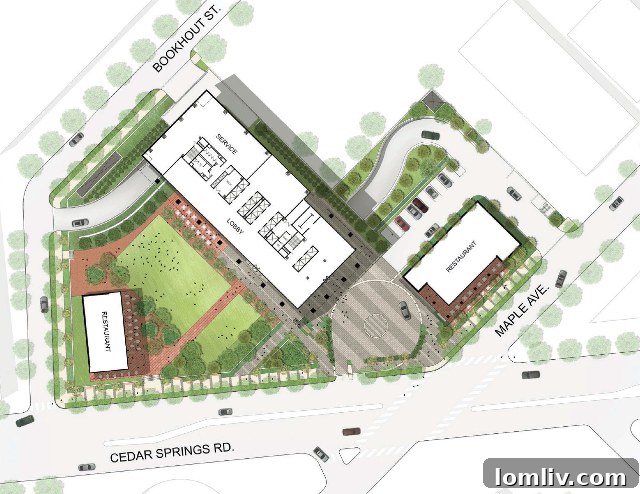
A new office tower, a beacon of modern design, has been proposed for a pivotal location at the intersection of Bookhout, Cedar Springs, and Maple Avenues. This site, strategically positioned directly across from the distinctive, pointy architecture of Crescent Court, is poised to become a new landmark. From the initial renderings, this project immediately distinguishes itself, earning accolades for several compelling reasons that resonate deeply with aspirations for high-quality urban development.
Foremost among these reasons is its sheer aesthetic appeal: it’s unequivocally not ugly! In a city often criticized for its monotonous or uninspired commercial structures, this design is a welcome revelation. It artfully sidesteps the pitfalls of both the ‘upended shoebox’ banality and overly whimsical, ‘cartoon-y’ extravagance. Instead, it strikes a sophisticated balance, demonstrating a mastery of architectural flourish that is both understated and impactful, entirely devoid of the commonplace blah that plagues so many new builds. The building embraces a largely glass facade, a choice that not only enhances its contemporary appeal but also subtly hints at forward-thinking sustainable design. Indeed, architects GFF have clearly absorbed contemporary discussions on environmental innovation, perhaps even influenced by the growing interest in solar-powered windows, suggesting a commitment to both form and function. Adding to its visual intrigue are the vertical white stripes; these are not mere decorative elements but cleverly integrated minor setbacks within the building’s skin. Their purpose is twofold: to disrupt the otherwise solid planes of the structure, preventing visual monotony, and to introduce subtle yet engaging visual interest along the corners and longer sides of the building, creating a dynamic interplay of light and shadow.
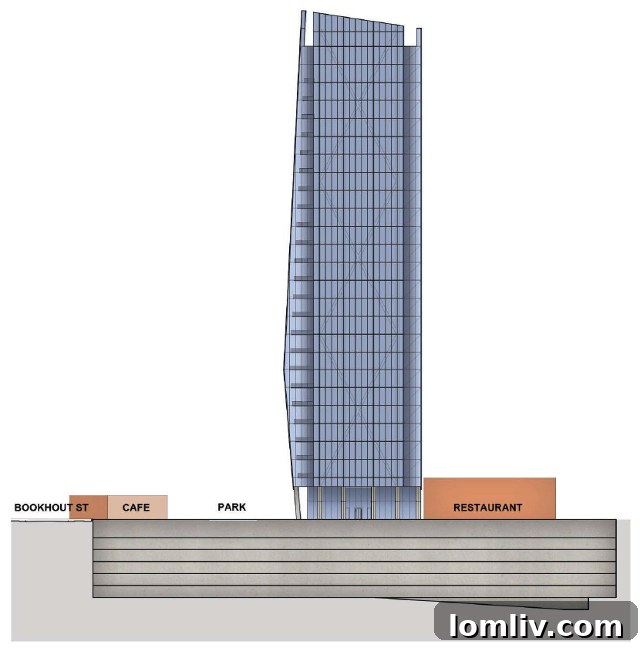
Further enhancing the building’s unique character is a visually intriguing bump-out feature on one side. This is another testament to the architects’ keen eye for subtle detail, serving to visually ground the towering structure by gently drawing the observer’s eye downwards. It’s an architectural gesture that avoids any sense of bulkiness, instead evoking the refined image of a building gracefully taking a knee rather than displaying an unfortunate ‘beer gut’ protrusion. This nuanced approach to massing and form ensures the building feels integrated and balanced within its urban context.
Innovative Dining and Retail Concepts for the Modern Urbanite
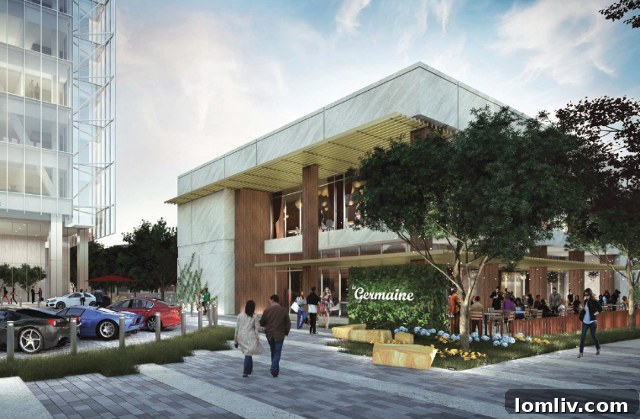
Beyond its impressive facade, the Cedar Maple development is designed to be a vibrant hub, particularly at ground level, where it will host two distinct stand-alone restaurant spaces. This strategic integration of hospitality aims to enrich the experience for both office tenants and the surrounding neighborhood. The larger of these spaces is envisioned as a more formal, upscale dining destination, akin to the sophisticated offerings of a Hillstone or R+D Kitchen – establishments renowned for their quality cuisine and elegant ambiance. The smaller building, on the other hand, is earmarked for a “fast casual” concept, a popular choice for busy professionals and urban dwellers seeking high-quality meals with efficiency, similar to a La Madeline.
Never one to shy away from offering strong opinions, here are some distinct suggestions that could elevate these dining options. For the fast-casual space, what about introducing the first Nandos to Dallas? Nandos, a phenomenal South African chain celebrated globally for its Peri-Peri chicken, operates in 21 countries and boasts over 400 locations in the UK alone. Its explosive growth and widespread popularity are undeniable, attracting a celebrity following that includes Adele, David Beckham, Drake, and Ed Sheeran. Its appeal is so universal that Beyoncé famously ordered £1,500 worth of their chicken to feed her entire crew after a single concert. Such is its cultural cachet that even Vogue, a publication not typically associated with fast-casual dining, has featured them – a true testament to their unique brand and widespread appeal. Introducing Nandos to Dallas would not only satisfy a growing demand for diverse culinary experiences but also establish a dynamic, popular eatery perfect for an office environment.
Similarly, while architects GFF discussed a generic sundry-type store in the lobby of the main building, a more inspired vision could see the introduction of Pret a Manger, now known simply as Pret. This highly successful UK chain of sandwich shops is staggeringly popular with office workers due to its commitment to fresh, natural ingredients and an ever-changing, sophisticated menu. Pret is typically geared towards daytime operations, making it an ideal fit for an office building lobby. This isn’t your average Subway-esque sandwich shop; their summer menu, for instance, has featured gourmet items like lobster salads, delectable lobster rolls, and fresh pesto chicken and mozzarella salads. Pret has already established a strong foothold in major US cities, including New York (58 locations), Boston (7), Chicago (13), Washington, D.C., (10), and Philadelphia (3). Its presence would provide office workers with convenient, high-quality, and healthy meal options that they could easily enjoy at their desks or, even better, take advantage of the generous acre of green space planned for the development, enjoying their meals al fresco.
Revolutionizing Urban Space: Underground Parking and Expansive Green Areas
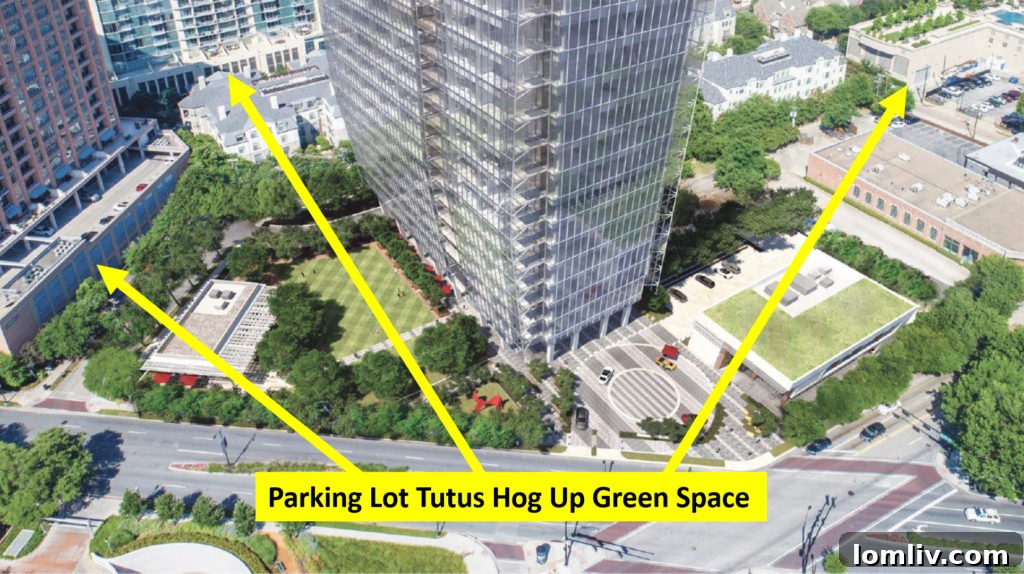
One of the most commendable aspects of the Cedar Maple project, firmly placing it in the “plus” column, is its forward-thinking approach to parking. The developer has ingeniously placed all 1,672 parking spaces across seven extensive underground levels – a decision made proactively, without any specific mandate from the committee. This radical commitment to subterranean parking yields an exceptionally cool and transformative outcome: the office tower connects directly with the ground level, entirely sidestepping the common and often unsightly practice of elevating the building on a surrounding podium, often derisively termed a “parking garage tutu.” This eliminates the visual and physical barrier that elevated parking structures often create, fostering a more direct and welcoming interaction between the building and the public realm.
The profound benefit of this choice is the liberation of a significant public green space from what would otherwise be a sea of concrete. From the total 2.7-acre parcel, approximately one full acre has been meticulously carved out and dedicated as vibrant green space. This is a monumental achievement when considering that local zoning regulations only required a paltry 6,013 square feet of landscaped area – a mere eighth of an acre. The resulting development achieves a remarkable 50 percent lot coverage, a stark and positive contrast to the 75 to 100 percent lot coverage typically allowed by the current zoning of connected parcels. This commitment to expansive public green space is nothing short of a huge win for the neighborhood, providing much-needed ecological benefits, aesthetic improvements, and recreational opportunities in a dense urban environment.
Observing the accompanying picture, one can clearly discern the two separate restaurant buildings flanking this newly created green oasis. Notably, the building on the right proudly features a green roof, a thoughtful design choice aimed at mitigating the visual blight typically associated with rooftops when viewed from above. One can only hope the building on the left will follow suit, further enhancing the project’s environmental credentials and aesthetic harmony. This inclusion serves as a compelling demonstration that green roofs are entirely feasible in Dallas, contingent solely on the developer’s vision and willingness to invest in sustainable practices – a clear message to those in the industry who claim otherwise.
The Height-for-Green-Space Dilemma: A Balanced Urban Calculus
However, securing this magnificent acre of green space comes with a substantial request from developer Granite: a significant increase in building height. The parcels are currently zoned for a height of 240 feet, yet the developers are seeking to nearly double this allowance, pushing for a towering 425 feet. This ambitious proposal translates into a building featuring 25 stories dedicated to office space, complemented by an impressive two-story lobby and an exclusive top-floor amenity space designed to offer panoramic views and high-end services. Concurrently, they are also requesting a nearly 50 percent increase in their allowed Floor Area Ratio (FAR), from 4:1 to 6:1, signifying a greater density of development on the site.
The rationale behind this substantial height request is rooted in simple economic realities. The enormous cost associated with excavating and constructing seven underground levels for parking – an estimated $59 million – is a staggering investment. To offset this colossal expenditure and ensure the project’s financial viability, the building must necessarily extend upwards, increasing its leasable area and potential revenue. This situation thus frames a critical question for the community and its planners: is the unparalleled benefit of an entire acre of prime public green space, nestled in the heart of bustling Uptown, a worthy trade-off for a significantly taller building?
During the committee discussions, Oak Lawn Committee Secretary Michael Milliken offered a remarkably valid and insightful perspective, particularly for those members expressing apprehension about the proposed height. He cogently reminded the committee that what Granite and GFF had presented was precisely the kind of innovative, quality development that the OLC has consistently advocated for from developers for many years. Milliken’s point was a crucial reminder against hypothetical alternatives, urging members to avoid “what if-ing” a shorter, squattier building that would inevitably result in a vastly diminished amount of public green space. His argument highlighted the pragmatic reality that achieving such valuable public amenities often necessitates making concessions in other areas, such as height, to make the project economically feasible and architecturally compelling.
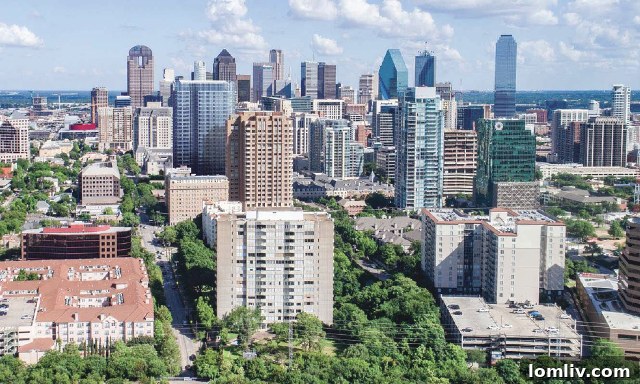
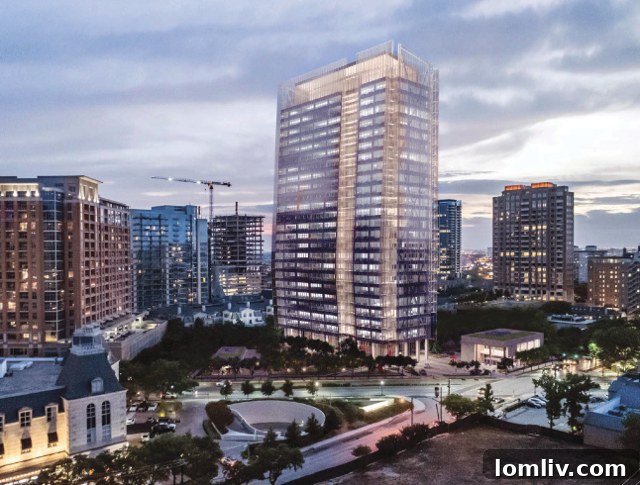
From a visual standpoint, a significant part of the answer to the height question lies vividly in the accompanying image. Observing this perspective, one is challenged to locate the proposed building amidst the existing skyline. I confess, it took me a moment, as its design so gracefully blends into the urban panorama from this angle. For a hint, look to the right of the Chase Tower on the left side of the frame. Crucially, this view showcases the building’s long side, indicating that the developers have not attempted to “cheat” by presenting only its slender profile. As is evident, the proposed tower does not appear as an intrusive or awkward “barnacle” on the skyline; rather, it integrates seamlessly. This visual harmony suggests that the proposed trade-off – increased height for invaluable green space – does not result in an aesthetic eyesore for the city.
Nonetheless, a prudent approach would involve requesting additional angles and perhaps a dynamic 3-D walkthrough to fully ascertain how its camouflage holds up from all perspectives. While the initial impression is positive, an open-minded caution is always advisable when considering such significant urban interventions.
Regardless of how one views the proposal, it’s important to note that this development will not be materializing on the skyline next year. The developers sought early approval to initiate the lengthy planning and permitting processes. Consequently, actual groundbreaking is anticipated roughly two years from now, contingent upon securing all necessary permits and, perhaps, a more stable global economic climate.
William B. Travis TAG Academy: Investing in Future Generations and the Arts
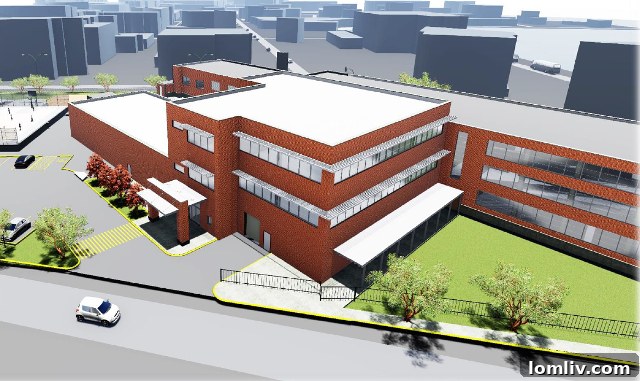
Another crucial project presented at the committee meeting was a proposed addition to the William B. Travis TAG Academy. This expansion is designed to address pressing needs for educational facilities and will house expanded spaces for drama, choir, orchestra, band, and visual arts, along with much-needed additional classrooms and a vital storm shelter. In the rendering above, the multi-floor area prominently displayed in the foreground represents this proposed addition, seamlessly integrating with the existing school structure. The need for these new classrooms is significant; they are intended to replace the current portable, mobile-home-like structures that have long served to house the school’s growing student population. The challenges posed by these temporary classrooms are compounded by the revelation that, some time ago, the girls’ locker room had to be controversially converted into a classroom – a situation that, one hopes, no longer forces students to endure lessons amidst restroom stalls. The school’s modest request to the Oak Lawn Committee was simply to support a five-foot height increase, a minor adjustment necessary to accommodate the new, much-needed addition. From a broader perspective, the construction of new and improved schools is paramount for community development. I firmly believe in building as many educational institutions as are required to meet the needs of our youth. I am particularly pleased to see a strong emphasis on the arts – especially drama – within this expansion. Investing in creative education not only enriches students’ lives but also, humorously, provides an early stage for future politicians to hone their rhetorical and performative crafts.
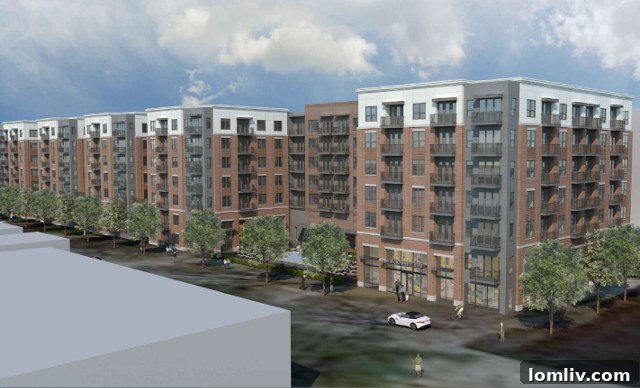
Provident’s McKinney and Hester Apartments: A Question of Quality and Community Value
Our final project walkthrough involved a revisit of a contentious apartment development at McKinney and Hester, a proposal previously reviewed by the Oak Lawn Committee back in December. You may recall my strong distaste for the initial 14-story iteration, and the most charitable comment I could offer about the subsequent, scaled-down five-story attempt was simply that there was “less of it.”
Masterplan, the entity behind the proposal, returned to the committee with a request for two additional stories in height, seeking to add another 100,000 square feet of leasable space. The developer’s stated justification for this significant increase was the inclusion of 25 “affordable units.” However, closer examination reveals that this requested increase would actually yield a total of 53 additional units for the developer. This situation prompts a critical question for residents and stakeholders: would you, dear readers, concede two extra stories to developers in exchange for a mere 25 affordable units, particularly when such an inclusion impacts their profit margins by less than half of a percent? The phrasing of the question likely betrays my own skepticism, highlighting the perceived imbalance in this proposed exchange.
The project’s design is attributed to Houston-based Wallace Garcia Wilson, whose architectural portfolio, in my assessment, presents a visual catalog of what often goes wrong in mid-rise apartment design. The developer overseeing this project is Provident. For those dedicated “Pink Wallers and PD-15-ers” who have diligently followed urban development issues and have read this far, it is crucial to remember that Provident is also the contract holder for the Preston Place development. If the proposed McKinney and Hester apartments are indicative of the quality of their work and the level of creativity they inspire in their chosen architects, then a serious word of caution is warranted. Personally, I would strongly urge Provident to invest more significantly in their architectural design – perhaps by tossing a few more coins into their architects’ metaphorical fountain of creativity, or, more effectively, by seeking out entirely new and more imaginative design partners. Because if this “tarted-up gulag” of a design is any indication of their standards, then I, for one, will be leading the charge with the pitchfork brigade.
Indeed, Provident need only cast their gaze towards projects like 2727 Turtle Creek or even consider the exemplary Cedar Maple project discussed earlier in this column to grasp the level of quality – not necessarily scale – that the discerning “Pink Wall” community in Dallas rightfully demands and expects from new developments. The emphasis must be on design excellence and genuine community benefit, not just maximizing unit count.

Remember: My focus consistently revolves around high-rises, homeowners’ associations (HOAs), and the intricate world of property renovation. However, my appreciation also extends to the delicate balance between modern and historical architecture, particularly when juxtaposed against the dynamic forces of the YIMBY (Yes In My Backyard) movement, which advocates for greater urban density and development. My commitment to insightful and quality real estate commentary has been recognized by the National Association of Real Estate Editors, who honored my writing with three Bronze awards in 2016, 2017, and 2018, alongside two Silver awards in 2016 and 2017. Do you have a compelling story related to real estate, or perhaps even a unique marriage proposal you’d like to share? Feel free to reach out via email at [email protected]. You’re also welcome to look for me on Facebook and Twitter – though you might not find me there, the effort is appreciated!