End of an Era: Demolition Looms for Historic 4901 Live Oak in Dallas
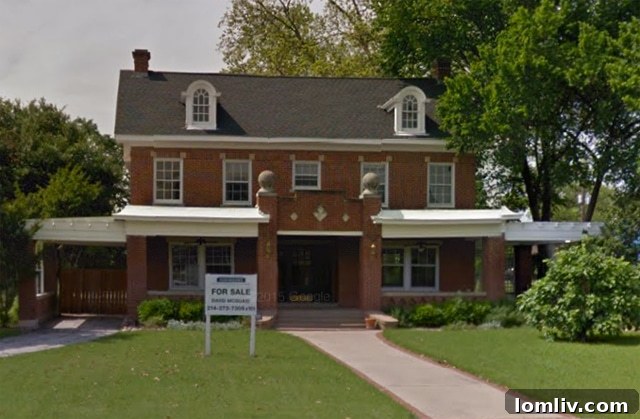
The stately red brick home, a familiar and charming fixture at the prominent corner of Live Oak and Fitzhugh Avenues in Dallas, is teetering on the precipice of obliteration. Earlier this month, a demolition permit was officially secured for 4901 Live Oak, signaling the imminent demise of this historic property. While the elegant structure itself still stands, the surrounding landscape has already begun its unceremonious transformation. The mature trees, which have long provided shade and framed the residence with their verdant canopy, are being systematically removed – a stark visual prelude to the complete razing that is anticipated to follow. This event is not merely the removal of a building; it marks a significant moment for Old East Dallas, igniting crucial conversations about urban development, the imperative of historic preservation, and the evolving character of one of the city’s most cherished neighborhoods.
The impending demolition transcends the mere physical loss of a building; it represents the forfeiture of potential and the erosion of a piece of the area’s rich historical fabric. This particular home once held the promise of new beginnings, having been eyed by a young couple from Brooklyn with aspirations of transforming it into a picturesque wedding venue. Their dreams, however, ultimately remained unfulfilled, a narrative that regrettably echoes many preservation battles fought across the rapidly developing city. As Dallas continues its relentless march of growth and modernization, the fate of properties like 4901 Live Oak serves as a poignant illustration of the delicate balance required between embracing progress and honoring the past. The community now watches with a blend of apprehension and curiosity, wondering what new form will ultimately emerge from the dust once this historic structure is irrevocably gone.
The Dynamic Heart of Old East Dallas: A Neighborhood in Flux
Old East Dallas, a district celebrated for its eclectic blend of historic architecture, tree-lined thoroughfares, and vibrant community spirit, has been a crucible of Dallas’s revitalization efforts for many decades. Spanning eastward from the bustling downtown core, areas such as Munger Place, Peak’s Suburban Addition, and the esteemed Swiss Avenue boast some of the city’s most architecturally significant and well-preserved residences. Live Oak Street itself functions as a major artery, a vital connective tissue linking various parts of this historic quadrant. The intersection of Live Oak and Fitzhugh is particularly strategic, frequently serving as a prominent gateway to the more tranquil, residential pockets while also maintaining close proximity to burgeoning commercial developments and modern amenities.
This district has experienced a dramatic surge in both new residents and businesses, all drawn by its enviable location, unique charm, and relative affordability compared to Dallas’s more established, upscale enclaves. This wave of popularity, however, comes hand-in-hand with its own complex set of challenges. Developers are increasingly targeting older, often larger lots for contemporary infill projects, frequently leading to the replacement of historic single-family homes with multi-unit townhouses or larger, more modern residences. While this trend undeniably contributes to urban density and accommodates the city’s relentless growth, it regrettably often results in the irreversible loss of architecturally significant structures and the gradual erosion of the neighborhood’s distinctive historical aesthetic. The residence at 4901 Live Oak, with its classic red brick facade and commanding corner position, stands as a tangible testament to an earlier era of Dallas architecture – a style and a scale that are becoming increasingly rare amidst the current wave of new construction.
An Unfulfilled Dream: The Vision for a Wedding Chapel
Adding a profound layer of complexity and a touch of pathos to the ongoing narrative of 4901 Live Oak is the previously unfulfilled vision for the property’s adaptive reuse. Several years prior, a creative young couple, Adam and Alicia Rico, founders of the acclaimed Bows and Arrows Flowers, acquired the home with ambitious plans. Their goal was to transform the stately residence into a romantic and utterly unique wedding chapel – a charming and intimate venue designed to host couples embarking on their married lives. Their proposal centered on reimagining the property, meticulously preserving its inherent historic charm while thoughtfully adapting it for a vibrant new purpose. This concept represented an ideal example of adaptive reuse, a strategy often celebrated for breathing new life and economic viability into older buildings while safeguarding their heritage.
However, their aspirations were met with significant, insurmountable hurdles, primarily rooted in restrictive zoning regulations. The arduous process of securing the necessary permits and variances for a commercial wedding venue, situated within a predominantly residential area, proved to be an arduous and ultimately unsuccessful endeavor. Reports from as far back as 2015 indicate that the couple encountered considerable community opposition and navigated a labyrinth of bureaucratic obstacles, vividly illustrating the intricate challenges that developers and entrepreneurs frequently face when attempting to repurpose historic residential properties for commercial ventures. The unfortunate failure of this ambitious project left the house in a peculiar state of limbo, its profound potential for a beautiful new chapter tragically unrealized. The irony of the situation is particularly stark: a place once envisioned as a vibrant symbol of enduring love and hopeful new beginnings is now inexorably poised for complete demolition, its future not reimagined, but rather, altogether erased.
Navigating the Ownership Labyrinth: A Web of Unanswered Questions
The pervasive mystery surrounding the current ownership and the ultimate decision to demolish this significant property has injected an additional layer of intrigue into this unfolding narrative. A thorough delve into the Dallas Central Appraisal District (DCAD) records reveals that the property is held under the corporate entity of 4901 Live Oak LLC. Further investigation into this “ownership rabbit hole” – a common challenge in real estate transparency – strongly suggests that one of the key figures associated with this Limited Liability Company is Victoria Berezina, a recognized Keller Williams Realtor.
Our diligent attempts to establish contact with Ms. Berezina for critical clarification and specific details regarding the demolition plans have, to date, proven unsuccessful. Our outreach to her professional office yielded information indicating that she is currently out of the country, reportedly situated in Russia. This discernible lack of direct communication from the principal owner leaves a multitude of critical questions hanging unanswered: What are the definitive, long-term plans for this prime site? Is there a new, already conceptualized development project slated to rise from its ashes? What were the fundamental considerations that ultimately led to the pivotal decision to demolish this historic home, rather than exploring avenues for renovation, preservation, or a strategic sale?
Further inquiries extended to Dyn-o-Mite Demolition, the company presumably entrusted with the critical task of executing the demolition work, have also met with silence, as calls to their business have gone unanswered. This pervasive absence of clear, forthright communication from all involved parties contributes significantly to the dense shroud of silence surrounding the entire project. It also serves to amplify speculation within the community and underscores the pervasive difficulties in obtaining transparent and timely information regarding major property changes, especially when complex corporate structures like LLCs are involved. The former owners, Adam and Alicia Rico of Bows and Arrows Flowers, were also contacted, as their historical perspective could prove invaluable, though their direct involvement in the current demolition would likely be minimal. This challenging situation vividly highlights a persistent issue in modern urban development: when key stakeholders remain uncommunicative, public discourse, community understanding, and effective oversight are invariably and significantly hampered.
The Broader Implications: Preservation Versus Progress in Dallas
The impending demolition of 4901 Live Oak is far from an isolated incident; it serves as a potent microcosm of a larger, sweeping trend impacting the entire city of Dallas. As the metropolis experiences unparalleled growth and intensive development, the inherent tension between the desire for historic preservation and the relentless drive for modernization and increased urban density becomes increasingly pronounced and palpable. Venerable neighborhoods across the city, including Old East Dallas, Oak Cliff, and Knox-Henderson, are all undergoing rapid transformations, with older, architecturally significant homes frequently being sacrificed to make way for contemporary structures that often prioritize maximizing lot usage and catering to modern aesthetic preferences.
Challenges for Effective Historic Preservation:
- Intense Economic Pressures: Property and land values in highly desirable urban areas have experienced exponential growth, creating immense financial incentives for developers to clear existing structures and erect new, more profitable, and often larger-scale projects.
- Insufficient Legal Protections: A substantial number of historic homes, despite their age and charm, do not fall within the specific boundaries of designated historic districts or possess official landmark status. This critical absence leaves them vulnerable to demolition without substantial public input or significant regulatory obstacles.
- Exorbitant Maintenance Costs: Older homes invariably demand substantial ongoing investment in maintenance, crucial repairs, and modern updates to meet contemporary living standards. Such costs can often deter prospective buyers or existing owners from committing to their long-term preservation.
- Evolving Architectural Tastes: While a significant portion of the population deeply appreciates historic architecture, a growing segment of the modern market strongly prefers the open floor plans, cutting-edge amenities, and superior energy efficiency offered by new construction.
The Enduring Value of Preserving Architectural Heritage:
- Unique Architectural Character: Historic homes contribute an irreplaceable aesthetic and distinct character to neighborhoods, fostering a profound sense of place and individuality that newly built structures often struggle to replicate.
- Significant Environmental Benefits: The act of demolishing existing structures generates vast quantities of construction waste and contributes to carbon emissions. Conversely, renovating and adaptively reusing buildings represents a far more sustainable approach, significantly reducing the overall environmental footprint.
- Vital Cultural Identity: These historical buildings serve as tangible, irreplaceable links to the past, embodying the city’s rich history, its intricate evolution, and the personal stories of generations who lived within their walls, thereby fostering a deeper and more authentic cultural identity for current and future residents.
- Catalyst for Economic Revitalization: Thoughtful preservation efforts can act as powerful engines for economic revitalization by attracting heritage tourism, supporting local craftspeople and skilled artisans, and often increasing property values in areas renowned for their unique, historically rich character.
The unfolding situation at 4901 Live Oak serves as a potent catalyst, igniting a broader and more urgent conversation about how Dallas strategically prioritizes its invaluable past while vigorously building its future. It compels residents, urban planners, and policymakers alike to critically consider and implement more robust and proactive strategies for safeguarding the city’s precious architectural heritage, without simultaneously stifling necessary and responsible urban growth.
What Lies Ahead for the Illustrious Corner of Live Oak and Fitzhugh?
With the demolition permit officially secured and the surrounding trees already cleared, the critical question now decisively shifts from “if” to “what next?” for the exceptionally prominent corner of Live Oak and Fitzhugh. The generous size and strategic location of the lot strongly suggest a high probability for significant and impactful redevelopment. Given the prevailing trends observed throughout Old East Dallas and its surrounding vibrant areas, several compelling possibilities emerge for the site:
- Luxury Townhomes: A pervasive and common replacement for older single-family homes in highly desirable urban areas, offering multiple modern units on a single lot. This option typically appeals to young professionals, small families, or empty nesters seeking a dynamic urban lifestyle.
- Contemporary Single-Family Residence: The construction of a larger, state-of-the-art single-family home, meticulously designed to maximize square footage, integrate modern amenities, and cater to buyers specifically seeking brand-new construction within an established and highly coveted neighborhood.
- Mixed-Use Development: While perhaps less likely for a singular residential lot, it is not entirely impossible for such a prime corner. This innovative approach could potentially involve dynamic ground-floor retail spaces seamlessly integrated with residential units above, further enriching the commercial vibrancy of the immediate neighborhood.
- Commercial Expansion: Given its strategic location on a bustling thoroughfare, a purely commercial venture, such as a boutique office building, a specialized retail establishment, or a small service-oriented business, could also be a viable consideration, although specific zoning regulations would undoubtedly play a critical and determining factor.
Whatever trajectory the future ultimately takes, the profound transformation of 4901 Live Oak will, without question, irrevocably alter the streetscape and the inherent character of this pivotal intersection. The loss of the stately red brick home symbolizes not merely the physical removal of a structure but also the profound removal of a rich narrative – a narrative steeped in architectural heritage, community aspirations, and the ever-present, dynamic tension between the cherished old and the relentless push of the new in a rapidly expanding and evolving metropolis. As the protective fences inevitably go up and the powerful excavators roll in, the Dallas community remains intently watchful, keenly aware that another cherished piece of its history is making way for an as-yet-unknown, transformative future.
Stay tuned for further updates and critical developments as this significant chapter unfolds. The compelling story of 4901 Live Oak is far from concluded; it is merely embarking upon its next, profoundly transformative phase.