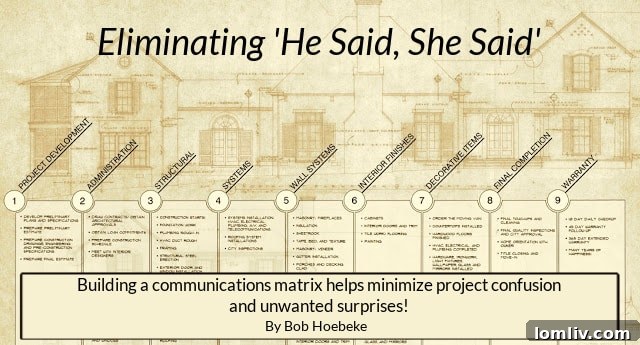
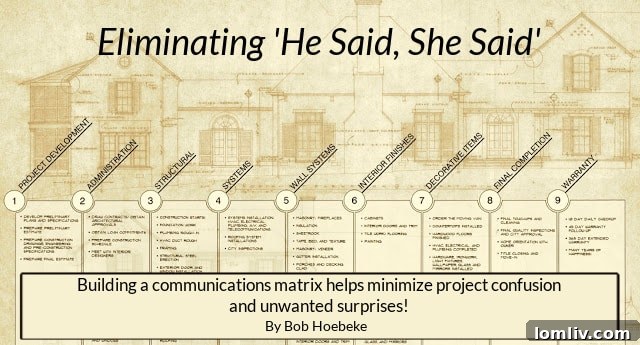
By Bob Hoebeke
President, Hoebeke Builders
Embarking on a home building project can feel like assembling a colossal jigsaw puzzle, one with thousands upon thousands of intricate pieces. From the smallest fixture, like an aerator, to major appliances such as microwaves, and from fundamental structural elements to the aesthetic nuances of zinnias in the landscape – the sheer volume of decisions can be overwhelming. While some selections are inherent to the overall design, a significant portion demands your direct involvement and thoughtful choice. It’s this intricate web of choices that necessitates a clear, robust, and consistent communication strategy.
You’ve likely already taken the crucial first step: assembling a stellar team of professionals. This typically includes an architect, a builder, an interior designer, and a landscape architect. Their collective expertise is invaluable for navigating the often-turbulent waters of product selection and design implementation. However, even with the most experienced team, the vast number of moving parts and seemingly endless decisions creates fertile ground for miscommunication. This isn’t merely an inconvenience; it can lead to costly delays, budget overruns, and considerable stress. To preempt these issues and foster a harmonious building process, you need a meticulously crafted plan for communicating with every member of your project team.
Effective communication in construction isn’t a singular entity; it manifests in various forms. For the purpose of clarity and strategic planning, let’s categorize them into two overarching, yet equally imperative, types for any successful building project: Document Communications and Informational/Directive Communications. Document Communications generally refer to the formalized work products generated by the project team, such as blueprints, detailed drawings, comprehensive specifications, and critical cost data. Informational/Directive Communications, on the other hand, are dynamic exchanges aimed at informing stakeholders, defining ongoing processes, clarifying ambiguities, and correcting any deviations during the building journey. Understanding and effectively utilizing both types are paramount to eliminating the dreaded “he said, she said” scenario in construction.
Let’s delve deeper into each category to understand their specific roles and how they contribute to a transparent and efficient building process.

Document Communications: The Foundation of Your Vision
Once you’ve shared all your hopes, wishes, and dreams for your future home with your dedicated project team, it becomes their responsibility to translate and “echo” back their understanding of your vision. This initial and crucial translation primarily occurs through a suite of formalized documents.
At the heart of Document Communications lies the blueprint – an indispensable form of communication, arguably the most important. These detailed plans define every aspect of your future home: the spatial relationships between rooms, the overall layout, precise dimensions, structural integrity, and the aesthetic style. Through an iterative process, beginning with “conceptual design” and evolving into finalized “construction drawings,” the architect, builder, interior designer, and landscape architect collectively articulate, “You shared your vision, we listened attentively, and this is our collaborative blueprint for its realization.” The word “together” is truly operative here; the finalized plans are a robust reflection of what all parties, including you as the owner, have mutually agreed to construct. These documents serve as the definitive contract language, minimizing assumptions and establishing a clear path forward.
However, even the most compelling blueprint needs a robust supporting cast. This comes in the form of supplementary documents, each playing a vital role in more completely defining the project’s scope and quality. These include:
- Specifications: These documents delve into the qualitative aspects, detailing the types of materials to be used, quality standards, specific brands, installation methods, and performance requirements for everything from roofing materials to plumbing fixtures. They ensure that what is built meets agreed-upon benchmarks.
- Landscape Plans: Beyond mere aesthetics, these plans detail grading, drainage, planting schedules, irrigation systems, and hardscaping elements, all crucial for the functional and visual integration of the home with its surroundings.
- Finish Schedules: These comprehensive schedules meticulously list all interior and exterior finishes, including paint colors, flooring types, tile selections, countertop materials, and cabinet finishes, ensuring every surface is accounted for and approved.
- Fixture Schedules: Similar to finish schedules, these documents specify all light fixtures, plumbing fixtures, hardware, and appliances, preventing misunderstandings about specific models, finishes, and functionalities.
- Detailed Drawings: Beyond the main blueprints, these might include enlarged details for custom millwork, cabinetry, staircases, or specific architectural features, providing granular instructions for trades.
- Cost Data and Budgets: Crucial for financial transparency, these documents outline expected expenses, material costs, labor rates, and contingency allowances. They allow for rigorous financial oversight and help keep the project on track financially.
- Timelines and Project Schedules: These set realistic expectations for the project duration, outlining key milestones, critical paths, and dependencies, helping all parties understand the anticipated pace of construction.
Referring back to the 80/20 rule from our previous article, it cannot be overstated: the more detail completed and documented *before* these documents are released for construction, the exponentially decreased the likelihood of unwelcome surprises. Remember, these foundational documents collectively define the project’s “scope of work,” which serves as the essential baseline upon which your construction contract will be drawn. Any ambiguity or missing detail at this stage is an open invitation for future disputes, change orders, and cost escalations.
While it might feel like the design phase is extending, investing the time to complete a full 80 percent (not a partial 68.5 percent!) of the detailed planning before the plans and supporting documents leave the design table and head to the construction field is a non-negotiable step. This meticulous upfront planning mitigates risks, streamlines the construction process, and ultimately saves you significant amounts of money by avoiding costly revisions and rework during the build phase. It transforms potential conflict into predictable progress.
Informational/Directive Communications: The Dynamic Flow of Progress
While Document Communications form the static, contractual backbone of a project, Informational/Directive Communications provide the dynamic, ongoing dialogue necessary for a smooth and responsive building process. These memos and exchanges, though typically not part of the formal contract documents themselves, are vitally important for exchanging critical information, clarifying ambiguities, resolving unforeseen issues, and correcting the building process as it unfolds.
Examples of these crucial real-time communications include a wide array of interactions:
- Directives from the Owner or Team Member: These formal instructions or decisions, whether issued during the design phase or once construction is underway, ensure that every decision, no matter how small, is documented and acknowledged.
- Meeting Minutes: Comprehensive records of project meetings are invaluable. They capture attendance, topics discussed, decisions made, action items assigned, responsibilities, and agreed-upon timelines. Meeting minutes serve as a historical record, holding all parties accountable for their commitments.
- Requests for Information (RFIs): When a question arises on-site about details in the drawings or specifications, an RFI is submitted. This formal query clarifies ambiguities, addresses missing information, or proposes alternative solutions, preventing assumptions that could lead to errors or delays.
- Requests for Pricing (RFPs) or Change Orders: When modifications to the original scope are considered or necessary, RFPs or formal change orders are issued. These documents clearly outline the proposed changes, their impact on cost and schedule, and require formal approval from the owner, maintaining financial transparency.
- Progress Updates: Regular updates are essential for keeping all stakeholders informed about the project’s status, milestones achieved, potential challenges, and upcoming activities. These can take various forms, from brief emails to more structured weekly reports.
- Site Instructions and Field Memos: These are issued by the builder or architect to clarify details, provide instructions to trades, or document observations made on-site, ensuring immediate responsiveness to day-to-day operational needs.
A crucial best practice for these dynamic communications is ensuring that, unless specifically user-targeted, the entire project team is included in the communication thread. This inclusive approach ensures that each professional discipline — be it the architect, interior designer, or builder — has the opportunity to assess whether the information, directive, or update applies to their specific area of responsibility. This prevents silos of information and fosters a collaborative environment where potential issues can be identified and addressed proactively by the relevant experts.
One of the most profound gifts our business ever received from a client was their insistence that we compose a weekly update for distribution to them and the entire team. Initially, the idea of a mandatory weekly report seemed like another burdensome task. However, we quickly discovered that this structured weekly update became an invaluable organizational tool. It compelled us to maintain meticulous records, kept the entire team consistently informed, and dramatically reduced the volume of frivolous, reactive communications. This proactive approach streamlined our operations, fostered trust, and minimized misunderstandings. Needless to say, we wholeheartedly adopted this practice, and it has served us with remarkable effectiveness for the last two decades.
Ultimately, regardless of the specific form or frequency of communication, the project team and the owner must collectively agree upon the most effective and convenient methods for updating job progress. This shared understanding and commitment to transparent communication lay the essential foundation for a smooth, timely, and successful construction project. Job transparency isn’t just a desirable trait; it’s the cornerstone of accountability, trust, and ultimately, client satisfaction. In our upcoming articles, we’ll dive into strategies for Monitoring Project Progress and effective Conflict Resolution. Stay tuned for more insights!
From developing a comprehensive “Lifestyle Inventory” to meticulously building and monitoring your Project Team, Hoebeke Builders Consulting Services provides all the essential tools and expertise necessary to dramatically increase your project’s efficiency, while simultaneously decreasing its overall cost. Discover how we can transform your building experience at www.hoebekebuilders.com.