Discovering the Unexpected Charm of DalPark Garage: A Dallas Landmark
By Jay Firsching
Senior Associate and Historic Preservation Specialist, Architexas
In the bustling heart of downtown Dallas, a seemingly utilitarian structure recently earned a prestigious accolade, captivating the attention of history and architecture enthusiasts alike. Last year, the DalPark Garage was officially listed on the National Register of Historic Places, a testament to its unique architectural significance and its pivotal role in the city’s urban evolution. While some might dismiss parking garages as mere concrete behemoths, Dallas boasts a rich history of innovative and impressive examples, proving that even these functional buildings can possess a distinctive charm and historical depth.
Among the city’s notable parking structures, the five-story Sanger Garage, built in 1925 at 711 Elm, stands as the oldest still in operation. On a larger scale, the I.M. Pei-designed garage beneath the Dallas Municipal Complex showcases architectural prowess hidden beneath the urban landscape. However, it is the DalPark Garage that truly embodies a fascinating chapter in Dallas’s story, a narrative interwoven with grand visions, urban challenges, and enduring architectural legacy. Join me for a few moments, and by the end, I believe you too will appreciate the undeniable cool factor of DalPark.
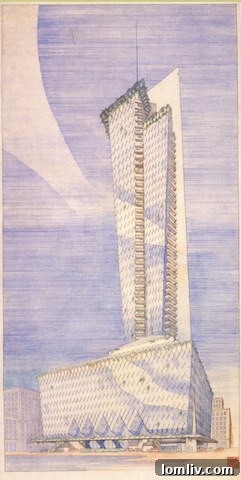
Before delving into DalPark’s merits, it’s essential to address the elephant in the room – or rather, the magnificent building that was never built. Many will argue that the prime spot occupied by the DalPark Garage should rightfully be home to the legendary Rogers Lacy Hotel. This ambitious project, conceived in 1945 by Longview native Rogers Lacy, an oil magnate who amassed a vast fortune in East Texas oil fields, was destined to be an architectural masterpiece. Lacy commissioned none other than the iconic American architect Frank Lloyd Wright to design his eponymous hotel, a vision that promised to redefine Dallas’s skyline.
Wright’s stunning design, unveiled with much fanfare in 1947, showcased his signature organic architectural style adapted for a grand urban hotel. It was a bold, innovative concept that would have undoubtedly become one of Texas’s most celebrated architectural landmarks. Tragically, Rogers Lacy’s untimely death shortly after the design’s reveal extinguished this extraordinary dream. All that remains are the intricate drawings and renderings, a tantalizing glimpse of what could have been. While Dallas sadly missed out on a Wright-designed hotel, the city can still take cold comfort in knowing that of the four Frank Lloyd Wright buildings in Texas, two are located within the Dallas metroplex, albeit not as prominent public structures as the Lacy Hotel would have been. This unfulfilled vision casts a long, intriguing shadow over the site, making DalPark’s eventual construction all the more remarkable.
Dallas’s Perpetual Dance with Growth and Congestion
Dallas’s relationship with transportation has been a complex, often tumultuous affair since the arrival of the Houston and Texas Central Railroad in 1872. Each advancement in transportation infrastructure brought with it a wave of exhilarating growth, transforming Dallas into a major economic hub. However, this prosperity came at a cost: escalating urban congestion. The familiar frustration commuters experience on today’s freeways is not a new phenomenon; it’s a direct descendant of the traffic woes that plagued Dallas for decades, a cyclical challenge tied to its very expansion.
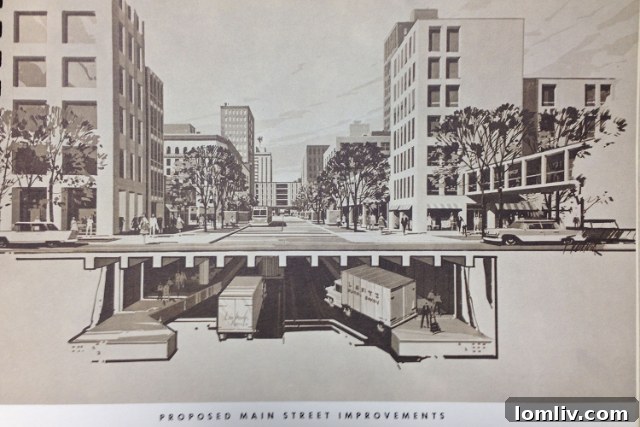
Among the myriad problems created by this relentless congestion, parking emerged as a paramount concern. Downtown Dallas, with its ever-taller and more densely packed buildings, attracted a burgeoning workforce. The streets, once bustling with commercial activity, became choked with a seemingly endless stream of vehicles. Business owners vociferously complained that their potential customers were driven away by the impossibility of finding a parking spot, while frustrated drivers decried the parked cars that narrowed the streets and impeded traffic flow. The city’s response was a series of controversial, yet ultimately necessary, measures. In 1935, parking meters made their debut, a move that sparked significant public debate. A mere ten years later, in an even more drastic and contentious decision, the city implemented a ban on streetside parking altogether during peak hours.
This bold pilot program, which prohibited street parking twice a day during the intense rush hour periods, laid the groundwork for the traffic management strategies still in place today. It was an early recognition that unfettered vehicle access was unsustainable in a rapidly growing urban core, setting a precedent for future interventions aimed at alleviating congestion.
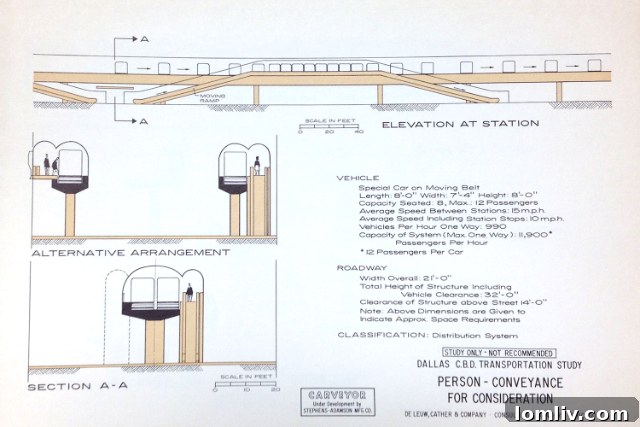
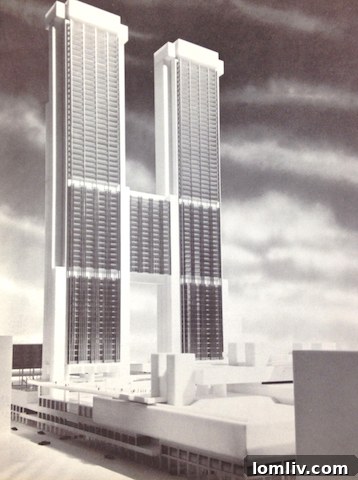
By the mid-1960s, the urban planning landscape of Dallas reflected a sense of desperation, with the city’s growth and traffic issues seemingly spiraling out of control. Planners and civic leaders brainstormed a myriad of grandiose, often futuristic, solutions. These included ambitious proposals to replace the entire downtown core with multi-layered superblocks, incorporating innovations like moving sidewalks and sky pods. Visions for an extensive underground network of freight tunnels aimed to remove commercial traffic from surface streets, while some even suggested mechanical parking pits capable of storing cars 300 feet deep – a testament to the extreme measures considered. Some of these imaginative solutions were eventually implemented, while others remained confined to architectural drawings and planning documents.
Remarkably, the complex loop of snarled freeways that encircles downtown today was, believe it or not, once hailed as a forward-thinking solution to urban mobility. This massive undertaking, however, brought with it unintended consequences, drawing even more cars and increasing congestion downtown while simultaneously destroying some of Dallas’s most historically interesting neighborhoods. A consistent recommendation across most urban plans was the imperative to build a comprehensive subway system and, crucially, to avoid placing at-grade trains downtown. Yet, in a twist of fate and fiscal priorities, Dallas ultimately bypassed the subway in favor of at-grade rail, a decision that has continued to shape the city’s public transportation challenges and opportunities.
The Dawn of the Modern Parking Garage: DalPark’s Inception
In a paradoxical turn, the very congestion that threatened to choke downtown Dallas also created an unexpected opportunity. The sheer volume of vehicles and the desperate need for parking spaces made the construction of major, multi-level parking structures not just feasible, but highly profitable. This economic reality paved the way for projects like the DalPark Garage, transforming a problem into a lucrative solution.
The story of DalPark truly begins with a powerful family legacy. In 1966, twenty years after her husband Rogers Lacy’s passing, Lawson Lacy announced her ambitious plans to develop a significant parking structure on the very site that had been earmarked for the ill-fated Lacy Hotel. Following her mother’s death in 1967, Ann Lacy Crain inherited the formidable Lacy Interests and took the reins, determined to see the project through to completion. Ann Lacy Crain was not just a savvy businesswoman; she was also married to Bluford Walter “BW” Crain, Jr., a prominent figure in the architectural world, associated with the renowned firm Wilson, Morris, Crain, and Anderson.
For those unfamiliar with the name, the firm had just celebrated the monumental completion of the Astrodome in 1965, an architectural marvel dubbed the “Eighth Wonder of the World.” Longhorn fans would also recognize BW Crain as the visionary architect behind the University of Texas at Austin’s iconic Frank Erwin Center. Under Ann’s astute leadership, BW Crain Jr. applied his considerable talent and modernist sensibilities to designing an imposing, multi-level parking garage that would be both highly functional and architecturally striking.
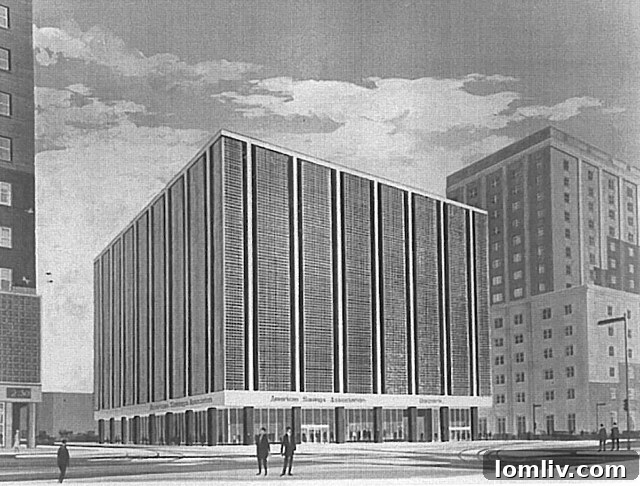
The DalPark Garage officially opened its doors on May 1, 1968, a bold statement in urban infrastructure. Far from being a mere concrete box, it was designed with elegance and convenience in mind. The lower floor housed a sprawling 13,000-square-foot branch for American Savings Association, adding a touch of commercial vibrancy. Advertisements from the era proudly proclaimed DalPark as nothing less than “the world’s most beautiful garage” and “a calm haven for 800 fidgety parallel parkers.” These bold claims were substantiated by the inclusion of meticulously landscaped gardens and a magnificent domed rotunda, features rarely associated with parking facilities. A central marketing theme emphasized DalPark’s unparalleled proximity and convenience to the flagship Neiman Marcus store directly across the street, a synergistic relationship that continues to hold significant value for downtown shoppers and businesses today.
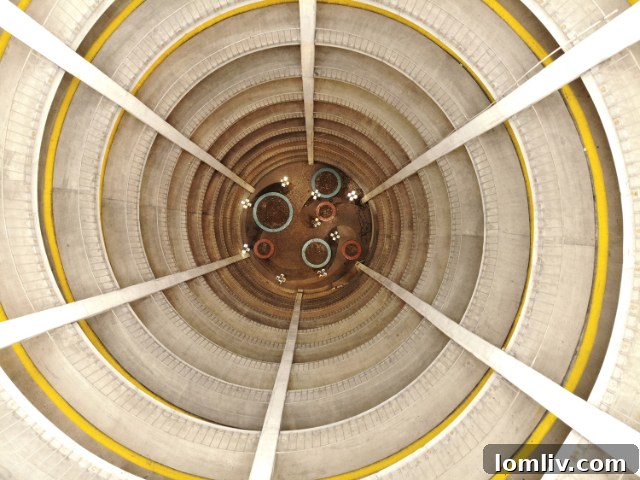
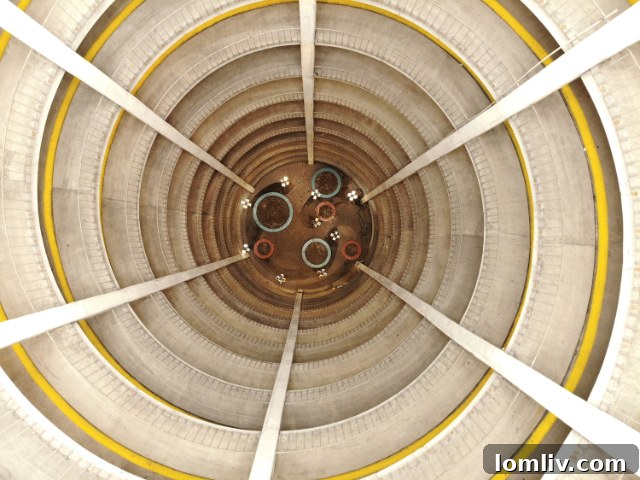
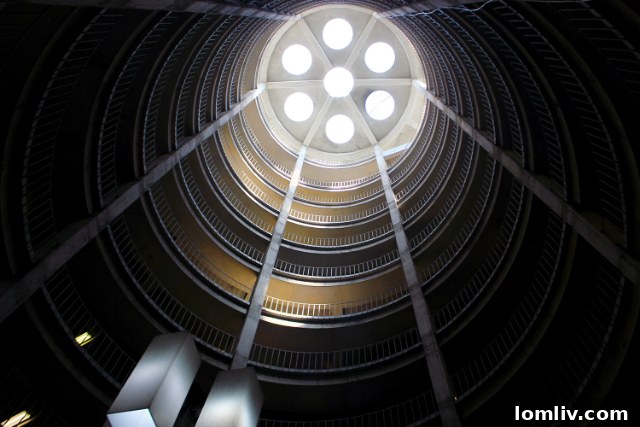
Despite the first floor currently standing vacant, the garage itself remains remarkably preserved, much as it was when it first opened over five decades ago. Its exterior presents an intriguing modernist aesthetic: a robust cube clad in a distinctive, patterned CMU (concrete masonry unit) breeze block. The dark, recessed base, featuring smoky storefronts, creates an illusion of the massive cube floating above the streetscape, an elegant touch that defies its utilitarian purpose. Inside, the design is a masterful orchestration of flow and efficiency. A complex array of interconnecting ramps guides vehicles smoothly through the various levels, all organized around a dramatic helical ramp at the garage’s core. Above this central core, a circular ceiling is punctured by an array of domed acrylic skylights, bathing the space in natural light. These skylights illuminate a captivating ground-level central garden, adorned with decorative stone paving, vibrant planters crafted from brightly glazed blocks, and custom-designed light poles, transforming what could be a mundane space into an unexpected oasis of urban design.
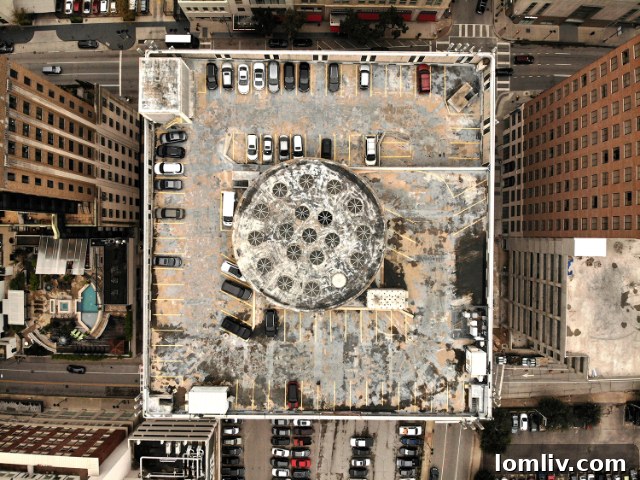
The DalPark Garage proved to be a shrewd and timely investment in a perpetually crowded Dallas. However, even this visionary structure could not entirely escape the broader challenges faced by the downtown area in the long term. As urban sprawl intensified and the suburbs grew, Dallas’s central business district slowly began to wane under its own historical weight, losing its vibrant energy to outlying communities. Planners continued to devise strategies and make suggestions, but it would be another four decades before Dallas would find itself in its current state – a remarkable resurgence of downtown life, bringing with it a renewed iteration of the very problems that sparked DalPark’s creation: congestion. What was old is indeed new again, and with this revitalized development comes the inescapable return of urban traffic and parking dilemmas.
Today, the current owner of DalPark is keenly focused on the future, diligently working to restore and polish the garage to its former glory. This revitalization effort is particularly timely and exciting given the amazing news that the garage is poised to become an integral component of the much-anticipated new subway line downtown. A crucial access point to the Commerce Street Station has received approval for integration into the building’s first floor, marking a full-circle moment in Dallas’s urban planning history. The DalPark Garage, born out of a need to manage vehicle congestion, will now ironically, and elegantly, become a partial solution to mass transit, connecting people to the very heart of the city.
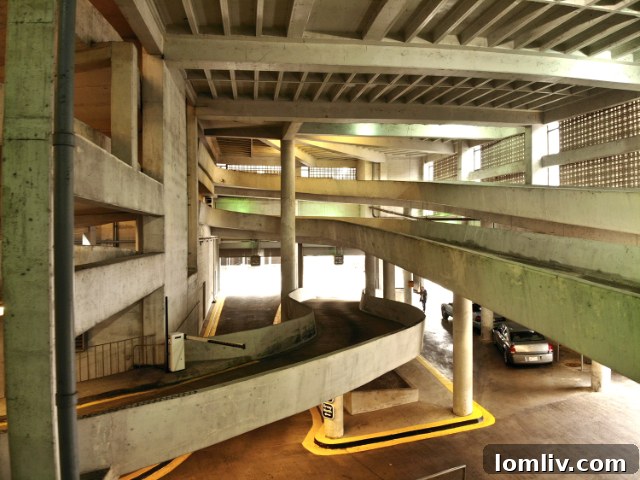
So there you have it: a compelling narrative encompassing the ghostly presence of Frank Lloyd Wright’s unbuilt masterpiece, the immense wealth of a pioneering Texas oil family, an intriguing dash of nepotism, the visionary architect behind the “eighth wonder of the world,” and the audacious claim of being “the world’s most beautiful parking garage.” The DalPark Garage, a product of its time and a testament to Dallas’s enduring urban challenges, is not just a relic of the past. It will soon transform into a vital new station on the very subway line that urban planners have advocated for decades, gracefully transitioning from a symbol of automotive necessity to a beacon of sustainable public transit. This historic structure, once a solution for cars, is now set to solve the very problem of congestion that necessitated its existence in the first place, offering a vital link to the future of downtown Dallas. Pretty cool, indeed.