Fair Park Under Scrutiny: Dallas City Council Launches Comprehensive Audit of Key Partners
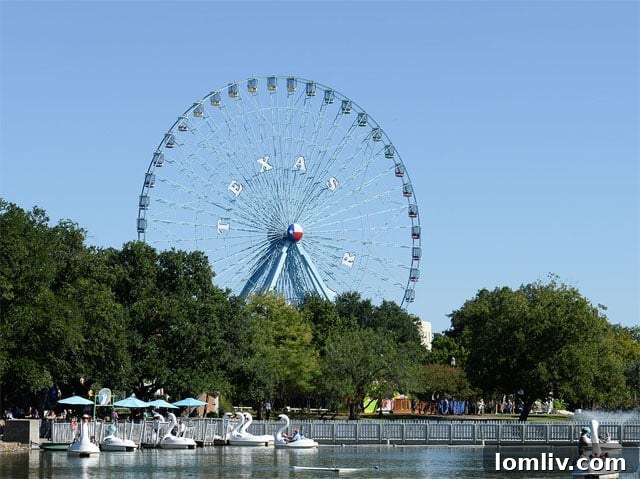
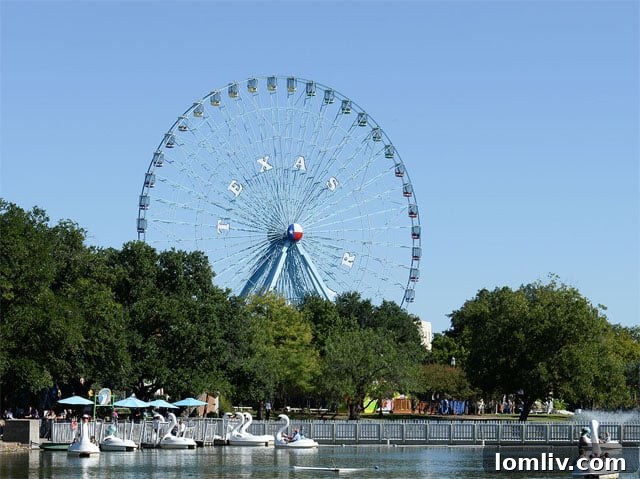
Fair Park in Dallas, a sprawling National Historic Landmark renowned for its stunning Art Deco architecture and its role as the long-time home of the State Fair of Texas, found itself at the center of a significant municipal inquiry. In December, two prominent members of the Dallas City Council initiated a formal request for a thorough audit into the operations of Fair Park’s major business partners. This move signaled a growing concern within city leadership regarding the financial contributions and operational transparency of entities utilizing one of Dallas’s most valuable public assets.
The individuals championing this call for accountability were Council members Phillip Kingston and Jennifer Staubach Gates. Their request underscored a broader sentiment of skepticism, particularly concerning the State Fair of Texas, one of the park’s most prominent occupants. The impetus behind their action stemmed from a desire to ensure that all partners operating within Fair Park were not only meeting their contractual obligations but also contributing equitably to the preservation and advancement of this historic site.
“There is broad skepticism that the State Fair is a legitimate nonprofit,” stated Philip Kingston, who held the vice-chair position on the council’s Budget, Finance and Audit Committee at the time. Alongside Jennifer Gates, the committee chair, he dispatched a detailed memo to City Auditor Craig Kinton. The memo explicitly requested “an evaluation of financial, operational, or other risks that may currently relate to these business partners,” highlighting the proactive stance of the council in safeguarding public interests and assets.
Unpacking the Scope: Entities Under Review
The audit initiated by the City Council was designed to be comprehensive, extending beyond just the State Fair of Texas to include a diverse array of organizations that call Fair Park home. This broad scope reflects the complex ecosystem of cultural, entertainment, and educational institutions that collectively define Fair Park’s identity and contribute to its public value. Each entity plays a vital role in drawing visitors and enriching the community, making their financial and operational health paramount to the park’s overall sustainability.
Among the partners slated for review were the **Texas Discovery Gardens**, a unique botanical garden and butterfly house dedicated to environmental education and conservation. The audit also encompassed the **Gexa Energy Pavilion**, a major outdoor amphitheater that hosts a variety of concerts and live events, drawing large crowds and generating significant revenue. The family-friendly **Children’s Aquarium at Fair Park** was also included, recognized for its role in educating younger generations about marine life and conservation.
Furthermore, the review extended to what were broadly termed “the cultural centers,” which include a collection of museums and the historic Music Hall. These institutions are custodians of art, history, and performance, contributing significantly to Dallas’s cultural landscape. The audit aimed to understand the financial models and operational efficiencies of these diverse partners, ensuring they align with the city’s vision for Fair Park as a vibrant, accessible, and well-maintained public space.
The State Fair of Texas: A Giant Under the Microscope
At the core of the audit, and perhaps the primary catalyst for its inception, was the **State Fair of Texas**. Operating as a non-profit entity, the State Fair transforms Fair Park for approximately 100 days each autumn into a spectacle of entertainment, agriculture, and Texas culture. True to the state’s reputation, the State Fair of Texas is renowned as one of the largest and most successful state fairs in the entire country, drawing millions of visitors annually and generating substantial economic activity for Dallas.
The city’s contractual agreement with the State Fair of Texas is long-term, extending through January 1, 2028. This enduring partnership makes the operational and financial health of the Fair, as well as its contributions to Fair Park, a critical concern for city officials. The audit sought to scrutinize the intricacies of this relationship, particularly given the public resources involved in maintaining the Fair Park grounds that the State Fair utilizes.
Financial Boom Amidst Skepticism
Despite the “non-profit” designation and the broad skepticism surrounding its legitimacy, the State Fair of Texas has consistently demonstrated robust financial performance. Reporting from The Dallas Morning News by Robert Wilonsky highlighted the Fair’s impressive revenue generation. In 2015, the State Fair of Texas achieved record-breaking revenue, bringing in an astonishing $53.6 million in coupon sales alone. This figure represented a significant increase of $10 million compared to its 2014 earnings, underscoring its immense commercial success.
While these financial achievements are undeniably impressive, they paradoxically fuel the skepticism surrounding the Fair’s non-profit status. Critics argue that such substantial revenues should translate into more significant contributions towards the upkeep and restoration of Fair Park itself, especially given the pressing infrastructure needs of the site. The disconnect between the Fair’s financial prowess and the park’s deteriorating conditions became a central point of contention for those advocating for the audit.
It’s a tale of two realities: the State Fair of Texas flourishing with record sales, while the very grounds it occupies grapple with monumental deferred maintenance. The question posed by the audit is whether this financial success is adequately leveraged for the benefit of the public asset from which it profits.
Fair Park’s Structural Crisis: A Half-Billion Dollar Problem
Beyond the operational questions facing its partners, Fair Park itself is wrestling with a profound and urgent crisis: the dilapidation of its historic infrastructure. Many of Fair Park’s iconic buildings, marvels of Art Deco design, were originally constructed or extensively renovated for the 1936 Texas Centennial Exposition. While these structures embody a rich historical legacy, decades of deferred maintenance and the natural toll of time have left them in dire need of repair.
The situation is stark: briefings to the City Council have estimated that Fair Park’s aging buildings require approximately $500 million worth of extensive rehabilitation and restoration work. This staggering figure represents the cost to bring these historical treasures up to modern standards of safety, functionality, and preservation. Moreover, the park needs an additional “$125 million to $175 million in the next several capital bond programs for specific improvements” beyond the core building repairs. This highlights a continuous need for significant capital investment to ensure Fair Park’s future viability and enhance its offerings.
The challenge of securing such substantial funding is compounded by the city’s broader infrastructure needs. Dallas voters were expected to consider a billion-dollar bond program in 2017, with city officials indicating that a significant portion of these funds would necessarily be allocated to addressing Dallas’s rapidly deteriorating streets and other critical public infrastructure. This creates fierce competition for limited resources, making the allocation for Fair Park a contentious political debate.
The pressing question is how to balance the need to preserve a National Historic Landmark with other essential urban development priorities. The audit, by shedding light on the financial health of Fair Park’s partners, could potentially inform discussions on new funding models or increased contributions from those entities benefiting most from the park’s existence.
The Executive Pay Controversy: Non-Profit Ethics Under Fire
One of the most contentious issues that brought the State Fair of Texas under intense public and council scrutiny was the compensation of its top executives. The figures, once revealed, sparked outrage and fueled the perception that the “non-profit” designation was being exploited. The former president of the State Fair of Texas, Errol McKoy, drew an annual salary that raised eyebrows across the city and beyond.
McKoy’s compensation package, exceeding $880,805 annually, became a flashpoint in discussions about non-profit accountability. Many questioned how such a large sum could be justified for the head of an organization that operates for roughly three months a year, particularly when the public asset it utilizes was in such desperate need of financial support. The public outcry was palpable, underscoring a fundamental concern about the allocation of funds within an entity benefiting from public land.
His successor, Mitchell Glieber, while earning a comparatively lower salary of over $300,000 annually, still commanded a substantial income for a non-profit executive. This figure, though less than McKoy’s, continued the trend of high executive pay at the State Fair, even as Glieber was credited with bringing in record-breaking sales. This paradox – high executive salaries coinciding with calls for increased contributions to Fair Park’s repairs – only intensified the debate.
According to the State Fair’s 2013 Form 990 filed with the Internal Revenue Service, its top nine-compensated employees collectively accounted for an astounding $3 million in salaries, bonuses, and incentives. Within this, then-president Errol McKoy pocketed $880,805 in total income, while Mitchell Glieber, who would later take the helm, received over $300,000. This pattern of executive compensation drew the attention of local media. As early as 2010, D Magazine published an investigative piece famously headlined “The State Fair of Texas Scam,” which specifically highlighted that its president earned significantly more than any other state fair manager in the country, noting that “his peers don’t even come close.” This long-standing issue of executive pay has been a consistent point of contention, raising questions about the ethical implications of such compensation within a non-profit organization that operates on public land.
Looking Ahead: The Future of Fair Park and Accountability
The comprehensive audit initiated by the Dallas City Council represents a critical juncture for Fair Park and its myriad partners. It underscores the city’s commitment to ensuring transparency, accountability, and the sustainable future of one of its most cherished historical and cultural assets. The findings of this audit are expected to provide invaluable insights into the financial health, operational practices, and potential risks associated with the entities operating within Fair Park.
The outcome will likely influence future discussions regarding lease agreements, financial contributions from partners, and the long-term governance model for Fair Park. It could also pave the way for new strategies to address the half-billion-dollar infrastructure deficit, potentially through increased private contributions, innovative public-private partnerships, or dedicated bond funding. Ultimately, the audit aims to foster a more equitable and beneficial relationship between the City of Dallas, its Fair Park partners, and the citizens who treasure this iconic landmark. The goal is to ensure that Fair Park not only survives but thrives for generations to come, continuing its legacy as a vibrant center of culture, entertainment, and history.