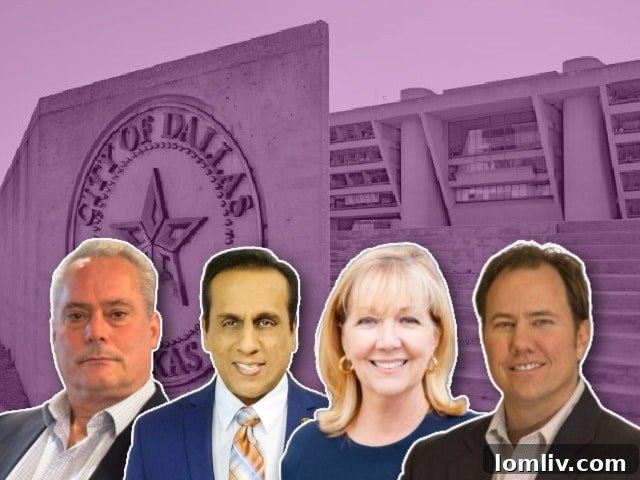
Editor’s Note: This article is the third installment in a comprehensive series offering insights from candidates vying for a seat in the upcoming Dallas City Council election on May 6. As part of our commitment to informed civic participation, daltxrealestate.com distributed detailed questionnaires to all candidates. Over the next several days, we will continue to unveil their thoughtful responses. Notably, candidates representing Districts 1, 4, 5, 6, 7, 8, 9, and 12 did not submit their responses to our questionnaire. Early voting for these crucial elections commences on April 24, underscoring the importance of understanding each candidate’s vision for Dallas’s future, particularly for District 10 residents.
Candidate Spotlight: Kathy Stewart – A Vision for District 10’s Future
Competing Against: Sirrano Keith Baldeo, Brian Hasenbauer, and Chris Carter
Current Incumbent: Adam McGough (Term-limited and not seeking re-election)

Why is Dallas a magnet for corporate relocations and new residents, outperforming national trends?
Dallas’s remarkable ability to attract major corporate relocations and a consistent influx of new residents stems from its dynamic and appealing environment. Corporations actively seek vibrant communities that are not only business-friendly but also family-centric, offering unparalleled accessibility via major transportation hubs like DFW International Airport. Beyond logistics, Dallas stands out with significant investments in its flourishing arts and culture scene, coupled with the excitement generated by its professional sports teams. It is a city that fosters economic opportunity, providing a robust job market, access to high-quality educational institutions, and a diverse array of attractive neighborhoods. District 10, for example, embodies many of these desirable traits with its picturesque rolling hills, mature trees, and convenient access to natural amenities such as White Rock Lake and the Dallas Arboretum, all within quick reach of downtown Dallas. The presence of excellent Richardson Independent School District (RISD) schools further solidifies D10’s reputation as an ideal location for families seeking to live, work, and recreate. However, District 10’s most invaluable asset remains its strong, interconnected community, a diverse tapestry of individuals—reflected in its multi-lingual schools—who actively engage and thrive through their neighborly connections.
Which areas within District 10 are poised for a significant housing boom in the coming years?
In District 10, the current housing boom is primarily concentrated within its well-established residential neighborhoods. We are observing a distinct trend where existing homes are either undergoing extensive, high-quality remodels or are being replaced entirely by much larger, modern residences. This revitalization is fueled by young families discovering the undeniable strengths of our RISD schools and the district’s highly desirable location. As these families choose to move into District 10, they are making substantial long-term investments in their homes, confident in the community’s enduring value and appeal. This organic growth within existing neighborhoods is transforming the housing landscape without necessarily requiring new land development.
What key developments in District 10 are paving the way for future growth, and how do you propose to support this expansion?
The extensive improvements to the LBJ East corridor, particularly the construction of the new tied arch bridge at Skillman and LBJ, are pivotal in positioning District 10 for significant future growth. These infrastructure enhancements promise new development opportunities along the corridor and at this vital intersection. The LBJ East project introduces a safer highway system and, crucially, continuous frontage roads—a feature District 10 has never enjoyed before—significantly improving local access. The aesthetically pleasing tied arch bridge at Skillman and LBJ serves as a beautiful new gateway into D10, thoughtfully incorporating dedicated bike and pedestrian lanes. I am confident that these continuous frontage roads will act as a catalyst, encouraging strategic redevelopment along the corridor with properties designed to face the freeway, now benefiting from enhanced accessibility. The new bridge will not only provide a stunning visual entry point but also vastly improve the functionality and overall aesthetics of the Skillman and LBJ intersection. Collectively, these enhancements are expected to boost property values throughout and around the corridor, thereby creating fertile ground for thoughtful redevelopment across the entire area. To ensure this redevelopment is balanced and meticulously planned, I advocate for the immediate initiation of an Area Plan for the LBJ East corridor. This collaborative process, involving City staff and residents, will empower the community to collectively articulate a compelling vision for the future of the LBJ East corridor.
How can the City of Dallas improve the redistricting process, and what positive impact would this have on District 10?
District 10 stands as a truly cohesive neighborhood, characterized by a strong, unified community spirit. Our district identifies strongly as one integrated neighborhood, a sentiment particularly reinforced by the fact that many of our high school students attend the singular public high school within our boundaries, Lake Highlands High School. For District 10, an improved redistricting process would primarily involve safeguarding the integrity and existing boundaries of our community. We would strongly advocate against losing any portion of our current district, as such changes could disrupt the established social fabric and school feeder patterns that contribute significantly to our community’s strength and identity. Maintaining our current, recognized boundaries ensures that our collective voice remains unified and effectively represented in City Council decisions, allowing our district to continue to thrive as a cohesive entity.
How would you vote regarding the allowance or restriction of short-term rentals (STRs) in residential neighborhoods?
During countless conversations and meetings with District 10 residents, the topic of short-term rentals consistently emerged as a significant concern. It is abundantly clear that the majority of single-family homeowners in D10 unequivocally oppose the presence of short-term rentals within their traditional residential neighborhoods, a stance with which I wholeheartedly concur. Our community has, unfortunately, experienced far too many weekends marred by “party houses,” leading to issues such as overcrowding, excessive alcohol consumption, and disruptive noise. Consequently, I would actively support a ban on short-term rentals in neighborhoods explicitly zoned for single-family residential use. However, I also recognize the complexity of this issue; multi-family property owners often hold a different perspective and have distinct experiences with STRs, desiring to retain the right to this use. Furthermore, there may be property owners who rely on short-term rentals to supplement a fixed income, or those in neighborhoods with higher density or closer proximity to entertainment districts who wish to preserve their right to operate STRs. Any viable solution must be carefully crafted to acknowledge and address these diverse perspectives and experiences, seeking a balanced approach that protects residential quality of life while respecting legitimate property owner interests.
What are your thoughts on the Public Facility Corporation (PFC) financing structure for multifamily development?
Public Facility Corporations (PFCs) represent a relatively nascent, yet increasingly utilized, housing tool designed to provide significant property tax exemptions for private apartment developers. They primarily serve as a mechanism for fostering mixed-income housing, typically adhering to a general guideline of 50% market-rate units and 50% affordable units. It is an undeniable fact that Dallas faces an urgent need for a greater supply of affordable housing units across the city. In this context, PFCs, when deployed with the right developer in a suitable location, appear to be a viable and effective tool to help address this critical housing shortage. Their ability to incentivize developers through tax benefits can unlock projects that might otherwise be financially unfeasible, contributing positively to the city’s affordable housing goals.
How do you intend to engage with the public and local media once elected?
Effective communication between the Councilmember and the residents is paramount to fostering an informed and engaged community. My plan for engagement is multifaceted and designed to ensure consistent and transparent dialogue. I intend to implement regular newsletter emails, providing timely updates and information directly to constituents. Furthermore, I will host periodic town hall meetings, offering direct opportunities for residents to voice their concerns, ask questions, and interact with their representative. I also hope to continue the highly beneficial D10 monthly meetings, which provide consistent updates on ongoing projects and create valuable avenues for collaboration with community members. With local media, I will welcome and encourage open dialogue, always striving for maximum transparency in all communications to keep the public well-informed about city affairs and District 10 initiatives.
What is your stance on utilizing historic and conservation districts to safeguard a neighborhood’s unique character?
I am a strong proponent of employing both historic and conservation districts as essential tools for preserving a neighborhood’s rich history and distinctive character. My professional experience, particularly the three years I spent working in Uptown, instilled in me a deep appreciation for our historic trolley system and the unique charm of the State Thomas neighborhood. This experience reinforced the value of protecting architectural heritage and community identity. Similarly, Lake Highlands possesses its own compelling history that deserves to be meticulously preserved. We must actively seek out opportunities to tell the stories of the families and communities who shaped our district, ensuring that their legacy endures and continues to inform our present and future development.
What roles do developers and the city play in addressing the need for affordable housing?
Providing safe, quality, and affordable housing is not merely a local issue but a pressing nationwide imperative. The City of Dallas is rightly focused on significantly increasing its affordable housing stock. However, it’s crucial to acknowledge the existing distribution: a May 2021 City of Dallas memo revealed that District 10 currently bears a disproportionate share, possessing more low-income housing units than any other district. With this reality firmly in mind, District 10 understands that it will still need to responsibly absorb some additional affordable housing. It is a shared responsibility, and every district across Dallas must contribute its fair share to this vital effort. My top priority in this endeavor will be robust community engagement, initiated early in the process. This proactive approach ensures that developers have ample opportunity to hear directly from residents, understand their concerns, and respond thoughtfully. My most significant concern is preventing the concentration of new affordable housing projects in any single area of the district, which could lead to unintended consequences and strain on resources. I am committed to working collaboratively with both developers and city staff to achieve a balanced and equitable distribution of affordable housing solutions across District 10.
What specific projects or needs in District 10 should be prioritized in the upcoming 2024 bond program?
My comprehensive plan for the 2024 bond program in District 10 involves the creation of a dedicated bond task force. This task force will comprise representatives from diverse neighborhoods and individuals possessing a variety of skills, ensuring a holistic and inclusive approach. Their primary objective will be to meticulously compile a detailed inventory of needs across various crucial areas: parks and trails, critical creek erosion mitigation, essential street improvements, and broader transportation enhancements. Throughout this process, a central guiding principle will be the improvement of connectivity across the district. For instance, I am aware of two specific parks in urgent need of bond funds: Orbiter Park and the nascent park at Forest/Audelia. Orbiter Park requires crucial investments in playground equipment and a new pavilion to serve its community effectively. For the new park at Forest/Audelia, funds are necessary to complete its development plans and bring this valuable green space to fruition. Furthermore, enhancing connectivity from our new bridge at Skillman and LBJ is a critical transportation priority. While I possess a strong understanding of many of our district’s needs, establishing this inclusive task force is vital to ensure that our needs inventory is thorough, representative, and truly reflects the collective priorities of District 10 residents.
Candidate Spotlight: Sirrano Keith Baldeo – A Call for Reconstruction in District 10
Competing Against: Kathy Stewart, Brian Hasenbauer, and Chris Carter
Current Incumbent: Adam McGough (Term-limited and not seeking re-election)

Why do you believe Dallas continues to attract corporate relocations and new residents at a greater frequency than the rest of the nation?
Dallas’s undeniable allure for corporate relocations and new residents can be attributed to several compelling factors that position it as one of the world’s foremost corporate headquarters centers. A significant draw is the favorable tax environment: both Dallas residents and businesses benefit from the absence of local or state income tax in Texas. In fact, Texas boasts the fifth-lowest total state tax burden among all U.S. states, creating a highly attractive fiscal landscape. Beyond taxation, Dallas offers a robust and healthy economy supported by a highly skilled workforce, providing a substantial talent pool for major corporations. The city is home to a high concentration of college-educated adults, attracting young professionals seeking career opportunities. Furthermore, the overall cost of living in Dallas remains competitive compared to other major metropolitan areas. Texas also provides excellent infrastructure and diverse, efficient transportation options, both within and surrounding the city, making it a truly business-friendly hub.
What specific areas within your district could experience a housing boom in the coming years?
Unfortunately, the past leadership in District 10 has not strategically developed the area to foster an urban environment conducive to a housing boom. Upon my election, one of my primary tasks will be to undertake a comprehensive reconstruction and reevaluation of the commercial and residential zoning, aiming to optimize the district for growth. While there are currently isolated pockets within District 10 that show potential for good housing development, previous leadership regrettably failed to adequately prepare the district for such expansion. My three opponents, two of whom have been involved in government, have, in my view, remained inactive on this crucial issue. Consequently, I am now left with the significant responsibility of reconstructing District 10 to effectively accommodate any future housing boom and align it with the broader growth trajectory of Dallas.
What current developments in your area could stimulate growth for District 10, and how do you plan to support them?
Regrettably, at present, very little is occurring that genuinely positions District 10 for substantial growth. While Lake Highlands recently saw the construction of a few new businesses on Skillman Street at Walnut Road, and existing businesses are replaced when they vacate, there has been a noticeable lack of evaluation and strategic planning for growth or housing in other parts of District 10 over the last decade. District 10 has, sadly, missed numerous opportunities to attract the kind of large corporations that are relocating to downtown Dallas and other thriving areas. Moreover, the minority community within District 10 remains largely unrepresented, and until voters make the decisive choice to elect a minority representative to address these critical concerns, the situation is likely to persist. I offer District 10 a visionary leadership capable of ensuring the district keeps pace with the overall growth and dynamism of Dallas. Let me illustrate a past poor decision and a significant missed opportunity under the watch of my three opponents: a pain relief center, located directly opposite the Walmart on Forest, was approved for conversion into a carwash. This decision was made despite another carwash already operating just up the street. That property could, and should, have been offered and approved to accommodate one of the major corporations moving to Dallas, which would have significantly enhanced the area. A multi-level development could have housed ten businesses on one floor and corporate offices on others, truly elevating the district. When comparing these types of shortsighted decisions to the proactive growth strategies seen across Dallas, it becomes evident that new leadership is imperative. My three opponents have been present for years, yet District 10 has seen no significant advancement mirroring that of other Dallas districts. Lake Highlands holds the majority of votes, and historically, they do not elect minority candidates. Until they realize that continually voting for the same individuals yields the same underwhelming results, the inevitable influx of new residents will eventually reshape the demographic landscape. My role as Councilman will be to strategically build up the District, ensuring its safety and security, and to proactively prevent such disenfranchisement, a task I am confident I can accomplish.
How can the City of Dallas improve its redistricting process, and what positive impact would this have on District 10?
The previous councilman deliberately testified to maintain District 10’s existing boundaries, a decision that, in my view, intentionally perpetuated segregation within the district. His actions reflected a desire to keep the district as it was, which has historically been the last district to vote in favor of maintaining symbols associated with the Confederate cause. This sentiment, I believe, implicitly suggested that Black and minority communities, like my own, should primarily serve to enrich white residents, and this stance was not discreetly held; there was a public struggle for supremacy. All three of my opponents, directly and indirectly, supported this councilman, particularly when he sought a public display of racism with the Confederate monument. Two even utilized their government positions to financially back him. They were unequivocally clear in their desire to maintain District 10’s segregation from its Black and minority sides. I too spoke extensively on redistricting, advocating for an expansion of the district boundaries to achieve a more balanced voting block. Interestingly, many other white residents shared this perspective, but the councilman aggressively pushed to keep the district unchanged, a move that has severely disenfranchised the minority community. A review of voter turnout in the last four elections starkly illustrates this negative impact on my district: a stark imbalance of 90% white voters versus a mere 10% minority votes. The fundamental purpose of redistricting is to ensure voting fairness, balancing representation between minorities and whites, as well as between Republicans and Democrats. Now, we face another ten-year wait to rectify this shameful situation. My hope is that more minority residents will move into the district, thereby offsetting the existing segregation. Alternatively, if I am elected as the first minority councilman, we can proactively move past these divisive issues and work towards genuine equity.
How would you vote on the matter of allowing or restricting short-term rentals in residential neighborhoods?
I believe individuals possess a constitutional right to utilize their homes as they deem fit. However, this right must be balanced with the equally important principle that residents should not be subjected to the disturbances, noise, and potential crime that can often accompany short-term rentals. My conviction is that quiet neighborhoods, which form a crucial part of our tax base, must be safeguarded from such intrusions. Therefore, I advocate for addressing short-term rentals on a meticulous, case-by-case basis. If, for instance, a homeowner innocently rents their property for a temporary period to a business professional, a non-party group, or a family seeking an affordable alternative to a hotel, I would consider supporting an application to the city for such a use. However, I unequivocally state that I will not approve overnight party houses or properties that habitually disturb my constituents with excessive noise or unruly behavior. The goal is to strike a sensible balance between property rights and the preservation of neighborhood tranquility.
What are your sentiments regarding the Public Facility Corporation (PFC) financing structure for multifamily development?
We are currently grappling with a specific project in the minority community along Cypress Creek that is leveraging the Public Facility Corporation (PFC) financing structure. This particular developer is utilizing this mechanism to secure an extraordinary 75-year tax break, which represents a significant diversion of funds that would otherwise flow to essential public services—police, taxpayers, road maintenance, and other critically needed areas. It is paradoxical that we initiate this discussion on attracting corporate relocations involving some of the world’s largest companies, only to find ourselves discussing “cheap housing” and 75-year tax breaks potentially tied to bonding. This very scenario underscores my argument that District 10 must actively keep pace with the broader economic boom of Dallas, attracting large corporations and fostering housing developments that align with the high-quality employment opportunities they bring. Regrettably, some developers seeking to introduce such housing in Dallas are bypassing South Dallas, opting instead to “dump” these projects into specific pockets of North Dallas. Under my vigilance, District 10 will ensure that the demand for growth is met equitably and responsibly, reflecting the overall advancement and prosperity of Dallas.
How do you plan to engage with the public and local media?
For over a year, I personally operated a newspaper, primarily dedicated to exposing public corruption and incompetence. This endeavor led to the government spending approximately $1.4 million in attempts to shut me down, even going so far as to target my wife in an effort to intimidate me. Since relocating to Dallas, I have uncovered certain issues that, if published, would likely put my life at risk. However, as a Councilman, I am an integral part of the government and, in essence, I embody the media. Therefore, I will strategically utilize my office to transparently provide information on matters that directly affect my constituents. I will also appoint a dedicated media liaison for the press, ensuring that journalists will not have to resort to filing arduous Public Information Requests (OPRA, likely referring to FOIA-equivalent) for information that my liaison can readily provide. I am confident that daltxrealestate.com, as a media outlet, also experiences challenges in obtaining timely information from City Hall, a barrier I am committed to dismantling.
What are your thoughts on using historic and conservation districts to preserve a neighborhood’s character?
My recent efforts to prevent the destruction of The CornerStone Church, utilizing the principles of preservation, clearly demonstrate my stance. Therefore, I believe that if a building or area holds significant value to the public and residents express a desire to preserve it, then employing historic and conservation districts is an excellent and necessary idea. These tools are vital for safeguarding the architectural and cultural heritage that contributes to a neighborhood’s unique identity.
What is the role of a developer in providing affordable housing, and what is the role of the city?
When it comes to affordable housing, we must exercise extreme vigilance and careful oversight of developers. When they attempt to locate affordable housing projects within high-opportunity zones, they risk diminishing the value and potential of that property. If a developer bypasses the vast 60% of available land in South Dallas to instead focus on North Dallas for such projects, this raises immediate concerns and demands to be addressed. The fundamental question that must be posed is: why are you not prioritizing the development of low-income areas, which often possess ample space and a greater need for such investment? Developers, by their very nature, are primarily driven by the bottom line; that is their inherent role. The city, conversely, must exercise caution to avoid becoming directly entangled in the real estate business. Our core responsibilities lie in maintaining a balanced budget, keeping taxes low, ensuring public safety, and establishing effective laws. Crossing these boundaries risks disrupting the harmonious and efficient functioning of City Hall. While City Hall does operate a Homeless Solutions office, tasked with receiving specific federal funds for housing initiatives, the ultimate decision regarding proposed housing projects within a district rests with the councilman. It is up to the elected representative, in collaboration with constituents, to articulate the arguments for or against such proposals. The outgoing councilman, for instance, regrettably mishandled three significant proposals, including one at 12000 Greenville Ave. It is a reality that no city in the United States can unilaterally provide sufficient affordable housing for all. However, it is unacceptable to possess abundant land in South Dallas without fostering housing development that includes essential shopping, businesses, and other amenities. Dallas is currently experiencing a significant influx of people, both from outside the city and those being directed here, and we must be adequately prepared for this continuous growth.
What projects or needs in your district should be prioritized in the 2024 bond package?
My absolute top priority for District 10 in the 2024 bond package is addressing crime. To this end, I intend to rebrand and reimagine the police department within District 10 as the “District 10 Defense Force,” signaling a new look and perspective on how our law enforcement operates. Any bond money secured under my leadership will be channeled directly towards establishing a comprehensive police substation, which would also include a courthouse and a holding station within the district. Furthermore, I have personally appeared before the Dallas County Commissioners Court on four separate occasions, twice pleading at the microphone for funding for a crucial multi-purpose center, yet my requests were never met with assistance. Therefore, securing funds for this vital community resource would also be a high priority. The overarching purpose of being an elected official is to genuinely help people, not to view public service as just another job or, worse, as an opportunity for personal enrichment. Finally, I am deeply concerned about the implications of bonding money, particularly due to the very high interest payback burden it places on taxpayers. Any bonding must be approached with extreme fiscal prudence.
Candidate Spotlight: Brian Hasenbauer – Driving Growth and Community Safety in District 10
Competing Against: Kathy Stewart, Sirrano Keith Baldeo, and Chris Carter
Current Incumbent: Adam McGough (Term-limited and not seeking re-election)
Why do you think Dallas continues to attract corporate relocations and new residents at a greater frequency than the rest of the nation?
Dallas’s exceptional appeal for corporate relocations and its consistent attraction of new residents can be largely attributed to its strong pro-business mindset, favorable low-tax environment, and a robust, continually expanding economy. These factors create a fertile ground for enterprise and opportunity. However, to sustain and enhance this growth, we must critically evaluate and significantly improve our current commercial and residential permitting processes. These processes are often inefficient and cumbersome, posing a real risk of discouraging vital development and potentially leading to a loss of new projects and crucial tax revenue to surrounding suburban areas. Streamlining these administrative hurdles is essential to maintaining Dallas’s competitive edge.
What areas in your district could see a housing boom in the next few years?
District 10 holds significant potential for a housing boom in various areas currently experiencing a transition. Many neighborhoods are witnessing a shift from older, established houses to modern, newly constructed homes. This natural evolution is set to substantially increase the number of new housing developments across the district. Specifically, areas located North of 635 are particularly ripe with potential for considerable growth and revitalization, signaling promising opportunities for both residents and developers in the coming years.
What is occurring in your area that could poise your district for growth, and how can you support that?
The successful completion of the 635 East project, coupled with the creation of continuous frontage roads, is a transformative development that will strategically position the areas along 635 for significant economic and residential growth. This enhanced infrastructure will improve accessibility and open up new avenues for development. To maximize this potential, I propose the establishment of a dedicated 635 Task Force. This collaborative body would bring together key stakeholders, including representatives from the Lake Highlands Chamber of Commerce, local businesses, engaged residents, and respected neighborhood leaders. The task force’s crucial role would be to collectively envision and strategize the most beneficial and sustainable uses for this revitalized corridor, ensuring that future development aligns with community interests and contributes positively to District 10’s overall prosperity.
How can the City of Dallas improve the redistricting process, and how would that positively impact your district?
The City of Dallas can significantly enhance the fairness and effectiveness of its redistricting process by shifting the approach to solicit redistricting maps directly from neighborhoods, rather than relying solely on individuals to create their own plans. This community-centric method would foster a much greater consensus around desired redistricting boundaries, as it would reflect the collective will and identity of established communities. For District 10, such an improvement would ensure that our distinct neighborhoods and their unique characteristics are respected and maintained, preventing arbitrary divisions that can disrupt community cohesion and dilute local representation. A process driven by neighborhood input would result in boundaries that truly serve the residents, strengthening the district’s ability to advocate for its specific needs and priorities.
How would you vote on the matter of allowing or restricting short-term rentals in residential neighborhoods?
When it comes to the complex issue of short-term rentals (STRs) in residential neighborhoods, I would advocate for what I call the “KISS solution,” or the recently refined “KISS 2.0.” My fundamental belief is that we should actively encourage homes to remain homes, not allow them to operate as commercial hotels within residential zones, thereby prioritizing the safety and peace of our neighbors. The immediate imperative is to establish a comprehensive registration system for all current STRs. This would not only generate much-needed tax revenue for the city but also enable us to closely monitor their operations. Critically, this system would empower authorities to identify and effectively address “bad actors”—those property owners who consistently generate complaints or disturbances—and facilitate their delisting from operating as short-term rentals if concerns or violations persist. This approach balances property use with community well-being.
What are your thoughts on the Public Facility Corporation (PFC) financing structure for multifamily development?
As a financial instrument, I appreciate the underlying concept of Public Facility Corporation (PFC) financing for multifamily development. It has the potential to facilitate much-needed housing projects. However, I hold significant reservations regarding the often-proposed 75-year lease period. This duration seems excessively long unless the agreements include robust and easily enacted clauses for reversion of control back to the city. Such clauses are crucial to ensure not only quality management throughout the entire lease term but also to guarantee that only responsible, long-term actors are involved. We must proactively prevent a scenario where the city is locked into an extended agreement with a poorly managed or problematic developer, especially when the underlying property remains a valuable city asset. Transparency and accountability, with clear escape clauses, are essential to mitigate these long-term risks.
How do you plan to engage with the public and local media once elected?
Upon election, my engagement strategy with both the public and local media will be proactive, multifaceted, and transparent. I plan to host a weekly YouTube/Facebook Live session, providing a consistent platform to discuss pressing issues and directly engage with constituents in real-time. Quarterly, I will convene public meetings where all our boards and commissioners will present updates on issues and developments within their respective areas, fostering greater accountability and soliciting direct feedback from the community. Furthermore, I am committed to regularly updating the district’s website, issuing frequent e-newsletters, and distributing printed newsletters to ensure broad dissemination of information. My presence on social media will also be significantly enhanced to facilitate broader interaction. Finally, I aim to continue the “Collective Impact” initiative, but with a renewed focus on making it more constructive, inclusive, and genuinely responsive to community needs and aspirations.
What are your sentiments on using historic and conservation districts to preserve a neighborhood’s character?
I firmly believe that historic preservation and conservation areas are invaluable and highly effective tools for safeguarding the unique character and rich heritage of our neighborhoods. These districts offer a structured framework to protect architectural integrity, maintain aesthetic appeal, and ensure that the historical essence of a community endures for future generations. My stance is that these tools should be judiciously utilized wherever and whenever possible, applying them strategically to areas that warrant their protective measures to maintain their distinctive charm and cultural significance. They are key to preventing uncontrolled development and preserving what makes each neighborhood special.
What is the role of a developer in providing affordable housing, and what is the role of the city?
The developer’s pivotal role in providing affordable housing is to create projects that are not only financially attractive to investors (especially if they are not non-profit entities) but also harmonize with surrounding neighborhoods and ultimately serve the prospective tenants effectively. The primary objective should be to deliver a thoughtfully designed property that incorporates early public input and secures strong stakeholder support. Such developments should aim to genuinely improve the neighborhoods in which they are built. I strongly encourage developers to target a limit of 40% affordable units within their projects. This percentage allows them to achieve a satisfactory return on their investment while simultaneously contributing new, much-needed affordable housing units to the community. The City of Dallas, conversely, has a crucial role to play as a partner in this endeavor. Its responsibilities include collaborating with developers, Community Home Development Organizations (CHDOs), and other relevant entities to provide essential funding mechanisms—potentially through strategic partnerships, grants, HUD funding, or county resources. Additionally, the city can contribute land, infrastructure, or other vital resources to responsibly and thoughtfully increase the overall affordable housing stock, ensuring that growth is managed sustainably and equitably across Dallas.
What projects or needs in your district should be given priority in the 2024 bond program?
For the 2024 bond program, my top priority for District 10 unequivocally is road repair and resurfacing. The condition of our streets directly impacts daily life and infrastructure. Beyond roads, we urgently need to address the issue of speeding cars in residential neighborhoods. I prioritize adding effective traffic-calming features to our neighborhood streets, such as strategically placed 4-way stops, dedicated bike lanes to enhance safety for cyclists, and speed bumps to deter excessive speeds. Furthermore, increased capital equipment budgets are essential for purchasing new fire trucks, maintaining our critical fire stations, and ensuring all city facilities are in optimal repair. We should also consider significant investments in re-envisioning Orbiter Park and The Fair Oaks Tennis Center, transforming them into more inviting and functional recreational spaces for residents to enjoy. On a broader, city-wide scale, I advocate for including bond money for crucial initiatives such as affordable housing development, establishing new mental health treatment facilities, and creating transitional shelters for individuals experiencing homelessness who may also be battling drug and alcohol addictions, providing them with essential wrap-around services and compassionate care.
Candidate Spotlight: Chris Carter – Fiscal Prudence and Neighborhood Preservation for District 10
Competing Against: Kathy Stewart, Sirrano Keith Baldeo, and Brian Hasenbauer
Current Incumbent: Adam McGough (Term-limited and not seeking re-election)

Why do you think Dallas continues to attract corporate relocations and new residents at a greater frequency than the rest of the nation?
Dallas’s sustained success in attracting both corporate relocations and a high frequency of new residents, surpassing national trends, can be directly attributed to one primary economic advantage: the absence of state or local income tax. This fundamental fiscal benefit significantly reduces the financial burden on both businesses and individuals, making Dallas an exceptionally attractive destination for economic growth and personal prosperity.
What areas in your district could see a housing boom in the next few years?
Given the current economic landscape, characterized by persistently high inflation and elevated interest rates, I believe that a widespread housing boom in District 10 within the next few years is highly unlikely. These economic pressures typically dampen market activity and slow down significant new housing development. My focus remains on sustainable growth rather than speculative booms.
What is occurring in your area that could poise your district for growth, and how can you support that?
The ongoing rebuilding of the LBJ freeway has the potential to stimulate growth by attracting more retail businesses along the newly developed service roads. This infrastructure improvement could enhance commercial viability and accessibility. However, it is critically important that we actively prevent the construction of homeless shelters near these service roads. Such developments could inadvertently disincentivize crucial retail and commercial growth, counteracting the positive economic impact we aim to achieve. My support will be focused on fostering development that enhances the commercial appeal and economic vitality of these corridors.
How can the City of Dallas improve the redistricting process, and how would that positively impact your district?
The City of Dallas’s redistricting process is in urgent need of reform. It must be made significantly more transparent and fundamentally depoliticized. Currently, the process often appears to be influenced by partisan interests rather than community needs. A more open and unbiased redistricting process would ensure that District 10’s boundaries are drawn fairly, reflecting the true composition and interests of our neighborhoods. This would lead to more equitable representation, giving our constituents a stronger, more authentic voice in city government, and ultimately fostering greater trust in the democratic process.
How would you vote on the matter of allowing or restricting short-term rentals in residential neighborhoods?
My stance on short-term rentals in residential neighborhoods is clear and unequivocal: I will vote against allowing them. Residential areas are primarily designed for permanent homes and families, and the introduction of short-term commercial rentals often disrupts the peace, safety, and community character that residents expect and deserve. Protecting the integrity of our single-family neighborhoods is a top priority.
How do you feel about the Public Facility Corporation financing structure for multifamily development?
District 10 already bears a significant burden regarding multifamily housing, with a ratio of two apartments for every one residential home. This imbalance strains our infrastructure and alters the character of our neighborhoods. Consequently, I strongly oppose the Public Facility Corporation (PFC) financing structure for any further multifamily development in District 10. To address this saturation and allow our community to recalibrate, I will advocate for and implement a two-year moratorium on any further apartment building within District 10. This pause is essential to ensure sustainable and balanced growth that truly serves existing residents.
How do you plan to engage with the public and local media once elected?
My plan for engaging with the public and local media will prioritize consistent communication and transparent decision-making. I will regularly disseminate information through a biweekly email newsletter, keeping constituents informed about city council activities and district-specific developments. Furthermore, I will hold frequent public meetings to facilitate direct dialogue and feedback. Crucially, unlike our current city councilman, I commit to providing the required 30-day notice for any controversial development meetings, ensuring that homeowners have ample time to prepare and voice their opinions. This commitment reflects my belief that homeowners should have the final say on all rezoning issues that directly impact their neighborhoods.
How do you feel about using historic and conservation districts to preserve a neighborhood’s character?
I fully approve of and support the strategic use of historic and conservation districts as effective tools for preserving a neighborhood’s unique character and historical integrity. These designations are vital for safeguarding the architectural heritage, aesthetic appeal, and cultural significance that contribute to a community’s distinct identity. They play a crucial role in preventing indiscriminate development and maintaining the charm and value of our cherished neighborhoods.
What is the role of a developer in providing affordable housing, and what is the role of the city?
Addressing affordable housing requires a citywide balance, and District 10 currently has more than its equitable share. The role of developers is primarily to respond to market demands and city planning. However, the city’s role is not to simply greenlight more affordable housing in already concentrated areas. Instead, the City of Dallas must ensure a balanced distribution across all districts. We need to critically evaluate new proposals, ensuring they align with sustainable community development rather than exacerbating existing imbalances. Developers should build where the need is genuinely distributed, and the city must guide this process responsibly.
What projects or needs in your district should be given priority in the 2024 bond program?
My ability to prioritize specific projects or needs in the 2024 bond program is fundamentally contingent upon resolving a critical fiscal crisis facing the City of Dallas. Unless we effectively solve the staggering $4 billion in unfunded pension liabilities within the police and firefighters pension fund, the City will inevitably face a debt rating downgrade by major agencies like Standard & Poor’s and Moody’s, accompanied by a NEGATIVE outlook. In such a dire financial scenario, there will be no 2024 bond program whatsoever, as the city will be unable to access the credit markets necessary to fund any new projects. My absolute priority, therefore, must be to address and rectify these foundational fiscal challenges to ensure that any bond program, and thus any future district projects, can even be considered.