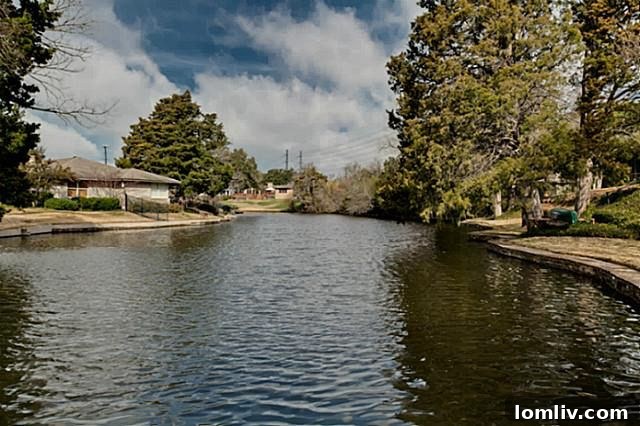
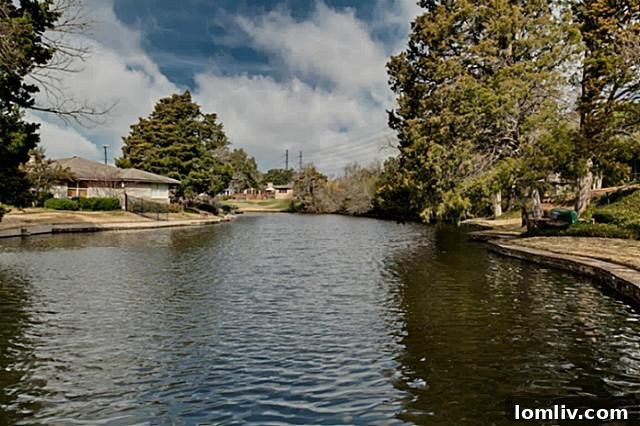
For many, the dream of living “on the water” is an ultimate real estate aspiration, often conjuring images of vast oceans, expansive lakes like Cedar Creek, or serene riverfronts. Yet, the reality of smaller waterways, particularly urban creeks, presents a different narrative. While a “creek-view lot” in a bustling city like Dallas might command a premium, the proximity to such a natural feature often comes with unique challenges, from the lurking mysteries beneath the surface to the substantial responsibilities of maintenance. It is within this context that a rather peculiar tale, dubbed “Koi-Gate,” unfolded in Northeast Dallas, offering a fascinating glimpse into local politics, environmental concerns, and the surprising realities of urban creek management. What began as a seemingly innocuous comment during a political forum quickly evolved into a captivating story that highlights the intricate relationship between homeowners, their natural surroundings, and civic responsibility.
The saga of “Koi-Gate” finds its unlikely origins amidst the fervor of a local election, illustrating how even the most unexpected details can surface during a political campaign. The central figure in this narrative is Paula Blackmon, a candidate vying for a seat on the District 9 Dallas City Council. Blackmon resides in the picturesque Briar Creek Estates, an esteemed enclave north of Mockingbird Lane. This highly desirable area is characterized by spacious half-acre lots and elegantly sprawling 1950s ranch homes, many of which have undergone meticulous renovations, alongside a scattering of newer, custom builds. Homes here rarely hit the market, a testament to the neighborhood’s enduring appeal and strong sense of community. Its unique topography, featuring three actual lakes/creeks, has even earned it the affectionate moniker, “the Venice of Dallas.” Crucially, Briar Creek itself is a significant tributary, playing a vital role in feeding into the iconic White Rock Lake, a beloved natural landmark for Dallas residents.
The ecology and maintenance of Briar Creek are central to the story. Along its winding path, twenty-two property owners share a unique arrangement: their land ownership extends to the middle of the creek, granting them joint responsibility for its ongoing upkeep. This shared stewardship comes with a significant financial and logistical burden, as anyone who has owned a portion of a natural waterway can attest. The costs associated with creek maintenance, particularly the labor-intensive and often complex process of dredging to remove accumulated silt and debris, can quickly become substantial. This underlying reality of shared responsibility and the financial implications of environmental upkeep set the stage for the unfolding “Koi-Gate” drama, bringing into sharp focus the delicate balance between property ownership and ecological preservation.
The political dimensions of “Koi-Gate” surfaced dramatically during a Tuesday evening forum hosted by the Lakewood Neighborhood Association. The event, a crucial platform for candidates to address their constituents, featured the two contenders in the District 9 run-off: Paula Blackmon and her opponent, Erin Moore. As the candidates shared their platforms and responded to community concerns, neighborhood activist Carol Bell-Walton raised a curious point. She mentioned that children playing in puddles left by recent rains near White Rock Lake had been discovering Koi fish. This observation immediately sparked questions: Where had these vibrant, ornamental fish come from? And, more alarmingly, was White Rock Lake, a cherished natural reserve, on its way to becoming an oversized Koi pond, potentially disrupting its delicate ecosystem?
In response to this unexpected query, Paula Blackmon quickly offered an explanation. She stated that her neighbors had introduced Koi and Tilapia into Briar Creek, explicitly for the purpose of controlling algae growth. This assertion, while seemingly a straightforward environmental solution, would soon become the focal point of the “Koi-Gate” controversy, raising questions about the efficacy, legality, and ecological impact of introducing non-native species into a public waterway. Blackmon’s statement opened a Pandora’s Box, inviting deeper scrutiny into the environmental practices within Briar Creek Estates and the broader implications for White Rock Lake.
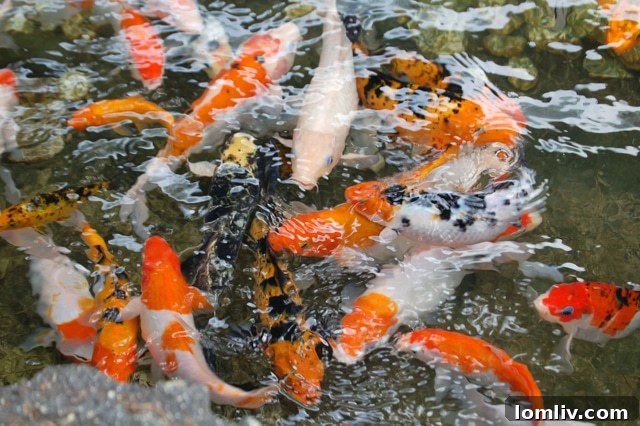
The two types of fish mentioned, Koi and Tilapia, play distinct roles in this unfolding narrative. Koi fish, originating from Eastern Asia, are celebrated globally for their striking colors and elegant patterns. Often seen as a symbol of prosperity and good fortune, Koi ponds are a coveted aesthetic enhancement for many properties. While these domesticated versions of common carp are undoubtedly beautiful, their introduction into natural waterways can carry ecological implications. For instance, Koi can contribute to increased ammonia levels in the water, which, while perhaps not the primary concern for Briar Creek’s existing challenges, underscores the potential for disruption when non-native species are introduced without careful consideration. The claim of “sterile Koi” would also later become a crucial detail in the unraveling of the story, influencing perceptions of environmental impact.
Tilapia, particularly the Mozambique Tilapia, is widely recognized for its natural ability to consume algae, making it an attractive option for aquatic weed control. Paula Blackmon further clarified the situation in a phone conversation, explaining that Lange Creek, a segment of Briar Creek, had become noticeably shallower over the years. “Years ago, it was a swimmable creek!” she reminisced, highlighting a significant change in the waterway’s character. This increased shallowness necessitated frequent de-silting and dredging efforts by the property owners. Compounding these natural challenges, the city had also experienced a leaking sewer line beneath the creek, an unpleasant and environmentally damaging incident. Shallower waters naturally warm more quickly, creating ideal conditions for prolific algae blooms. In response to these persistent issues, Blackmon stated that the neighbors responsible for the creek’s maintenance had consulted an expert in lake and water management. This expert reportedly suggested introducing Tilapia as a holistic and ecological approach to manage the burgeoning algae problem. Blackmon also attributed the introduction of what she believed were “sterile Koi” to her neighbor, Roger Albright.
However, the full truth, as often happens in complex local issues, proved to be more nuanced. A subsequent phone conversation with Roger Albright on a Thursday provided a more comprehensive and, in some respects, contradictory account. Albright, a key member of the Lange Circle Lake Owner’s Association, revealed crucial details that challenged Blackmon’s initial statements. Most notably, he clarified that there were no Mozambique Tilapia to be found in White Rock Lake, directly refuting the idea of a widespread introduction of these fish. Albright recounted discussions from 2005 within the Association about potentially introducing environmentally acceptable fish, including African Tilapia, but emphasized that no concrete action was taken. A Facebook post by Albright further hinted that another homeowner might have purchased and introduced some Tilapia from Tyler, but even those, he suggested, likely perished due to the aforementioned sewer leak.
Albright’s account directly contradicted the timeline and extent of fish introductions. “There have not been any fish added to that lake by anyone in the last 10 years,” he firmly stated. “The last Tilapia added was 14 years ago, if at all.” This assertion significantly altered the narrative, placing Blackmon’s comments about recent Tilapia introductions into question. Further corroboration came directly from the Association’s treasurer, who, during our conversation, emailed to confirm that a purchase of Mozambique Tilapia had, in fact, never been made by the Association. This decision was primarily financial, coupled with the understanding that Mozambique Tilapia, being a species from warmer climates, cannot survive in waters below 50 degrees Fahrenheit, making their long-term viability in North Texas creeks highly improbable. Thus, the idea of Tilapia as the perennial “dustbusters” of the creek was, at best, a short-lived or unfulfilled concept. Albright humorously concluded that while Paula’s statement might have been mistaken, in the heat of a political campaign, the Tilapia controversy had become a veritable “tempest in a teapot,” overshadowing the more complex realities of creek management.
The challenges faced by Briar Creek extend far beyond the fish debate. The creek has a long history of maintenance issues, indicative of the larger struggles urban waterways face. In 2003, Briar Creek underwent a significant dredging operation costing $250,000. It was dredged again in 2009, yet despite these efforts, it continues to be choked with silt, making it perpetually ripe for another costly dredging project. A major contributing factor to the creek’s ecological woes was the city’s sewer leak, an issue Paula Blackmon had previously highlighted. This leak, far from a minor inconvenience, was catastrophic, leading to the death of all indigenous fish populations – bass, bluegill, and catfish – and allowing raw sewage to flow directly into White Rock Lake. Despite the severity of this environmental disaster, the city, according to Albright, has taken no substantive action to remediate the damage or prevent future occurrences, leaving the burden largely on the property owners.
But what about the Koi that started this whole “Koi-Gate” in the first place? Albright clarified that the Lange Circle Lake Owners Association did not put Koi into the lake, nor did he personally. The actual source of the Koi was a private individual, the owner of a Koi pond, who, upon shutting down their private pond, decided to release their fish into Briar Creek rather than “murder” them. This event, according to Albright, occurred approximately ten years ago. While he knew about it at the time, he chose not to disclose the individual’s name. In a gesture of transparency, Albright also revealed a personal anecdote: when his children were very young, they, too, had introduced two ducks into the lake. Regarding the Koi, Albright accepted personal responsibility for allowing the private owner to release the fish, stating, “If anyone gets blamed for the Koi, it has nothing to do with Paula or the association. It was me because I let this person put his Koi in. I was told the Koi were sterile.” This admission brings the “East Dallas Koi-Gate” to a full circle, pinpointing the origin of the much-discussed fish.
Despite the various controversies and clarifications, Roger Albright vehemently refutes any suggestion that the Lange Circle Lake Owners Association is not acting in an environmentally responsible manner. He emphasizes the ongoing efforts and significant expenses borne by the property owners to maintain Briar Creek, despite challenges like city infrastructure failures. Albright’s candor, particularly his playful challenge, “I keep hearing that the game wardens are looking for me. Feel free to give them my number,” underscores his belief in the Association’s ethical conduct and his willingness to face scrutiny. This entire episode, while centered on a local election, serves as a compelling narrative about the complexities of urban development, environmental stewardship, and the delicate balance required to manage shared natural resources. It reminds us that even seemingly small local issues can reveal deeper truths about community responsibility and the interconnectedness of our urban ecosystems.