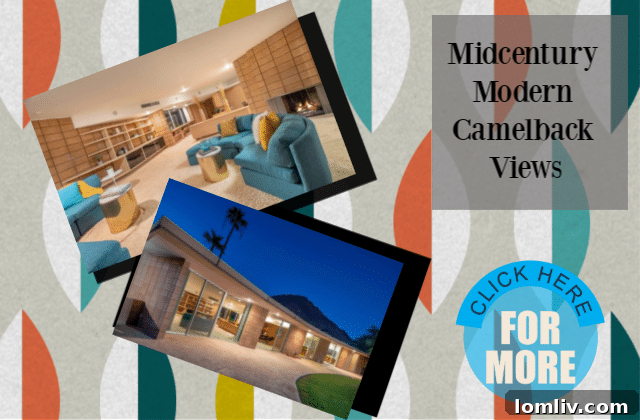
Desert Modernism: The Enduring Legacy of a Mid-Century Masterpiece on Camelback Mountain
Nestled amidst the rugged beauty of Arizona’s Camelback Mountain, a distinct architectural heritage thrives: Mid-Century Modern homes crafted by the visionary apprentices of Frank Lloyd Wright. These residences are not merely structures; they are profound dialogues between human ingenuity and the majestic desert landscape, embodying a philosophy where nature and design converge in breathtaking harmony. This article delves into the captivating world of these unique properties, exploring their historical significance, defining architectural features, and the timeless appeal that continues to captivate discerning homeowners and design enthusiasts alike.
The Allure of Architectural Pedigree: A Wright Apprentice’s Vision
The name Frank Lloyd Wright evokes images of groundbreaking design, organic architecture, and an unwavering commitment to innovation. His apprentices, steeped in his revolutionary philosophy at Taliesin West, carried forth this torch, translating his principles into their own distinct masterpieces. A home on Camelback Mountain designed by one of these talented individuals is more than just a house; it’s a piece of living history, a testament to a pivotal era in American architecture.
These homes represent a crucial evolution from Wright’s original concepts, adapted to the specific challenges and inspirations of the Sonoran Desert. The designs often showcase a sophisticated understanding of sun paths, prevailing winds, and the unique palette of local materials, all filtered through the lens of Mid-Century Modernism’s clean lines and functional elegance.
The architects behind these masterpieces were not simply imitators; they were innovators who absorbed Wright’s teachings on “organic architecture”—the idea that a building should grow out of its site and be in harmony with its environment—and interpreted them for a new generation. This resulted in homes that felt both modern and deeply rooted in their spectacular surroundings.
Roots of Inspiration: Wright’s Legacy and Mid-Century Modernism
To fully appreciate these Camelback Mountain gems, it’s essential to understand the architectural currents that shaped them. The Mid-Century Modern movement, flourishing roughly from the mid-1940s to the late 1960s, emerged from a post-war desire for functionality, new materials, and a break from traditional styles. It prioritized simplicity, clean lines, and a strong connection to nature, often expressed through expansive glass and open floor plans.
Frank Lloyd Wright’s Enduring Influence
Wright’s philosophy, developed much earlier, laid critical groundwork for Mid-Century Modernism. His Usonian homes, for example, pioneered open-plan living, radiant floor heating, and integrated built-in furniture – all elements that became hallmarks of the later style. His apprentices, many of whom worked at Taliesin West in Scottsdale, Arizona, were immersed in his ideas of passive cooling, solar orientation, and using indigenous materials like desert stone and sand. They learned to respect the landscape, viewing it not as a backdrop but as an integral part of the design narrative.
The Mid-Century Modern Movement in the Desert
When Mid-Century Modernism met the Arizona desert, a unique regional style emerged: Desert Modernism. This adaptation addressed specific climatic challenges while embracing the movement’s core tenets. Homes were designed to mitigate intense sun, capture cooling breezes, and blend visually with the rugged topography. Flat or low-sloping roofs, deep overhangs, and shaded courtyards became common features, ensuring comfort without sacrificing style.
Architectural Harmony: Design Principles in the Desert
The homes on Camelback Mountain by Wright’s apprentices are exemplary illustrations of how these influences culminated in truly remarkable architecture. Several key principles define their distinct character:
- Integration with Nature: Perhaps the most striking characteristic is the seamless blending of indoor and outdoor spaces. Large expanses of glass walls, sliding doors, and carefully placed patios invite the desert in, making the stunning views of Camelback Mountain an extension of the living area. Terraced gardens often follow the natural contours of the land.
- Openness and Flow: Rejecting compartmentalized layouts, these homes feature open floor plans that encourage a natural flow between living, dining, and kitchen areas. This creates a sense of spaciousness and fosters a communal atmosphere, ideal for entertaining and modern family life.
- Materiality and Texture: Architects utilized materials that resonate with the desert environment. Exposed concrete, local stone, richly grained wood, and stucco are common, providing a tactile experience that connects residents to their surroundings. These materials are often left in their natural state, celebrating their inherent beauty and durability.
- Innovative Structural Elements: Beyond aesthetics, functionality was paramount. Designs often incorporated passive solar principles, using strategic orientation, deep eaves, and thermal mass to regulate indoor temperatures naturally. Cantilevered elements, expansive glass, and thoughtful ventilation systems demonstrate an advanced understanding of climate-responsive design.
- Clean Lines and Geometric Forms: While organic in their integration, the structures themselves often feature the characteristic clean lines, geometric precision, and understated elegance of Mid-Century Modernism. This juxtaposition creates a powerful visual statement against the irregular forms of the mountain landscape.
The Camelback Mountain Experience
The location itself adds another layer of mystique and desirability to these architectural marvels. Camelback Mountain is not just a landmark; it’s a lifestyle destination known for its breathtaking panoramic views, exclusive properties, and proximity to the vibrant cultural heart of Phoenix and Scottsdale.
Panoramic Views and Seclusion
Perched high on its slopes, these homes offer unparalleled vistas of the Valley of the Sun, stretching from city lights to distant mountain ranges. The elevated position provides a sense of serene seclusion, creating private sanctuaries away from the bustle below. Yet, they remain conveniently located, balancing privacy with accessibility.
Adapting to the Landscape
Designing on Camelback Mountain presents unique challenges, from steep inclines to rocky terrain. The genius of these architects lies in their ability to not just overcome these obstacles but to incorporate them into the design itself. Foundations might be carved directly into the rock, retaining walls become architectural features, and multi-level structures follow the natural grade, ensuring minimal disruption to the existing ecosystem. This approach results in homes that feel intrinsically part of the mountain, rather than simply placed upon it.
Interiors: A Symphony of Style and Comfort
The interior spaces of these Mid-Century Modern homes are as thoughtfully designed as their exteriors, reflecting a holistic approach to living.
Streamlined Furnishings and Built-ins
Clutter is minimized, and functionality is maximized through streamlined furnishings and often bespoke built-in elements. Cabinetry, shelving, and even seating are frequently integrated into the architecture, maintaining the clean aesthetic and optimizing space. This attention to detail ensures that every element serves a purpose and contributes to the overall harmonious design.
Thoughtful Color Palettes
Interior color schemes typically draw inspiration from the desert landscape itself—earthy tones, muted greens, and sandy beiges are common, often punctuated by pops of vibrant color typical of the Mid-Century era. These palettes create a calming backdrop that allows the outdoor views to truly shine.
Seamless Indoor-Outdoor Transition
Beyond large windows, the transition between interior and exterior is often blurred through consistent flooring materials that extend from living rooms onto patios, or through design elements that carry from one space to the next. This creates an expansive, breathable living environment that feels at one with its surroundings.
The Enduring Appeal and Preservation
Decades after their construction, these Mid-Century Modern homes on Camelback Mountain continue to command significant attention in the luxury real estate market. Their appeal is multi-faceted, extending beyond mere aesthetics.
Investment in History and Design
For many, owning such a home is an investment not only in prime real estate but also in a piece of architectural history. These properties are often meticulously preserved or sensitively renovated, retaining their original character while integrating modern conveniences. The unique provenance of a Wright apprentice’s design adds an invaluable layer of prestige and rarity.
Challenges and Opportunities in Preservation
Preserving these architectural treasures, however, comes with its own set of challenges. Maintaining original materials, upgrading infrastructure without compromising integrity, and navigating evolving design preferences require a delicate balance. Yet, the dedicated efforts of preservationists and appreciative homeowners ensure that these homes continue to stand as testaments to a golden age of design, offering an unparalleled living experience that blends historical significance with contemporary luxury.