Texas’s Enduring Magnetism: A Comprehensive Look at Relocation Trends and Population Growth
Texas has long captivated individuals and businesses alike with its unique blend of robust economic opportunities, diverse cultural landscape, and an appealing quality of life. This unwavering allure consistently positions the Lone Star State as a premier destination for those seeking new beginnings and growth. The sustained influx of residents, both from other U.S. states and international locales, is a testament to Texas’s powerful drawing card, as highlighted in the in-depth Texas Relocation Report released by Texas REALTORS®. This article explores the multifaceted reasons behind Texas’s rapid population expansion, dissecting key migration data, economic incentives, and the geographical hotspots attracting the most newcomers.
The Undeniable Growth: Unpacking Texas’s Population Surge
The U.S. Census Bureau’s latest available migration data, corroborated by insights from U-Haul, paints a vivid picture of Texas’s dynamic population growth. In 2019, the state experienced a significant net gain of approximately 100,000 people. To put this figure into perspective, this net increase is roughly equivalent to the entire population of a thriving Texas city like Allen, underscoring the substantial number of individuals choosing to call Texas home.
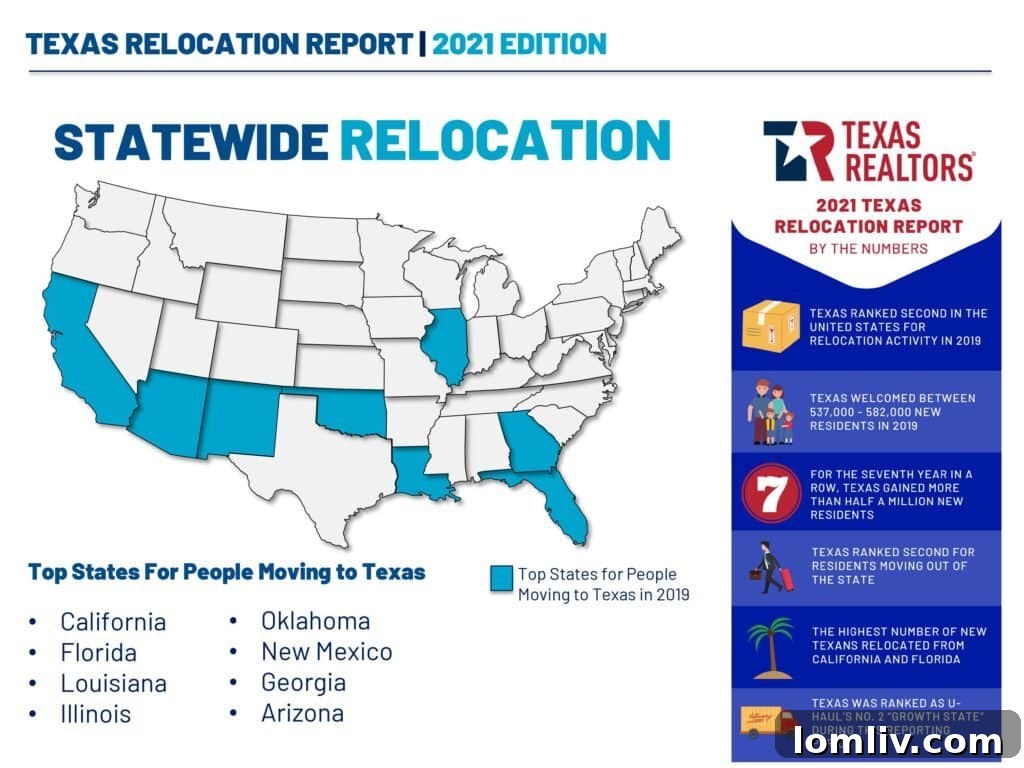
A closer examination of the Census estimates reveals that Texas welcomed between 537,000 and 582,000 incoming residents from other U.S. states in 2019. While the state also saw between 435,000 and 471,000 residents move away, the positive balance unequivocally demonstrates its appeal. Furthermore, Texas’s global connectivity and economic vibrancy attracted an additional 192,000 to 220,000 residents from outside the U.S. When factoring in both domestic and international migration, Texas’s total net population gain in 2019 amounted to an impressive 320,000 individuals – a population size comparable to that of Corpus Christi. These statistics powerfully illustrate Texas’s role as a major demographic growth engine within the nation.
“Once again, Texas welcomed more than half a million new residents from other states,” observed Marvin Jolly, chairman of Texas Realtors, within the report. “Some move here for a lower cost of living than where they’re from, a great quality of life, diverse job opportunities, good weather — there are many reasons people continue coming to Texas.”
Why Texas? Dissecting the State’s Irresistible Pull Factors
The consistent narrative of Texas as a top relocation destination is not accidental. It stems from a compelling combination of factors that Marvin Jolly articulated, encompassing economic benefits, an enriching quality of life, and favorable environmental conditions. Understanding these core drivers is essential to comprehending the sustained momentum of the “Texas relocation” phenomenon.
Economic Powerhouse: Affordability and Abundant Opportunities
One of the most potent motivators for moving to Texas is its competitive cost of living relative to other major economic centers, particularly the East and West Coasts. While real estate markets have experienced appreciation, housing costs often remain more accessible, allowing residents to achieve greater homeownership aspirations. Crucially, Texas does not levy a state income tax, which translates into more disposable income for individuals and families, significantly enhancing financial well-being. This fiscal advantage is a powerful incentive for both individuals and businesses eyeing expansion or relocation.
Beyond affordability, Texas boasts an exceptionally robust and diversified job market. The state is a global leader in key sectors such as energy, technology, aerospace, healthcare, manufacturing, and advanced research. Major corporations frequently choose Texas for their headquarters or significant operational centers, thereby generating a continuous stream of employment opportunities across a wide spectrum of industries and skill levels. Major metropolitan areas like Dallas-Fort Worth, Houston, Austin, and San Antonio serve as dynamic economic engines, fostering innovation and providing attractive career trajectories for professionals from various backgrounds.
Exceptional Quality of Life and Rich Cultural Tapestry
Beyond the financial incentives, Texas offers an unparalleled quality of life that caters to diverse preferences. The state is home to a vast network of state parks, scenic landscapes, and the beautiful Gulf Coast beaches, providing abundant opportunities for outdoor recreation. Its major cities are vibrant hubs of arts, entertainment, world-class dining, and sports. Texan communities are generally known for their hospitality, strong communal bonds, and family-friendly environments. The educational landscape is also strong, with numerous highly-regarded universities and a commitment to quality public education.
Culturally, Texas is a melting pot, reflecting a rich history influenced by Anglo-American, Hispanic, African-American, and various international traditions. This diversity is celebrated through its unique cuisine, music, art festivals, and community events, ensuring that newcomers can readily find cultural resonance while also discovering new and enriching experiences.
Favorable Climate and Lifestyle Options
For many relocating from colder climates, Texas’s weather is a significant draw. The state enjoys long, warm summers and relatively mild winters across much of its expanse, facilitating year-round outdoor activities. The prevalence of sunshine contributes to an active and healthy lifestyle for many. It’s important to note that due to its sheer size, Texas offers varied climates, from the humid sub-tropical Gulf Coast to the arid desert regions of West Texas, allowing individuals to choose an environment that best suits their preferences.
Migration Dynamics: Analyzing Who is Moving To and From Texas
For the seventh consecutive year, Texas proudly welcomed over half a million new residents from other U.S. states in 2019, underscoring its consistent and powerful appeal as a relocation destination. The Texas Relocation Report provides valuable insights into the specific origins of these new Texans and where some residents choose to move outside the state.
The California-Texas Connection: A Major Demographic Shift
One of the most significant and often-discussed migration trends involves the flow of residents between California and Texas. While California saw a higher overall number of outgoing residents nationwide, the report highlighted a compelling statistic: the number of Californians relocating to Texas was approximately double the number of Texans moving to California. This substantial demographic shift is frequently attributed to the stark contrasts in housing affordability, overall cost of living, and regulatory environments between the two states. Many Californians seek Texas for its economic advantages, spacious living, and vibrant job market, making “moving to Texas” a popular choice.
Primary Origin States for Texas Newcomers
Beyond California, Texas primarily attracted new residents from a diverse range of states, including Florida, Louisiana, Illinois, Oklahoma, New Mexico, Georgia, and Arizona. This broad list indicates that Texas’s appeal extends across various regions of the U.S., drawing individuals from neighboring states, those with higher living costs, or different economic landscapes.
Where Texans Are Choosing to Relocate
Conversely, Texans who opted to leave the state primarily chose California, Colorado, Oklahoma, Florida, and Georgia as their new homes. While the report provides less detail on the motivations for these outgoing movements, they likely stem from a variety of factors, including specific career opportunities in other states, personal preferences regarding climate, or family considerations.
Geographical Hotspots: Key Relocation Destinations Within Texas
Within the vast expanse of Texas, certain regions consistently emerge as primary magnets for new residents, reflecting the state’s major economic centers and dynamic urban appeal. These areas offer concentrated opportunities and amenities that attract a steady stream of newcomers.
Leading Counties and Metropolitan Statistical Areas (MSAs)
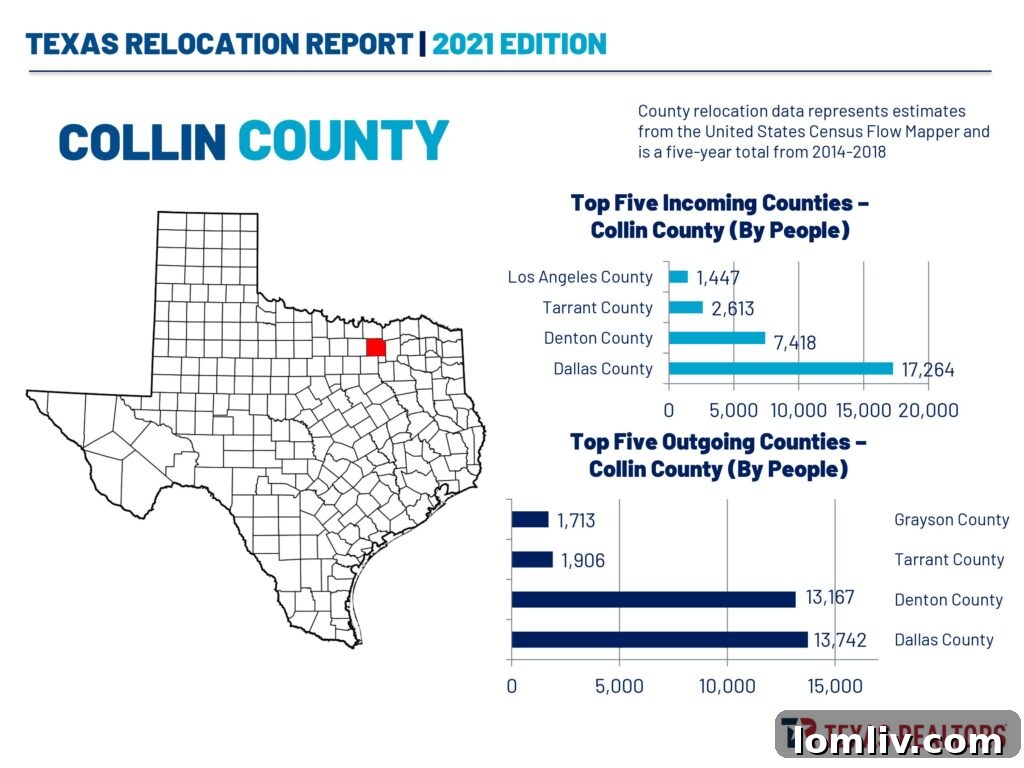
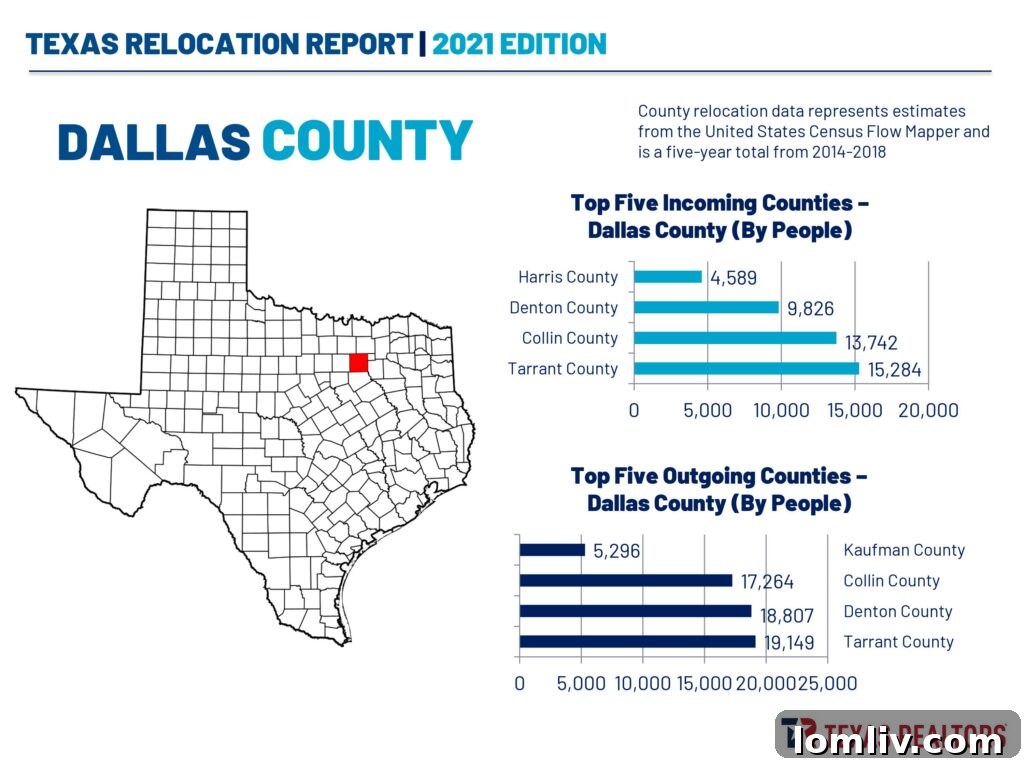
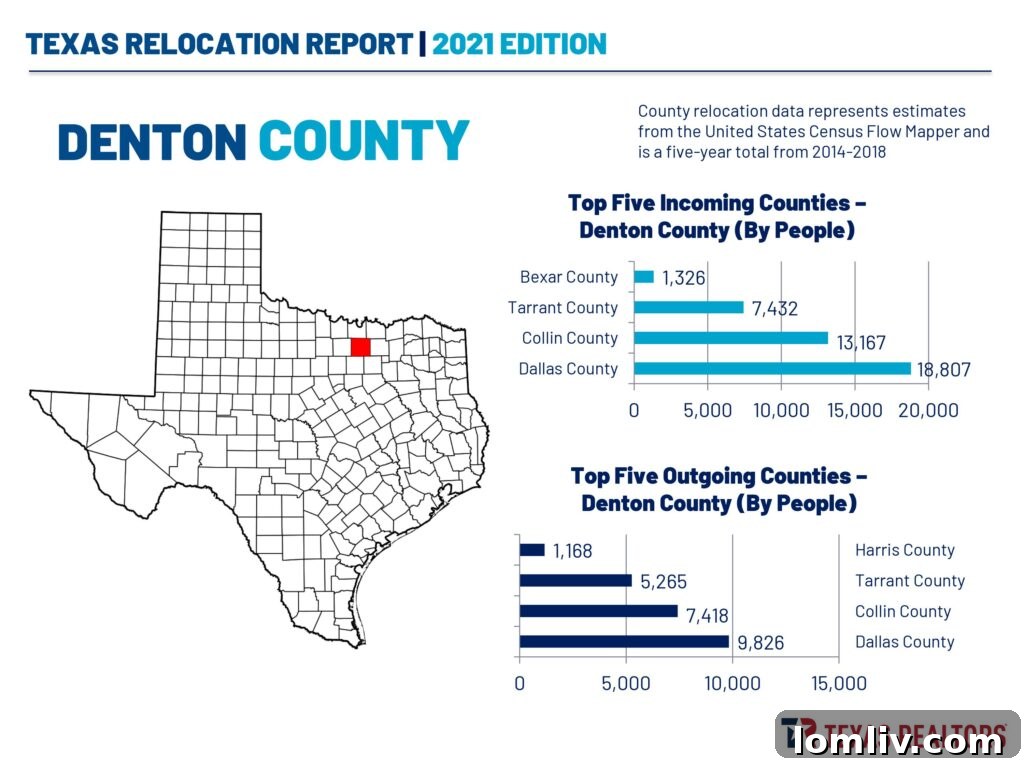
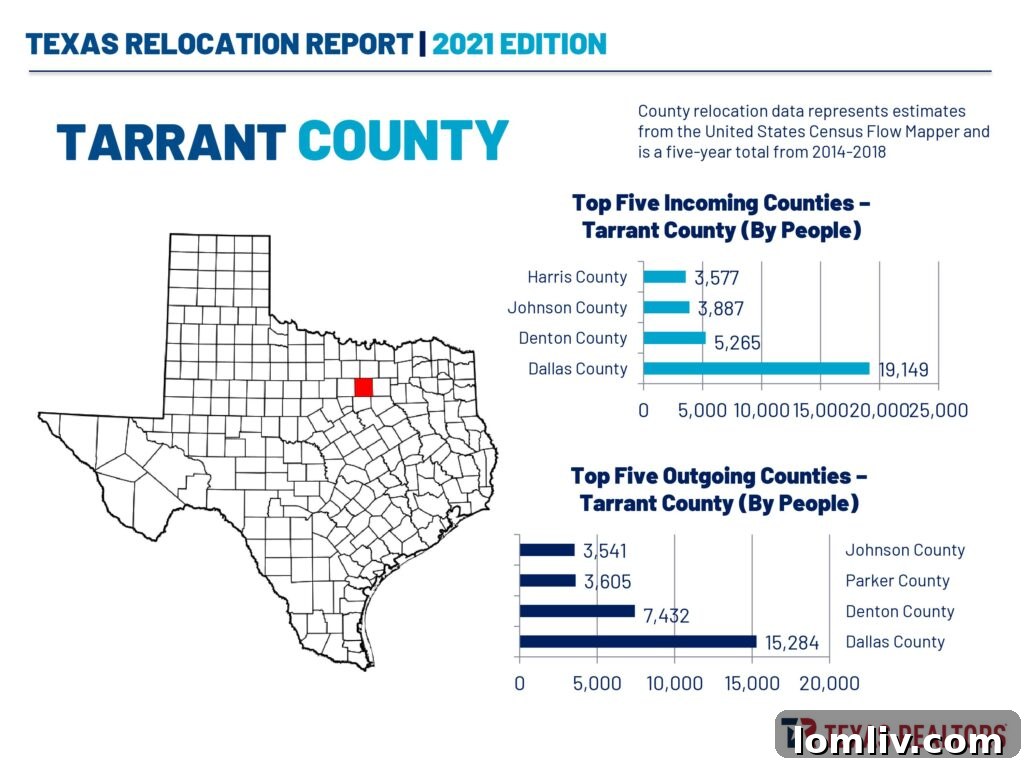
Analysis of data from 2014 to 2018 consistently identified Harris, Dallas, Tarrant, Bexar, and Travis counties as the top destinations for incoming residents. These counties collectively represent Texas’s largest and most economically vibrant metropolitan areas. At a broader metro level, the Dallas-Fort Worth-Arlington MSA and the Houston-The Woodlands-Sugar Land MSA recorded the highest numbers of new residents. These regions function as significant economic powerhouses, offering concentrated employment opportunities, dynamic real estate markets, and extensive amenities that appeal to a wide spectrum of individuals and families considering a move to Texas.
City-Level Attraction: Insights from U-Haul Data
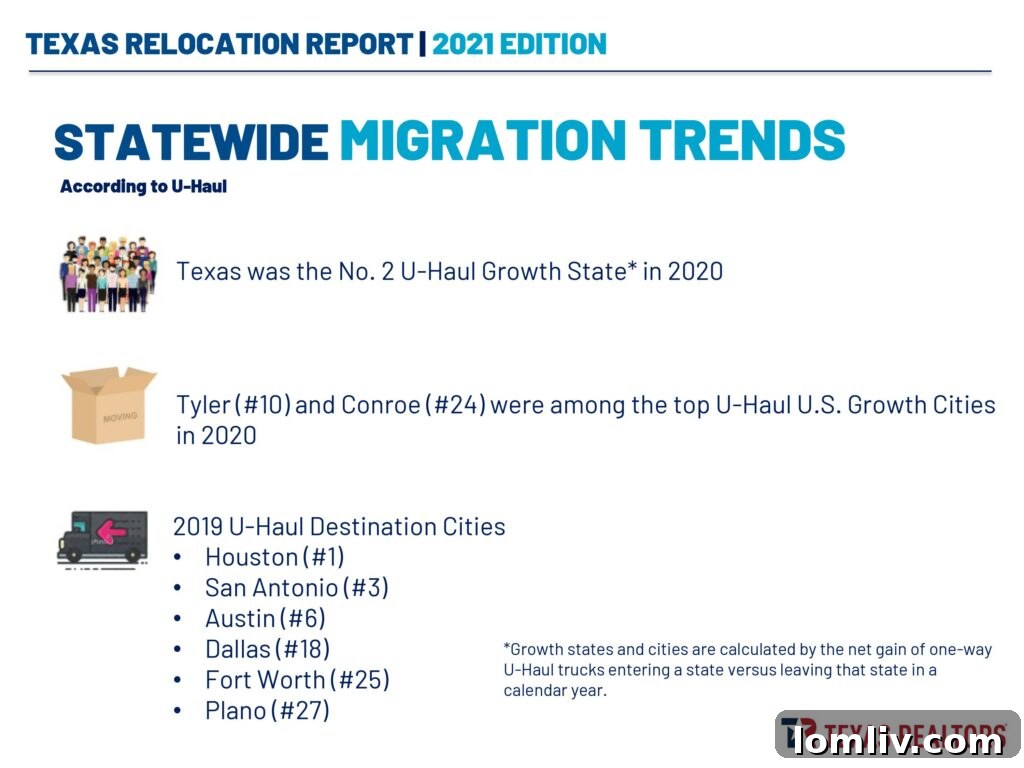
Further insights into micro-level migration patterns come from U-Haul’s designation city data. Houston consistently ranked as the top destination city in the U.S., highlighting its immense appeal as a hub for both personal and corporate relocations. Dallas, Fort Worth, and Plano also featured prominently among top U-Haul destination cities, ranking 18th, 25th, and 27th respectively. This data directly correlates with the economic vitality, diverse housing options, and extensive infrastructure available within these major urban centers and their surrounding suburban communities, making them prime targets for Texas relocation.
The Pandemic’s Influence: Accelerating Texas Relocation Trends
While the full scope of 2020 relocation statistics was still emerging at the time of the report, preliminary indicators strongly suggested that the COVID-19 pandemic significantly accelerated migration to Texas. Marvin Jolly noted, “Though we don’t have 2020 relocation statistics yet, increased remote-work opportunities and company relocations continued to fuel moves from other states to Texas during the pandemic.”
The widespread adoption of remote work models provided many employees with unprecedented geographic flexibility, enabling them to prioritize factors such as cost of living, available living space, and overall quality of life. Texas, with its relative affordability, absence of state income tax, and robust job market, became an even more attractive prospect. Concurrently, the pandemic underscored strategic advantages for businesses, prompting an increase in corporate relocations and expansions within the state, further stimulating the Texas real estate market.
Corporate and Consumer Migration Highlights (2020)
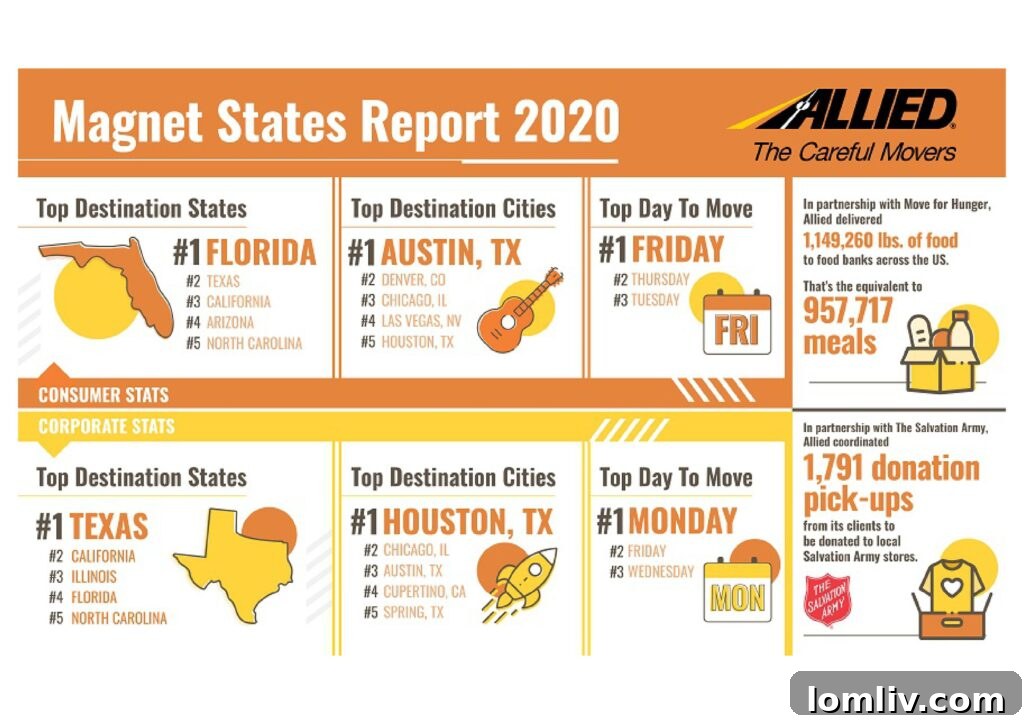
These observations were further supported by Chicago-based Allied Van Lines’ annual Magnet States Report for 2020, which listed Texas among the top five destination states for corporate moves. This highlights Texas’s appeal not only to individual movers but also to businesses seeking a favorable operational environment, lower taxes, and access to a growing talent pool. Houston, specifically, continued its impressive streak, maintaining its position as the top corporate move destination city for the second consecutive year, solidifying its status as a global business powerhouse.
Interestingly, Austin emerged as the top consumer move destination city in 2020, indicating a strong preference among individual movers for Austin’s dynamic tech scene, vibrant cultural amenities, and energetic urban lifestyle, even amidst its increasingly competitive housing market. The distinct preferences for Houston (corporate focus) and Austin (consumer focus) underscore the diverse and specialized attractions within Texas’s major metropolitan areas, making Texas relocation a complex and varied phenomenon.
Economic and Social Implications of Continued Growth
The sustained and rapid population surge in Texas brings with it a complex array of economic and social implications. Economically, this growth acts as a powerful stimulant across numerous sectors, driving demand in real estate, construction, retail, and services. New residents contribute significantly to the state’s tax base, which in turn supports the expansion of public services, infrastructure development, and educational initiatives. A continually expanding and diversifying workforce enhances the state’s innovation capacity and global competitiveness, attracting further domestic and international investment.
Socially, the continuous influx of people enriches Texas’s cultural fabric, fostering greater diversity, new perspectives, and a more cosmopolitan atmosphere. However, rapid growth also presents inherent challenges. These include increased strain on existing infrastructure, such as transportation networks and utilities, potential for rising housing costs and affordability concerns, and the critical need for thoughtful urban and regional planning to maintain and enhance the overall quality of life. Texas municipalities and state agencies are continually engaging in strategic planning and investment to address these pressures, striving to ensure that growth remains sustainable and beneficial for all residents.
The Future of Texas Relocation: A Trend Set to Continue?
Given the compelling combination of enduring economic advantages, diverse career opportunities, and a high quality of life, it is highly probable that Texas will continue to be a leading destination for relocation in the foreseeable future. Factors such as ongoing corporate expansions by major companies, the increasing permanence of remote work models, and a generally favorable business and tax climate are all expected to sustain this robust trend. While the exact pace of growth may experience fluctuations due to broader economic conditions or policy changes, the fundamental reasons driving people to embrace the “Texas relocation” remain profoundly strong. This promises a dynamic and continually evolving demographic landscape for the Lone Star State, ensuring its continued prominence as a national leader in population growth and economic development.
Related Articles: Exploring Past Texas Relocation Trends
- 2019:People Love to Relocate to Texas — Especially DFW
- 2017:Gone To Texas (Again): Lone Star State Ranks No. 2 For Relocation
- 2014:Gone to Texas: More People are Moving to The Lone Star State