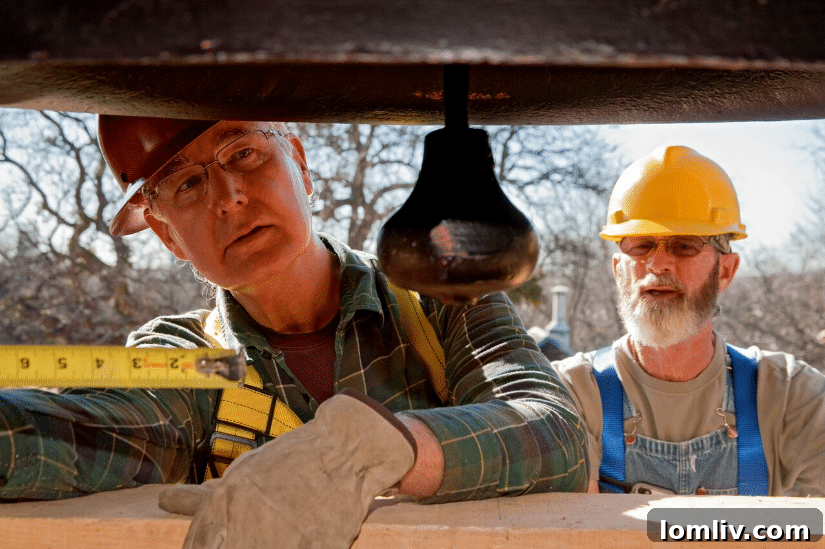
Ronald Siebler: A Master Craftsman Championing Historic Preservation in Dallas
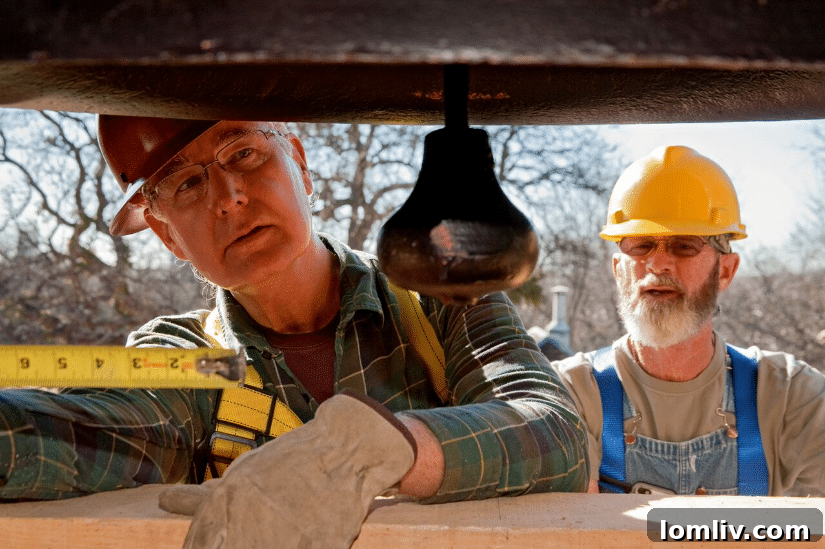
In the specialized world of historic preservation, one name stands out for his exceptional skill and unwavering dedication: Ronald Siebler. Revered as a craftsman of the highest caliber, Siebler has consistently demonstrated an profound commitment to safeguarding our architectural heritage, transforming decaying structures into testaments of history.
Siebler’s remarkable talent was officially recognized at the 2016 Preservation Achievement Awards hosted by Preservation Dallas. This prestigious event saw him not only receive the coveted Craftsman Award but also play a pivotal role in four other award-winning projects—an unprecedented feat that underscores the breadth and depth of his influence in the preservation community.
“You’re lucky to get one award from Preservation Dallas,” Siebler humbly remarked, reflecting on that extraordinary evening. “To walk across the stage five times – it truly shows you I had such a wonderful year of opportunities, filled with challenging and rewarding work.”
Indeed, this rare achievement speaks volumes about the caliber and consistent quality of his contributions to historic restoration. His colleagues and peers readily affirm his impact.
David Preziosi, executive director of Preservation Dallas, shared his admiration: “Ron is an outstanding craftsman, and his work on historic buildings consistently showcases the meticulous care and unparalleled quality he brings to every project. Ron frequently employs authentic historic techniques and tools, ensuring his work is not only accurate for the period but also deeply respectful of the original historic structure. He has contributed significantly to countless Preservation Achievement Award-winning projects across Dallas, and his exceptional skill, coupled with his steadfast dedication, has undoubtedly been an incredible asset to those project teams, helping them secure well-deserved accolades from Preservation Dallas.”
A Legacy of Restoration Excellence: Siebler’s Award-Winning Portfolio
The 2016 awards ceremony was a testament to Siebler’s diverse expertise. Beyond his personal Craftsman Award, four distinct projects on which he served received Preservation Achievement Awards. These included the Caruth Family Curing Shed, the Renner Church Bell at Farmers Branch Historical Park, the MKT Depot at Dallas Heritage Village, and the Sharrock Cabin. Each project presented unique challenges, demanding Siebler’s specialized knowledge and hands-on skill.
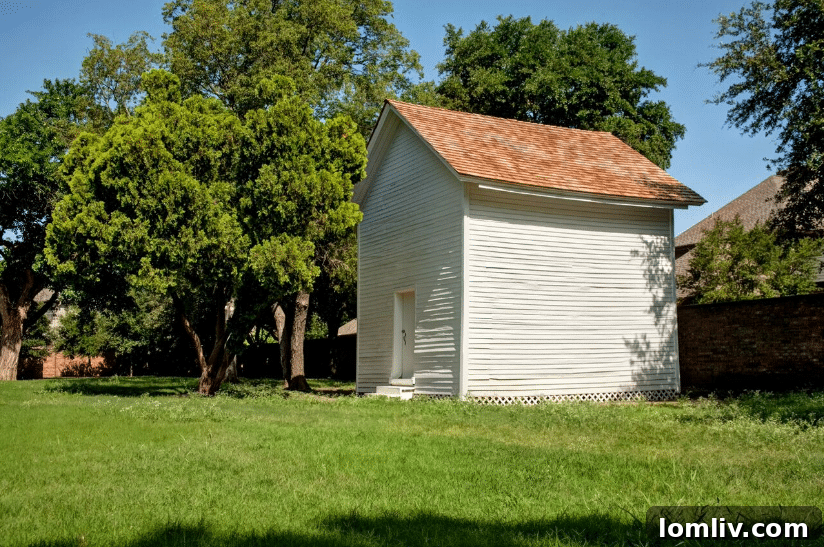
The Caruth Family Curing Shed: Resurrecting Agricultural Heritage
The Caruth Family Curing Shed, a structure that has stood for over 160 years, offered a unique glimpse into the agricultural past of the region. Preserving such a building means more than just repairing wood and replacing roofs; it involves understanding the historical context and the traditional building methods of its era. Siebler’s involvement ensured that this curing shed was meticulously restored, honoring its original craftsmanship and allowing future generations to connect with its rich history.
The Renner Church Bell: Restoring a Community’s Voice
Another notable project was the restoration and return of the Renner Church Bell to the Farmers Branch Historical Park. A bell is often the voice of a community, and its restoration is a deeply symbolic act. Siebler’s work on the bell encompassed careful cleaning, repair, and the intricate process of preparing it for reinstallation, ensuring that its clear tones could once again resonate through the park, echoing tales of the past.
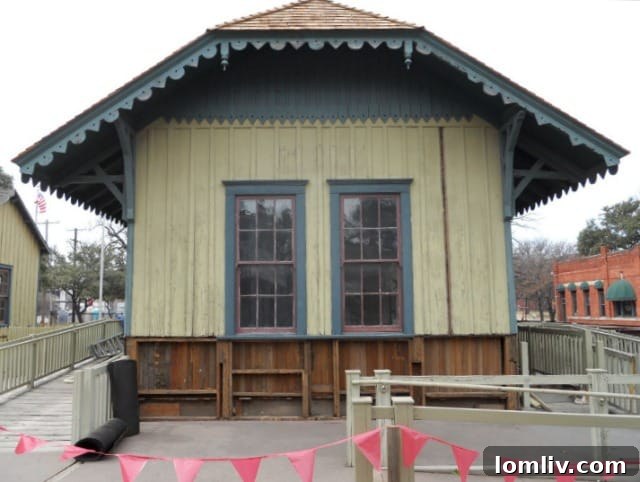
The MKT Depot at Dallas Heritage Village: A Gateway to Transportation History
At the Dallas Heritage Village, Siebler contributed to the revitalization of the MKT Depot. This project was particularly challenging, as the structure suffered from extensive damage, including rotted wood and persistent termite infestation on its lower board and batten siding. Siebler’s expertise in historical carpentry and structural repair was critical in addressing these issues, meticulously restoring the depot to reflect its original glory and preserve its significance as a relic of early rail transportation.
The Sharrock Cabin: Safeguarding Pioneer Legacies
The Sharrock Cabin, which received the prestigious Gail Thoma Patterson Award, stands as another testament to Siebler’s leadership and skill. Serving as the lead preservation carpenter on this project, Siebler guided the restoration efforts, ensuring that this humble cabin—a crucial artifact of pioneer life—was stabilized and preserved. His work here highlights the importance of protecting even the most unassuming structures that tell vital stories of early settlement and frontier resilience.
Educating Through Restoration: The Film “Restore”
Beyond his hands-on projects, Siebler also extended his influence to the realm of preservation education. He was involved in Mark Birnbaum’s compelling film Restore, which earned the Preservation Education Award. This film likely champions the very principles Siebler embodies: the value of historic architecture, the art of traditional craftsmanship, and the importance of preserving cultural heritage for future generations.
The Deep Roots of a Preservationist: A Lifelong Journey
Siebler’s profound interest in historic preservation isn’t merely a professional calling; it’s a passion deeply rooted in his childhood experiences and family heritage.
Nebraska Roots and a 1910 Buick
Growing up with parents from Nebraska, a state where basements are commonplace, Siebler spent his summers immersed in the discovery of forgotten treasures. These early encounters with “old stuff” sparked a lifelong fascination. “My family still had my grandfather’s first car, a 1910 Buick,” he recounted. “Every time we’d go up, my dad and I would get that car out and add oil and gas and water and drive it around town a few days.” These moments, spent tinkering with a century-old machine, instilled in him a deep appreciation for the mechanics and stories embedded in vintage objects.
Immersive History Lessons: From Books to Real Life
His mother further cultivated this historical curiosity by integrating educational trips into family vacations. “My mother would incorporate history trips on these vacations, and by the time I was 16, I had been to every presidential library in the country,” Siebler recalled. This unconventional approach to learning made history tangible and exciting. “It was a fun way to study and learn because all of these abstract ideas we were reading about in school became real,” he explained, forging an indelible link between academic knowledge and physical artifacts.
Following in Ancestral Footsteps: The Blacksmith’s Legacy
Siebler’s connection to craftsmanship runs even deeper, tracing back to his great-grandfather, a skilled blacksmith in Nebraska. The very shop where his great-grandfather worked became a part of a historic park, drawing Siebler back to his ancestral roots. “In the late 80s and 90s, I started traveling there to smith, to apprentice in my great grandfather’s shop,” he shared. This apprenticeship wasn’t just about learning a trade; it was about connecting with a lineage of hands-on creation and understanding the dedication required to master a craft.
Embracing Depression-Era Values: The Art of Repair
Another significant influence came from his parents, who grew up during the Depression era. Their upbringing instilled practical values: “you make do with what you’ve got and you fix what’s broken.” This philosophy became a cornerstone of Siebler’s approach to preservation. “I’ve found a way where I can make an income doing something that I love so much,” he concluded, highlighting the profound satisfaction of turning a deeply ingrained philosophy into a rewarding career.
The Enduring Significance of Historic Preservation
Ronald Siebler’s work is more than just repair and restoration; it is an act of storytelling, connecting us to the past and providing continuity for the future. Historic preservation ensures that the unique architectural styles, construction techniques, and cultural narratives embedded within our older buildings are not lost to time or neglect. By saving structures like the Caruth Curing Shed, the Renner Church Bell, the MKT Depot, and the Sharrock Cabin, Siebler helps to safeguard the collective memory of communities and educate new generations about their heritage.
His dedication to using historically accurate methods and materials respects the original intent of the builders and maintains the authenticity of these irreplaceable landmarks. In a rapidly modernizing world, craftsmen like Siebler are vital guardians of our tangible history, reminding us that the echoes of the past can, and should, continue to enrich our present and inform our future.
Visual Journey Through Restoration: Project Videos
For those interested in a deeper look into some of these incredible projects, the following videos offer compelling insights into the restoration processes and the stories behind them: