As the days grow longer and the mercury begins its inevitable climb, the official start of summer is just around the corner. We all understand that proper AC care is not just a luxury, but a necessity for comfort and well-being during the scorching summer months. Before the heat becomes truly oppressive, prompting endless conversations about the weather and filling your social media feeds with dramatic car thermometer readings, you might be asking yourself, “What proactive steps can I take to ensure my home’s air conditioning system is ready?” The good news is, you’ve come to the right place for answers!
Taking care of your air conditioning unit doesn’t have to be a daunting task. As a homeowner, there are several straightforward yet highly effective maintenance practices you can implement to significantly improve your AC system’s efficiency, prolong its lifespan, and ensure a comfortably cool home all season long. The overarching secret to optimal AC performance this summer? Keeping it impeccably clean. Let’s dive into some essential DIY AC maintenance tips that will save you money, enhance your indoor air quality, and keep your home an oasis of cool.
AC Maintenance Tip #1: Prioritize Cleanliness – Start with Your Vents
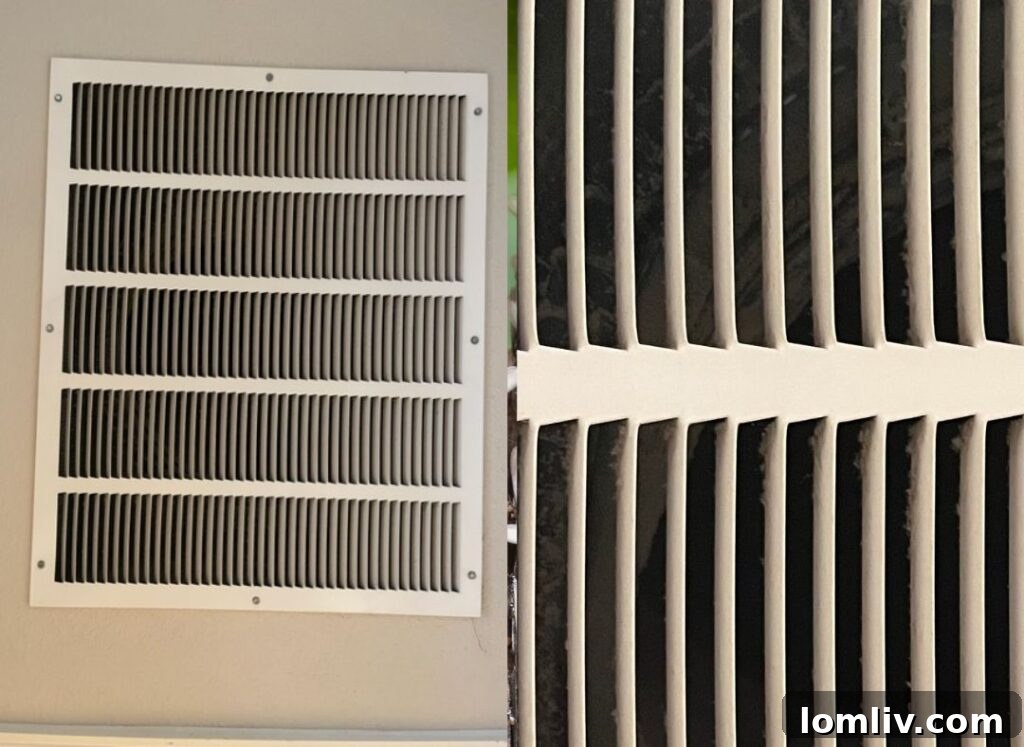
Even if you’re not an HVAC expert, understanding the basic components of your AC system can empower you to perform simple, yet impactful, maintenance. Generally, your home has three types of air vents: supply, return, and exhaust. The large vent typically seen on walls or ceilings, like the one prominently featured in the accompanying image, is most often a return vent. These vents are crucial as they draw warm, stale air from your living spaces back to the AC unit for cooling and dehumidification. Once conditioned, the freshly cooled air is then delivered back into your home through the smaller supply vents. Exhaust vents, usually found in attics or bathrooms, play a role in expelling stale air and moisture from your home, contributing to overall ventilation and indoor air quality.
Observe the close-up of the return vent in the image; it’s not uncommon to find a significant accumulation of dust, pet dander, and other airborne debris clinging to the vent fins and extending into the ductwork. This buildup isn’t just unsightly; it’s a major impediment to your AC system’s performance and your home’s air quality. Dirty vents restrict airflow, forcing your AC to work harder and consume more energy to achieve the desired temperature. This increased strain not only drives up your utility bills but also accelerates wear and tear on your unit, potentially leading to costly repairs down the line. Furthermore, these trapped allergens and dust particles can be circulated back into your living environment, impacting the health of allergy sufferers and contributing to a dusty home.
The solution is simple and surprisingly effective: unscrew the vent cover, thoroughly clean and disinfect it using warm soapy water or a mild cleaning solution. For the interior of the duct, use a long-handled duster, a vacuum cleaner with a hose attachment, or even a microfiber cloth wrapped around a stick to remove as much accumulated dust and debris as you can reach. This clears the pathway for air, preventing contaminants from reaching and clogging your AC filter prematurely, blocking critical ducts, and most importantly, preventing these unwelcome particles from recirculating into the air you breathe. Regular cleaning of your vents, ideally monthly or quarterly, will noticeably improve your system’s efficiency and your home’s air quality.
A note on aesthetics and durability: if you notice rust on your existing metal vent covers, it’s a clear sign of moisture exposure, which can also contribute to mold growth. Consider replacing them with moisture-resistant resin or plastic covers. These alternatives are not only more durable in humid environments but also easier to clean and maintain, providing a longer-lasting, cleaner aesthetic for your home’s ventilation system.
AC Maintenance Tip #2: Inspect and Replace Your AC Drip Pan
While we cannot embed the original video content, we can vividly describe the crucial role of the AC drip pan and why its maintenance is paramount. The drip pan, also known as the condensate drain pan, is an unsung hero of your air conditioning system. Its primary function is to collect the moisture – the condensate – that naturally forms as your AC unit cools the air. As warm, humid air passes over the cold evaporator coils, water vapor condenses, much like dew forming on a cold glass of water. This water then drips into the pan, designed to channel it away safely through the condensate line.
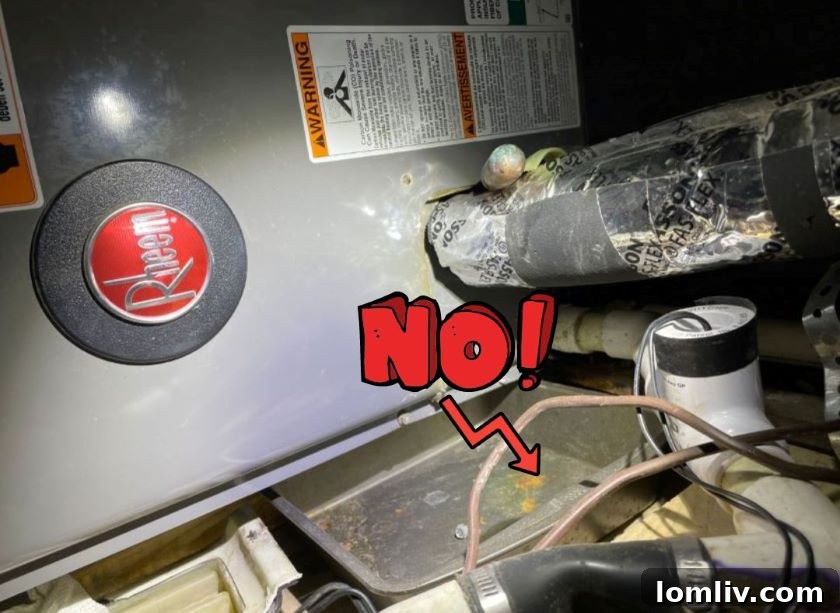
A common and problematic issue arises when water is allowed to sit stagnant in the pan for extended periods, as depicted by the rusty pan in the original content’s example. Rust is a clear indicator of persistent moisture and potential issues. If you observe rust, it often points to a clogged condensate line, which prevents proper drainage, or it could signal other underlying problems, such as a damaged pan or an improperly sloped unit. When the drip pan becomes rusty, it’s not just an aesthetic concern; it compromises the integrity of the pan and can lead to leaks, water damage, and even mold growth in your HVAC system and home. Mold spores can then be circulated throughout your home, posing significant health risks.
Replacing a severely rusted or damaged drip pan is a necessary step to prevent further issues. While it is possible for a handy homeowner to replace the pan themselves, costs can range from $200-$600 depending on your specific AC unit and its accessibility. However, it is often advisable to consult a professional HVAC technician, especially if you’re unsure about the process, as improper installation can lead to leaks. Before undertaking any significant repair or replacement, always check your AC unit’s warranty – some parts and labor might still be covered, saving you considerable expense. For temporary fixes, it is strongly cautioned against using household items as makeshift drip pans. While a quick solution might seem appealing, forgetting about it can lead to bigger problems than the one you started with. Proper, permanent solutions are always best for long-term AC health.
Regularly inspecting your drip pan, ideally monthly during peak AC season, can help catch issues early. Look for standing water, rust, algae, or slime buildup. A clean, clear drip pan means your system is draining effectively, preventing water damage and maintaining a healthy indoor environment.
AC Maintenance Tip #3: Keep Your Condensate Line Clear
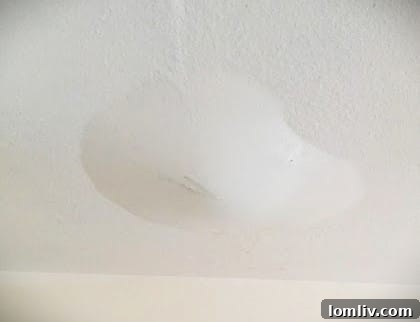
The image above, depicting a prominent white blob on a ceiling, serves as a stark reminder of what happens when AC maintenance is overlooked, particularly concerning the condensate line. This “blob” is not some abstract art; it’s a significant water stain and structural damage behind drywall, caused by an overflowing AC drain pan, *before* it burst and led to extensive water damage. While it’s hard to judge scale from the photo, imagine a water stain roughly the length of a yardstick – that’s the kind of silent, destructive creep that can happen when your condensate line becomes blocked.
The primary condensate line is a critical component that transports the water collected in the drain pan away from your AC unit. This line typically routes the water to a plumbing trap, often connected to a household sink, frequently found in a secondary bathroom. Have you ever noticed a peculiar, faint dripping sound coming from a bathroom sink when no water is running? That could very well be your AC’s condensate draining, a sign that the system is working as intended. However, when this line becomes clogged with a mixture of algae, mold, dust, and sediment – a common occurrence in humid environments – the water has nowhere to go. The drain pan then fills to capacity, overflows, and as vividly illustrated by the homeowner’s unfortunate experience mentioned in the original article (which resulted in water spilling into the attic, leaking through the decking, and ultimately soaking the carpet below), this leads to significant water damage, structural issues, and the potential for mold growth.
Preventative cleaning of your condensate line is a simple yet crucial task that can prevent such costly catastrophes. Just as the adage goes about the cobbler’s children having no shoes, even seasoned home inspectors can fall victim to overlooked maintenance. What should have been done in that scenario, and what you can do now, is routinely flush your primary condensate line. Approximately once a month during the cooling season, pour a mixture of diluted bleach (1 part bleach to 16 parts water), distilled white vinegar, or a specialized AC line cleaner like Nuline, down the primary condensate line. Look for a PVC pipe, usually 3/4-inch in diameter, that extends from your indoor AC unit. There might be a cap or a T-shaped vent where you can pour the solution. Allow the solution to sit for 20-30 minutes to dissolve any buildup, then flush with a cup or two of clean water.
This simple act of preventative maintenance keeps the line clear, ensures proper drainage, and safeguards your home from water damage. It’s a small effort with potentially huge savings, protecting your home’s structure and your peace of mind.
While we’ve covered some essential ground today, the journey to a perfectly clean and efficient air conditioning system is ongoing. Our HVAC systems can accumulate dirt and grime in numerous places, affecting everything from energy consumption to indoor air quality. Therefore, we’re not done yet! Look out for next week’s installment of Upon Closer Inspection, where we’ll delve deeper into more tips for keeping your AC pristine this summer. These initial tips, however, should keep you busy and well on your way to a cooler, more comfortable home until then.
For those who prefer a comprehensive professional assessment or have more complex questions about their AC system’s operation, longevity, or optimal maintenance schedule, consider scheduling a seasonal home inspection. A licensed home inspector can provide invaluable insights into your entire home’s systems, including your HVAC, offering tailored advice and identifying potential issues before they become major problems. Investing in regular maintenance, whether DIY or professional, is an investment in your home’s comfort, your family’s health, and your wallet.