
Mark Johnson
Chief Executive Officer, JP and Associates Realtors
For many professionals, the journey into real estate sales isn’t always a first calling. In fact, for a significant portion of our associates—nearly 90 percent—this vibrant and dynamic field represents a second career choice. Yet, if you’re seeking a profession that offers not just a substantial income but also unparalleled opportunities for personal and professional growth, real estate sales deserves your serious consideration. It’s a path where dedication truly translates into success.
Embracing a career as a real estate sales professional means unlocking a world of benefits. You’ll discover immense personal satisfaction from helping clients achieve their dreams, experience continuous growth as you navigate evolving markets, and tap into unmatched income potential driven by your efforts and expertise. Beyond the financial rewards, real estate provides a unique form of financial stability, allowing you to build a resilient and thriving business on your own terms.
“Learn the rules like a pro so that you can break them like an artist.”
Pablo Picasso
The wisdom of Pablo Picasso perfectly encapsulates our philosophy at JPAR. Whether you are taking your first steps into the world of sales or are a seasoned veteran with years of experience, we firmly believe that every real estate salesperson possesses untapped potential for growth. The market constantly shifts, client needs evolve, and innovative tools emerge. Therefore, continuous improvement of skills and knowledge is not just beneficial, but essential for sustained success. This core belief drives JPAR’s commitment to our associates. We invest significantly in comprehensive education programs, encourage daily practice through role-playing scenarios, and foster an environment where learning and development are prioritized. Our goal is to empower you to not only master the foundational rules of real estate but also to creatively adapt and excel, truly becoming an artist in your field.
Drawing from our extensive experience and insights, we’ve compiled a list of actionable strategies and essential tips designed to elevate your game and help you become a more effective, successful real estate salesperson. These growth marketing tips are tailored to help you refine your approach, enhance client relationships, and ultimately, double your sales.
1. Solve Problems For a Profit: The Core of Effective Sales
Think about your own experiences as a consumer. How often have you received a sales call where the salesperson relentlessly highlights every new feature of their product or service? While they might be enthusiastic, your internal response is often, “That’s great, but how does this specifically help *me*?” This common scenario reveals a fundamental flaw in many sales approaches: focusing on features over solutions. True sales mastery lies in understanding that you’re not just selling a property; you’re solving a complex problem for a profit.
At JPAR, we embody this philosophy. We recognize the challenges our agents face and develop practical solutions. For instance, we released the “JPAR CEO Real Estate Team Leader Manual” specifically to address the six most common pitfalls agents encounter when building and managing a team. Simultaneously, our “JPAR Guide To Hiring Your First Assistant” provides a clear, step-by-step roadmap for growing agents. These aren’t just informational documents; they are practical guides designed to help our associates overcome real-world hurdles, streamline their operations, and scale their businesses effectively.
You can apply this same problem-solving mindset directly to your client interactions. Consider the diverse needs of today’s homeowners. Not everyone wants a traditional sale. That’s why we leverage innovative platforms like www.jparsuresale.com, powered by industry leaders Zavvie and Knock. This tool empowers consumers by offering a spectrum of selling options: the traditional market listing, a convenient home swap (much like trading in a car), or an instant cash offer. By presenting these varied solutions, you’re directly addressing different client pain points, whether it’s the need for speed, convenience, or maximizing profit. Similarly, our IntroLend offering revolutionizes the mortgage process, allowing multiple lenders to compete for a client’s business, ultimately providing the consumer with the best rates and terms. By focusing on identifying and solving these critical client challenges, you move beyond being a mere salesperson and become an invaluable advisor, forging stronger relationships and ensuring profitable outcomes for everyone involved.
2. Understand Your Market: The Foundation of Strategic Sales
In the fast-paced world of real estate, generic approaches yield generic results. Above all else, your effectiveness as a real estate professional hinges on a deep and nuanced understanding of your market. This isn’t just about knowing property values; it’s about comprehending who your target clients are, what their specific needs and aspirations entail, and the broader economic and social landscape influencing their decisions. Without this foundational knowledge, you’re navigating blind, unable to provide truly valuable insights or tailor your strategies to maximum effect.
Effective market understanding encompasses several key areas: local trends, including average sale prices, days on market, and inventory levels; demographic shifts within neighborhoods; the impact of economic indicators like interest rates and employment figures; and even the specific preferences for architectural styles or community amenities. Mastering these elements allows you to anticipate market movements, advise clients with confidence, and position properties strategically. Fortunately, a wealth of resources exists to help you build and maintain this critical market knowledge.
Tools like Altos provide sophisticated market data and analytics, helping you visualize trends and pinpoint opportunities. NAR (National Association of Realtors) research offers invaluable national and regional insights, keeping you informed on broader industry patterns. For digestible, client-friendly market commentary, Keeping Current Matters (KCM) is an excellent resource, enabling you to communicate complex market dynamics clearly. Additionally, academic institutions and think tanks, such as the esteemed Texas A&M Real Estate Center, offer rigorous research and economic forecasts that can provide a deeper understanding of market drivers. Beyond these tools, actively engaging in local community events, networking with other professionals, and consistently analyzing hyperlocal data will solidify your position as the go-to market expert, earning trust and driving your sales success.
3. Focus on The Right Leads: Maximizing Your Marketing ROI
In real estate, you’re often selling two distinct things: the home, which is a tangible product, and your professional service, which is a complex blend of expertise, negotiation skills, and trusted guidance. Selling yourself—your unique value proposition—requires a more sophisticated understanding of marketing than simply listing property features. Ultimately, the primary goal of all your real estate marketing efforts, whether it’s content creation, social media engagement, or direct outreach, should boil down to one critical outcome: generating a qualified appointment. Once you sharpen this focus, your entire marketing strategy becomes more streamlined, efficient, and effective.
With countless avenues for lead generation, it’s easy to spread your resources too thin. This is where strategic prioritization becomes vital. Research from the National Association of Realtors (NAR) consistently highlights a powerful trend: nearly 60 percent of consumers find their real estate professional through personal referrals. These come from a diverse range of sources, including family, friends, prior business associations, or even direct referrals from other agents or brokers. This statistic is not merely interesting; it’s a profound directive for your lead generation strategy.
Given the immense power of referral-based leads, a critical question emerges: Where are you truly going to invest your valuable time, energy, and financial resources? Rather than chasing every fleeting trend, prioritize cultivating and nurturing your existing network. Delve into strategies that build client loyalty, encourage positive word-of-mouth, and facilitate professional cross-referrals. This means providing exceptional service that makes clients eager to recommend you, staying in touch long after a transaction closes, and actively building relationships with complementary professionals like lenders, contractors, and other agents. By focusing on referral marketing and nurturing high-quality relationships, you tap into a consistently effective and cost-efficient source of highly qualified appointments, leading to a much higher conversion rate and stronger business growth.
4. Leverage Your CRM: The Central Nervous System of Your Business
In the competitive landscape of real estate, your database isn’t just a list of contacts; it’s the lifeblood of your entire operation. Outside of the invaluable relationships you cultivate, your Customer Relationship Management (CRM) system stands as arguably the single most important asset of your business. To truly scale your real estate practice, to move beyond a transactional model to a relationship-driven enterprise, a robust and consistently utilized CRM is not merely an option—it’s an absolute necessity.
It’s simply impossible to mentally track the myriad details, follow-up schedules, personalized notes, and communication histories for dozens, let alone hundreds, of clients and prospects. Relying on memory or disparate calendar entries is a recipe for missed opportunities and inconsistent service. A well-implemented CRM automates, organizes, and centralizes all this crucial information. It allows you to segment your audience, tailor communication, schedule automated follow-ups, track lead progress, and analyze your sales pipeline with precision. This systematic approach ensures that no lead falls through the cracks, no client feels forgotten, and every interaction is informed and strategic.
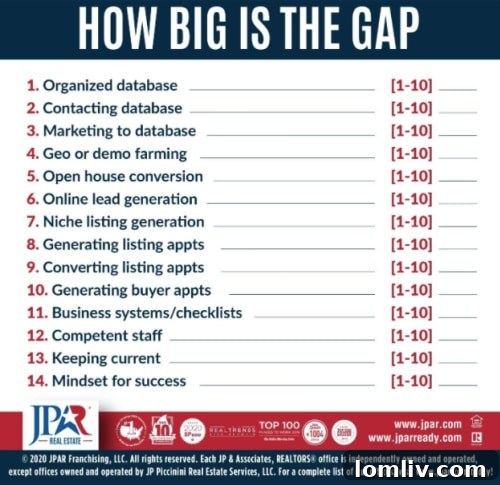
The power of your CRM extends far beyond basic contact management. It serves as the foundation upon which many other critical aspects of your business depend. For instance, the first three factors of the business assessment located at the bottom of this post—and indeed, many of the subsequent 11 items—are directly influenced by the quality and utilization of your CRM. A high-quality CRM empowers you to manage marketing campaigns, track transaction progress, streamline client onboarding, and even forecast future revenue. It’s the engine that drives efficiency, ensures consistency, and provides the data necessary for informed decision-making and sustainable growth. Investing time in mastering your CRM is an investment in the long-term health and scalability of your real estate business.
5. Build Trust: The Art of Authentic Connection
Trust is the bedrock of any successful relationship, especially in real estate, where clients are making one of the most significant financial and emotional decisions of their lives. While conventional wisdom might suggest explicitly using words like “trust” and “honesty” in your marketing, research actually indicates that such direct claims can have the opposite effect. They can inadvertently sound defensive or as if you’re trying too hard to convince, rather than naturally earning, that trust. The path to building genuine trust is often more nuanced and less intuitive than simply stating your intentions.
Instead of telling clients to trust you, demonstrate trustworthiness through your actions, transparency, and the tools you employ. Consider the fascinating insight that agents utilizing “Drone Photography” in their property listings generated significantly more trust among consumers than those who didn’t. Why? Drone photography offers a comprehensive, bird’s-eye view, providing a level of transparency and detail that traditional photos cannot match. It suggests a commitment to professionalism and a willingness to invest in showcasing a property in its best, most complete light. Similarly, agents who incorporated virtual video walk-throughs of a home or provided richly annotated virtual tours were perceived as far more trustworthy than their counterparts. These technologies offer an immersive, unvarnished look at a property, allowing potential buyers to explore every detail from the comfort of their home. This transparency reduces uncertainty, builds confidence, and fosters a sense of authenticity.
Therefore, what you *think* builds trust might not always align with what truly resonates with your audience. The key is to constantly evaluate your approach and integrate elements that provide genuine value, enhance transparency, and demonstrate your commitment to a superior client experience. Focus on actions and tools that convey professionalism, thoroughness, and openness, rather than relying on overt declarations. By adopting these client-centric, technology-driven strategies, you’ll organically cultivate the deep trust essential for long-term client relationships and sustained success in real estate.
6. Calls To Action: Guiding Your Clients to the Next Step
One of the most common missed opportunities in real estate marketing and client meetings is the absence of a clear, compelling call to action (CTA). Many engaging conversations or beautifully designed marketing pieces fall flat because they leave the client wondering, “What do I do next?” An appointment ending without a defined next step is simply a conversation that failed to progress. Similarly, marketing materials without a clear directive are merely information, not instruments for engagement. The singular purpose of all your marketing efforts is to secure an appointment, and the ultimate goal of any meeting should be to establish and agree upon the very next logical step in the client’s journey.
To maximize conversions and maintain momentum in both your marketing and your client interactions, clarity is paramount. Here are four essential strategies to ensure your calls to action are potent and effective:
- Simplify Your Offer: Overwhelm leads with too many options or complex choices, and they’ll choose none. Distill your offer down to its simplest, most compelling value proposition. What is the single, most beneficial action you want them to take? Make that crystal clear.
- Make it EASY to Schedule an Appointment: Friction is the enemy of conversion. If booking an appointment requires multiple emails, phone tag, or navigating a cumbersome system, you’ll lose prospects. Utilize intuitive scheduling tools like Calendly that allow clients to see your availability and book a slot instantly, with minimal effort. The easier it is, the more likely they are to act.
- Adopt a Culture of Always Be Testing – “#ABT”: What works for one audience or market might not work for another. Embrace a mindset of continuous improvement by testing different CTAs, messaging, and visual elements. A/B test headlines, button colors, and offer language. Track your results diligently and let data guide your decisions. This iterative process ensures you’re always optimizing for the highest possible conversion rates.
- ASK For The Next Step: This may seem obvious, but many sales professionals hesitate to explicitly ask for the next step. At the conclusion of a meeting or within your marketing, clearly articulate what you propose as the logical progression. “May I set up a time next Tuesday to review these market comps?” or “Click here to download our free home valuation guide.” Be direct, confident, and specific. Guide your client, don’t leave them guessing.
By implementing these strategies, you’ll transform your marketing and meetings into focused, action-oriented interactions that consistently move clients forward, securing appointments and ultimately, driving significant sales growth.
How Big Is Your Gap? A Self-Assessment for Growth
Continuous self-evaluation is a cornerstone of professional development. To help you pinpoint areas for improvement and guide your strategic planning, we’ve outlined 14 critical areas that are fundamental to a thriving real estate practice. This assessment is designed as a personal reflection tool, allowing you to honestly evaluate your current performance and identify where your biggest opportunities for growth lie.
On a scale of 1 (low proficiency or significant room for improvement) to 10 (high proficiency or expert level), take a moment to honestly rank yourself in each of these vital categories. This exercise will provide a clear snapshot of your strengths and highlight the “gaps” in your current operations. Understanding where these gaps exist is the first crucial step toward developing targeted strategies to enhance your skills, refine your processes, and ultimately, achieve your goal of doubling your real estate sales.