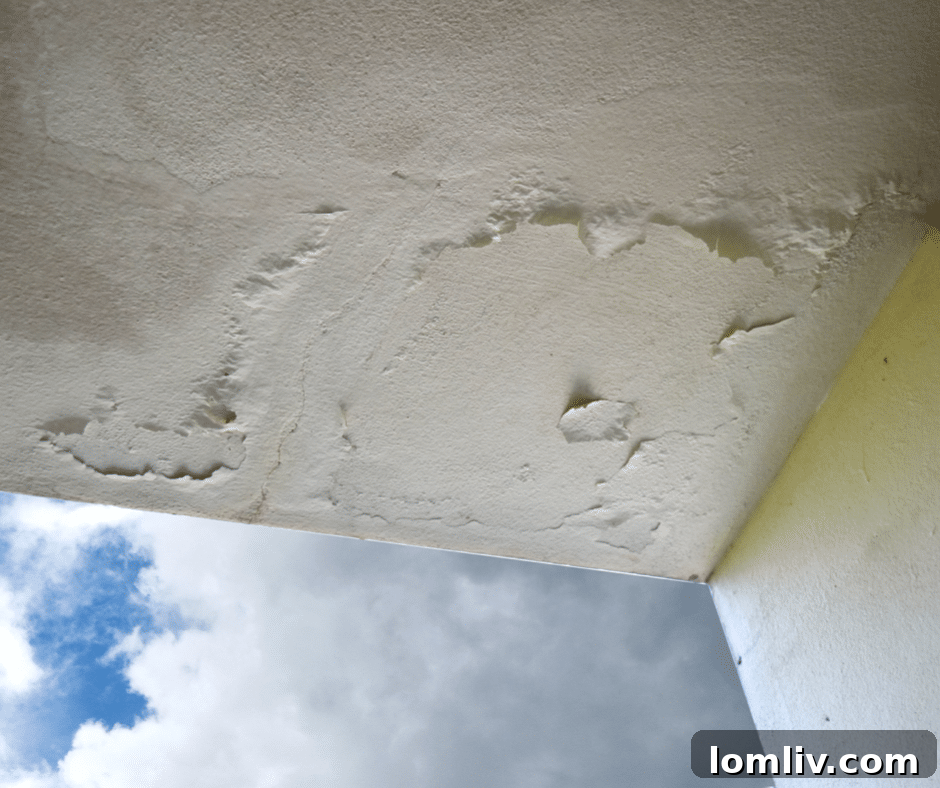
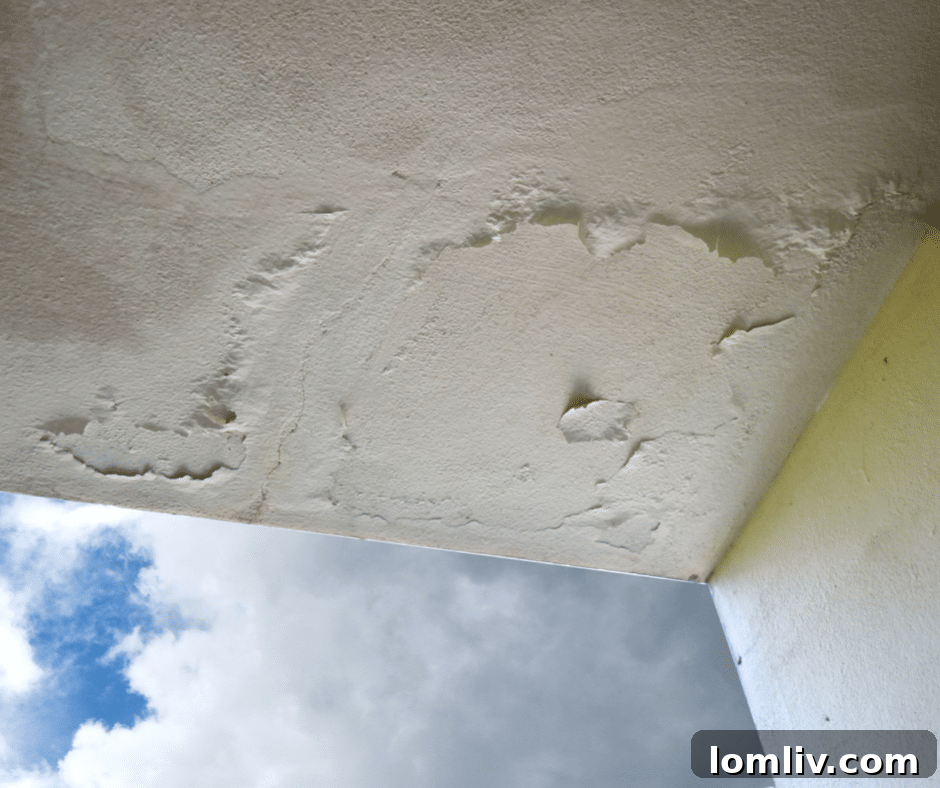
Water: the essence of life, indispensable for our survival and daily routines. Yet, this vital element harbors a destructive potential when it breaches the boundaries of your home. From a gentle drip to a full-blown flood, uncontrolled water can inflict significant, costly, and often hidden damage on a property. Understanding the myriad ways water can infiltrate and devastate your home is crucial for every homeowner, especially those on the cusp of purchasing a new residence. This isn’t just about visible puddles; it’s about the insidious seepage that can undermine foundations, foster mold, and compromise structural integrity over time.
Whether it’s serving our needs through pipes for drinking, bathing, and laundry, or descending from the heavens as rain, water possesses an uncanny ability to find its way into unwelcome spaces. And when you’re navigating the complex journey of buying a home, the keen eye of a professional home inspector becomes your most valuable asset. These experts are trained to identify not just the obvious leaks, but also the subtle signs of past or present water intrusion that could spell major trouble down the line. They’re the detectives who connect the dots, tracing water damage back to its source, often revealing issues that an untrained eye would completely miss. Ignoring these early warning signs can lead to escalating repair costs, diminished property value, and even health hazards. Let’s delve into some common examples of water damage found during home inspections, illustrating why vigilance and professional assessment are paramount.
Unraveling the Mystery: Tracing Water Damage from the Roof Down
One of the most frequent and potentially devastating sources of water damage originates from the roof. The integrity of your roof is your home’s primary shield against the elements, and any compromise can have cascading effects throughout the entire structure. A skilled home inspector understands that visible water stains on a ceiling or wall are often just symptoms of a larger, more complex problem hidden higher up. This video serves as an excellent illustration of an inspector’s methodical approach to problem-solving, meticulously connecting seemingly disparate clues to pinpoint the root cause.
In this scenario, a structural flaw in the roof design or a neglected repair causes water to pool every time precipitation occurs. This stagnant water then seeps through the roofing materials, insulation, and framing, creating progressive water damage to everything beneath it. The immediate consequences can include stained ceilings, blistering paint, and softened drywall. However, the long-term ramifications are far more severe: the proliferation of mold and mildew, which poses significant health risks; compromise of the wooden structural components leading to rot and weakening; and potential electrical hazards if water reaches wiring. This cycle of damage will persist, intensifying with every rain shower, until the fundamental issue with the roof structure is professionally addressed and repaired. Regular roof inspections, especially after severe weather, are crucial for identifying and mitigating such problems before they escalate into major restoration projects. A proactive approach to roof maintenance is an investment in the overall health and longevity of your home.
Exterior Defense: The Critical Role of Gutters and Drain Spouts
Beyond the roof itself, proper exterior drainage systems, specifically gutters and drain spouts, play an indispensable role in directing rainwater away from your home’s foundation. Neglecting these components can lead to some of the most pervasive and costly forms of water damage. The sight of a rusty, dilapidated drain spout, as depicted in the image, is an immediate red flag for any home inspector.
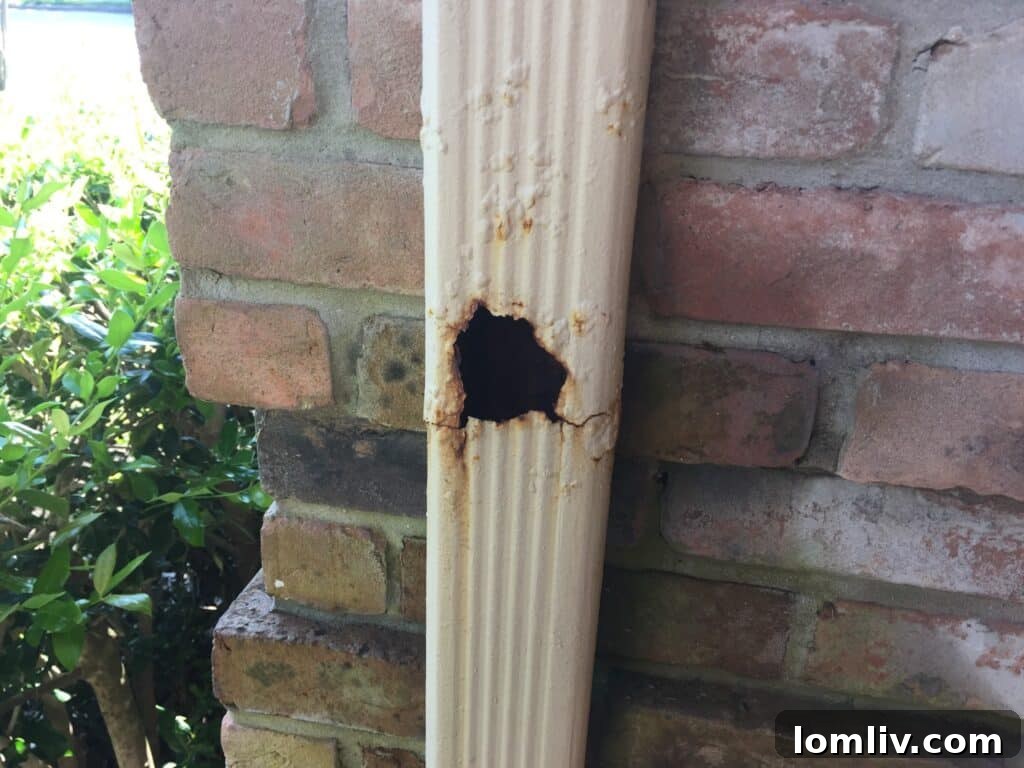
As we anticipate or navigate the rainy seasons, it’s paramount to ensure that your home’s drain spouts and gutters are not only present but also in optimal working condition. A rusty hole like this indicates prolonged exposure to moisture and corrosion, significantly compromising its ability to channel water effectively. Beyond visible damage, gutters often become clogged with leaves, twigs, and other debris, preventing water from flowing freely. When gutters are blocked or damaged, rainwater overflows, cascading directly down the side of your house and pooling around the foundation.
The consequences of faulty or neglected gutters and drain spouts are extensive. Water pooling around the foundation can lead to soil erosion, compromise the structural integrity of your home, and potentially cause extensive foundation cracks or shifting. This can manifest as sticking doors and windows, cracks in interior walls, and costly structural repairs. Furthermore, overflowing gutters can saturate exterior walls, leading to wood rot in fascia boards, soffits, and siding, creating entry points for pests, and fostering mold growth in damp areas. In basements or crawl spaces, this excess water can lead to chronic dampness, musty odors, mold infestations, and even outright flooding. Ensuring that gutters are regularly cleared of debris, securely fastened to the house, and that drain spouts extend far enough away from the foundation (ideally 5-10 feet) is a fundamental aspect of home maintenance. This simple preventative measure can save homeowners thousands of dollars in potential water damage repairs and preserve the long-term structural health of their property.
Plumbing Vulnerabilities: The Silent Threat of a Leaky Cleanout
While external elements are major contributors to water damage, internal plumbing issues, even minor ones, can be equally destructive. A prime example is a leaky plumbing cleanout, a component often overlooked until it becomes a problem. This is a plumbing cleanout, typically found on an exterior wall, often near your kitchen sink. Its primary purpose is to provide an accessible opening to your home’s drain pipes, making it easier for plumbers to clear clogs and perform maintenance on your wastewater system.
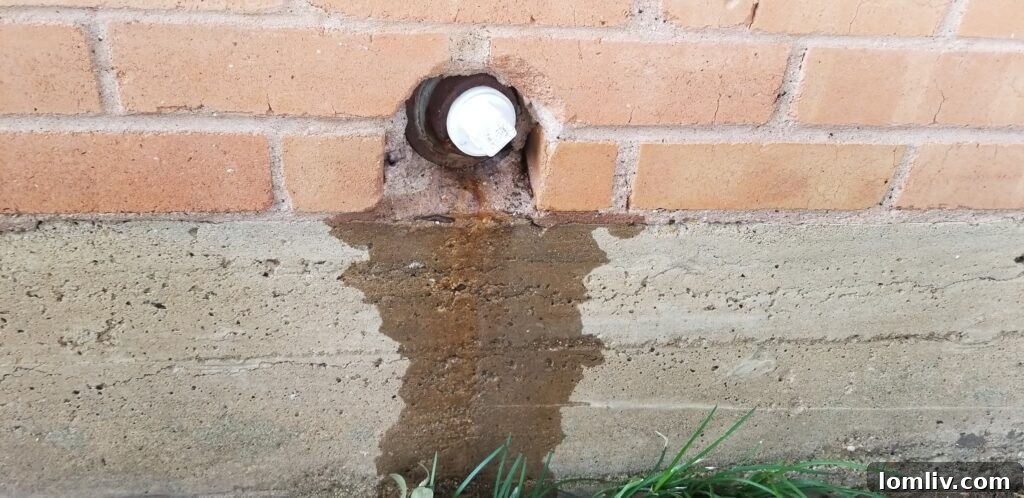
However, when a cleanout is leaking, as this image clearly shows, it signifies a compromised seal or connection. This means that every time the kitchen sink is used, the dishwasher runs, or any wastewater flows through that section of the plumbing, water is slowly but consistently seeping out. While it might appear as a small, insignificant drip, the cumulative effect over weeks, months, or years can be catastrophic. Unchecked, this persistent water intrusion directly into the soil adjacent to your home can lead to severe foundation damage. The soil surrounding a foundation is designed to maintain a consistent moisture level; excess water can cause the soil to expand and contract unevenly, leading to settling, cracking, and shifting of the foundation. Beyond the foundation, this moisture can attract pests, promote the growth of mold and mildew in hidden cavities, and degrade the surrounding landscaping. It’s a classic example of how a seemingly minor plumbing issue, if ignored, can trigger a chain reaction of costly structural problems. Regular inspection of all external plumbing components, including cleanouts, is essential for early detection and repair, safeguarding your home’s most critical structural element.
The Perilous Mix: Leaky AC Unit and Electrical Panel
Some water damage scenarios escalate from costly repairs to immediate, life-threatening hazards, particularly when water interacts with electrical systems. The combination of a leaky AC unit and an adjacent electrical panel represents one of the most dangerous configurations a home inspector can uncover. Having an electrical panel positioned on the floor is generally ill-advised due to its susceptibility to ground-level moisture, but placing it *right* next to the water collection pan of an AC unit is an invitation for disaster.
@greenscenehome Leaky AC + Electrical Panel = BAD. #homeinspectionfinds #electrocution #askahomeinspector #austinrealestate #dallasrealestate #homeinspector #badidea
♬ original sound – Green Scene Home Inspections
Air conditioning units, particularly the indoor evaporator coils, generate condensation as they cool the air. This condensation collects in a drain pan and is typically channeled away through a condensate drain line. However, a clogged drain line, a cracked drain pan, or a malfunctioning condensate pump can cause the pan to overflow. When this overflow occurs directly next to an electrical panel, the risks are immediate and severe. Water is an excellent conductor of electricity, meaning that even a small amount of water seeping into the panel can cause short circuits, damage to critical electrical components, and potentially lead to electrical fires. The most alarming risk, however, is the potential for electrocution. Any individual coming into contact with a water-logged electrical panel, or even standing in water that has been electrified, faces a life-threatening shock hazard. This highly dangerous setup underscores the importance of proper appliance installation, regular HVAC maintenance (including checking condensate lines), and strict adherence to electrical safety codes which dictate clear separation between water sources and electrical equipment. Identifying and rectifying such perilous situations is a top priority during any home inspection, ensuring the safety of the future occupants.
Proactive Homeownership: Essential Water Damage Prevention Strategies
While the examples above highlight critical areas prone to water damage, effective homeownership extends to a broader proactive approach to prevention. Understanding and implementing basic maintenance can significantly reduce the risk and severity of water-related issues throughout your property.
- Regularly Inspect Plumbing Fixtures: Routinely check faucets, toilets, showerheads, and under-sink pipes for any signs of leaks or drips. Even the smallest leak can contribute to mold growth and structural damage over time. Pay close attention to appliance hoses for washing machines, dishwashers, and refrigerators, replacing them every 3-5 years or if signs of wear appear.
- Know Your Water Shut-Off Valve: Locate your home’s main water shut-off valve and ensure everyone in the household knows how to turn it off. In the event of a burst pipe or major leak, quickly cutting off the water supply can prevent catastrophic damage.
- Maintain Water Heaters: Water heaters have a limited lifespan and can leak significantly when they fail. Inspect your water heater periodically for rust, corrosion, or pooling water. Consider having it flushed annually by a professional to remove sediment and extend its life. Installing a drip pan underneath with a drain connection can also offer protection.
- Winterization Precautions: In colder climates, adequately insulate exposed pipes in unheated areas like basements, crawl spaces, and attics. Disconnect garden hoses and shut off outside water spigots to prevent pipes from freezing and bursting during winter months.
- Ensure Proper Ventilation: Adequate ventilation in bathrooms, kitchens, and basements is crucial to prevent the buildup of humidity, which can lead to condensation, mold, and mildew. Use exhaust fans during and after showering or cooking.
- Address Landscaping and Grading: Ensure the ground around your home slopes away from the foundation at least 6 inches over a 10-foot span. This directs rainwater away from the house rather than allowing it to pool against the foundation walls. Avoid planting large shrubs or trees too close to the foundation, as their roots can interfere with underground pipes or drainage systems.
- Seal Cracks and Gaps: Inspect your home’s exterior for any cracks in the foundation, siding, or around windows and doors. Seal these openings promptly with appropriate caulk or sealant to prevent water intrusion.
- Consider Water Detection Devices: Smart home technology now offers affordable water leak detectors that can be placed in vulnerable areas (under sinks, near water heaters, in basements) and send alerts to your phone if moisture is detected.
By integrating these preventative measures into your routine home maintenance schedule, you can significantly reduce the likelihood of costly water damage and ensure your home remains a safe and sound environment for years to come.
Conclusion: Safeguarding Your Home from Water’s Wrath
Water, while essential for life, poses one of the most persistent and costly threats to homeownership. From the subtle drip of a leaky cleanout to the catastrophic potential of a compromised roof or an AC unit threatening an electrical panel, water damage manifests in countless forms, often silently undermining your most valuable asset. The examples discussed highlight not only the diverse sources of water intrusion but also the compounding and often hidden dangers they present, ranging from structural degradation and mold infestation to severe safety hazards like electrocution.
The journey of homeownership, whether you’re a first-time buyer or a seasoned veteran, demands vigilance. Proactive maintenance, understanding your home’s vulnerabilities, and swiftly addressing even minor issues are fundamental to preventing significant damage. Above all, the role of a professional home inspector cannot be overstated. Their expert eye and diagnostic skills are indispensable in identifying these critical issues before they become your responsibility. Investing in a thorough home inspection is not merely a transactional step; it’s a strategic decision to safeguard your investment, ensure your family’s safety, and maintain the long-term integrity of your home against the relentless and often unseen forces of water.