Frisco Battles Brazos/CoServ Over High-Voltage Power Lines: The Fight for Home Values and Property Rights
A contentious battle is unfolding in Frisco, a rapidly growing northern suburb of Dallas, as local homeowners and real estate professionals unite against a proposed high-voltage power line project. Spearheaded by Brazos Electric Power Cooperative Inc. and CoServ Electric, the project threatens to install imposing above-ground transmission lines through established and developing residential areas, sparking fierce opposition from a mobilized community. At stake are not just the scenic landscapes of Frisco but also the financial security and private property rights of its residents.
This dispute marks a significant moment, with the Collin County Association of Realtors (CCAR) joining forces with homeowners – an unprecedented alignment that underscores the severity of the potential impact. The real estate community recognizes the profound implications these power lines could have on home values, marketability, and the overall desirability of living in Frisco.
The Proposed Power Line Project: What’s at Stake?
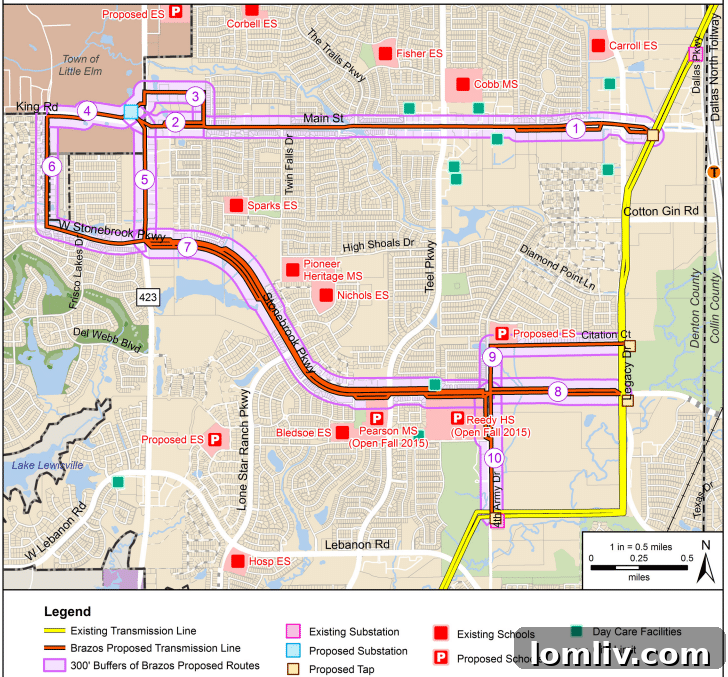
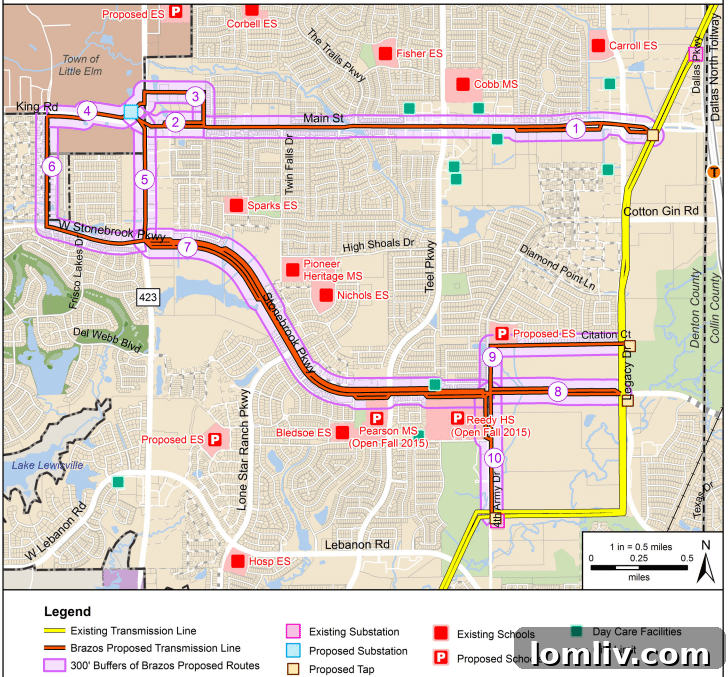
The heart of the controversy revolves around a plan to construct an above-ground, 138,000-volt, double-circuit power line. This substantial infrastructure, envisioned by Brazos on behalf of CoServ, is designed to enhance the electrical grid and serve the burgeoning populations of Frisco, Little Elm, and The Colony – a region experiencing some of the nation’s fastest growth. The proposed line would originate from an existing transmission line situated west of the Dallas North Tollway, extending between 2.7 and 4.1 miles, depending on the chosen route, to a new substation planned for King Road, west of Farm-to-Market Road 423.
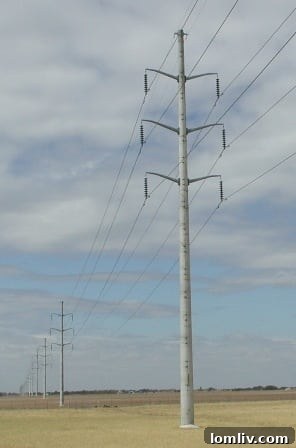
Two primary routes are under consideration for these towering structures, which could reach heights comparable to 12-story buildings: Stonebrook Parkway or Main Street. Both corridors are integral to Frisco’s residential fabric, weaving through densely populated neighborhoods where families have invested their life savings. The prospect of such massive industrial infrastructure dissecting their communities has ignited a powerful resistance movement.
A Unified Front: Homeowners and Realtors Join Forces
In response to the proposal, the West Frisco Homeowners Coalition (WFHOC) and the Collin County Association of Realtors (CCAR) have forged a formidable alliance. Their unified message is clear: the above-ground high-voltage transmission lines are unacceptable. They argue that these colossal structures will not only be an eyesore but will also profoundly infringe upon the rights and well-being of homeowners. Instead, they advocate for a common-sense solution: burying the power lines underground.
“This isn’t merely about property devaluation; it’s a fundamental assault on homeownership and private property rights,” stated Adam Majorie, Government Affairs Director for the CCAR. He further emphasized the pervasive damage such lines could inflict: “We believe these above-ground lines will detrimentally affect homeowners, impacting entire neighborhoods and eroding what many consider their most significant financial asset—their ‘nest eggs.'” The sentiment resonates deeply within the community, highlighting concerns that extend beyond mere aesthetics to the very foundation of financial stability and quality of life.
Community Mobilization and Strategic Action
The WFHOC and CCAR have demonstrated remarkable organizational prowess in mobilizing the community. On November 13, a packed town hall meeting at Wakeland High School in Frisco drew hundreds of concerned residents, eager to learn about the situation and plan their next moves. Reporting from WFAA highlighted the collective determination of the attendees, who discussed strategies for challenging Brazos/CoServ’s future application with the Public Utility Commission (PUC) for a Certificate of Convenience and Necessity – the vital permit required to commence construction.
A cornerstone of their grassroots efforts is burythelines.org, a dedicated website launched in September 2014. This platform serves as a central hub for information, advocacy, and community engagement, empowering residents to voice their opposition and support the call for undergrounding the power lines. Majorie noted that their relentless advocacy is yielding results, with the utility companies now reportedly considering underground options, a significant departure from their initial proposals.
“The original 2013 proposal completely lacked any underground alternatives. We anticipate that the application Brazos/CoServ submits to the PUC, likely in December or January, will include at least two new options, both proposing underground routes,” Majorie confirmed, noting that these would still follow the same general pathways. This development represents a partial victory for the community, validating their sustained pressure and advocacy.
The Cost Dilemma: Overhead vs. Underground
While the community’s efforts have pushed for underground options, the financial implications are considerable. Officials estimate a stark contrast in construction costs: approximately $3.5 million for an overhead line versus a staggering $31.5 million for an underground line, as reported by the Dallas Morning News. This nearly tenfold increase in cost is a significant factor in the debate. The City of Frisco, which firmly opposes an above-ground line, points out that the overhead cost estimate does not even include the substantial expense of acquiring the necessary rights-of-way, further complicating the financial picture.
A crucial aspect often overlooked is who ultimately bears these costs. Regardless of whether an overhead or underground option is selected, the financial burden will fall on taxpayers within the Electric Reliability Council of Texas (ERCOT) grid, which encompasses the majority of the state. This means residents across Texas, not just those in Frisco, would contribute to the project’s funding, raising questions about accountability and public input in major infrastructure decisions. The community argues that if taxpayers are footing the bill, their preferences for a more aesthetically pleasing and community-friendly solution should carry significant weight.
Navigating the Regulatory Landscape: The PUC Challenge
The next phase of this battle will unfold within the regulatory arena. Once Brazos/CoServ formally submits its application to the PUC, burythelines.org plans to mount a formal challenge. This legal and administrative process is expected to lead all parties before an administrative law judge, who will arbitrate the competing interests and ultimately make a recommendation to the PUC regarding the Certificate of Convenience and Necessity. This legal proceeding will be critical, as it provides a structured platform for the community to present its arguments, evidence, and preferred solutions.
Last year, WFHOC chairman Kendall Meade spearheaded a remarkable public outreach campaign, orchestrating a deluge of comments from over 3,000 individuals to the PUC. This unprecedented public response demonstrated the depth of community concern. The organizations plan to replicate this successful strategy once the Brazos/CoServ application is filed, hoping to sway the PUC to mandate the underground option. Such a decision would not only be a victory for Frisco but could also set a precedent for future utility projects in rapidly urbanizing areas across Texas.
Impact on Residents and the Vision for Frisco
The statistics compiled by burythelines.org paint a sobering picture of the project’s potential reach: an estimated 19,700 residents would be directly impacted by above-ground power lines at current population levels, a number projected to surge to 34,700 residents upon full build-out of the area. These figures underscore the vast human element at the core of this infrastructure debate.
“This fight transcends mere infrastructure; it’s fundamentally about homeownership and the sanctity of private property rights,” asserted Meredith Held, a past president of CCAR and a dedicated member of the WFHOC. “We must ensure that our region’s dynamic growth does not come at the expense of our cherished neighborhoods. Preserving property values is paramount. Burying these lines represents the optimal compromise – a solution that supports progress without sacrificing our community’s character and residents’ investments.”
Beyond the tangible concerns of property values and legal rights, there are significant quality-of-life issues. Above-ground power lines are universally acknowledged as unattractive, creating visual blight that detracts from residential aesthetics. Furthermore, Texas residents are all too familiar with the fragility of overhead infrastructure, especially during severe weather events like ice storms, which can plunge entire communities into darkness for days. The stark reality of prolonged power outages often highlights the superior resilience and reliability of underground utility systems.
A Call for Public Dialogue and Future-Proofing
The ongoing struggle in Frisco serves as a powerful reminder of the delicate balance between urban development, utility expansion, and community well-being. If taxpayers are ultimately responsible for financing these critical infrastructure projects, a transparent and robust dialogue regarding their preferences and priorities becomes essential. Why should communities accept antiquated, visually intrusive, and vulnerable overhead solutions when more robust, aesthetically pleasing, and resilient underground alternatives exist?
This situation compels us to ask: What do you think is the best path forward for Frisco and other communities facing similar challenges? Should aesthetic impact, property values, and community preference be weighed more heavily against initial cost savings? The decisions made in Frisco today could establish a critical precedent for how rapidly growing regions across Texas manage their infrastructure needs while preserving the quality of life for their residents.