Unmasking the Millennium Title Fraud: Nancy Carroll’s Multi-Million Dollar Real Estate Scheme in North Texas
The dawn of 2018 marked the conclusion of one of North Texas’s most audacious and egregious real estate fraud schemes, a saga that left a trail of financial devastation and shattered trust. At the heart of this intricate web of deceit was Nancy Carroll, also known by her married name, Nancy Jackson Spinks. Her illicit activities, orchestrated through Millennium Title in Southlake, culminated in a dramatic sentencing that brought a measure of justice, yet also underscored the profound challenges faced by victims of elaborate financial crimes.
The Day of Reckoning: Sentencing in Tarrant County
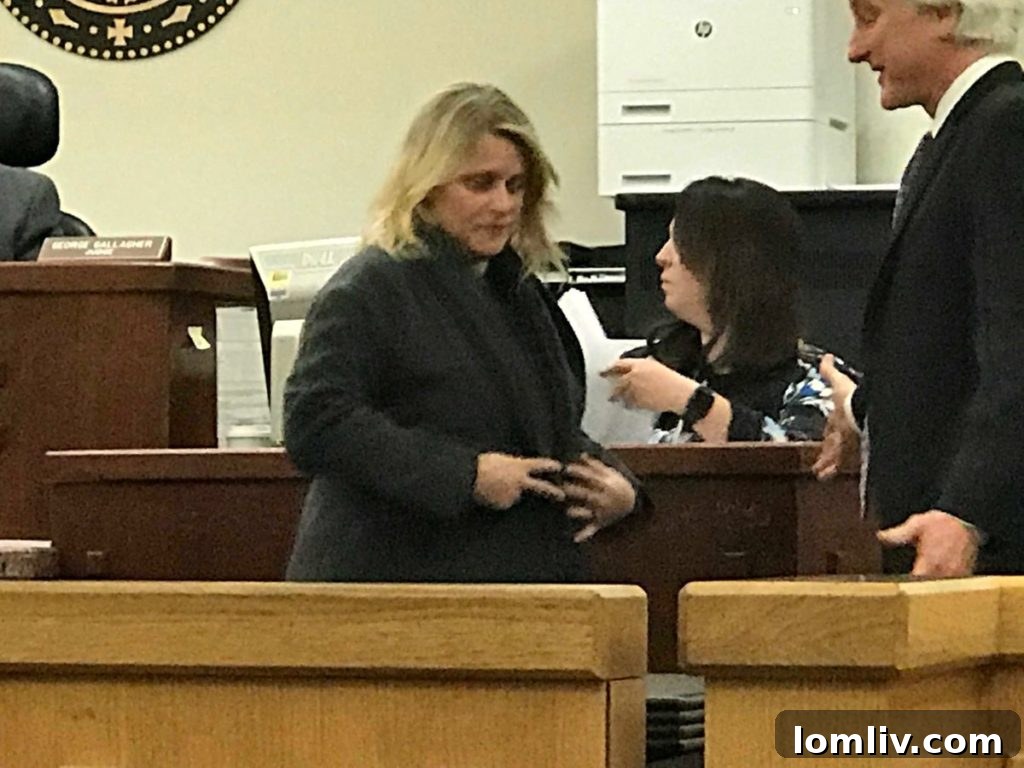
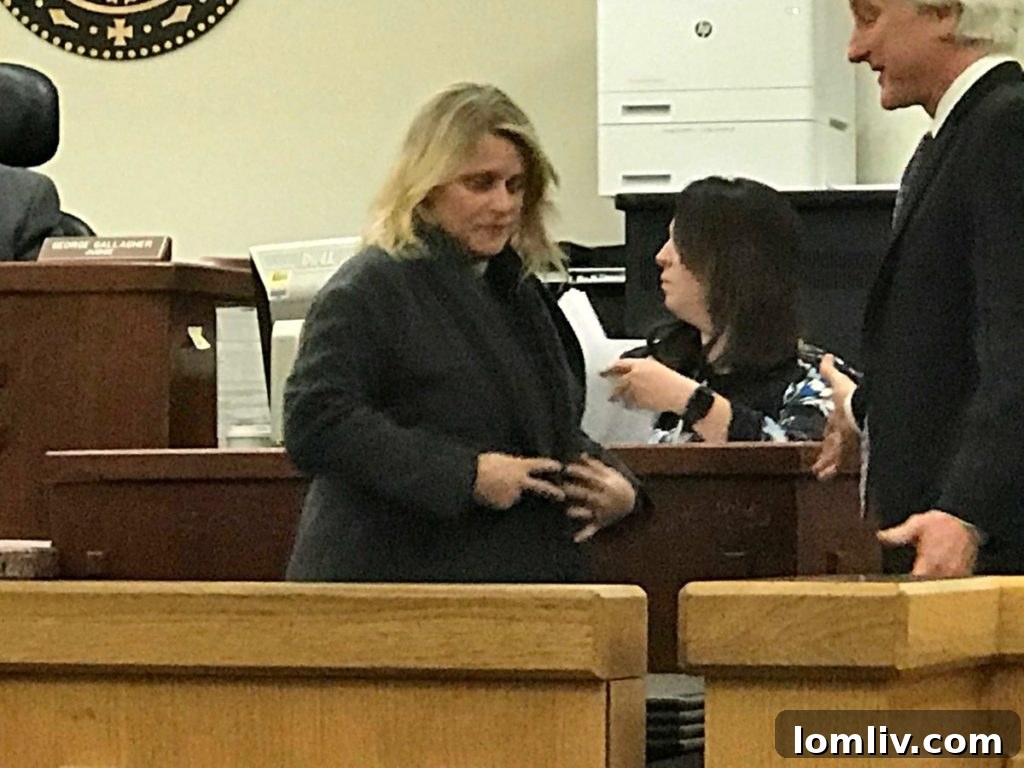
On January 4th, 2018, the solemn atmosphere of a Tarrant County district courtroom set the stage for Nancy Carroll’s fate. Accompanied by her legal counsel, Lance Evans, Carroll entered the courtroom, a stark contrast to the persona she had projected during her years of fraud. Her husband, Bubba Spinks, 23 years her junior, sat alone in the rear of the room, a silent observer to the unraveling of their shared life. For 46-year-old Carroll, the day ended not with freedom, but with the cold click of handcuffs, symbolizing the immediate commencement of her 10-year prison sentence. Judge George Gallagher delivered the verdict, a reduced sentence from an initial 20-year recommendation, intended as reparation for the staggering sum of over $8.6 million she had siphoned from 23 victims through a sophisticated money-laundering operation at Millennium Title.
The funds she stole represented the life savings, investment capital, and even crucial insurance payouts that clients had entrusted to her firm during critical life events such as home sales, closings, and specialized 1031 Exchanges. Her crimes were not merely financial transactions; they were profound betrayals of trust that left countless individuals and families in dire financial straits.
A Web of Deceit: The Modus Operandi of Nancy Carroll’s Scheme
Nancy Carroll’s criminal enterprise at Millennium Title was characterized by a multifaceted approach to defrauding clients. Her scheme encompassed various methods, each designed to illicitly enrich herself at the expense of unsuspecting individuals and businesses:
Misappropriation of Client Funds in Real Estate Transactions
At its core, Carroll’s fraud involved the direct theft of funds entrusted to Millennium Title for legitimate real estate transactions. Clients believed their money was securely held in escrow for home sales and closings, only for Carroll to divert these funds for her lavish personal use. The integrity of the real estate closing process, a cornerstone of property law, was fundamentally undermined by her actions.
Defrauding 1031 Exchange Investors
One particularly damaging aspect of Carroll’s fraud involved 1031 Exchanges, a complex but legitimate strategy allowing real estate investors to defer capital gains taxes on the sale of investment property by reinvesting the proceeds into a similar property. These transactions require careful handling of funds by a qualified intermediary. Carroll exploited the trust placed in her company, absconding with significant sums intended for these exchanges. For investors relying on these provisions, the loss was not just financial; it also carried severe tax implications and jeopardized future investment opportunities.
Betrayal of Grieving Families: The Jeremiah Adam Wright Case
Perhaps one of the most heartbreaking instances of Carroll’s avarice involved the family of Jeremiah Adam Wright. After Wright’s tragic death in a motorcycle accident in 2005, his widow sought Carroll’s expertise to establish a trust account for the $100,000 in life insurance funds she and her two young daughters received. Carroll assured the grieving family she would secure a tax identification number for the estate and deposit the funds into a Wise County court registry. However, these funds were never deposited, vanishing instead into Carroll’s illicit accounts. This callous act underscored the predatory nature of her scheme, targeting even the most vulnerable.
Money Laundering and Ponzi-Like Deceptions
Court records detail how Carroll engaged in multiple acts of money laundering across North Texas. She routinely used stolen funds to pay off notes on her personal real estate acquisitions, intertwining her legitimate property interests with the proceeds of her crimes. Furthermore, she devised a Ponzi-like scheme, placing other individuals’ real estate assets into trusts to conceal her true ownership and control. A particularly chilling account came from a victim mowing his lawn in McKinney, who was served with foreclosure documents on a prior home he believed he had sold through Nancy Carroll. Instead of wiring the payoff, Carroll had placed the property into a trust, making monthly payments herself. Once these payments ceased, the bank initiated foreclosure proceedings, leaving the unsuspecting former homeowner facing devastating legal and financial repercussions. This intricate web of deceit highlighted her sophisticated understanding of real estate law, which she twisted to her criminal advantage. The widespread nature of her fraud prompted at least one North Texas real estate firm to send warning letters to its customers, a testament to the pervasive fear and uncertainty her actions created:

From Fugitive to Defendant: Carroll’s Extravagant Life and Capture
In the weeks leading up to the Texas Department of Insurance (TDI) taking Millennium Title into receivership, Nancy Carroll fled Texas, seeking refuge in suburban Chicago. Far from showing remorse, her actions during this period revealed an astonishing sense of entitlement and detachment from her victims’ suffering. From her leased home in Illinois, costing a staggering $8,500 per month, Carroll contacted her mother with audacious plans. She expressed a desire to connect with the publisher of “The Wolf of Wall Street,” envisioning a book and movie based on her own exploits, tentatively titled “Everything that Glitters is not Gold,” with Reese Witherspoon slated to star. The proposed cover? Her own handcuffed hands clutching a Louis Vuitton handbag—a grotesque symbol of her self-perceived victimhood and her ongoing obsession with luxury, even amidst her downfall.
During recorded phone calls while in custody in Illinois, Carroll reportedly scoffed at the idea of serious prosecution, dismissing her crimes as “white collar” and predicting a mere “slap on the wrist.” She even gave herself the moniker “Millennium Mobster,” demonstrating a chilling lack of insight into the gravity of her actions. However, her confidence was misplaced. Her capture was ultimately facilitated by her husband’s use of one of her credit cards to purchase food at a suburban Chicago mall, leading authorities directly to her hideout.
Obstruction of Justice from Behind Bars
Even after her arrest and while incarcerated in Lake Forest, Carroll continued her attempts to evade accountability. She made several calls to her husband, instructing him to withdraw the maximum amounts from various bank and PayPal accounts. Prosecutors later revealed these were blatant efforts to liquidate assets and prevent authorities from seizing the funds she had illicitly acquired while bankrupting her company. In another damning act, she directed her husband to have her son wipe her cellphone, a desperate attempt to destroy crucial evidence pertaining to her case. These actions paint a picture of a calculating individual persistently trying to manipulate the legal system and hide the spoils of her fraud.
The Extravagant Lifestyle Fueled by Fraud

The scale of Nancy Carroll’s real estate fraud was directly linked to her insatiable desire for an opulent lifestyle. Her excessive spending habits were truly staggering, highlighting the personal enrichment that drove her criminal enterprise. According to court testimonies and investigations, Carroll squandered stolen millions on:
- Lavish fur coats and an extensive wardrobe of designer goods.
- Multiple luxury vehicles, including several Mercedes-Benz cars.
- Significant investments in horses, indicating an expensive hobby.
- Over $75,000 dedicated to the construction of a luxurious swimming pool at her Keller home.
- A staggering $12,500 for tickets to a Taylor Swift concert, demonstrating her pursuit of high-end entertainment.
- $4,300 to attend the prestigious Academy of Country Music Awards.
- A colossal $100,000 for her second wedding, a lavish affair held at the exclusive Rough Creek Lodge and Resort in Erath County.
These expenditures paint a vivid picture of a woman who felt entitled to a life of extravagance, financed directly by the misappropriated funds of her clients. Prosecutor Nathan Martin succinctly encapsulated her character after the sentencing, declaring her a “financial predator in every sense of the word.” He added, “Without a doubt, she deserves to be in prison,” a sentiment echoed by the victims and investigators who tirelessly worked on the case.
Legal Battles and Consequences
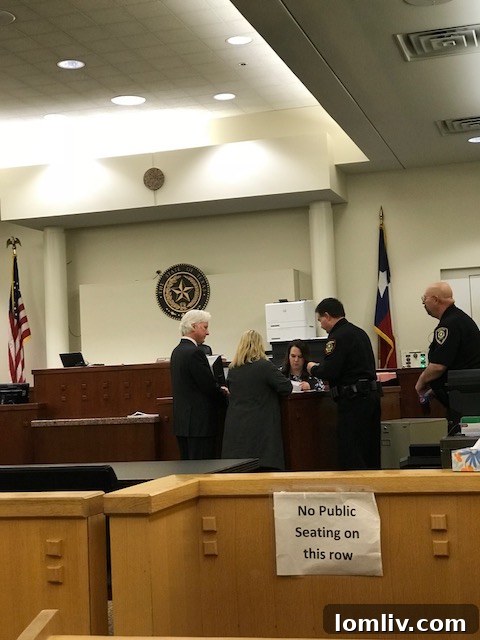
The sentencing hearing itself was a testament to the gravity of Carroll’s crimes, drawing officials from the Texas Department of Insurance (TDI) and several of her victims to witness the legal outcome. While many victims preferred not to speak on camera, their presence underscored the profound impact of Carroll’s white-collar crime spree. Prosecutor Nathan Martin, resolute in his stance, reiterated his condemnation of Carroll as a “financial predator.”
Permanent Disbarment and Denial of Early Release
The question of whether Carroll would ever practice law again in Texas was definitively answered long before her sentencing. She proactively relinquished her law license in August 2016, making her permanent disbarment a certainty. Rumors of her potentially seeking “Shock Probation”—a judicial order placing an offender in prison for a short period before suspending the remainder of the sentence in favor of probation, based on the theory that the initial harsh experience would deter recidivism—were firmly refuted. Prosecutor Martin vehemently opposed any form of early probation, emphasizing that Carroll’s actions warranted the full extent of her sentence.
The Plea Bargain and Its Ramifications
The District Attorney’s Office initially filed a “Consultation Setting Plea Offer Acknowledgement” that recommended a 20-year sentence in the Texas Department of Corrections, an unspecified amount of restitution, and the permanent surrender of her law, real estate, and insurance licenses. Through negotiations, Carroll ultimately received a 10-year sentence, pleading guilty to misappropriation of fiduciary property and theft exceeding $1.6 million. While a significant reduction, the sentence nevertheless marked a substantial period of incarceration for her crimes.
Dedicated Investigations and Personal Impact
TDI investigators played a crucial role in bringing Carroll to justice, working tirelessly on the complex case. One female investigator even traveled to Chicago to personally effect Carroll’s arrest. The personal toll of these investigations was evident; one investigator shared how working on the Carroll case prompted him to re-evaluate his own home-buying process, leading him to demand proof of payoff during his closing. Such anecdotes highlight the broader awareness and caution that Carroll’s case instilled within the industry and among consumers.
Carroll’s Self-Proclaimed Victimhood and Lawsuit
In a bizarre turn, while in custody, Nancy Carroll penned an account of her extradition journey back to Texas, portraying it as less than luxurious. In this narrative, she astonishingly labeled herself a “newly self-professed civil rights activist” and proceeded to sue PTS of America, the transport company responsible for her transfer from jail in Illinois to Texas. Representing herself pro se, Carroll described her six-day transport as “the most dangerous, terrifying, demeaning and inhumane conditions I have ever witnessed,” accusing private transport companies of disregarding basic human rights. Her self-serving narrative stated, “Prior to 2016 I had never been charged with or committed a criminal act… Today I am a newly self-professed civil rights activist, wife, mother of three minor children living in Texas on an ankle monitor awaiting indictment…” This attempt to recast herself as a victim and advocate for civil liberties, despite the overwhelming evidence of her crimes and the suffering she inflicted, further illuminated her profound disconnect from reality.
The Human Cost and Unresolved Restitution
During her sentencing, Nancy Carroll presented a starkly different image than her defiant self from Illinois. Her voice was described as tiny and breaking, she was tearful, and she offered an apology to Judge Gallagher. However, Judge George Gallagher’s response was unyielding: “You don’t need to apologize to me. Your actions have destroyed a lot of lives.” This powerful statement underscored the widespread and lasting devastation Carroll’s fraud had wrought.
Her young husband, Bubba Spinks, the father of her youngest child, remained in the courtroom alone until Carroll was led away. The two, who had met when Bubba was just 15, neither spoke nor made eye contact. Bubba reportedly stormed out of the courtroom when approached by reporters, declining to comment on any potential efforts for probation. Lance Evans, Carroll’s attorney, later conveyed her regret, stating, “Miss Carroll knows the damages that her actions have caused can never be fully repaired, but she hopes what happened today is a start.” While parole could be considered in two to three years, Prosecutor Nathan Martin affirmed his commitment to vigilant oversight, stating, “The actions of Ms. Carroll are a huge consumer concern… She deserves to be in prison, she victimized 23 people.”
The Incomplete Path to Restitution
Of the $8.6 million Carroll/Spinks was ordered to pay in restitution to her defrauded consumers, a significant portion will remain unpaid. Only $3.6 million is expected to be covered by the Texas Department of Insurance’s policy guaranty fund. The Texas Title Insurance Guaranty Association (TTIGA) collects a policy guaranty fee from all title insurance transactions. This fund serves two crucial purposes: to support the title insurance agent audit function of the Texas Department of Insurance and to cover escrow account shortages resulting from the insolvency of a title insurance agent. However, a critical loophole exists: those who lost money on 1031 Exchanges have no recourse under Texas law, leaving them with substantial, irrecoverable losses.
Adding insult to injury, the very consumers who rely on the integrity of the real estate system ultimately bear the financial burden of these protective measures. The fees collected for the guaranty fund are paid by “you and me,” the everyday consumer, highlighting the systemic cost of such egregious fraud.

Lessons Learned: Protecting Consumers from Financial Predators
The case of Nancy Carroll and Millennium Title serves as a stark reminder of the ever-present dangers of financial fraud, particularly within the complex world of real estate. Her actions illuminated critical vulnerabilities in the system and highlighted the devastating consequences when trust is betrayed by those in fiduciary positions. The lessons learned from this North Texas scandal are crucial for both consumers and regulatory bodies alike.
Importance of Due Diligence
For consumers, the most vital takeaway is the imperative of thorough due diligence when selecting title companies, real estate professionals, and financial advisors. It is no longer sufficient to merely accept referrals or assume integrity based on professional credentials. Verification of licenses, checking for any disciplinary actions, and seeking independent reviews are essential steps. Asking for proof of payoff, as the TDI investigator learned, can be a simple yet effective safeguard. Understanding the intricacies of transactions, especially complex ones like 1031 Exchanges, and not shying away from asking detailed questions, empowers individuals to protect their assets.
Vigilance of Regulatory Bodies
The role of regulatory bodies, such as the Texas Department of Insurance, is undeniably critical. Their tireless efforts in investigating, auditing, and ultimately bringing perpetrators like Carroll to justice are paramount. This case underscores the need for continuous oversight, robust auditing functions, and the swift implementation of measures to put fraudulent companies into receivership. Strengthening legal frameworks to close loopholes, particularly those affecting specialized transactions like 1031 Exchanges, is also an ongoing challenge.
Understanding the Cost of Fraud
Finally, the case highlighted a sobering truth: the cost of fraud extends beyond the direct financial losses of victims. The operational expenses of investigative bodies, the legal proceedings, and the very existence of guaranty funds are all ultimately financed, directly or indirectly, by consumers. This collective burden underscores the societal impact of white-collar crime and the shared responsibility in preventing it.
Nancy Carroll’s sentencing closed a dark chapter in North Texas real estate. While justice was served, the pain and financial hardship endured by her victims persist. Her case stands as a potent cautionary tale, urging continuous vigilance, robust consumer protection, and unwavering commitment to ethical practices within the real estate and financial industries.