
The Growing Housing Affordability Crisis for Teachers: A Deep Dive into Dallas-Fort Worth

Across the United States, the rising cost of living, particularly housing, has become a significant challenge for many working professionals. Among those most acutely affected are our nation’s educators, whose salaries, vital as they are, often fail to keep pace with the accelerating housing market. A recent in-depth analysis by Apartment List sheds light on this pressing issue, revealing a stark reality for teachers in major metropolitan areas, including the bustling Dallas-Fort Worth (DFW) region. This report underscores a critical imbalance: while housing prices and rents continue their upward trajectory, teacher salaries in DFW lag significantly, pushing a substantial portion of the educational workforce into a precarious financial state.
The stability and well-being of our teachers are fundamental to the quality of education our children receive. When educators face relentless financial pressure, particularly regarding basic necessities like housing, their ability to focus, perform, and remain in the profession is severely compromised. This article will delve into the findings of the Apartment List study, examining the extent of the housing affordability crisis for Dallas-Fort Worth teachers, comparing it to national trends, and exploring the broader implications for our educational system and society.
The Dallas-Fort Worth Dilemma: Teachers Under Financial Strain
The Dallas-Fort Worth metroplex, a vibrant economic hub, unfortunately, presents a challenging landscape for its teaching community. The Apartment List analysis revealed that nearly 24 percent of primary-earner teachers in DFW are burdened by the cost of their housing. To put this into perspective, a household is typically considered “cost-burdened” if it spends more than 30 percent of its gross income on housing. This 24 percent figure for DFW teachers is alarming, as it indicates a substantial portion of educators are dedicating an unsustainable share of their earnings to keeping a roof over their heads.
The disparity becomes even more striking when comparing teachers to other college-educated professionals. In DFW, the teacher cost burden rate stands at a staggering 48.1 percent higher than the rate for households where the primary earner holds a college degree but is not a teacher. This profound gap highlights a systemic issue where the valuable service provided by educators is not adequately compensated, particularly in comparison to their peers with similar educational backgrounds in other fields. The median income for DFW teachers is reported to be 30.7 percent less than the median income of full-time non-teachers who possess comparable educational qualifications.
A Glimmer of Improvement, Yet Still Far from Sustainable
While the current situation remains challenging, the study notes a marginal improvement in the income gap over time. In 2000, college-educated non-teachers in DFW earned 35.8 percent more than teachers. By 2017, this gap had narrowed slightly to 30.7 percent. Similarly, the proportion of income teachers allocated to housing costs saw a reduction, from almost 58 percent in 2000 to approximately 48 percent. However, even with these incremental improvements, dedicating almost half of one’s income to housing is still significantly above the recommended 30 percent threshold. This means that while conditions have not worsened as dramatically as they could have, they are still far from ideal, placing immense financial pressure on DFW’s dedicated educators.
Furthermore, it’s crucial to recognize that the Dallas-Fort Worth area is not an isolated case. While facing its unique challenges, the struggles of DFW teachers mirror a broader national trend where educator salaries simply haven’t kept pace with the soaring costs of living, especially in competitive housing markets.
The National Picture: A Widespread Crisis for Educators
The challenges faced by DFW teachers are emblematic of a widespread national crisis. Chris Salviati, a housing economist at Apartment List, concisely summarized the national wage disparities: “The median income across primary and secondary school teachers with Bachelor’s degrees is 27.4 percent less than that of non-teachers with Bachelor’s degrees. Teachers with Master’s degrees earn 33.3 percent less than similarly educated non-teachers. These wage gaps are even more extreme for preschool and kindergarten teachers.” These figures paint a grim picture, illustrating how significantly undervalued the teaching profession is in economic terms compared to other fields requiring similar levels of education.
On a national scale, the median income for K-12 teachers holding bachelor’s degrees is approximately $45,000. This is a staggering 27.4 percent less than what their counterparts with comparable education earn in non-teaching professions. For teachers who have pursued advanced degrees, the income gap widens even further, with those holding graduate degrees typically earning about 33 percent less than similarly educated professionals outside of education. The specific mention of preschool and kindergarten teachers facing even more extreme wage gaps highlights a critical area of concern, as these early childhood educators are foundational to a child’s learning journey.
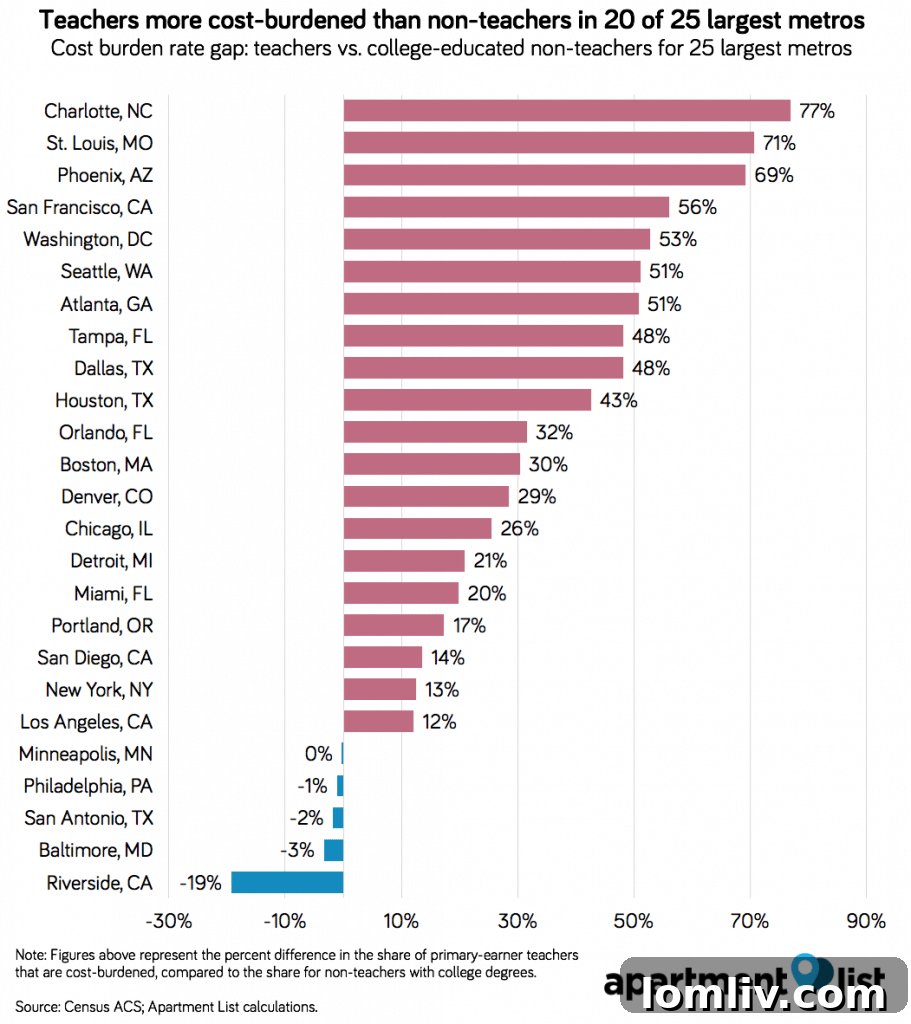
While DFW’s specific cost-burdened teacher rate of nearly 24 percent is concerning, it is indeed higher than the national average rate of 19.9 percent. This suggests that while the problem is national, Dallas-Fort Worth experiences an even more pronounced version of the housing affordability challenge for its educators. This higher regional burden can be attributed to a combination of local housing market dynamics and teacher compensation structures within the DFW area.
Beyond the Classroom: The Invisible Work and Hidden Costs of Teaching
The financial struggles of teachers are not solely defined by their base salaries or housing costs. The Apartment List study also sheds light on the often-overlooked aspects of a teacher’s work life that contribute to their economic precarity. Many teachers supplement their primary income through second jobs, leading to increased working hours that still don’t fully bridge the income gap.
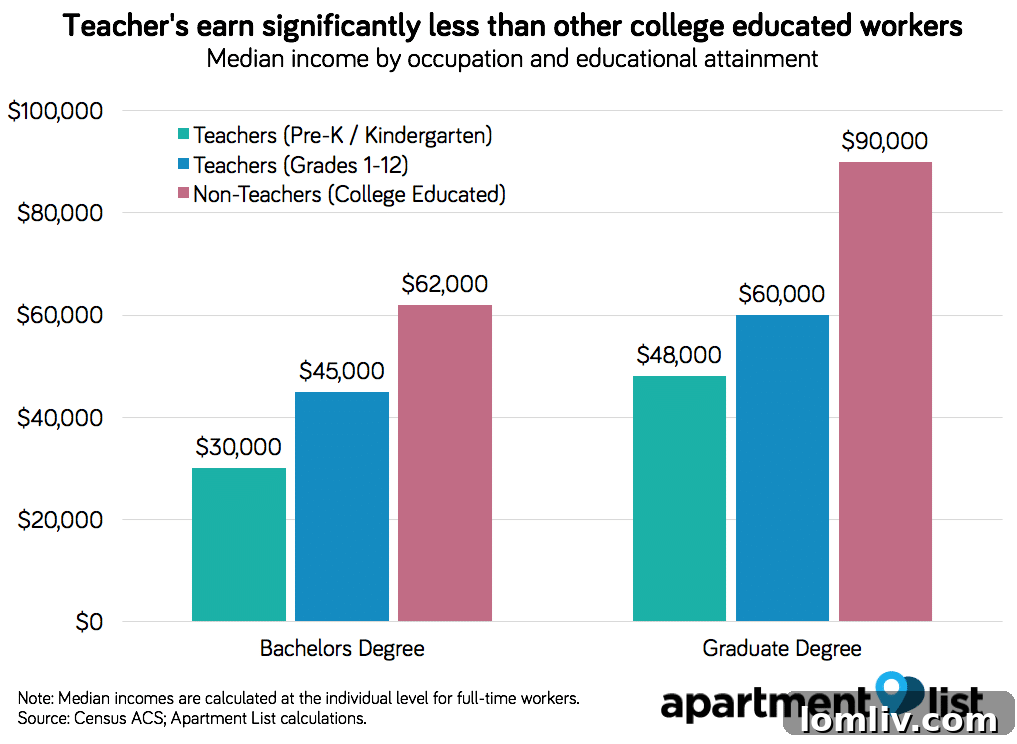
As Chris Salviati noted, these income figures are based on total earnings, including money from second jobs, which makes the wage gaps “all the more distressing.” It implies that even with additional effort outside their primary teaching roles, educators are still struggling to achieve financial parity with their non-teaching counterparts. The long-held trope that teachers enjoy “summers off” is largely a myth, debunked by modern census data. In 2017, almost 79 percent of teachers reported working more than 50 weeks per year, demonstrating a year-round commitment to their profession or to supplementary income-generating activities.
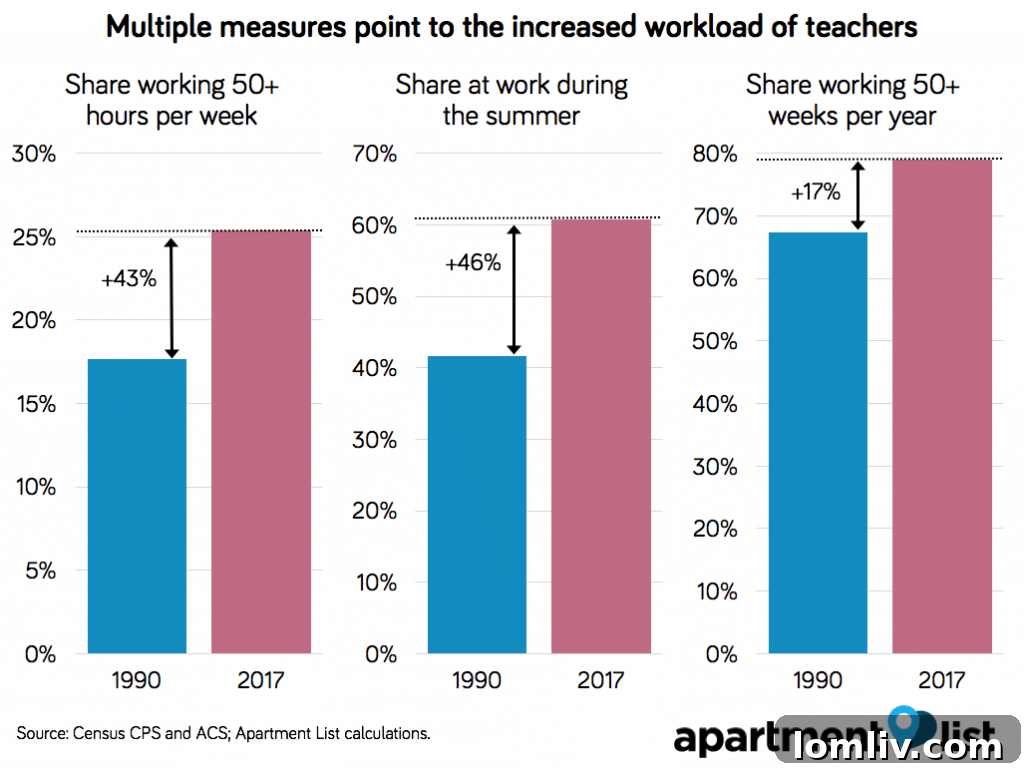
The trend of increased summer work is significant. Salviati explained, “We estimate that the share of teachers who reported being at work during the summer months increased by 46 percent from 1990 to 2017, rising from 41.7 percent to 60.7 percent.” This substantial increase points to a reality where teachers are dedicating more time to work outside the traditional academic year, whether it’s through summer school, professional development, curriculum planning, or indeed, second jobs to make ends meet.
Beyond working more weeks, teachers are also dedicating more hours each week. In 2017, 25.3 percent of teachers reported working over 50 hours a week. This intense workload raises questions about the sustainability of the profession and the potential for burnout. The reasons behind these extended hours are multifaceted:
- **Increased Demands of the Primary Job:** Teaching has become increasingly complex, with evolving curricula, diverse student needs, and administrative responsibilities, requiring more time and effort within the school setting itself.
- **Less Lucrative Secondary Jobs:** Teachers may be working more hours in supplementary jobs because these jobs offer lower hourly wages, requiring them to put in more time to earn a similar amount of additional income.
Both scenarios point to an alarming trend where teachers are pushed to their limits simply to maintain financial stability, often at the expense of their personal well-being and time for rest and rejuvenation.
Defining the “Cost Burden”: What the Study Reveals
For the Apartment List study, “cost burden rates” were calculated specifically for teachers who earn more than 50 percent of their household’s total income, identifying them as “primary earners.” A household is classified as “cost-burdened” if it allocates more than 30 percent of its gross income towards housing expenses. This internationally recognized benchmark is crucial because spending above this threshold severely limits a household’s ability to cover other essential costs like food, transportation, healthcare, and savings, leading to financial instability and stress.
The study also highlighted the difficulty for teachers to be primary earners. “Just 52.9 percent of teachers are primary earners, compared to 81.4 percent of non-teachers with college degrees, speaking to the difficulty of supporting a household on a teacher’s salary alone,” Salviati emphasized. This statistic underscores the harsh reality that a teacher’s salary is often insufficient to independently support a family, forcing many educators to rely on a spouse’s income or take on additional work to achieve financial security.
Historical Trends and Vulnerable Groups
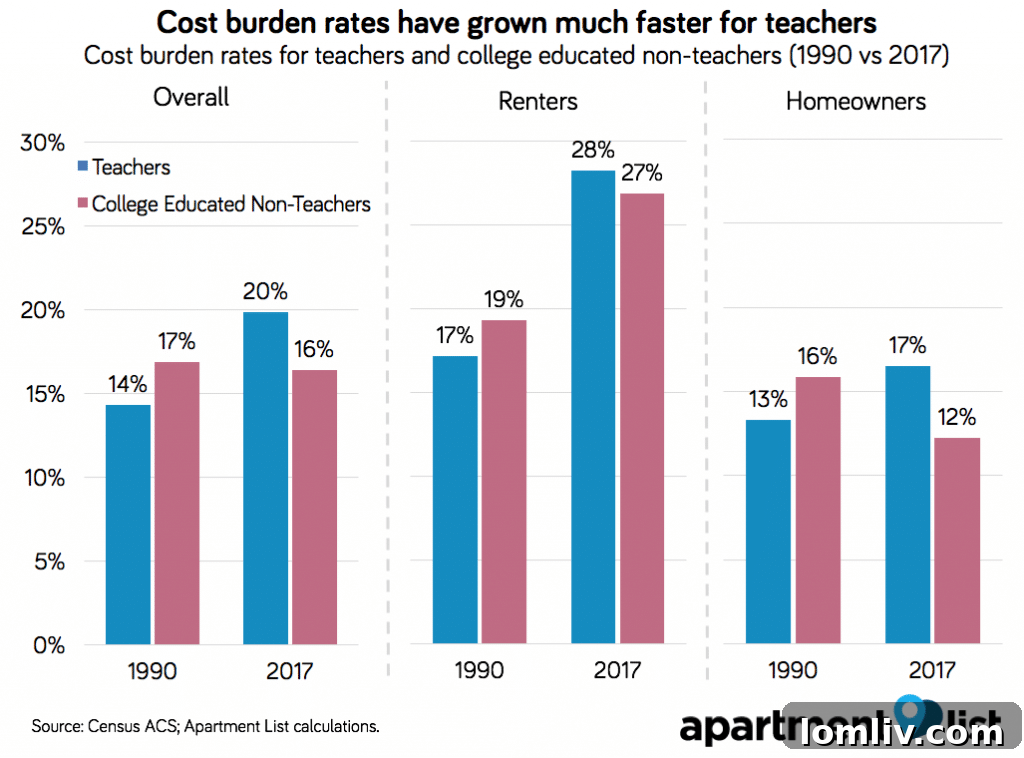
The erosion of teacher housing affordability is not a new phenomenon but a deepening crisis over decades. In 1990, the national cost burden rate for teachers was actually 15 percent lower than that of college-educated non-teachers, suggesting a relatively more stable financial footing for educators in the past. However, by 2017, this trend had dramatically reversed: while the cost burden rate for non-teachers slightly decreased by 2.7 percent, it surged by nearly 39 percent for teachers. This stark divergence illustrates a significant decline in the economic standing of teachers relative to other educated professionals.
Certain demographics within the teaching profession are particularly vulnerable to this housing crisis:
- **Renters:** Nationally, the cost burden rate for teachers who rent their homes was 28.2 percent, significantly higher than for homeowners. Renters often face less stable housing costs and fewer opportunities for wealth building compared to homeowners, exacerbating their financial challenges.
- **Preschool and Kindergarten Teachers:** These early childhood educators face an even more dire situation, with a national cost burden rate of 41.2 percent. This rate is more than double the rate for teachers as a whole, reflecting the typically lower salaries associated with early childhood education despite its critical importance.
The Cumulative Burden: Beyond Housing Costs
The housing affordability crisis is further exacerbated by a myriad of other financial burdens specific to the teaching profession. These hidden costs chip away at an already strained income, making it even harder for educators to achieve financial stability:
- **Student Loan Debt:** For many teachers, a significant portion of their educational journey is funded by student loans. In Texas, a particularly harsh policy states that falling behind on student loan payments can put a teacher’s license at risk. This creates an incredibly high-stakes situation where financial struggles can directly jeopardize one’s career and ability to earn a living as an educator.
- **Out-of-Pocket Classroom Expenses:** It’s an unfortunate but common reality that most teachers regularly spend their own money on classroom supplies and teaching materials. Reports indicate that teachers often spend up to $1,000 annually from their personal funds to ensure their students have the resources they need. This unofficial “tax” on teachers further diminishes their take-home pay and adds to their financial stress.
Considering these additional expenses, previous calculations have shown that a teacher could easily face a monthly deficit of at least $374. This figure doesn’t even account for basic personal necessities such as replacing worn clothing, personal hygiene items, or any form of entertainment or leisure, highlighting the extreme austerity many teachers are forced to adopt.
Societal Implications and the Future of Education
The persistent financial struggles of teachers have far-reaching societal implications that extend well beyond the individual educator’s household. When highly qualified individuals are deterred from entering the teaching profession due to inadequate compensation and unsustainable living costs, the quality of education suffers. Schools, especially those in high-cost areas, struggle to attract and retain talented educators, leading to teacher shortages, higher turnover rates, and a less experienced workforce. This instability ultimately impacts student learning outcomes and perpetuates educational inequality.
Moreover, financially stressed teachers are more susceptible to burnout, leading to decreased job satisfaction and a higher likelihood of leaving the profession. The mental and emotional toll of constantly worrying about making ends meet, coupled with the demanding nature of teaching, can undermine an educator’s effectiveness and passion. Addressing teacher housing affordability is not just a matter of fairness; it’s an investment in our communities, our children’s future, and the long-term health of our public education system.
Addressing the Challenge: Pathways to Support Our Teachers
To mitigate this growing crisis, a multi-faceted approach involving policy makers, school districts, and communities is essential. Potential solutions could include:
- **Increased Teacher Salaries:** Directly addressing the wage gap by increasing teacher salaries to be more competitive with other similarly educated professions.
- **Affordable Housing Initiatives:** Implementing programs specifically designed to provide affordable housing options for educators, such as housing subsidies, down payment assistance, or dedicated teacher housing developments.
- **Student Loan Forgiveness and Support:** Expanding and promoting student loan forgiveness programs for teachers, particularly those in high-need areas, and providing counseling on financial management.
- **Tax Credits and Expense Reimbursement:** Offering tax credits for out-of-pocket classroom expenses or establishing district-level reimbursement programs to alleviate the financial burden of purchasing supplies.
- **Community Partnerships:** Fostering collaborations between school districts, local governments, and non-profit organizations to create comprehensive support systems for teachers, including financial literacy resources and access to community services.
The findings from the Apartment List study serve as a critical call to action. Recognizing and valuing the invaluable contributions of teachers means ensuring they can afford to live comfortably in the communities they serve. Investing in teacher well-being, particularly their housing security, is an investment in the foundational strength of our society.
For a comprehensive understanding of the analysis and its full scope, the complete Apartment List report offers additional details and data points. We encourage interested readers to explore the full findings to grasp the gravity and nuances of this issue.
Want to see the rest of the report? Click here.