By Lydia Blair
Special Contributor
Navigating the Future: Key Insights from the “Voice of the Title Agent” Survey
The landscape of the real estate and title industry is ever-evolving, shaped by economic shifts, technological advancements, and changing market dynamics. To better understand the pulse of this vital sector, The Title Report annually releases its highly anticipated “Voice of the Title Agent” survey. The 2019 edition, hot off the presses at the time, offered a comprehensive snapshot of how title professionals perceived their business, their primary challenges, and their outlook for the year ahead. This crucial study delves into a myriad of topics, providing invaluable insights into the health and future trajectory of the title industry.
The survey is more than just a collection of statistics; it’s a barometer for the sentiment within the industry, reflecting the hopes, anxieties, and strategic priorities of those on the front lines. By canvassing a broad spectrum of title agents, the report helps stakeholders – from individual professionals to large corporations and policymakers – to gauge market trends, anticipate potential hurdles, and foster an environment conducive to growth and stability. Understanding these perspectives is essential for anyone involved in real estate transactions, as title agents play a pivotal role in ensuring secure and seamless property transfers.
Optimism Tempered by Emerging Caution in the Title Industry
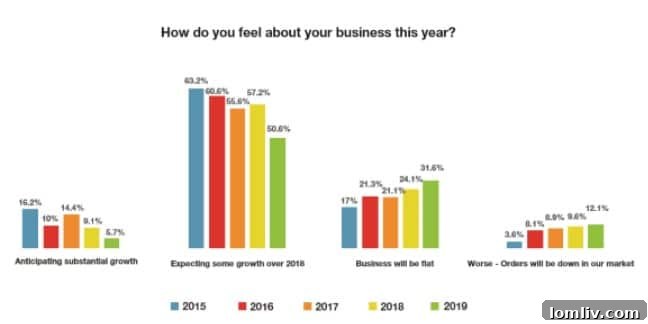
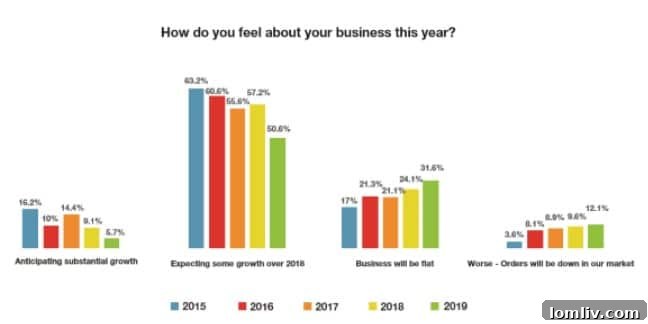
When title agents were polled about their business expectations for the upcoming year, a significant majority expressed a degree of optimism regarding future growth. Over 56 percent of those surveyed anticipated some level of expansion in 2019. This positive outlook underscores a general confidence in the underlying strength of the real estate market, buoyed by factors such as steady consumer demand and favorable lending conditions.
However, this optimism was notably more subdued compared to previous years. In the prior year’s survey, more than 66 percent of title agents had projected growth, indicating a noticeable shift in sentiment. While the majority still foresaw growth, the proportion of agents who felt their business would either stagnate or experience a decline continued to increase. This subtle but significant cooling of expectations suggests a growing sense of caution within the industry, prompting agents to adopt more conservative forecasts. This nuanced perspective reflects a recognition of potential headwinds, such as fluctuating interest rates, housing market slowdowns in certain regions, or broader economic uncertainties that could impact transaction volumes.
The slight reduction in widespread optimism doesn’t necessarily signal an impending downturn, but rather a mature understanding of market cycles and the complex interplay of economic forces. It highlights the industry’s need for adaptability and strategic planning, as sustained, aggressive growth becomes less of a certainty. Title agents, often at the forefront of real estate transactions, are keenly aware of even subtle shifts in buyer behavior, lending policies, and overall economic health, making their collective outlook a reliable indicator of the market’s pulse.
Key Drivers and Major Concerns Shaping the Title Industry
The health of the broader economy plays a profound role in the vitality of the title industry. Survey respondents frequently cited the low unemployment rate and generally healthy economic conditions as significant benefits. A strong economy typically translates into more robust real estate activity, including increased home sales, refinancing opportunities, and commercial property transactions. This surge in activity directly fuels demand for title insurance and related services, contributing to the industry’s overall prosperity. When more people are employed and have stable incomes, they are more likely to invest in real estate, driving the market forward.
Despite these favorable conditions, the economy paradoxically also topped the list of concerns for title agents. This dual perspective highlights the inherent volatility of economic cycles; while current conditions may be good, the potential for future downturns—such as rising interest rates, inflationary pressures, or a recession—remains a constant worry. Such shifts can dramatically reduce transaction volumes, impact property values, and increase financial pressures on businesses. Title agents, therefore, must constantly balance current opportunities with an awareness of potential economic headwinds.
Beyond economic fluctuations, two other critical issues consistently ranked among the chief concerns: cyber threats and increased operating costs. These three worries—the economy, cyber threats, and operating costs—have consistently dominated the survey findings for consecutive years, including the 2018 report, underscoring their persistent and profound impact on the industry.
Combating Cyber Threats: A Top Priority for Security
Cyber threats have become an existential concern for the title industry. The nature of title transactions—involving large sums of money, sensitive personal data, and complex digital communications—makes them particularly attractive targets for cybercriminals. Wire fraud, data breaches, and sophisticated phishing schemes pose significant risks, capable of causing immense financial losses for clients and severe reputational damage for title companies. Agents expressed deep apprehension about the ever-evolving tactics of cybercriminals and the constant need to fortify their digital defenses. Protecting client funds and confidential information is not merely a regulatory requirement but a fundamental ethical obligation that demands continuous vigilance and investment.
To mitigate these risks, title companies are increasingly implementing multi-factor authentication, secure email protocols, stringent vendor management, and continuous employee training on cybersecurity best practices. They also work closely with real estate agents and lenders to educate clients about the dangers of wire fraud and the importance of verifying all financial instructions through trusted, independent channels. The digital transformation of the industry, while offering efficiency, also introduces new vulnerabilities, making cybersecurity a perpetual arms race between title professionals and malicious actors.
Managing Increased Operating Costs: The Bottom-Line Challenge
The rising cost of doing business presents another significant challenge for title agents. Operating costs can encompass a wide range of expenditures, including investments in technology, compliance with ever-changing regulatory frameworks, staffing expenses, insurance premiums, and marketing. As the industry becomes more technologically driven and regulated, these costs inevitably climb. For smaller, independent title companies, especially those with fewer than five offices, absorbing these increased expenses can be particularly difficult, impacting their profitability and competitive edge.
Compliance costs alone can be substantial, as title companies must adhere to a complex web of federal and state regulations designed to protect consumers and ensure fair practices. Meeting these requirements often necessitates specialized software, legal counsel, and dedicated compliance officers. Furthermore, the need to upgrade technology—from transaction management systems to cybersecurity infrastructure—requires ongoing capital investment. Balancing the pressure to keep fees competitive with the necessity of covering these escalating costs is a constant tightrope walk for title agents, influencing strategic decisions around efficiency, pricing, and service offerings.
The Demanding Role of a Residential Loan Closer / Escrow Officer
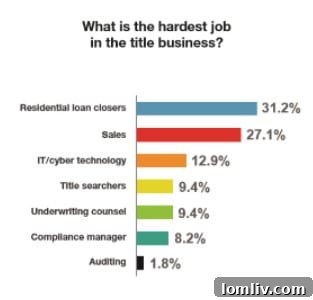
Among the various roles within the title business, the position of the residential loan closer—known as an Escrow Officer in Texas—was identified as the most challenging. This sentiment contrasts with some common perceptions, as the sales side of the business is often assumed to be the most arduous due to its commission-based nature and the constant pursuit of new clients. However, the survey revealed a deeper appreciation for the unique pressures faced by closers.
Respondents frequently cited that a key reason for the closer’s job being the most difficult stems from their direct and extensive interaction with the public. Residential closings are often highly emotional and complex events for buyers and sellers, many of whom have limited or no prior experience with the intricacies of real estate transactions and the title industry. An Escrow Officer is responsible for coordinating numerous parties, including buyers, sellers, lenders, real estate agents, and attorneys, ensuring all conditions of the sale are met, and meticulously overseeing the exchange of funds and documents.
This role demands an exceptional blend of legal knowledge, financial acumen, and superior interpersonal skills. Closers must explain complex legal jargon and financial concepts in an understandable way, mediate disputes, manage tight deadlines, and troubleshoot unexpected issues that may arise just hours before a scheduled closing. The pressure to ensure every detail is correct and every party is satisfied, all while navigating the emotional highs and lows of clients, makes this role incredibly demanding. There’s a constant need for patience, clarity, and precision, as even a minor error can have significant financial and legal repercussions.
Addressing the Industry’s Aging Workforce and Succession Planning
A significant concern highlighted in the report pertained to the aging demographic within the title industry. The survey revealed that the title business is “growing old” in multiple respects. A striking 55 percent of the title agents surveyed worked for companies that had been established for more than 20 years, many of which are independent and operate with fewer than five offices. This longevity, while speaking to stability, also points to a potential demographic challenge.
Across the nation, ownership and leadership positions within title companies are predominantly held by individuals who are approaching or have already surpassed traditional retirement age. This trend generates considerable unease among agents regarding the future leadership and sustainability of the industry. Questions arise about the clarity and robustness of “exit strategies” for these seasoned leaders. Without well-defined succession plans, there is a risk of losing invaluable institutional knowledge and experience, creating significant gaps in leadership and operational expertise. The absence of clear pathways for transition can also lead to uncertainty for employees and clients alike.
The concern extends to the crucial question of where the “next generation” of title agents and owners will emerge. Attracting younger talent to an industry perceived as traditional can be challenging. Addressing this requires proactive strategies such as promoting career paths within the title sector, highlighting technological advancements that are modernizing the field, and investing in comprehensive training and mentorship programs. Cultivating a diverse and dynamic workforce is essential not only for filling leadership voids but also for introducing fresh perspectives, fostering innovation, and ensuring the long-term vibrancy and relevance of the title industry in an ever-changing market. This demographic shift necessitates a concerted effort to nurture new talent and facilitate smooth transitions of leadership and ownership.
Battling Fraud and Enhancing Security: A Collective Imperative
The combination of cybercriminals, various forms of fraud, and the overarching need for enhanced security measures collectively represents the most profound concerns for title agents. In an era where digital transactions are commonplace and criminal tactics are increasingly sophisticated, the imperative to safeguard sensitive information and customer assets has never been more critical. Title agents recognize that their reputation and their clients’ financial well-being depend directly on the robustness of their security protocols.
The focus for title agents in 2019, and indeed continuing into subsequent years, has been unequivocally on keeping their information and their customers safe. This involves a multi-faceted approach to security that goes beyond simple antivirus software. It includes rigorous employee training programs designed to recognize and thwart phishing attempts and social engineering scams, continuous updates to cybersecurity infrastructure, and the implementation of secure communication channels for all sensitive client interactions. Furthermore, verifying identities and transaction details through multiple secure channels has become standard practice to prevent fraudulent wire transfers and identity theft, which can be devastating for all parties involved in a real estate transaction.
The industry’s commitment to security also extends to educating clients. Title companies frequently provide resources and warnings to buyers and sellers about common fraud schemes, emphasizing the importance of independently verifying instructions, especially those related to wiring funds. By fostering a culture of vigilance and proactive security measures, title agents aim to build trust and protect the integrity of every real estate transaction, reinforcing their vital role as guardians of property rights and financial security in the digital age.
Lydia Blair (formerly Lydia Player) was a successful Realtor for 10 years before jumping to the title side of the business in 2015. Prior to selling real estate, she bought, remodeled and sold homes (before house flipping was an expression). She’s been through the real estate closing process countless times as either a buyer, a seller, a Realtor, and an Escrow Officer. As an Escrow Officer for Carlisle Title, she likes solving problems and cutting through red tape. The most fun part of her job is handing people keys or a check.