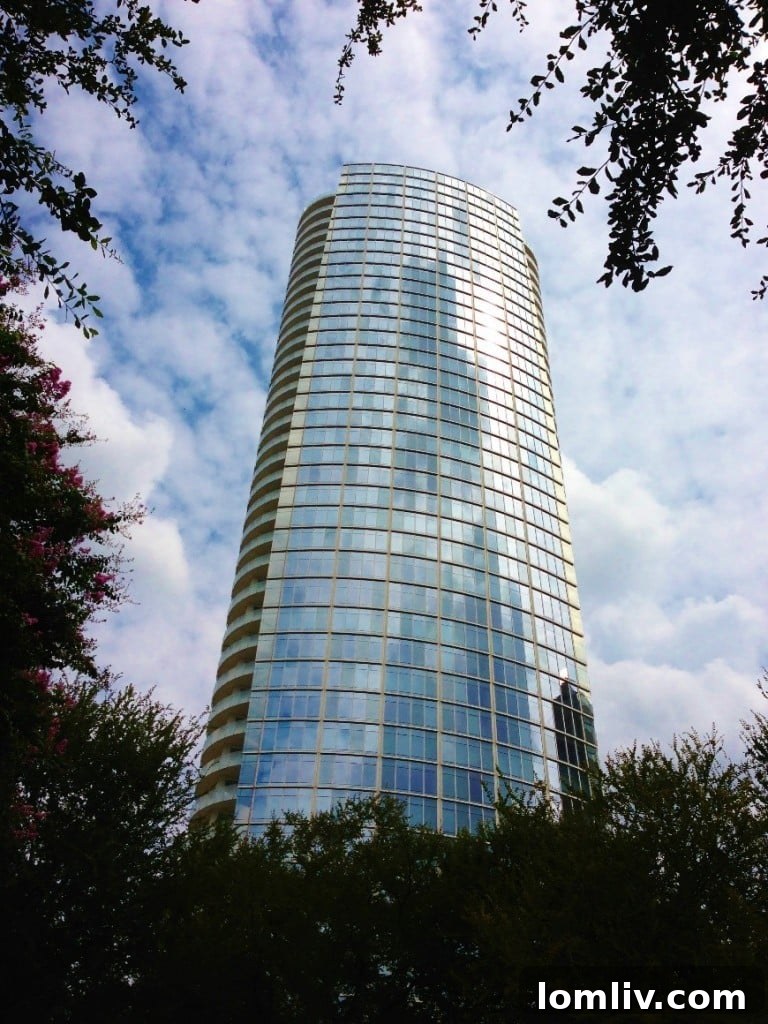
An Unfolding Saga: The Dallas Museum Tower and Nasher Sculpture Center Controversy
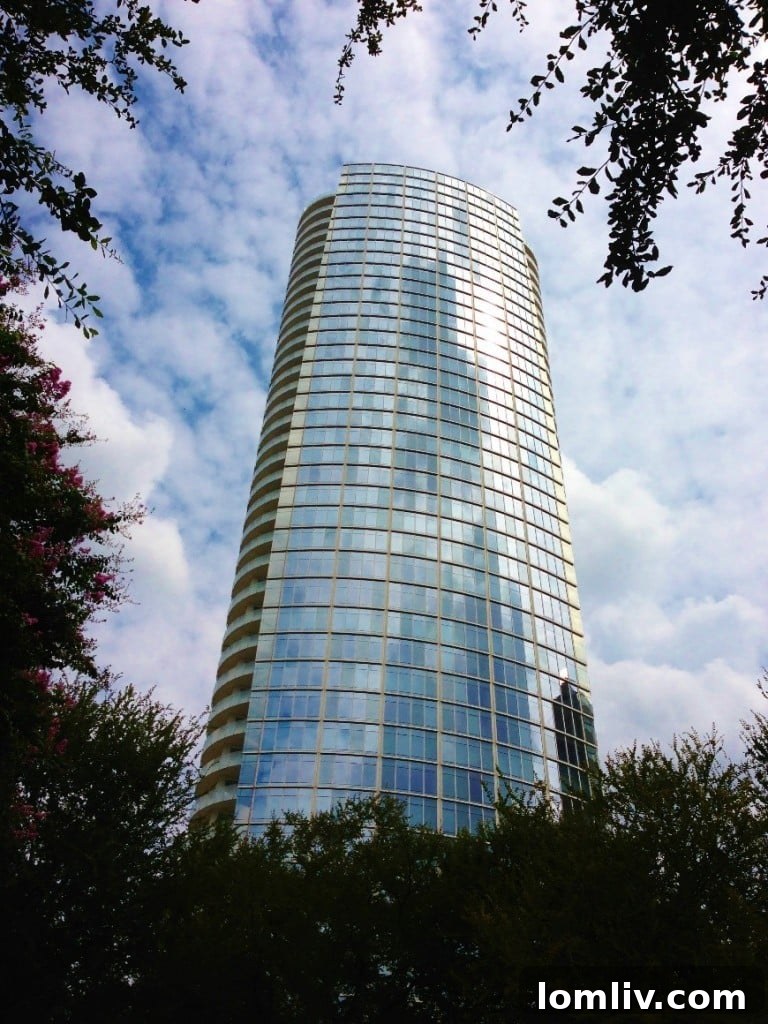
One of the core principles driving this blog is a commitment to exploring and understanding the dynamic landscape of the Dallas Real Estate community. This platform serves as a vibrant forum for industry insights, a space where professionals can share their unique perspectives, and consumers are warmly invited to engage and stay informed. Dallas Real Estate Broker Scott Carlson, a respected voice in the local market, has meticulously documented the intricate dispute between the iconic Museum Tower and the revered Nasher Sculpture Center. His thoughtful analysis, “Museum Tower: A Higher Perspective,” serves as a poignant reminder of the invaluable role real estate professionals play as custodians of our city’s narrative.
As they navigate the complexities of showing, selling, and closing properties across diverse neighborhoods, these brokers become crucial witnesses and experts in transactions that ripple through the community, often with profound and lasting effects. Scott Carlson’s essay, presented here with minor adaptations for clarity and blog format, offers a captivating journey back in time, a “real estate way-back machine” that I found particularly fascinating, having only just arrived in Dallas myself in 1980. His words provide a unique blend of personal experience, historical context, and architectural appreciation, making this a cornerstone contribution to understanding Dallas’s urban development.
Museum Tower: A Higher Perspective by Scott Carlson
What truly defines sculpture? What, precisely, is art in its purest form? Perhaps it is an opportune moment to delve into a more philosophical discourse, shedding a different kind of light – and indeed, no pun intended – on the ongoing and often heated controversy enveloping the magnificent Museum Tower and the esteemed Nasher Sculpture Center. This discussion transcends mere architectural aesthetics; it probes the very essence of urban coexistence, artistic integrity, and community evolution.
A Vision for the 21st-Century Dallas Skyline
My fascination with Museum Tower began long before its completion, right from the moment of its initial conception. From my vantage point on a twentieth-story balcony overlooking Turtle Creek, I bore witness to its remarkable ascent, watching in awe as this architectural marvel took shape over two years following its groundbreaking in June 2010. For me, it represents nothing less than one of the most exquisitely designed and significant additions to our city’s ever-evolving skyline. As both a dedicated residential Real Estate broker and an ardent admirer of architectural innovation, I have consistently been captivated by Museum Tower. Its sleek lines, reflective surfaces, and commanding height exemplify a bold step forward for Dallas, ushering the city into the elite echelons of 21st-century architectural prowess.
One of my most cherished views of the Tower can be found from the intersection of Central Expressway and Henderson. From this particular angle, Museum Tower stands majestically alongside I.M. Pei’s iconic Fountain Place and Kevin Roche’s impressive Bank of America Plaza. The harmonious alignment of these three monumental structures creates a truly breathtaking, spectacular, and undeniably unique vista, presenting an unforgettable tableau of the Dallas skyline that speaks volumes about our city’s architectural ambition and historical progression. This particular composition of buildings not only enhances the urban fabric but also serves as a testament to Dallas’s commitment to monumental design.
The Nasher Sculpture Center: An Oasis of Art and Design
Equally profound is my admiration for Renzo Piano’s Nasher Sculpture Center. Its design and spatial execution have consistently left me in awe, embodying a rare fusion of artistic vision and architectural functionality. Indeed, I’ve often fantasized about having a personal residence crafted with the same thoughtful elegance and groundbreaking spirit that defines the Nasher. It stands as a beacon of beauty, creativity, and joy, a destination I instinctively choose when welcoming company or friends to our vibrant city. The Nasher offers not just an exhibition space, but a holistic experience, where art and nature converge in a serene and inspiring environment.
Among the Nasher’s most profoundly creative installations is James Turrell’s mesmerizing sky space, Tending, (BLUE). I frequently guide my guests into its contemplative interior, where we engage in moments of quiet meditation, experiencing sensations akin to being within the revered King’s Chamber of the Great Pyramid in Giza, Egypt. The energy within BLUE was always its most remarkable attribute, fostering a profound sense of connection and introspection. I cherished the opportunity to sit within its confines, gazing upwards through the ceiling, observing the slow drift of clouds, delighting in the flight of birds, and marveling at the quiet descent of jet planes preparing for landing. These moments, now overshadowed by the ongoing dispute, were once opportunities for transcendent personal experience.
The Heart of the Dispute: Art, Light, and Perception
Tending (BLUE): A Personal Artistic Experience Challenged
It is with a profound sense of sadness and incomprehension that I observe an artist, or indeed any authority, declare an artwork such as Tending (BLUE) as “destroyed.” Is not art, at its very core, an intensely personal journey, a unique dialogue between the piece and each individual viewer, evoking a distinct emotional and spiritual resonance? Each witness to an artistic creation experiences it uniquely, perfectly attuned to their own temporal and spatial context. To label BLUE as truly “destroyed” feels antithetical to the very spirit of artistic engagement. The reflection issue, caused by the proximity of the Museum Tower, has indeed altered the conditions of the installation, but does alteration equate to annihilation of the artistic experience?
As the 19th-century French romantic artist Eugene Delacroix wisely observed, “Les artistes qui cherchent la perfection dans tout ce sont ceux qui ne peuvent pas atteindre à rien.” Translated, this means, “Artists who seek perfection in everything are those who cannot attain it in anything.” This sentiment resonates deeply when contemplating the current predicament. The quest for an absolute, unblemished experience, particularly in dynamic urban environments, often overlooks the inherent beauty in adaptation and reinterpretation. I hold a patient hope for the day The Nasher will once again make BLUE accessible, allowing visitors, including myself, to gaze upwards, marvel, and experience the majestic Museum Tower sculpture from this newly imposed, yet potentially enlightening, perspective. This new viewing condition might not be what was originally intended, but it forces a re-evaluation of art’s relationship with its evolving environment.
Tracing the Roots: Dallas’s Legacy of Urban Development Battles
How did we, a community of civilized, educated art enthusiasts, arrive at a juncture where we are seemingly unable to “look up” – both literally and figuratively – to appreciate the art and architecture that define our urban fabric? Perhaps the seeds of this drama were sown long before the immediate tiff between The Nasher Sculpture Center and Museum Tower. Driven by this profound curiosity, a few weeks ago, I embarked on a historical field trip. My assistant and I journeyed downtown, immersing ourselves in the news archives housed at the Dallas Public Library, a prominent institution situated directly opposite Dallas City Hall.
Dallas City Hall: An Architectural Icon and a Symbol of Urban Planning
Dallas City Hall, designed by the inimitable I. M. Pei, is unquestionably an architectural icon, a distinctive edifice that commands attention. Yet, as I traversed the path from my vehicle to the library, I couldn’t help but scrutinize this unique structure housing our city government. Its design, famously described as an “upside-down building,” creates an intriguing, if sometimes disorienting, experience. In my humble estimation, it embodies a certain energetic disarray. I vividly recall a previous visit to the City Hall chambers years ago, specifically to voice the concerns of Lakewood/East Dallas residents regarding a controversial 25-story high-rise proposed for White Rock Lake. The interior architecture, with its escalators leading upwards only to descend into the chambers, proved to be an almost nauseating experience. It felt, quite literally, as if I might lose my breakfast.
This architectural design, with its unconventional flow, struck me then, as it does now, as a metaphor for how Dallas conducts its crucial business. It raises questions about the city’s approach to complex urban development challenges, perhaps offering an unsettling explanation for why the City of Dallas appeared to “drop the ball” when it came to anticipating and mitigating the eventual issues surrounding Museum Tower. The spatial disorientation of the building itself might inadvertently reflect a historical pattern of decision-making that prioritizes certain outcomes without fully appreciating all the interconnected consequences.
The Caruth Farm Legacy: A Historical Battleground for Zoning
Our deep dive into the archives unearthed headlines from a bygone Dallas era, revealing that the roots of the Museum Tower and Nasher story extend several miles north of downtown, specifically across from NorthPark Center. These headlines painted a vivid picture of intense urban battles: “Growth intrudes on Caruth Farm,” “Development Blocked by Council,” “Council Members hope Caruth Developers Got Message,” “Nasher and Crow over Crow Land,” “Crow sets Sights on Caruth Mall,” “Crow, Nasher, Grapple for Turf and Battle of the Titans,” “City Promises Developer Nothing,” and “University Park Stalls North Central Plan.”
Like many significant conflicts, this protracted struggle was ultimately waged over a substantial parcel of land. Years prior, Raymond Nasher had initiated efforts to rezone a sprawling 39-acre tract of undeveloped land situated at the strategic corner of Northwest Highway and North Central Expressway. It is challenging to conceptualize now, but this expansive area was, at one point, a singular, immense vacant lot. In fact, it was part of a vast agricultural holding belonging to the influential Caruth family, whose 11,000 acres once encompassed a significant portion of North Dallas. A long-standing, somewhat tired old Dallas real estate joke perfectly encapsulates this historical reality for what was then considered “North Dallas” (the far north not yet existing):
Q: “What’s the synonym for North Dallas?” A: “Will Ca-ruth’s backyard.”
Nasher’s primary objective was to see the land directly opposite his NorthPark Mall – which he leased from the Caruths on a 99-year agreement initiated at the mall’s opening in 1965 – rezoned from residential to commercial. This area was considered prime real estate for robust commercial development. However, the Dallas City Council consistently rejected these rezoning requests over many years. Initially, the Caruth family themselves opposed the change, but later, over 300 homeowners residing near the property vehemently fought against it. Their desire was simple: to preserve the peaceful, leafy character of their neighborhood, fearing that commercial development would irrevocably alter their quality of life.
Titans Clash: Nasher, Crow, and the Northwest Highway Land
It is crucial to note that even before Nasher’s persistent efforts, the Caruth land had also been the subject of immense interest from another Dallas real estate titan, Trammell Crow. Crow had secured a series of options on the property, contingent upon successful rezoning for development. However, despite his considerable influence, Crow was never able to obtain the necessary zoning changes. The resolute homeowners consistently opposed such development, engaging in a battle that spanned many years.
Against this backdrop of entrenched opposition, Raymond Nasher somehow managed to purchase or gain control of the land in 1980. This acquisition ignited a fresh wave of legal battles: Crow sued Nasher, and Nasher, in turn, counter-sued. The contentious case, however, was ultimately settled on the very eve of the trial in 1981, leaving Nasher in possession of the property. Despite this victory, Nasher’s struggle for rezoning continued, culminating in a decisive 6-8 defeat at the hands of the city planning commission in 1991, reaffirming the council’s consistent stance against altering the area’s residential character. This historical context underscores the long-standing challenges associated with major land use changes in Dallas and the powerful influence of community opposition.
The Downtown Deal: A Seemingly Win-Win Barter with Hidden Costs
The narrative then shifts to Downtown Dallas, where, since 1994, the “chosen land” for the future Nasher Sculpture Center Garden had been identified as a 2.1-acre parking lot. This prime location, nestled within the western half of city blocks 527 and 528 at 2001 Flora Street, strategically positioned just north of the Trammell Crow Center and directly across from the Dallas Museum of Art, seemed perfect. Yet, here lay another twist: Trammell Crow, once again, owned the very land that Nasher coveted for his ambitious sculpture garden project.
This presented another nasty “titan battle” between two of Dallas’s most formidable real estate figures. The city, perhaps eager to facilitate the development of a world-class arts institution, exerted significant pressure, even threatening condemnation on Crow’s property situated in the heart of the burgeoning arts district. Ultimately, through this municipal leverage, Nasher succeeded in securing the desired site. This led to what was hailed in 1996 as a “win/win barter.” The Downtown Dallas Arts District was promised a globally renowned sculpture garden, a cultural jewel that would elevate the city’s international standing. In exchange, Ray Nasher finally received the long-sought zoning change for that parcel of land on Northwest Highway he had so desperately yearned to develop – the very same land Trammell Crow had previously tried, and failed, to rezone. It appeared, on the surface, to be a triumphant outcome for all parties involved.
However, the reality was not so neatly packaged. The unspoken “losers” in this grand bargain were the more than 300 Park Cities homeowners who had steadfastly fought against that zoning change for decades. Their collective sacrifice, as real estate “soldiers” in a prolonged urban planning war, was the price paid for Dallas to gain a world-class museum. This pivotal moment underscores a recurring theme in urban development: progress for the many often comes at the direct expense of a few, a complex interplay of public good versus private impact.
The Echo of Decisions: Karma in Dallas Real Estate
Through years of observing and participating in the real estate world, I have come to deeply understand the true law of the universe: action and reaction. Some call it the boomerang effect, others refer to it as Karma in certain cultures, and Jesus of Nazareth eloquently stated, “you reap what you sow.” In the realm of real estate and urban planning, what one group perceives as a beneficial neighborhood improvement can be simultaneously viewed as detrimental by others. The question then arises: who truly wins when neighborhoods undergo significant changes and zoning laws are altered?
The Boomerang Effect: Unintended Consequences of Urban Planning
Could it be that the intense dilemma surrounding the Museum Tower is, in fact, a direct result of an energetic consequence – a form of karma – stemming from the highly contentious rezoning that took place five miles north of downtown Dallas decades ago? I personally find a striking irony in the situation: one man’s unwavering decision and desire to push forward against the collective will of a neighborhood, bolstered by the support of the city government at the time, has seemingly boomeranged back to potentially “bite” him with the very same karmic repercussions. Was the City of Dallas truly inattentive to the critical reflection issues that would inevitably affect the Nasher Sculpture Center when approving the Museum Tower?
It remains baffling to me how American culture, in general, struggles with the concept of accepting karma or the natural consequences of actions. We are often quick to assign blame to an external entity, and with the pervasive “over-lawyering” prevalent in our society, how do we ever truly balance this intricate web of actions and their reactions, this profound concept of karma? Karma, originating from the Sanskrit word for “action,” implies that every deed, thought, and word carries an energetic imprint. Are all actions inherently divine in their origin, or are there varying actions and reactions to particular energies, creating a complex chain of cause and effect? Is this truly the fundamental law governing the universe, and by extension, our urban ecosystems?
Accountability and Forgiveness: A Path Forward for Dallas
In this complex dispute, both Museum Tower and The Nasher Sculpture Center bear a degree of responsibility, as does the City of Dallas itself. However, in my considered opinion, the government of the City of Dallas and its city planning commission are the primary culprits in this unfolding cause-and-effect scenario. Their historical decisions, or lack thereof, have undeniably contributed to the current impasse.
Unsubstantiated rumblings circulate, suggesting that The Nasher may consider withdrawing from Dallas entirely, relocating to another city or even country. Such speculation often includes the possibility of selling their prime downtown land to another developer for a high-rise, effectively casting Museum Tower as the villain in a dramatic urban narrative. I recently overheard a rather high-profile woman adamantly declare that she would never set foot in Museum Tower. Similarly, a client reacted with visible anger when I innocently suggested exploring available units within the building.
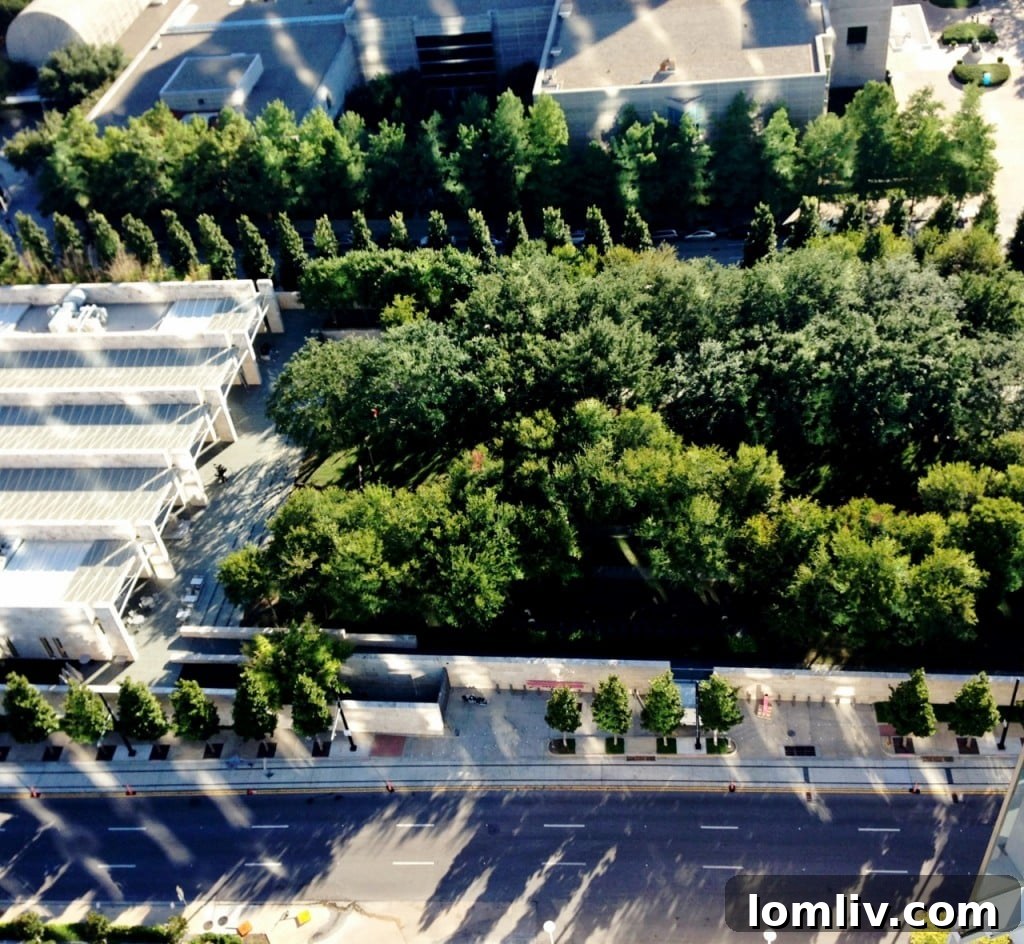
I am utterly flabbergasted by the depth of this sentiment. To refuse entry into what is undeniably an amazing 21st-century sculpture of architecture due to a reflection issue? Why such an intense level of anger and divisiveness? ENOUGH! The perpetuation of such negativity does a disservice to our city’s progress and cultural vibrancy.
Currently, the city government is intensely scrutinizing the business affairs of the Dallas Police and Fire Pension fund, a prudent move given that Dallas taxpayers would ultimately bear the financial burden should investments falter. However, this level of detailed oversight should not be selectively applied. It begs the question: didn’t the Dallas Police and Fire Pension fund also play a role in financing the NorthPark Mall addition, a previous significant urban development project? Consistency in financial scrutiny and accountability is paramount across all city-related ventures.
Embracing Dallas’s Architectural Future: Beyond the Controversy
Gifts to the City: Appreciating Both Architectural Marvels
Both the Nasher Sculpture Center and Museum Tower stand as tremendous, invaluable gifts to our city. They represent significant investments in culture, luxury living, and architectural innovation, each contributing uniquely to the Dallas identity. It’s imperative to acknowledge that both parties, when examined through a long enough historical lens, carry a certain degree of “dirt on their hands,” having navigated complex negotiations and compromises inherent in large-scale urban development. However, this is precisely how cities are constructed; this is the very mechanism through which we progress and grow. Inevitably, some homeowners, some groups, will lose a battle to maintain the status quo. This is because the only true certainty in our lives is change itself; it always has been, and it always will be.
A Call for Unity: Supporting Dallas’s Vibrant Arts and Residential Landscape
The Nasher and Museum Tower, despite their contentious history, are both inherently beautiful structures that, remarkably, complement one another. Their presence enriches the Dallas urban landscape in different yet equally vital ways. Ultimately, the true winners in this ongoing narrative are those of us who hold memberships to the Nasher Sculpture Center, who revel in the creativity, the art, and the joy it offers, and who hopefully, once again, will be able to experience the profound serenity of BLUE. Equally, the winners are those who have chosen to purchase units and establish their homes within the magnificent Museum Tower, embracing its elevated lifestyle and unparalleled views.
Let us celebrate the greatness embedded in each of these remarkable entities. Let us continue to be proud of both and extend our unwavering support. And above all, let us not forget the sweet, unifying rays of forgiveness, for Dallas, at its heart, is profoundly and truly… THE CITY OF FORGIVENESS! It is through this spirit that we can move forward, appreciating the diverse tapestry of our urban environment and fostering a harmonious future.
– Scott Carlson