Navigating the complexities of estate planning can often feel overwhelming, yet it is a crucial step in safeguarding your legacy and providing for your loved ones. This is precisely where the expertise of a dedicated wills and trusts lawyer becomes invaluable. These legal professionals specialize in meticulously crafting and managing your estate plans, ensuring every detail is clear, legally sound, and aligned with your deepest wishes. They don’t just draft documents; they serve as trusted advisors, helping you establish tailored wills and trusts, strategically protect your hard-earned assets, minimize potential tax burdens, and often, help your estate avoid the lengthy and costly process of probate.
At its core, estate planning is about empowering you to dictate the future of your property and family. A will is a foundational legal instrument that designates how your property will be distributed upon your passing. In contrast, a trust offers significantly greater flexibility and privacy, allowing you to maintain control over asset distribution through specific conditions and over a longer period, even after your death. Understanding these fundamental tools and their implications is the first step toward securing peace of mind for both yourself and your beneficiaries.
Across the nation, from bustling metropolitan areas to tranquil suburban towns, numerous reputable law firms dedicate their practice to comprehensive estate planning, elder law, and Medicaid planning. Engaging with a competent attorney ensures that all your critical legal documents are meticulously prepared, legally binding, and reflect your intentions with absolute clarity. Beyond the legalities, a skilled wills and trusts lawyer acts as a shield, preventing potential confusion and bitter disputes among family members during an already difficult time. If your goal is to meticulously safeguard the wealth and values you’ve accumulated throughout your life and simplify the transition for your loved ones, consulting with a legal expert who profoundly understands the intricacies of estate planning is not just advisable, it’s essential.
Recent data underscores the urgency of proactive estate planning. The 2024 survey from Caring reveals that a mere 24% of Americans currently possess a will, representing a notable decrease from the 33% recorded in 2022. This statistic highlights a significant vulnerability for countless families across the country.
The alarmingly low percentage of Americans with a will points to a widespread lack of preparedness that can have severe consequences. Without a legally valid will, state intestacy laws will determine how your assets are distributed, potentially bypassing your true wishes and leading to unforeseen complications for your family. As emphasized by experienced wills and trusts lawyers, collaborating with an attorney to draft a robust and legally compliant will offers a multitude of benefits. Primarily, it significantly streamlines and expedites the probate process—the court-supervised validation of a will—making it less burdensome and less expensive for your grieving loved ones. Moreover, a will ensures the smooth and unambiguous transfer of your assets to your explicitly named beneficiaries, leaving no room for speculation or conflict.
Beyond asset distribution, a will provides a powerful mechanism for philanthropic endeavors, allowing you to allocate portions of your estate to charities and causes you deeply care about. Crucially, for those with minor children or dependents requiring special care, a will is the sole legal document that guarantees your chosen guardians are officially recognized and empowered to fulfill your plans for their future well-being. This foresight protects your children from being placed under the care of someone you wouldn’t have chosen and ensures continuity in their upbringing. Therefore, having seasoned legal professionals draft your will and other vital estate planning documents is paramount not only to ensure your wishes are legally binding but also to provide comprehensive protection and clarity for those you hold dearest.
Understanding Wills and Trusts: Key Differences

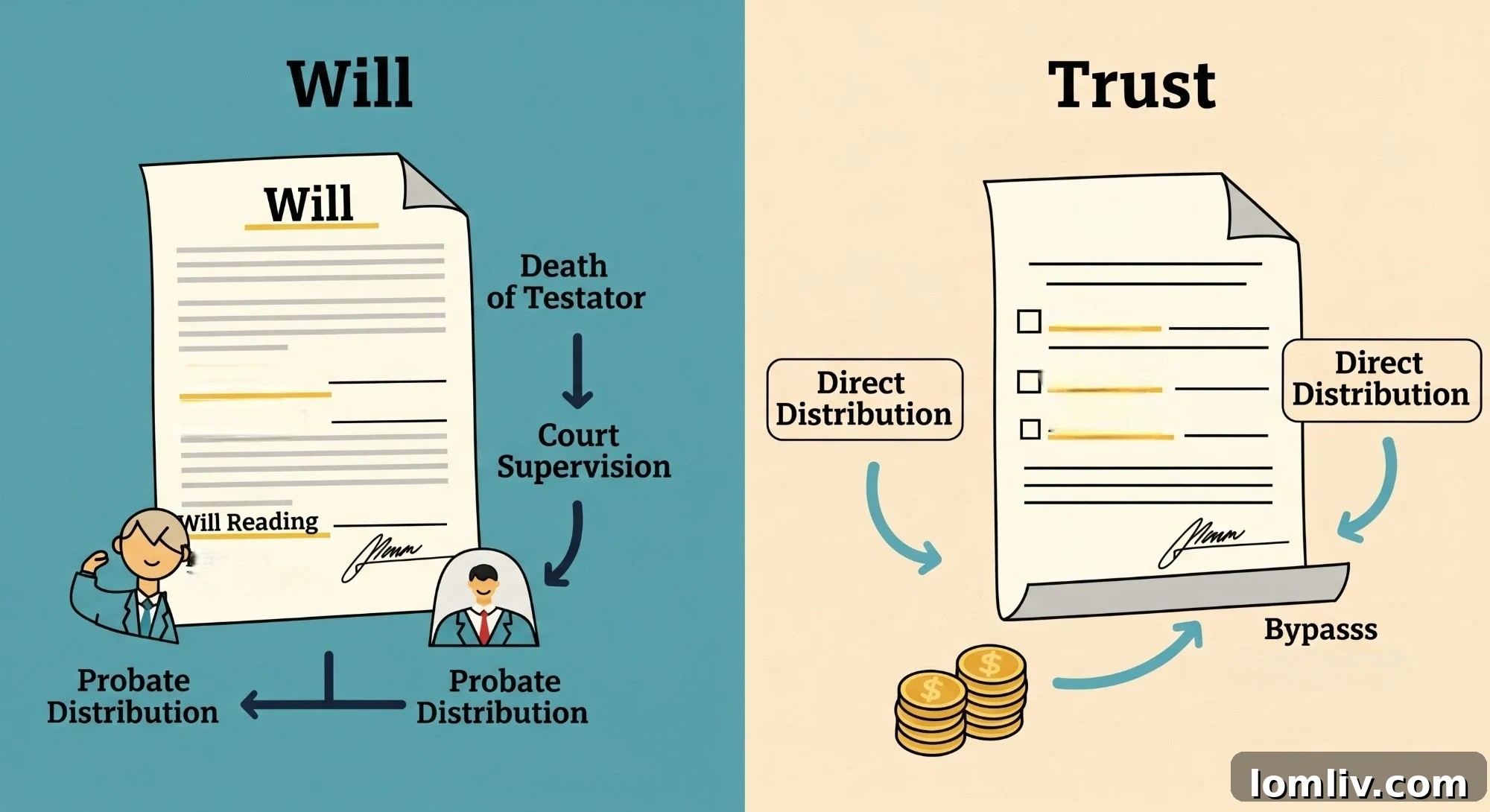
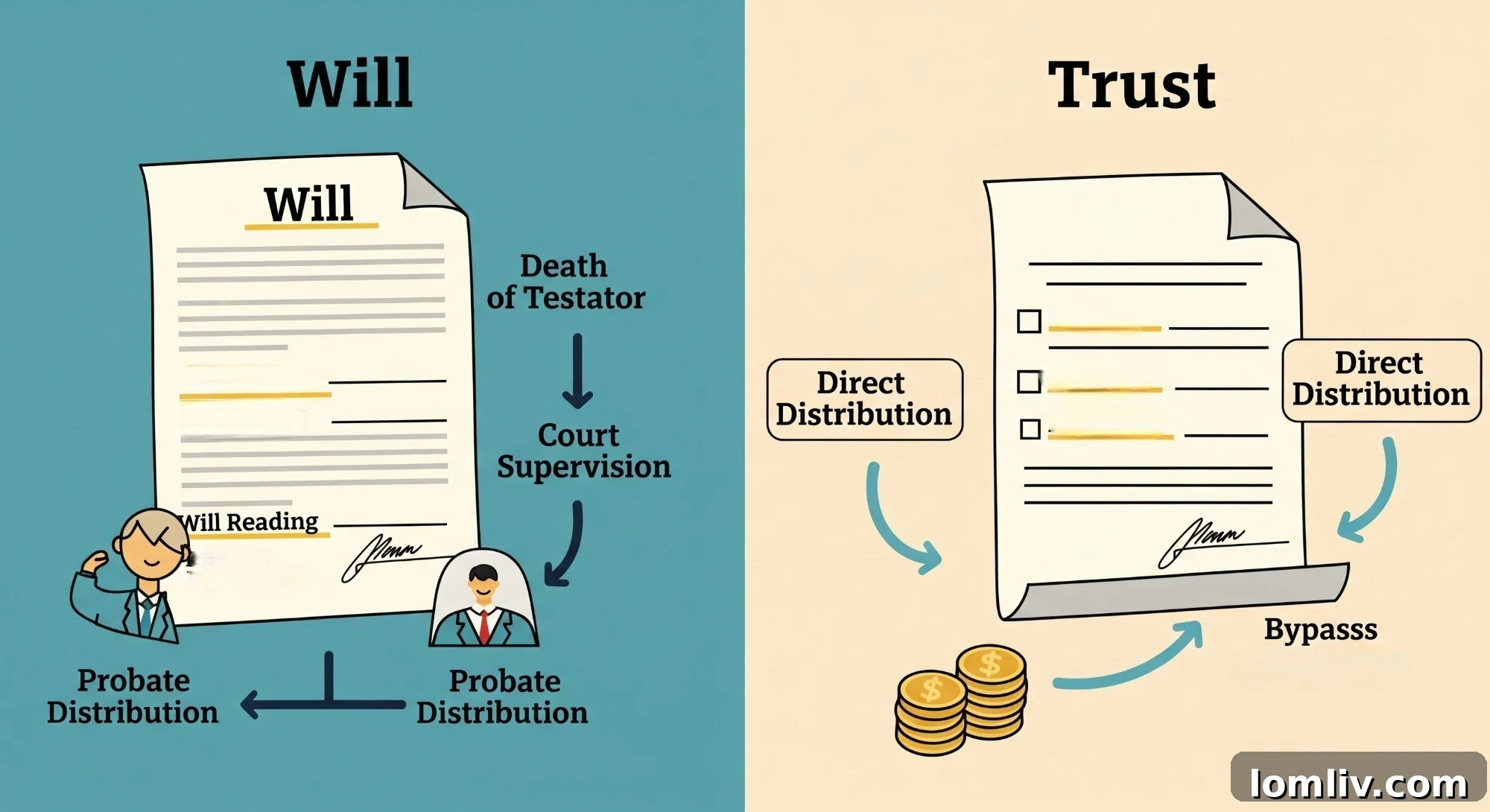
A comprehensive understanding of the fundamental distinctions between a will and a trust is essential for effective estate administration. While both serve as cornerstones of estate planning, their operational mechanisms and benefits diverge significantly. A will, formally known as a last will and testament, is a legal declaration that specifies how your assets, properties, and personal belongings should be distributed after your death. It also allows you to name an executor to manage your estate and appoint guardians for minor children. However, a significant characteristic of a will is that it must undergo probate—a court-supervised process designed to validate the will, pay debts, and distribute assets. This process can be notoriously lengthy, costly, and, most importantly, becomes a matter of public record, meaning details of your estate are accessible to anyone.
Conversely, a trust offers a private and often more flexible alternative for asset management. A trust is a fiduciary arrangement where a third party (the trustee) holds assets on behalf of a beneficiary or beneficiaries. The key distinction is that assets are transferred into the trust *during your lifetime*, which means that upon your death, those assets are already owned by the trust and typically bypass the probate process entirely. This avoidance of probate can save significant time, legal fees, and maintain the privacy of your financial affairs. Trusts are particularly valuable for managing assets for beneficiaries who may not be ready to receive a large inheritance immediately, such as minor children, young adults, or individuals with special needs. By establishing specific terms and conditions for distributions, you can exert greater control over how and when your assets are used, ensuring they serve their intended purpose for years to come. Recognizing these core differences empowers you to choose the most appropriate instrument, or combination thereof, that best aligns with your specific estate goals and family circumstances.
The Importance of Tailored Estate Planning

Generic, one-size-fits-all estate plans rarely address the unique intricacies of an individual’s life and legacy. This is precisely why customized estate planning is not just beneficial, but essential. It allows you to meticulously address your specific property holdings, complex family dynamics, long-term financial objectives, and even deeply personal values. Every family is unique; you may have special considerations concerning the ongoing care and financial support of a child with special needs, intricate business succession plans, blended family structures, or unique charitable intentions. Collaborating closely with an experienced wills and trusts lawyer ensures that your comprehensive plan is a true reflection of your individual values and intentions, thereby guaranteeing that your legacy is honored precisely as you envision.
An often-overlooked yet critically important aspect of tailored estate planning is the ability to plan for potential incapacity. Life is unpredictable, and a sudden illness or accident could render you unable to make financial or medical decisions. A robust estate plan includes provisions for appointing someone trustworthy to act on your behalf should you become incapacitated. This typically involves establishing a Durable Power of Attorney for financial matters and an Advance Healthcare Directive (or Healthcare Power of Attorney) for medical decisions. As noted by a seasoned Upland Durable Power of Attorney Lawyer, specific actions—such as selling stocks, listing your home for sale, accessing bank accounts, or applying for insurance benefits—might require explicit authorization from your designated agent. Without these documents in place, your family might be forced to pursue a costly and emotionally draining conservatorship or guardianship through the courts, losing valuable time and control over your personal and financial well-being. Tailored planning covers these critical scenarios, ensuring continuous management of your affairs and minimizing distress for your loved ones during challenging times.
Minimizing Taxes and Avoiding Probate

When embarking on estate planning, two of the most significant concerns for many individuals are the potential for substantial tax liabilities and the often-dreaded probate process. Both of these factors can significantly erode the value of your carefully built estate, diminishing the inheritance intended for your beneficiaries. This is precisely where the strategic guidance of a skilled wills and trusts lawyer proves indispensable. An experienced attorney can expertly navigate these complex challenges, crafting a plan designed to protect and preserve your wealth.
One of the most effective tools for both tax reduction and probate avoidance is the strategic establishment of various types of trusts. For example, a revocable living trust can hold your assets, allowing you to manage them during your lifetime, and upon your death, these assets can be distributed to your beneficiaries without ever entering the public probate process. For more substantial estates, irrevocable trusts can be particularly powerful for removing assets from your taxable estate, thereby reducing federal estate taxes. Beyond trusts, other valuable strategies for tax reduction include making calculated lifetime gifts within annual exclusion limits and engaging in thoughtful charitable donations. These philanthropic acts can not only support causes you believe in but also provide significant tax advantages. Furthermore, your lawyer will guide you in structuring your legal documents and asset ownership to ensure a smooth, efficient, and timely transfer of assets. This meticulous planning allows your beneficiaries to receive their inheritance without unnecessary delays, bureaucratic hurdles, or excessive legal fees, thereby protecting and maximizing the value of your estate for the people you care about most.
Ensuring Your Wishes Are Honored

The ultimate purpose of creating a will and trust is to ensure that your specific wishes are meticulously carried out and honored after you pass away. A clear, comprehensive, and legally robust estate plan acts as your voice, speaking on your behalf when you no longer can. Legal experts specializing in estate planning dedicate themselves to ensuring that your hard-earned assets are distributed precisely to the individuals and organizations you intend. They go beyond simple distribution, often helping you establish various types of trusts that offer not only additional protection against creditors or irresponsible spending but also tailored benefits designed specifically for your beneficiaries’ unique needs, such as staggered distributions or funds for specific purposes like education.
It is critically important to understand that estate planning is not a one-time event but an ongoing process. Life is dynamic, and your legal documents must evolve with it. Regularly reviewing and updating these crucial documents is paramount to reflect significant life changes—such as marriage, divorce, the birth or adoption of a child, the death of a beneficiary or executor, or substantial changes in your financial situation or property holdings. A well-drafted plan, meticulously created and periodically reviewed with an experienced attorney, serves as a powerful deterrent against potential legal challenges or family disputes that could otherwise derail your final intentions. By proactively maintaining an up-to-date estate plan, you ensure that your legacy remains secure and that your loved ones are provided for according to your precise, enduring wishes, offering unparalleled peace of mind for everyone involved.
Choosing the Right Estate Planning Lawyer for Your Needs

Selecting the right estate planning lawyer is a pivotal decision that will directly impact the security of your assets and the well-being of your loved ones. To find the legal professional best suited for your specific situation, begin by thoroughly analyzing your individual needs and the complexity of your estate. Do you primarily need assistance drafting a foundational will, or do you have a more intricate estate requiring the establishment of sophisticated trusts, business succession planning, or navigation of complex elder law issues? Focusing your search on local attorneys who genuinely specialize in estate planning is crucial, as they will have specific knowledge of state laws and local court procedures. Take the time to diligently vet their qualifications, experience, and any specialized certifications they may hold in estate law.
Beyond credentials, delve into their professional reputation. Read online client reviews and testimonials on reputable platforms to gauge what past clients have experienced regarding the lawyer’s performance, communication style, and overall professionalism. Seeking referrals from trusted financial advisors, accountants, or friends and family can also provide valuable insights. Once you have a shortlist, set up initial consultations. These meetings are invaluable opportunities to discuss your unique circumstances, ask pertinent questions about their experience with cases similar to yours, understand their fee structure, and ascertain their overall approach to estate planning. A truly effective lawyer will not only communicate clearly and demystify complex legal jargon but will also listen attentively to your concerns, goals, and family dynamics, demonstrating empathy and a genuine understanding of your situation.
Ultimately, trust your instincts. The relationship with your estate planning attorney is often long-term and built on trust. Find a lawyer who makes you feel comfortable, confident, and understood—someone with whom you can openly discuss sensitive personal and financial matters. This partnership is absolutely key to achieving your peace of mind, knowing that your estate is protected, your wishes are clearly documented, and your legacy will be honored precisely as you intend. The right lawyer will serve as your dedicated advocate, ensuring every detail of your estate plan is meticulously crafted to secure your family’s future.