As the festive season approaches and holiday classics grace our screens, one film consistently stands out not just for its heartwarming narrative but also for its surprisingly profound insights into the world of real estate and community economics. While many holiday movies offer feel-good messages, Frank Capra’s timeless masterpiece, It’s a Wonderful Life, delivers an enduring lesson that resonates deeply with the core principles of property ownership, ethical finance, and the true value of a home. More than just a Christmas tale, this 1946 classic offers a powerful, allegorical blueprint for understanding the intricacies of the housing market and the societal impact of responsible lending.
At its heart, It’s a Wonderful Life is a deeply human story of struggle and triumph, pitting the selfless aspirations of George Bailey (portrayed by the incomparable Jimmy Stewart) against the predatory greed of Mr. Potter, the town’s wealthy and cynical magnate. George’s journey is one of deferred dreams, personal sacrifice, and an unwavering commitment to his community in Bedford Falls. He grapples with immense financial pressures, leading him to a desperate moment that is ultimately averted by his guardian angel, Clarence. This beloved narrative, a staple for generations, transcends its era, offering universal truths about the human spirit and the foundational role of ethical enterprise in building a stable society, especially concerning housing and economic opportunity.
George Bailey inherits the leadership of the Bailey Brothers Building & Loan from his late father, Peter. This inheritance comes at the expense of his own ambitions to travel the world and build grand structures. Yet, it is within the confines of this small-town financial institution that George discovers his true purpose: to provide accessible and affordable housing solutions for the ordinary families of Bedford Falls, ensuring they have a chance at homeownership and a dignified life, free from the clutches of Mr. Potter’s exploitative real estate empire. The film masterfully illustrates how a local, community-focused financial body can serve as a bulwark against predatory monopolistic forces, creating economic stability and fostering genuine community growth.
Lesson No. 1: The Enduring Importance of Community-Centric Lending and Affordable Housing
The Bailey Brothers Building & Loan stands as a beacon of hope against the backdrop of Mr. Potter’s oppressive control over Bedford Falls’s housing market. While Potter offers only overpriced, dilapidated slums, the B&L provides vital loans for community members to purchase or build their own homes. This contrast highlights a fundamental real estate lesson: the critical need for equitable access to housing finance. Building & Loans, historical precursors to modern savings and loan institutions, played a pivotal role in American homeownership. According to data cited by Forbes, these institutions were responsible for approximately half of all outstanding residential mortgages in the U.S. by 1930, underscoring their immense significance in fostering economic growth and social stability at a local level. Their model prioritized community welfare over pure profit, offering a cooperative approach to financing that empowered individuals.
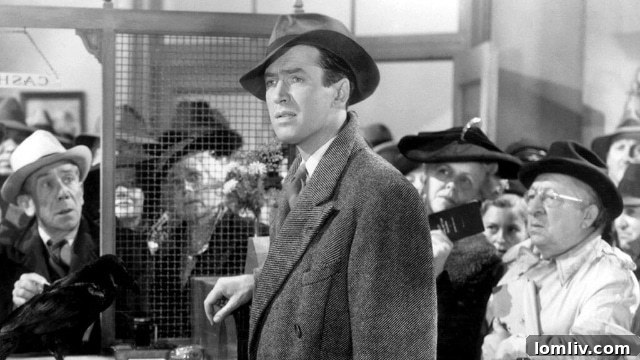
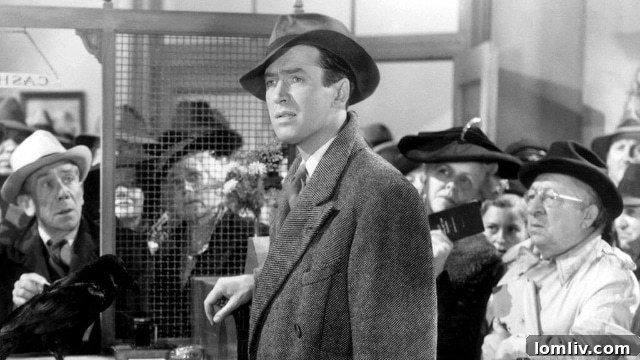
The film vividly portrays the fragility of financial institutions through the infamous “run on the bank” scene. When a financial panic sweeps through Bedford Falls, fear-driven residents rush to withdraw their savings from the B&L. George, with the crucial help of his wife Mary, sacrifices their honeymoon money to keep the institution solvent. During this crisis, George delivers an impassioned speech, reminding his anxious customers that their collective faith is their greatest asset and that Mr. Potter is actively profiting from their panic. He eloquently articulates the dangers of allowing a single, avaricious entity to control essential services:
“If Potter gets ahold of this Building and Loan, there’ll never be another decent house built in this town. He’s already got charge of the bank. He’s got the bus line. He’s got the department stores. And now he’s after us. Why? Well, it’s very simple. Because we’re cutting in on his business, that’s why. And because he wants to keep you living in his slums and paying the kind of rent he decides.”
This powerful dialogue serves as a timeless warning: beware of monopolistic forces and institutional investors whose primary goal is consolidation of power and wealth, often at the expense of community well-being and affordable housing options. Their dominance can stifle competition, inflate prices, and create a cycle of dependency, mirroring concerns about corporate landlords and large investment firms in today’s property markets. The stability of a housing market, therefore, depends heavily on diversified, ethical lending practices that prioritize the residents’ long-term interests.
Lesson No. 2: The Transformative Power of Home Renovation and the Value of a Fixer-Upper
With their startup capital for future dreams now invested in saving the B&L, George and Mary Bailey find themselves in an unexpected predicament: without money for a grand home, they turn a dilapidated, abandoned house into their first family residence. This act of transforming a “fixer-upper” into a beloved home encapsulates a crucial real estate lesson: there is immense value and no shame in seeing potential in properties that others overlook. Despite its drafty windows and numerous imperfections, this house becomes a symbol of resilience, resourcefulness, and the fundamental value of homeownership. It represents more than just shelter; it embodies the spirit of building something personal, piece by piece, with love and effort.
This storyline beautifully pre-dates modern trends like house flipping and DIY home renovation, but with a significant difference. Unlike speculative flipping aimed purely at profit, George and Mary’s project is driven by necessity and the desire to create a nurturing environment for their growing family. It highlights the profound personal satisfaction derived from breathing new life into an old structure, making it truly your own. For aspiring homeowners, this teaches that the perfect house might not be on the market; sometimes, the perfect home is one you envision and create through hard work and a little imagination, proving that true value often lies in potential and personal investment rather than immediate luxury. It underscores the idea that a “starter home” or a “fixer-upper” can be the most rewarding path to building equity and a sense of belonging.
Lesson No. 3: A Thriving, Equitable Market Benefits Everyone, Not Just the Elite
George Bailey’s vision for Bedford Falls extends beyond individual loans; he spearheads the development of Bailey Park, a new housing community offering affordable, well-built homes. These homes are described as being worth twice what they cost the B&L to build, showcasing the success of a community-focused development model. This initiative directly challenges Mr. Potter’s monopoly on local housing, providing working families with an alternative to his substandard and overpriced rental properties. Bailey Park represents the ideal of sustainable urban development, where growth is equitable and serves the entire community, not just a select few.
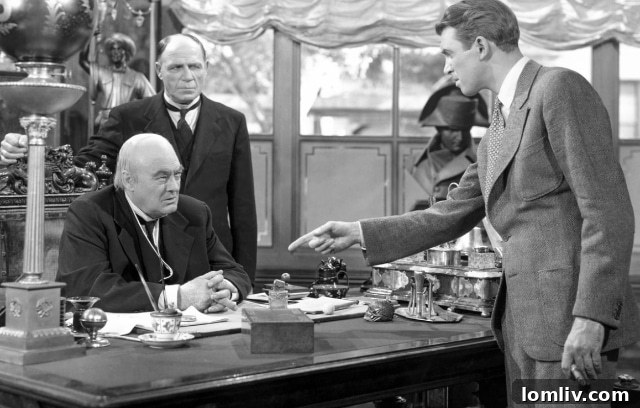
Mr. Potter, recognizing the threat to his exploitative empire, attempts to lure George to the “dark side” with a lucrative job offer. He tries to convince George to abandon his principles and join him in consolidating wealth. George, however, sees through this temptation, understanding that true prosperity comes from lifting everyone, not just oneself. He continues to champion the B&L, demonstrating that a solvent and ethical market, one driven by fair practices and community investment, ultimately creates greater long-term value and benefits for all residents. This stark contrast between Bailey Park and Potter’s slums is a powerful illustration of how different approaches to real estate development can shape the quality of life and economic opportunities within a town. It emphasizes that a healthy property market is one where diverse, affordable options exist, fostering upward mobility and broad-based prosperity, rather than concentrating wealth and power in a few hands.
Lesson No. 4: Vigilance, The Fragility of Markets, and The Consequences of Unchecked Greed
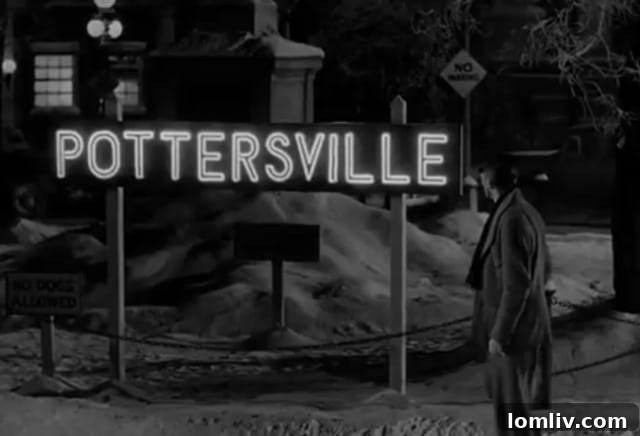
The film reaches its climax with Uncle Billy’s catastrophic error: losing a crucial cash deposit that plunges the B&L into financial ruin and George into deep despair. This mishap underscores the inherent fragility of financial systems, even those built on good intentions, and the critical need for diligent oversight and robust financial controls. In his darkest hour, contemplating suicide, George is visited by Clarence, his guardian angel, who grants him a vision of what Bedford Falls would be like had George never existed. This “Pottersville” sequence is perhaps the most chilling and impactful lesson in the entire film.
In this alternate reality, Bedford Falls transforms into Pottersville – a gaudy, morally bankrupt town dominated entirely by Mr. Potter’s unchecked greed. Without George Bailey’s ethical influence and the Building & Loan’s alternative housing options, the town decays into a place devoid of community spirit, affordable homes, and hope. Bailey Park, the symbol of George’s legacy, simply does not exist. The once vibrant, family-oriented community becomes a landscape of vice and desperation, where home values are nonexistent for the average person, and quality of life has plummeted. This dystopian vision serves as a powerful cautionary tale about the devastating long-term consequences of allowing a single, ruthless entity to control the economic and real estate destiny of a community. It illustrates how the absence of ethical leadership in finance and housing can lead to urban blight, social decay, and the erosion of fundamental human dignity.
The happy ending of It’s a Wonderful Life, with George’s life restored and the community rallying to save him, is deeply satisfying. However, the film also subtly reminds us that real-world financial systems, particularly in the tumultuous 1930s when the story is set, were far less forgiving. As Forbes points out, the Building & Loan model, despite its noble intentions, faced significant sustainability challenges in the face of broader economic pressures. And Old Man Potter, a character whose malice is seemingly boundless, would undoubtedly continue to exert pressure in a truly real-world scenario. While the cinematic ending provides comfort, the underlying message remains: constant vigilance, ethical governance, and strong community support are essential to protect the integrity of housing markets and prevent them from falling prey to exploitation. Even in a fantasy setting, as humorously depicted in Saturday Night Live’s take on what happens next, the struggle against avarice is continuous. George Bailey’s enduring legacy is a reminder that in real estate, as in life, integrity, community, and the pursuit of a common good are truly what make a life, and a town, wonderful.