
North Texas Real Estate Alert: Safeguarding Against Phishing Scams Targeting NTREIS Users

The digital landscape of the real estate industry is constantly evolving, bringing with it both innovation and new security challenges. Recently, the MetroTex Association of Realtors issued a critical warning to its members regarding a sophisticated phishing attempt targeting users of the North Texas Real Estate Information System (NTREIS). This incident serves as a stark reminder of the persistent threats faced by real estate professionals who handle sensitive client data and high-value transactions daily.
Real estate agents across North Texas began receiving deceptive emails designed to trick them into divulging their NTREIS account credentials. These fraudulent messages typically alerted recipients to an “attempted login” from an unusual location, specifically citing El Paso, TX, as the origin. The emails were crafted to create a sense of urgency and concern, pushing agents to act without careful consideration.
Anatomy of the Phishing Attempt: How Scammers Operated
The core of the scam lay in the carefully worded email. Recipients were told, “We were notified of a log in attempt on your account from El Paso, TX. This may have been an error. Please verify the below information. Once received we will send you a link to reset your password. We do not store your information on file due to security reasons.” While seemingly reassuring, the request that followed was highly suspicious, directly asking for the user’s login and password information.
Such a request is a definitive red flag for a phishing attempt. Legitimate organizations, especially those dealing with sensitive accounts like NTREIS, will never ask for your password directly via email. Their protocol would involve directing users to a secure, verified portal to reset credentials, often utilizing multi-factor authentication, rather than requesting direct input within an email or an insecure form.
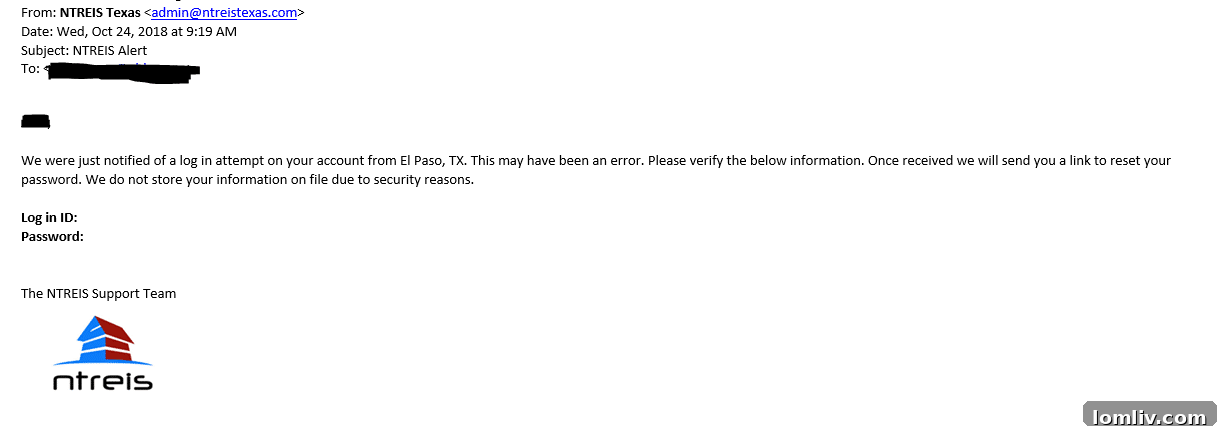
The origin of these malicious emails was traced back to “[email protected].” Upon investigation, MetroTex officials quickly verified that the domain associated with this sender was registered only a day prior to the phishing campaign. This rapid registration of a domain name closely mimicking a legitimate one is a classic tactic used by cybercriminals to establish credibility and evade initial detection. The swift identification of this fraudulent domain underscores the importance of vigilance and rapid response in the face of cyber threats.
MetroTex and NTREIS: A Coordinated Response to Protect Members
In response to the detected threat, the MetroTex Association of Realtors acted promptly to safeguard its extensive network of members. They issued a direct warning through a message posted on the association’s official Facebook page, advising members against engaging with the suspicious email sender or clicking on any included links. This immediate public alert was crucial in preventing further compromises.
NTREIS, the central system under attack, also moved swiftly. A prominent notification alert was posted on the Single Sign-On (SSO) login page for all users, ensuring that anyone attempting to access their account would be aware of the ongoing threat. Furthermore, NTREIS initiated efforts to have the fraudulent domain in question taken out of service. Such proactive measures by industry leaders are indispensable in mitigating the impact of cyberattacks and protecting the integrity of the real estate ecosystem.
Understanding Phishing: A Pervasive Threat to Real Estate
Phishing is a type of cyberattack where attackers disguise themselves as a trustworthy entity in an electronic communication (most commonly email) to trick the victim into opening a malicious link, downloading an infected attachment, or revealing sensitive information like usernames and passwords. For the real estate sector, these attacks are particularly dangerous due to the immense financial transactions involved and the confidential nature of client data. Realtors often handle personal identifying information, financial details, and contractual documents, all of which are highly valuable to cybercriminals.
The allure of real estate data for hackers stems from multiple factors. Successful phishing attacks can lead to identity theft, escrow fraud, wire transfer scams, and the compromise of entire brokerage networks. A single compromised account can unlock a cascade of vulnerabilities, potentially affecting not only the agent but also their clients, colleagues, and the reputation of their firm. The financial consequences of such breaches can be devastating, leading to significant monetary losses, legal battles, and a profound erosion of trust.
Best Practices for Realtors: Fortifying Your Digital Defenses
Given the persistent nature of these threats, real estate professionals must adopt robust cybersecurity practices. Protecting yourself and your clients from phishing and other cyberattacks requires continuous vigilance and adherence to security protocols. Here are essential steps every Realtor should take:
- Scrutinize Every Email: Always verify the sender’s email address. Look for subtle misspellings in domain names (e.g., “ntreistexas.com” instead of “ntreis.com”). Be wary of generic greetings, poor grammar, unusual urgency, or unsolicited requests for personal information. If an email looks suspicious, do not click on any links or open attachments.
- Never Share Credentials Directly: Legitimate organizations will never ask for your password via email. If you need to change your password, navigate directly to the official website by typing the URL into your browser, rather than clicking a link in an email.
- Implement Strong, Unique Passwords: Use complex passwords for all your accounts, combining uppercase and lowercase letters, numbers, and symbols. Avoid using the same password across multiple platforms. Consider using a reputable password manager to securely store and generate unique passwords.
- Enable Two-Factor Authentication (2FA): Where available, activate 2FA for all your accounts, especially critical ones like NTREIS, MLS, and email. This adds an extra layer of security, requiring a second verification step (e.g., a code sent to your phone) beyond just a password.
- Stay Updated: Keep your operating system, web browsers, antivirus software, and all other applications updated. Software updates often include critical security patches that protect against newly discovered vulnerabilities.
- Educate Yourself and Your Team: Regular training on cybersecurity best practices is paramount. Ensure everyone in your office understands how to identify phishing attempts and what steps to take if they suspect a scam.
- Secure Your Network: Be cautious when using public Wi-Fi networks for sensitive work. Consider using a Virtual Private Network (VPN) to encrypt your internet connection and protect your data from eavesdropping.
- Backup Your Data: Regularly back up important data to a secure, offsite location or cloud service. In the event of a cyberattack, having backups can minimize data loss and facilitate recovery.
- Report Suspicious Activity: If you receive a phishing email or suspect a security breach, report it immediately to the relevant authorities and your organization’s IT department. For NTREIS-related incidents, notify MetroTex or NTREIS directly.
NTREIS: A Pillar of North Texas Real Estate and Its Security
NTREIS is more than just a database; it is a critical infrastructure serving realtors throughout North Texas, including the bustling Dallas-Fort Worth metropolitan area. It provides essential information management services to over 30,000 Multiple Listing Service (MLS) subscribers spread across 15 Realtor associations and supports more than 6,000 real estate offices. The sheer scale of its operations underscores the immense responsibility NTREIS bears in maintaining the security and integrity of its system.
The continuous efforts by NTREIS to combat cyber threats, such as posting security alerts and working to take down malicious domains, are vital for ensuring that its vast network of real estate professionals can operate with confidence. The trustworthiness of MLS systems directly impacts the efficiency and security of real estate transactions across the region. Protecting this crucial resource is a collective endeavor, requiring collaboration between the system providers, associations, and individual agents.
Conclusion: A Collective Commitment to Cyber Resilience
The recent phishing attempt targeting NTREIS users in North Texas serves as a potent reminder that cyber threats are an ongoing challenge for the real estate industry. While organizations like MetroTex and NTREIS are committed to implementing robust security measures and providing timely warnings, the ultimate defense lies with each individual agent. By understanding the tactics of cybercriminals, adopting rigorous cybersecurity practices, and remaining vigilant, real estate professionals can significantly reduce their vulnerability.
The future of real estate demands a proactive and collective commitment to cyber resilience. Educate yourself, protect your credentials, and cultivate a culture of security within your practice. Together, the North Texas real estate community can stand strong against evolving online threats, safeguarding sensitive information and maintaining the trust essential to successful business operations.