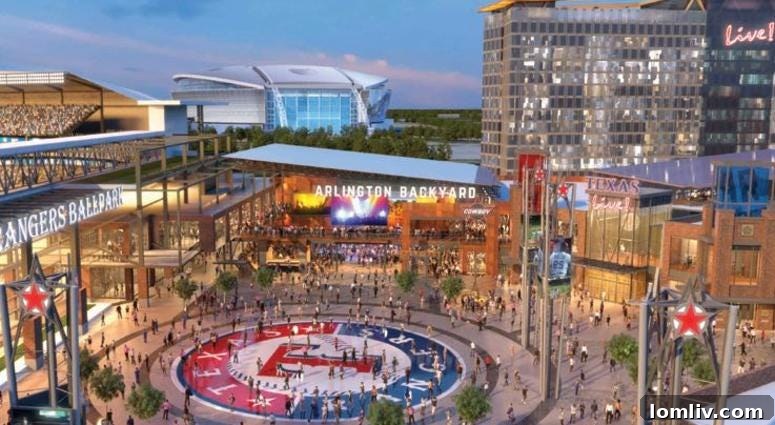
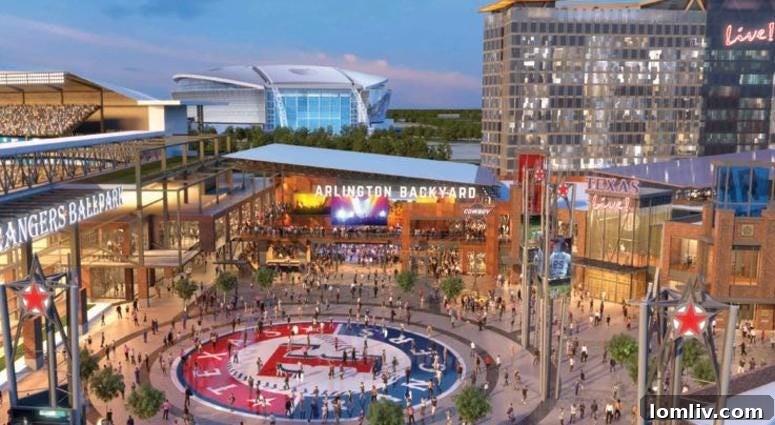
Arlington, Texas is poised for a significant transformation with an $810 million expansion announced for the prominent Texas Live! entertainment venue. This monumental project is set to redefine the city’s economic and cultural landscape. Meanwhile, as we step into a new decade, the world of interior design calls for a fresh perspective, prompting a look at the design trends that are ready to be left behind. Additionally, the architectural community in North Texas welcomes new leadership, with Zaida Basora taking the helm as executive director for both AIA Dallas and the Architecture and Design Foundation. This week, we delve into these key developments shaping real estate, design, and professional architecture.
Texas Live! Unveils Ambitious $810 Million Expansion to Redefine Arlington’s Future
Arlington, Texas, a city synonymous with major league sports and burgeoning entertainment, is set to undergo an unprecedented revitalization with the announcement of an $810 million expansion for its flagship Texas Live! development. This colossal project is far more than just an addition; it represents a strategic vision to cultivate a dynamic, integrated live-work-play district, further cementing Arlington’s status as a premier destination in the Dallas-Fort Worth Metroplex.
The original Texas Live!, already a popular entertainment hub adjacent to Globe Life Field and AT&T Stadium, will be significantly augmented through a collaborative effort. The Cordish Companies, renowned for creating large-scale entertainment and sports-anchored districts, are spearheading this second phase of development. They are joined by key partners: the City of Arlington, the Texas Rangers baseball organization, and Loews Corporation. This powerful alliance underscores a shared commitment to fostering robust economic growth and community enrichment. Funding for this ambitious undertaking will be channeled through a Tax Increment Reinvestment Zone, demonstrating a forward-thinking approach to urban development.
This massive infusion of investment is designed to create a vibrant, self-sustaining ecosystem within the district, appealing to residents, businesses, and tourists alike. The new construction is meticulously planned to incorporate a diverse range of facilities, each contributing to the overall appeal and functionality of the expanded complex:
- State-of-the-Art Office Space: A significant 200,000 square feet of modern office space is slated for inclusion. This addition will attract new businesses, foster corporate growth within Arlington, and provide a convenient workspace for professionals looking to integrate their careers with a dynamic lifestyle. It signals a move towards creating a genuine business hub within the entertainment district.
- The Loews Arlington Hotel & Convention Facilities: A cornerstone of the expansion is the brand-new 888-room Loews Arlington Hotel. This upscale hotel is not just about accommodation; it will feature an impressive 150,000 square feet of versatile meeting and convention space. Crucially, the hotel will be seamlessly connected to the existing Arlington Convention Center, creating a formidable convention complex capable of hosting larger events, conferences, and trade shows. This will dramatically boost Arlington’s capacity to attract national and international gatherings, driving significant tourism revenue.
- Expanded Retail and Restaurant Offerings: To complement the entertainment and hospitality aspects, 100,000 square feet of new retail and restaurant space will be added. This will introduce an even wider array of dining experiences, from casual eateries to fine dining, along with diverse shopping options. These additions are designed to enhance the visitor experience and provide more amenities for the district’s residents and workers.
- Modern Residential Living: Recognizing the growing demand for urban living, the expansion will include 280 stylish apartments. These residential units will cater to individuals and families seeking the convenience of living within a vibrant district, with immediate access to entertainment, dining, and professional opportunities. It represents a significant step towards creating a true mixed-use community.
- Enhanced Infrastructure and Accessibility: To support this expansive development, 2,000 new parking spaces will be constructed. This essential infrastructure improvement ensures that the complex remains easily accessible for all visitors, mitigating potential traffic and parking challenges associated with such a large-scale project.
- Innovative Business Incubator Space: A forward-thinking element of the plan is the inclusion of business incubator space. This dedicated area will foster entrepreneurship and innovation, providing resources and support for startups and emerging businesses. It highlights a commitment to not only entertainment and commerce but also to nurturing local talent and economic diversification.
The construction phase of this ambitious project is expected to reach completion by 2023. Upon its full realization, the entire second phase of Texas Live! is projected to generate an astonishing 3,000 new jobs, providing substantial employment opportunities across various sectors, from hospitality and retail to construction and professional services. Furthermore, the long-term economic impact is estimated to reach an astounding $1.8 billion, injecting vital capital into the local and regional economies. This expansion is poised to be a monumental catalyst for Arlington’s continued growth, transforming it into an even more dynamic and attractive hub for residents and visitors alike.
Source: Dallas Business Journal
Refreshing Your Space: Top 10 Design Trends to Ditch in 2020 and Beyond
Just as fashion seasons dictate new wardrobes, the world of interior design constantly evolves, ushering in fresh aesthetics while gently nudging outdated styles out the door. As we navigate the early years of the 2020s, it’s time to take a critical look at our living spaces and identify elements that might be hindering, rather than enhancing, our home environments. While personal preference always reigns supreme, understanding the trajectory of design trends can help us create more timeless, functional, and aesthetically pleasing homes. Drawing insights from industry experts like Realtor.com, we explore ten design trends that are ready for their graceful exit.

The cyclical nature of trends means that what was once cutting-edge can quickly become overused or feel dated. The goal isn’t necessarily to chase every new fad, but rather to cultivate a space that feels contemporary, comfortable, and truly reflective of its inhabitants. Let’s delve into the top 10 design trends receiving the “heave-ho” in 2020 and consider why they’re making way for newer sensibilities:
1. The Lone Accent Wall: An Isolated Statement
Once a popular way to introduce color or texture, the solitary accent wall can often feel disjointed, creating an imbalance rather than a cohesive design. Instead of a single contrasting wall, designers are now opting for more integrated approaches, such as painting an entire room in a bold hue, incorporating architectural features, or using art and decor to create focal points that feel organically part of the space.
2. Overly Minimalist Designs: Seeking Warmth Over Starkness
While minimalism champions clean lines and functionality, extreme minimalism can sometimes lead to spaces that feel cold, uninviting, or impersonal. The trend is shifting towards “warm minimalism” or “curated minimalism,” where simplicity is paired with rich textures, natural materials, personal touches, and a sense of coziness. It’s about thoughtful selection, not stark emptiness.
3. Faux Natural Materials: Embracing Authenticity
The allure of natural materials like marble, wood, and stone is timeless. However, the use of faux versions – particularly in flooring, countertops, and veneers – can often fall short of replicating the genuine article, lacking the depth, texture, and durability. The movement is now firmly towards authentic materials or high-quality, sustainable alternatives that offer genuine tactile and visual appeal.
4. Rose Gold and Millennial Pink: Fading Hues
These specific pink tones enjoyed immense popularity across fashion, tech, and interiors. However, their ubiquity has led to saturation, making them feel less fresh and more indicative of a specific past era. While pink will always have a place in design, the focus is shifting to more muted, earthy pinks, deeper blush tones, or moving away from these specific hues in favor of other vibrant or calming color palettes.
5. Overdone Farmhouse Style: A Call for Evolution
The rustic charm of modern farmhouse style, popularized by design shows, swept the nation. Yet, its widespread adoption has led to an almost formulaic application, with shiplap and barn doors appearing everywhere. The trend is evolving towards a more nuanced “modern rustic” or “eclectic country” aesthetic, blending authentic vintage finds with contemporary pieces, rather than a generic, mass-produced look.
6. Cool and Light Neutrals: Warming Up Our Spaces
For years, cool grays and crisp whites dominated interior palettes, offering a clean backdrop. However, these can sometimes make a space feel stark or lacking in warmth. The shift is towards warmer neutrals – think beiges, creamy off-whites, greiges with brown undertones, and earthy tones – which create a more inviting and comforting atmosphere. Bolder, richer colors are also making a strong comeback as accents or primary hues.
7. Fast Furniture: Prioritizing Quality and Sustainability
The rise of inexpensive, mass-produced furniture pieces designed for quick assembly and disposability is being reconsidered. Concerns about environmental impact, durability, and a desire for more meaningful possessions are driving a shift towards investing in higher-quality, durable furniture, often made from sustainable materials. There’s a renewed appreciation for handcrafted pieces, vintage finds, and furniture built to last.
8. Neon Word Signs: Saying Goodbye to Gimmicks
While playful and eye-catching for a time, neon word signs, often displaying motivational phrases or quirky statements, have become an overused design cliché. They can quickly date a space and often lack the sophisticated appeal of well-chosen artwork or integrated lighting solutions. Designers are now favoring more subtle forms of wall art, meaningful photography, or elegant lighting fixtures to create ambiance.
9. Bedding in a Kit: Custom Comfort Over Conformity
The convenience of a “bedding in a bag” kit often comes at the expense of quality, individuality, and a truly luxurious feel. These kits typically feature matching patterns and limited layering options. The trend is moving towards curating a personalized bedding ensemble, mixing high-quality sheets, duvets, blankets, and pillows with different textures, patterns, and colors to create a bespoke, inviting, and layered look.
10. Open Floor Plans: Redefining Spatial Boundaries
Once considered the epitome of modern living, the fully open-concept floor plan is being re-evaluated. While promoting connectivity, they can also lead to issues with noise, lack of privacy, and undefined zones. The evolution is towards “broken-plan” living or clearly delineated zones within open spaces, achieved through clever furniture placement, half-walls, sliding doors, or subtle architectural features that offer both connection and a sense of distinct functionality.
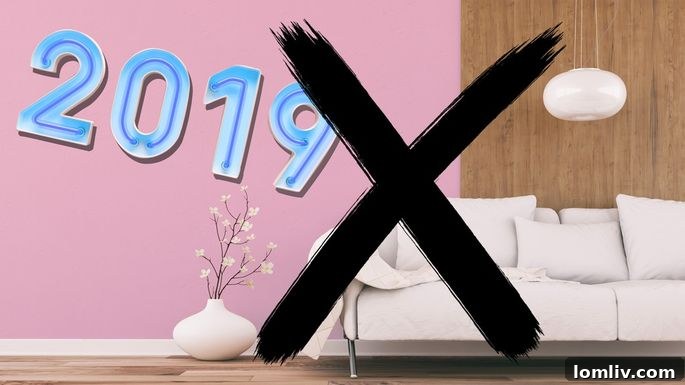
While some of these shifts might feel “harsh” to those who have recently embraced these trends, they ultimately pave the way for more thoughtful, enduring, and personal interior design choices. The ultimate goal is to create homes that truly resonate with their inhabitants, reflecting individual style and providing a sanctuary that transcends fleeting fads. Embracing timelessness, functionality, and authenticity ensures that your space remains fresh and inviting for years to come.
Source: Realtor.com
Zaida Basora Appointed Executive Director of AIA Dallas and Architecture and Design Foundation
The American Institute of Architects (AIA) Dallas chapter and the Architecture and Design Foundation have announced a pivotal leadership appointment, naming Zaida Basora as their new executive director. This significant announcement follows an extensive and rigorous eight-month national search, underscoring the importance and responsibility associated with leading two of North Texas’s most influential architectural organizations. Basora’s appointment is poised to usher in a new era of growth, advocacy, and community engagement for the architecture and design community in the rapidly expanding Dallas-Fort Worth region.

Zaida Basora brings a remarkably diverse and rich professional background to her new role, which officials highlighted in their press release. Her experience spans both the public and private sectors, offering a unique 360-degree perspective on architectural practice, project management, and urban development. This blend of experiences as an architect, client, consultant, and advocate, coupled with her active engagement and leadership on various boards and committees, positions her as an ideal leader for these dynamic organizations. Her deep understanding of the multifaceted challenges and opportunities within the field of architecture and design will undoubtedly advance the mission and impact of both AIA Dallas and the Architecture and Design Foundation.
A Career Defined by Impact and Expertise
Before assuming her new directorship, Basora held a prominent position at Huitt-Zollars, a leading architectural and engineering firm. There, she was instrumental in leading the architectural practice for their Dallas office, demonstrating her prowess in managing complex projects and overseeing design teams. Importantly, she also served as the sustainability manager for the firm, showcasing her commitment to environmentally responsible design and building practices—a critical area of focus in modern architecture.
Her extensive experience also includes a distinguished tenure of over two decades at the City of Dallas. During her more than 20 years in public service, Basora primarily served as the assistant director of public works over facilities. This role involved significant responsibility for the planning, design, construction, and maintenance of a wide array of public infrastructure and city-owned buildings. This public sector background provides her with invaluable insight into urban planning, community needs, regulatory frameworks, and the intricate process of realizing large-scale civic projects. Such a comprehensive understanding of both public administration and private enterprise is a rare asset.
Vision for the Future of Architecture in North Texas
Richard Miller, the 2019 AIA Dallas President, articulated the high expectations placed on Basora, stating, “Our search committee was looking for an engaging, experienced, respected, and proven executive director to lead AIA Dallas and the Architecture and Design Foundation, two organizations at the center of a growing chapter, city, and North Texas region.” He further expressed confidence in her capabilities, adding, “We believe Zaida Basora is just that leader.”
Miller emphasized Basora’s profound connection to the professional community: “Zaida’s involvement in the AIA at the local, state, and national level gives her the well-earned credibility which is representative of her passion, commitment, and respect within the profession.” This extensive involvement signals a deep understanding of the challenges and opportunities facing architects today, from licensure and continuing education to technological advancements and ethical practice. Her proven track record and wide network across various levels of the AIA will be invaluable in fostering collaboration and amplifying the voice of the profession.
Furthermore, Miller highlighted her extensive influence: “She has a robust sphere of influence due to her unique background and history that makes her a huge benefit to our members and community.” This sphere of influence is expected to translate into enhanced advocacy for design excellence, greater educational opportunities for members, stronger community outreach programs, and increased public appreciation for the built environment. Under Basora’s leadership, AIA Dallas and the Architecture and Design Foundation are poised to play an even more crucial role in shaping the future growth and architectural identity of North Texas, ensuring that design quality, sustainability, and community engagement remain at the forefront of development initiatives.
Source: AIA Dallas