

Texas homeowners and businesses have long grappled with one of the nation’s highest property tax burdens, a persistent challenge in a state without an income tax. The continuous escalation of property valuations has translated into soaring tax bills, impacting everything from family budgets to the viability of local businesses and the affordability of housing. In a significant legislative breakthrough, the Texas House and Senate recently reached a bipartisan agreement on a comprehensive property tax relief package, a long-anticipated measure aimed at alleviating these pressures. This landmark deal promises to deliver substantial savings, though its final implementation hinges on voter approval in an upcoming statewide referendum.
The announcement in April brought a wave of relief and cautious optimism across the state. While the initial sentiment was one of excitement, a closer look at the legislation reveals a multi-faceted approach to tax reform, designed to touch various aspects of the property tax system. From enhancing homestead exemptions to introducing innovative “circuit breaker” mechanisms and reforming the appraisal review process, this package represents a concerted effort to recalibrate the state’s tax landscape. For residents of rapidly growing regions like North Texas, where rental costs have skyrocketed partly due to escalating property taxes, these changes could provide much-needed breathing room. The proposed reforms address not only individual homeowners but also offer vital support to small businesses and landlords, recognizing their critical role in the state’s economy.
Understanding the Path Ahead: The November Referendum and Retroactive Relief
While the legislative chambers have done their part, the journey for this crucial property tax relief package isn’t quite over. The Texas Constitution mandates that certain changes to the state’s tax code must be approved by its citizens. Therefore, the fate of this extensive reform package rests in the hands of Texas voters, who will cast their ballots in a statewide referendum on November 7th. It’s widely anticipated that this measure will pass, given the broad public desire for tax relief, making it a critical date for every Texan to mark on their calendar.
One of the most appealing aspects of this legislation is its retroactive nature. Taxpayers will be pleased to learn that the property tax cuts are effective as of January 1, 2023. This means that once the referendum passes and the bill is signed into law by Governor Greg Abbott, the benefits will apply to the current tax year. Homeowners can expect to see the positive impact of these new, lower rates reflected in their fall tax bills, providing immediate financial relief during a period when many budgets are stretched thin. This immediate application underscores the urgency and significance of the reform, promising tangible savings much sooner than some might have anticipated.
To gain deeper insights into the specifics of this legislation, a conversation with State Sen. Paul Bettencourt’s office proved invaluable. Sen. Bettencourt has been a leading architect and vocal advocate for property tax reform, tirelessly working to bring these changes to fruition. David Clark, a committee director in his office, clarified several key aspects, emphasizing the immediate and long-term benefits envisioned by the bill’s proponents. The overwhelming support for these measures from policymakers reflects a shared understanding of the need to protect Texans from an ever-increasing tax burden, ensuring the state remains an affordable place to live and conduct business.
Enhanced Homestead Exemptions: A Significant Boost for Texas Homeowners
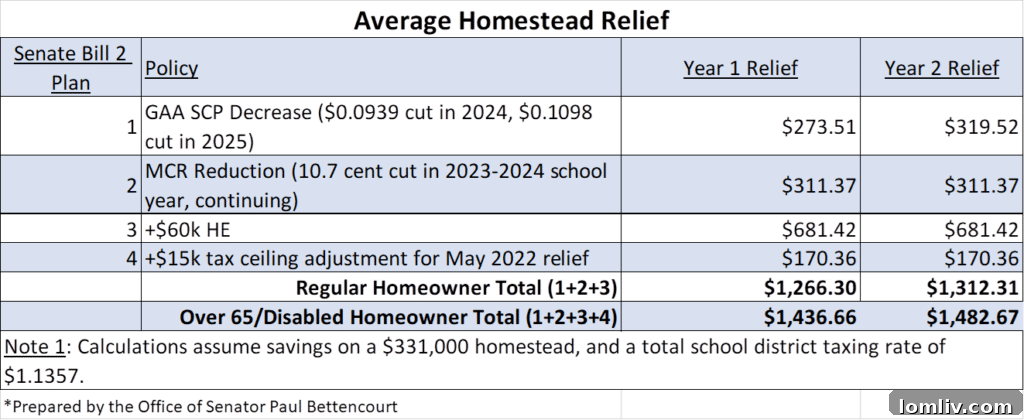
At the heart of the new property tax relief package is a substantial increase in the homestead exemption for school district property taxes. This measure is poised to deliver the most significant direct savings for the majority of Texas homeowners. Previously set at $40,000, the exemption has now been dramatically raised to $100,000 for all qualified Texas homesteads. For specific demographics, the relief is even greater: seniors (over 65) and disabled homeowners will see their exemption increase to an impressive $110,000. This substantial boost was a key priority for Lt. Gov. Dan Patrick and is expected to provide considerable financial relief, directly reducing the taxable value of millions of homes across the state.
Understanding the homestead exemption is crucial for appreciating its impact. Simply put, it’s a tax break that allows homeowners to reduce the appraised value of their primary residence for property tax purposes, specifically for school district taxes. If your home is appraised at $350,000 and you qualify for the $100,000 homestead exemption, you will only pay school property taxes on $250,000 of your home’s value. This reduction can lead to significant annual savings, directly impacting a homeowner’s disposable income. For seniors and disabled individuals, the additional $10,000 exemption provides an even greater cushion, acknowledging their often fixed or limited incomes.
To qualify for this invaluable exemption, the property must be owned by the applicant and serve as their principal, full-time residence. Homeowners are required to affirm that they are not claiming a homestead exemption on any other property, whether in Texas or another state. This ensures that the benefit is targeted towards primary residences, supporting the individuals and families who call Texas home. The expanded homestead exemption represents a monumental shift in how school property taxes are calculated, offering a tangible demonstration of the state’s commitment to easing the financial strain on its citizens.
Beyond the homestead exemption, the property tax package also includes a critical component known as MCR (Maintenance and Operations) compression for school taxes, outlined in SB 2. This initiative earmarks a substantial $7 billion for this purpose. MCR compression essentially means the state is stepping in to cover a larger portion of local school district funding, thereby “buying down” or reducing the reliance on local property taxes. In simpler terms, the state, utilizing its budget surplus, is picking up the tab for a segment of school operating costs that would typically be funded directly through local property taxes. This mechanism provides indirect yet significant relief to all property owners, as it lessens the burden that school districts place on property values for their operational budgets.
Another innovative aspect of the reform targets non-homesteaded real property. As a three-year pilot project, properties valued at $5 million and under will benefit from a 20 percent “circuit-breaker” on appraised value increases. This measure is designed to cap the growth of property appraisals for a specific category of properties, offering predictability and stability in tax bills, particularly for landlords and small businesses. This proactive approach aims to prevent sudden, dramatic increases in property valuations from translating into crippling tax hikes, ensuring a more stable economic environment for commercial and investment properties.
The “Circuit Breaker” Pilot Project: Supporting Landlords and Small Businesses
The introduction of a “circuit breaker” in the Texas property tax framework marks an important step towards a more equitable and stable tax system, especially for non-homesteaded properties. Historically, tax circuit breakers have served as crucial safety nets, operating much like their electrical counterparts by “cutting off” the flow of excessive tax increases before they can inflict severe financial damage. These programs are designed to shield property owners, particularly those facing economic hardship, from being priced out of their homes or businesses due to rapidly escalating property taxes. While many states implement circuit breakers in conjunction with income taxes, Texas has tailored its approach to fit its unique tax structure, focusing on appraisal caps.
The Texas version of the circuit breaker specifically targets commercial properties and other non-homesteaded real estate valued at $5 million or less. Under this three-year pilot project, these properties will benefit from a 20 percent cap on appraisal increases. This means that even if the market value of a property surges by 30% in a given year, its appraised value for tax purposes will only increase by a maximum of 20% compared to the previous year. This mechanism provides a vital layer of protection against the volatility of real estate markets, offering much-needed predictability for property owners. The rationale behind this provision is clear: to provide substantial relief to small businesses and landlords, who often operate on tighter margins and are highly susceptible to sudden increases in their property tax liabilities. By stabilizing their property tax expenses, the circuit breaker helps these entities to better manage their finances, invest in their operations, and avoid passing on prohibitive costs to tenants or consumers.
This targeted approach is particularly beneficial for the state’s vibrant small business sector, which forms the backbone of local economies. Unpredictable and rapidly rising property taxes can stifle growth, deter investment, and even force businesses to close. The circuit breaker offers a degree of financial certainty, fostering an environment where small enterprises can thrive. Similarly, landlords, many of whom are small-scale investors rather than large corporations, will find relief from the pressure to continually raise rents to cover escalating tax bills. This, in turn, can contribute to greater housing affordability and stability within communities, demonstrating a thoughtful and strategic application of tax relief measures.
Broader Taxpayer Benefits: Beyond Property Tax Relief
The recently passed tax reform package extends its reach beyond direct property tax reductions, encompassing several other provisions designed to benefit a wide spectrum of Texas taxpayers. These “taxpayer gifts” reflect a holistic approach to enhancing the state’s economic environment and reducing bureaucratic hurdles for businesses and individuals alike.
- Franchise Tax Exemptions and “Nuisance Tax” Elimination: State Senators Bettencourt and Tan Parker (R-Flower Mound) were instrumental in doubling the franchise tax exemption. This significant change means that an estimated 67,000 Texas businesses will no longer be subject to the state’s franchise tax, providing a substantial boost to their operational budgets. The franchise tax, levied on most businesses organized or doing business in Texas, has long been a point of contention for many small and medium-sized enterprises. By raising the exemption threshold, the state aims to foster business growth and reduce administrative burdens. Furthermore, the package eliminates a particular “nuisance tax” or a cumbersome procedure that required approximately 1.7 million taxpayers to file “no-tax-due forms” on franchise taxes, even when they owed no actual tax. This seemingly minor reform will streamline processes and save countless hours for businesses, allowing them to focus on core operations rather than unnecessary paperwork.
- Appraisal Review Board (ARB) Member Elections: For any homeowner who has ever navigated the complex process of protesting their property taxes, the Appraisal Review Board (ARB) is a familiar entity. Traditionally, these citizen panels, responsible for hearing and deciding property tax disputes, have consisted entirely of appointed members. The new legislation introduces a significant shift towards greater transparency and taxpayer representation: in counties with populations exceeding 75,000, three of the appraisal district’s nine directors will now be elected by citizens during general elections. The remaining five directors will continue to be appointed. This move democratizes a crucial part of the property tax system, giving taxpayers a direct voice in the governance of their appraisal districts. As Dick Lavine, a tax analyst for the progressive Every Texan organization, aptly noted to The Dallas Morning News, “People likely to run for the elected slots on the board are probably going to be more interested in reducing values than the nuts and bolts of running a district…” This sentiment resonates deeply with homeowners, suggesting a future where ARBs might be more attuned to taxpayer concerns and potentially more inclined to favor value reductions during appraisal protests. This change promises to bring more accountability and a taxpayer-centric perspective to the appraisal process, empowering individuals in their efforts to challenge unfair property valuations.
These multifaceted reforms collectively aim to create a more favorable economic climate in Texas. By reducing the tax burden on businesses and providing greater avenues for taxpayer advocacy, the state is taking proactive steps to ensure its continued prosperity and affordability for all its residents. The combination of direct property tax relief, business-friendly reforms, and increased democratic oversight truly makes this a comprehensive package designed for the benefit of every Texan.